
Observing the seasons

We live by the Trondheim fjord, and just a few meters from our place, there is a long path of about 10 kilometers with varied natural landscape. We’ve been living close to this path for fifteen years now.

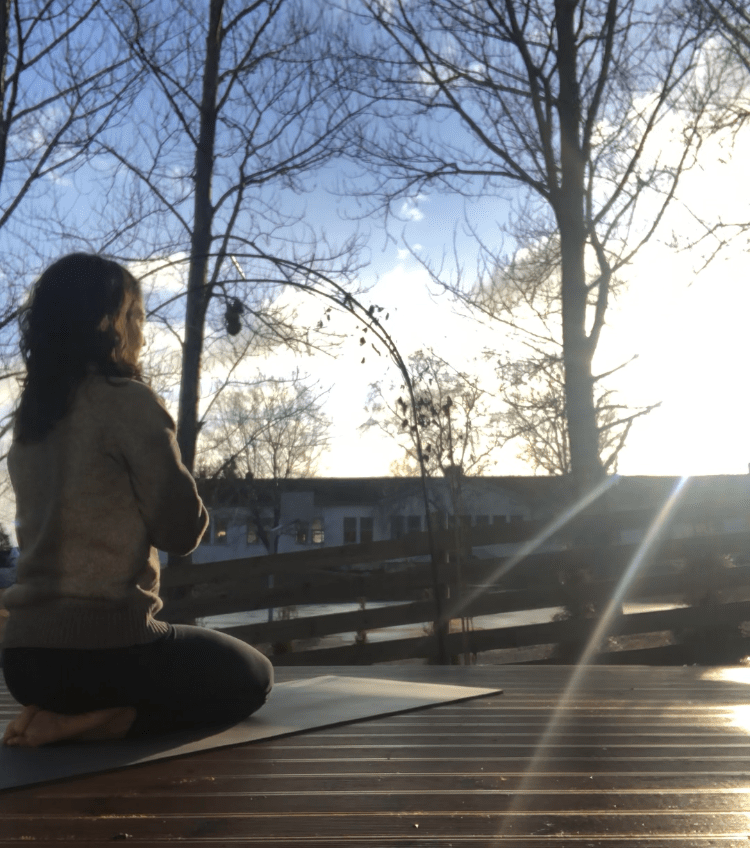
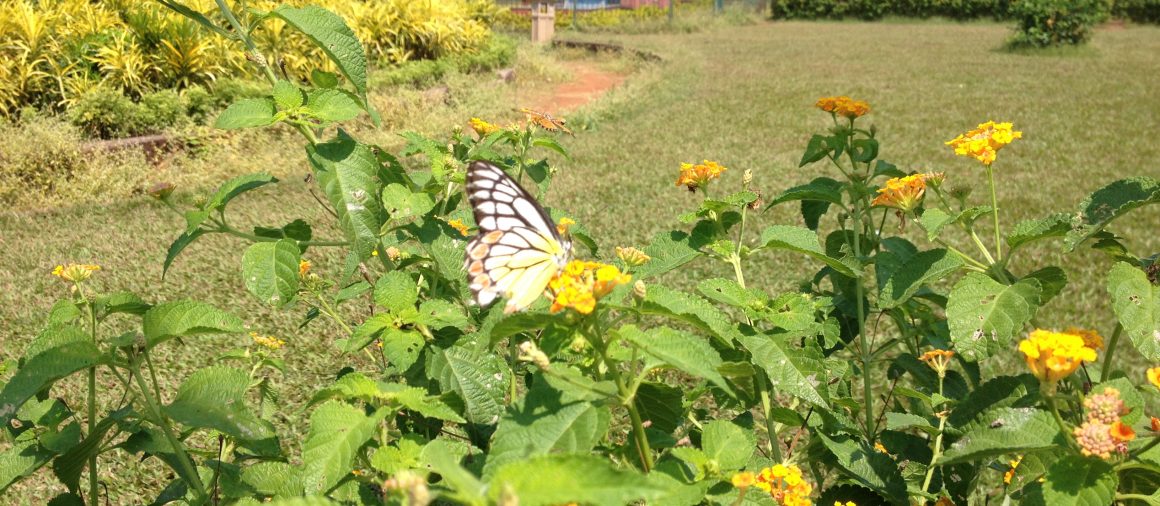
Throughout the years, I have learned to be more observant of the changes that each season brings. Spring probably being one of my favourite. I can notice the changes almost from day to day. From hearing the song of the robin and the blackbird, to the first sprouts on the trees and the ground. It first goes relatively slowly and all of a sudden, with some days of stable sunny weather, it is like an explosion of shapes, light, colour and sound.

It is with the same awe but also a pinch of sadness that I observe the end of the Summer and the start of the Fall, and the same way as Spring just explodes in front of our eyes, the wonderful warm colours of the Fall suddenly invade the landscape. Before we know it, the first snowfall comes, and the long Winter starts.

With the changes in temperature and weather come also the changes in daylight. I think this change is the one that has the most impact in the rhythm of my family’s everyday life. Every year, it takes us some weeks to adapt and find a new routine.

During the darkest months, from November to the end of January, we spend a lot of time indoors. During the weekends, we allow ourselves to sleep in, and spend our evenings watching movies or playing board games. In February, days start getting longer, and we suddenly discover that the sun is out while we are still in our pyjamas so we make the conscious change in routine of getting up earlier during the weekend and get out of the house for a skiing trip or at least a walk in the sun.

During the summer, which can be quite short here in Trondheim, as soon as we get some days of sun and hot weather, we are out the whole day, maybe even part of the night as the sun goes down only for a few hours. Its the summer holiday so we can allow ourselves and our kids to sleep less, or har slightly messier sleeping routines, just to be able to enjoy the nice weather.

Lately, I’ve been thinking about this cycle, and how, the changes in the weather and daylight influence our lives, and most of the time, we just make the necessary adjustments without much resistance. When it snows, I check the online skiing map and I plan for a skiing trip. When the snow melts, we put on our hiking shoes and go for a hike in the forest or by the fjord. If it’s raining, we take our rain clothes, if it’s hot and sunny, we put on a hat… Sometimes, I go out with my winter coat to discover that it is about time to change it for the thinner one, and I just make that change next time I go out.

This adaptability and flexibility we need to show with the change of seasons, and the trial and failing that we also experience, are good lessons for life otherwise. Life is full of changes. The most certain one is ageing. When our kids are born, they have certain needs, and as they grow up, these needs change, and we have to adapt our parenting to better meet these needs. As they grow older, we start giving them the tools to meet their own needs instead of catering all the time for them. But, just like with the seasons, it the changes require that we sometimes stop and observe what is going on. Ask ourselves what are we doing and why are we doing it that way. Consider a change of course, or just a change of attitude.

One thing that I keep reminding myself about is not to panic when I notice that a habit or routine is not working, or when one of my kids is struggling. I’ve noticed that unconsciously, my mind goes to what I like to call the ‘that’s it’ modus. It all seems hopeless and lost, but as my grandmother used to say “everything has a solution except from death”. As long as we are alive, we are always capable of changing and adapting to create a harmonious life for ourselves and our loved ones. We can make it as easy as putting on our rain pants by avoiding mental and emotional resistance and trying to just flow with it. Sometimes we also have to accept that our kids go through tough periods and all we can do is be present, give them love, understanding and compassion, and allow them to find their way.

Although the changes we experience in our lives seem linear as opposed to the changes of season that are cyclic, we can also see our lives as cycles. Changes might sometimes bring a period of confusion, of chaos, of instability, but with work, we find a certain balance and stability until a new change comes.

Peaceful mind through uplifting attitudes

Both in the Bhagavad Gita and in the Yoga Sutras of Patanjali we find practical advice and techniques to cultivate a calmer state of mind. The beauty of it is that not only do we attain a more stable state of inner peace, we also contribute to a more harmonious and peaceful environment which in turn help us keep our mind calmer and clearer.

In the Gita chapter 6 we read:

6:8 “He is a supreme yogi who regards with equal-mindedness all men—patrons, friends, enemies, strangers, mediators, hateful beings, relatives, the virtuous and the ungodly.” Yogananda, Paramahansa. God Talks with Arjuna: The Bhagavad Gita . Self-Realization Fellowship. Kindle Edition.

When we learn to meet all sorts of behaviours with equanimity, we are able to better deal with challenging ones. If we get caught up in our opinion, our experience and our feelings around the behaviour (our ego), we most probably end up wrapped up in a more complicated situation. The practice of meditation can give us the tools to keep this equanimity such as breathing exercises and the skill to observe both a situation and our thoughts before acting (instead of impulsively reacting). It is difficult not to judge a situation or react emotionally to something we perceive as ‘wrong’ or ‘unfair’ or ‘hurtful’, but it is possible to observe the emotional reaction arising, and control it before it translates into an action. We can try to tell ourselves that the behaviour is the result of the inner state of the person and has little or nothing to do with ourselves. We just happen to be the receptor. Furthermore, we can try to see ourselves in others and others in ourselves. We are all trying to find some sort of happiness, some sort of feeling of fulfilment and purpose, and we act out of what we perceive, what we have experienced and what we know. We can recognise that we too have probably acted in hurtful ways in certain situations as a result of our limited thought process at the time.

If we manage to detach from our need to judge others and react emotionally to their behaviour, our mind is calmer and thus ready for the meditation practice. The less we attach our ego to other people’s actions in the everyday life, the less they will come and buzz in our head while we sit in silence. The calmer the mind, the closer we get to that inner state of ours that is undisturbed by outer circumstances. A lasting inner state of peace. The closer we get to that state, the calmer we are off our mat too. So you can say it’s a positive spiral.

We feel better, we deal with the world better, and we don’t make other people feel bad with our reactions.

In the Yoga Sutras of Patanjali, we get more detailed advice:

1: 33 “By cultivating attitudes of friendliness toward the happy, compassion for the unhappy, delight in the virtuous, and disregard toward the wicked, the mind-stuff retains its undisturbed calmness.” Satchidananda, Swami. The Yoga Sutras of Patanjali—Integral Yoga Pocket Edition: Translation and Commentary by Sri Swami Satchidananda . Integral Yoga Publications.

The way I understand it, step nr1 to start working with our limiting thoughts is to try to replace them with uplifting thoughts. Uplifting attitudes are closer to our true nature than limiting ones, and they give us energy instead of draining us. Friendliness, compassion and delight are much better for us and for those around us than envy, jealousy and judgement. If we sit to meditate with a feeling of compassion, it is much easier to calm the mind, than if we sit with thoughts of judgement.

So, work on your thoughts and attitudes to calm your mind and thus create a more harmonious environment around you so you can live a calmer and more harmonious life.

Easier said than done, you say? I totally agree, but with practice, I think it is possible.

A serene mind for meditation and meditation for a serene mind.

6:7 “With a self-disciplined mind, you experience a state of constant serenity, correctly identifying with your highest Self (Atman) who remains unaffected in heat or cold, pleasure or pain, praise or blame.” Satchidananda, Sri Swami. The Living Gita: The Complete Bhagavad Gita: a Commentary for Modern Readers (p. 82). Integral Yoga Publications.

The practice of meditation requires self-discipline. We exercise and develop discipline by taking the time to sit in silence every day no matter what. Furthermore, we exercise mental discipline when we sit in silence and keep bringing the mind back to the here and now.

There are different ways to focus the mind while siting in silence, one of the most common ones being bringing our attention to the breath. We observe the breath either by noticing it coming in and out of our nostrils, or by feeling the rise and fall of our chest/belly as we breathe in and out.

The repetition of a mantra or affirmation is also a good tool to focus the mind, and as we notice ourselves engaging in our thoughts, we go back to the breath or the mantra until we manage to let thoughts come and go without engaging with them. This is what is called dharana in meditation, and could be the equivalent to mindfulness in the Buddhist tradition.

It is said that beyond dharana is dhyana – meditation – and through this we can get in touch into our Higher Self (Atman) which is ever peaceful and unshaken by whatever is happening around us.

The practice of disciplining the mind continues in our everyday life. We learn to discern between uplifting and limiting thoughts. We learn to take life as it is without overindulging in our perceptions and judgement of the external world. This way, we are able to stay serene, as the cited verse states.

It is a loop, or an upward spiral. We discipline the mind when we sit in silence so we are able to meet everyday life with serenity, and because we are able to keep cultivate a serene state of mind no matter what, we can easier sit in silence and get in touch with your Higher Self.

To the ideas presented in this verse is connected the principle of the transient nature of the world we perceive including our physical body and our thoughts, and thus the importance of accepting pleasantness and unpleasantness equally. Avoiding to put our stability in this changing world and rather in our inner peace.

Are you your own friend?

5-6  “I must emphasize, Arjuna, that you have to lift yourself by your own efforts! You must not allow yourself to be demeaned by your ego-self. Know that the self can be both friend and foe — a friend when used to conquer the mind, senses, and body; a foe when it drags one into the mind, senses, and body. True Self (Atma) is the ally; the ego-mind self is the enemy.
Hawley, Jack. The Bhagavad Gita: A Walkthrough for Westerners (p. 58). New World Library. Kindle Edition.

These are the empowering words of Krishna explaining meditation to Arjuna. Meditation as a 24/7 practice. Meditation as a mindset: to learn to control the mind to quiet the cacophony of thoughts and thus be in touch with your inner peace.

When we sit in silence, we aim to slow down the body and the mind, to shut the senses, and focus our attention inwards. It is inside ourselves, beyond our thoughts that we can find lasting peace that is unaffected by whatever is happening around us. But it takes practice and time, and it requires that we also do some inner work the rest of the day, when we are not sitting in silence.

We can be our own friend and our own enemy when seeking this inner peace. Our mind often seems to live a life of its own. It often seems like emotions and thoughts arise without us having much control. Therefore, we are encouraged to observe the thoughts and emotions that are limiting us, and work towards gradually letting go of them.

You can start by observing your self-talk. How do you treat yourself? Are you your own friend or foe? Can you change your self-criticism into constructive feedback? How do you respond when you make a mistake? When things don’t go as you expected them to be? Do you mentally drag yourself further down? Start practicing self-compassion. Whenever you notice your negative self-talk, say something nice to yourself that will help you in the moment instead of make you feel bad about yourself.

Next, is to observe your recurrent thoughts. Those that keep your mind busy. Where do they come from? How do they make you feel? Are you ruminating about the past or worrying about the future? You can’t change the past, and all you can do about the future is to be clear about your intentions behind your actions, and do your best. Regret and worry won’t help you. On the contrary, since you are spending mind energy in regretting or worrying, you are loosing the opportunity to use that energy in being aware of the present moment. When we don’t spend mental energy in regret and worry, we have more time and space to better enjoy the present and better deal with the challenges it might bring.

Past events do have an impact in us, but we can also do the mental work to let go of what is out of our hands. Acknowledge the emotions that those past events have created in you (or others), and again, use compassion and understanding to let go of them. There is a difference between accepting and acknowledging emotions and feeding into them. You can be your own friend by allowing yourself to feel, tell yourself that you understand, and invite yourself to move forward, to let go.

The future might seem overwhelming sometimes, especially when facing challenges. Tough periods are tiring and draining. Try to find the confidence in yourself that you will be able to walk through this too as you always have. There is always a lesson to be learned, and fortunately, things are in constant change. A period of difficulty will be followed by a calmer period. You can create inner peace to better go through whatever life is throwing at you, and again, with this inner peace, you will be able to better deal with anything.

The inner work we do in our everyday life has an effect in our meditation practice. When we learn to befriend our mind and let go of thought processes that do not help us, our mind is calmer and it is easier to focus our attention when we sit. This again has an effect in our mindset for the rest of the day. In order to slow down the mind, we need to practice meditation both when sitting and when playing our parts in life.

Krishna also mentions the body and the senses. I will come back to them when sharing other verses.

#30daysthreeminutessilencechallenge

I recently started a ‘sitting in silence challenge’ on my Facebook page where I film myself guiding a three minute long meditation. I came up with the idea because I see there are often plank, push-up and burpee challenges on Facebook and Instagram. They are often intended to bring awareness to an important cause. The intention for my challenge is to encourage people to slow down and spend some time with themselves.

It is fun to see how the people taking exercise challenges seem to struggle the first days to complete the set amount of repetitions, but as they continue day after day, it seems to get easier. The same applies to meditation practices. It requires practice and patience. Just like our muscles, the mind can be trained to slow down and to focus.

I started practicing meditation about five years ago, and like many, my practice wasn’t very steady. I started for a period of time, and then left it, and then came back to it. A year ago, I made the commitment to myself that I would not let a day pass without siting in silence, and I have sticked to it. One year of daily practice, and I observe, almost every day that I come to my practice with the intention of focusing my mind, to then realise that my whole life is passing in my mind, as a movie while I sit still. Either analysis of past events, or planing my immediate and long-term future. But I don’t allow this to discourage me because I have noticed the benefits from siting with myself every day.

It is like a mini vacation from the constant flow of stimuli and information the outer world sends me. It is is a mini vacation from my almost compulsive need to do something. It slows down my body and my nervous system. When I practice in the morning, I feel it allows me to center myself before I meet the world. When I practice in the evening, it helps me unwind and get ready to rest.

In connection with this 30-days challenge, I will try to write a bit more often about meditation. One of my favourite reads is Chapter 6 from the Bhagavad Gita which is about Meditation. The beauty of Yoga Meditation is that it is not just a new activity we add to our daily schedule, it is a way of living. I love to go back to this chapter from time to time because it is so inspiring to read how we can gradually change our mindset to live a more harmonious and peaceful life.