
The picture I didn’t take

I like to share pictures on social media. They are often pictures I take from nature or places we go to, but also some of my family and I. Yesterday before bed time, I had a discussion with one of my daughters and I was quite firm with her which, of course, she didn’t like. The situation turned rather unpleasant for all of us especially since we are staying in a little apartment we are borrowing from my sister-in-law. It wasn’t a big argue but I could see our other two kids be uncomfortable.

When I went to bed I thought, that’s holiday together. Some really good moments and some not that good moments. It would be interesting to post a picture of this situation on social media, but what would it bring? Discomfort for many. Why would I share the difficult moments too? It would also be disrespectful towards my daughter. But why is sharing the good moments okay but not the challenging ones?

I also think that I don’t want people to believe I’m looking for sympathy, but again, what would be wrong with that?

We often criticize social media for showing a too glossy picture of people’s lives, and I guess some do use social media to appear as perfect, but that is not the case for me. Maybe I don’t share the challenging moments because it could be misinterpreted. We all know that most of everyday life challenges come and go, and the only thing to do is to get through them. I feel that sharing them would make them appear bigger than they are.

Maybe sharing life’s little and not so little challenges on social media wold normalize them too. When things turn sour, I tend to panic and want to ‘fix the problem’. I regret my part in the conflict, but yesterday, as we all went to bed, I thought, this is not a big deal, and it is good to also get through the discomfort that disagreement brings. Both for me and my kids. Not everything needs to be pleasant, not even during the holidays.

This morning, after my sadhana, I drove to buy fresh fruit and vegetables, and when I came back, our youngest daughter set the table, and we had a lovely breakfast. The discomfort from last night was washed away and maybe we all five were a bit more resilient than yesterday morning.
Patience

Every morning, after my sadhana, I read a page in Eileen Caddy’s book Opening Doors Within. She has a page for each day of the year with what I see as inspiring and useful reminders to align myself towards a more harmonious life. Towards the path I want follow.

Here’s July 10:

HOW VITALLY IMPORTANT is your right and positive attitude towards today and all that it holds for you! You can make or mar the day for yourself simply by the way you approach it. Your reactions to things as they take place can make all the difference. When your reactions are negative and aggressive, you immediately put up barriers and create opposition, finding fault and blaming everyone else. You are so blind you fail to see that you are the one at fault, and you go around with a chip on your shoulder. When your reactions are positive and constructive, all barriers come tumbling down and you will find you will get help and cooperation from every side. If you have made a mistake, admit it, say you are sorry and move on. Then no precious time is wasted in trying to justify yourself and prove you are right. You have many lessons to learn. Learn them quickly, and try never to make the same mistake twice.

If you have read some of my blog posts this summer you might have noticed that I have been reflecting a lot about the moments where I get carried away by frustration and/or anger.

When I read this page, I thought ‘Yes! That is what I want to strive towards!’ Who doesn’t prefer life to flow instead of creating opposition and conflict? Why is it, then, that I still see myself in certain situations shutting out? In opposition to what is happening?

My Yoga teacher, Prasad, once told me ‘Patience will be your most important asset in life’. He was so right! Lack of patience is often at the source of my unskilled way of dealing with my thoughts and emotions especially in challenging situations.

Does it ever happen to you that you wake up in a weird mood? That from the first moments in the morning you notice some sort of inner discomfort? I am learning to observe this and be with it during my sadhana and remind myself that whatever happens during the day, it is more ‘the mood’ that will throw me off balance than the outer circumstances. This requires patience towards myself, not to try to escape from ‘the mood’ and patience towards what happens during the day.

Unfortunately, I don’t always notice ‘the mood’ or in the haste of everyday life, I forget my morning’s reflection. Too much to do and the wish to things to ‘go my way’, and a feeling of self-righteousness are often the reason why I forget to open up, to listen, to slow down and be constructive. In other words, lack of patience.

What can I do? Keep practicing. Keep giving myself the time to sit in silence in the morning to notice my mood. Keep reminding myself to be mindful. Slow down. Do less at a time. Let go of my perceptions when they are not helping.

I have managed this year to be better at accepting my mistakes. Not to be too afraid to see them, and apologize. Accept that I can’t do everything according to everyone’s expectations, and move on. This has been rather liberating.

Judgmental

I have never thought of myself as judgmental. In fact, I strive towards being open minded, understanding and tolerant. Until I recently experienced missing patience with someone from whom I had [unreasonable] expectations, and saw myself acting and speaking in what can only be described as a judgmental manner.

In my quest towards being more open-minded, flexible and mindful of my actions, I expect the same from others and see with a critic eye those who don’t seem from where I stand to ‘strive enough’. Ideally, through the study and practice of Yoga, I have the tools to notice this kind of attitude and correct it, but in the haste of everyday life, I still see myself acting and talking impulsively without thorough reflection.

I recently listened to Pema Chödrön’s Don’t Bite the Hook. A lecture in Shantideva’s teachings on patience. Shantideva was a Buddhist monk from the 8th century. In the teachings of the sixth chapter of his most famous scripture, we are encouraged to develop and practice patience. First and foremost when we experience a situation as unpleasant, irritating or even painful. We need to learn to be with the emotion, observe it, and avoid acting impulsively in our hurry to come out of it. This will allow us to act more skillfully and avoid creating more pain for ourselves and others.

Patience is also to be practiced towards ourselves and others by remembering that we all act with one basic need at the base: the wish to avoid pain or to get out of a situation that feels like painful. We all want to be and stay happy.

I think the message in this audiobook is beautiful. I heard it when I was in the process of reflecting about how, out of habit and often unconsciously, I often judge other people’s actions and choices.

I have been asking myself why do I do this? Why do I judge and criticize (mainly mentally) others? So far, I have two answers:

1. The ‘need’ to feel that I do something well. I am not proud of it, but I think that finding what I perceive as shortcomings in others gives me some sort of validation.

2. It is easier to see other people’s flaws than my own. It is easier to criticize others than work with my own limitations.

I believe that in order to stop this bad habit, I need to work more dedicated to slow down the process from thought to word and/or action. Patience, like Pema Chödrön describes, is key. If I manage to observe my thoughts, I will be able to stop them. I have decided to replace them with an affirmation that counteracts the negativity. When I do this, and allow the time to reflect, I will remember that we all are trying our best from what we know, so why the need to judge? It only creates separation.

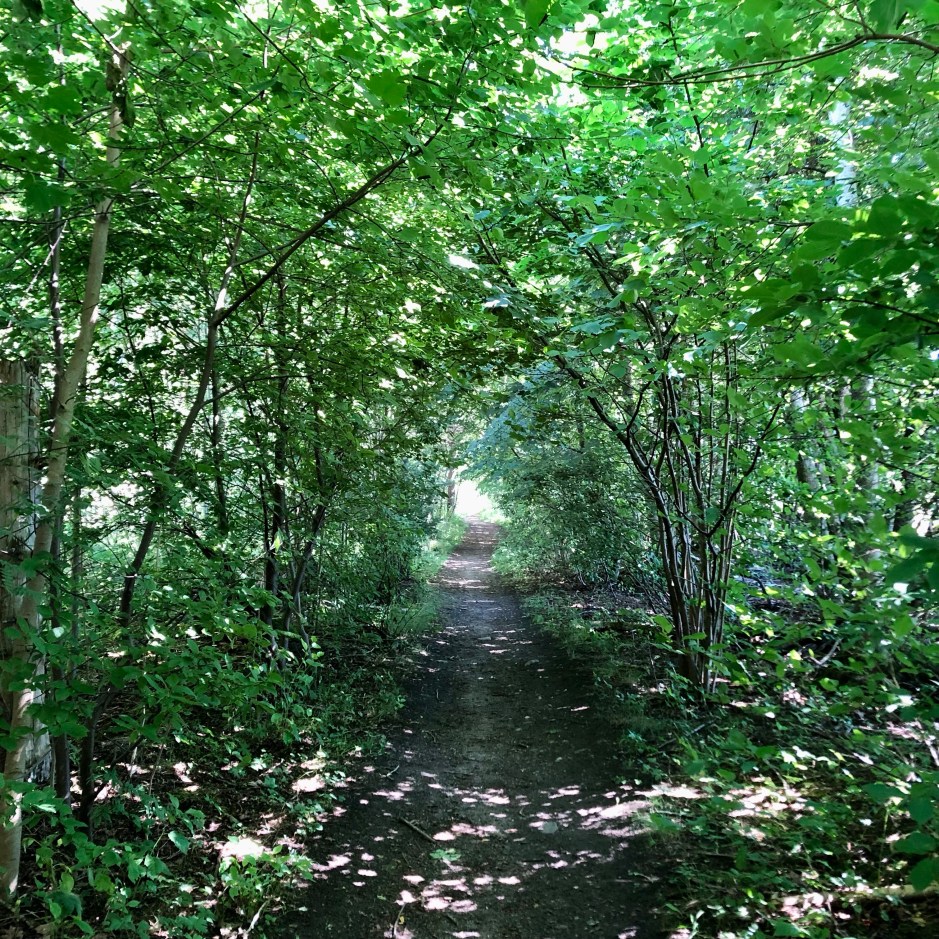
During a walk in the forest this week, I shared my thoughts with my husband and we agreed to refrain from talking about other people in a negative way. I don’t believe we are of the worst sort but we do often criticize how ‘people’ do this or don’t do that and get all worked up. It is mainly about people in general and very rarely about friends or people we know, but still. Why not spend our time together talking about something uplifting? Share dreams, make plans, be amazed by the good things, or even be quiet from time to time. 😁

My daughter sometimes shares with me how uncomfortable she feels when some of her friends talk poorly about each other behind their backs and my explanation is often that they must have low self-esteem and/or nothing more interesting to talk about…boom! Right back at me!

Humility is another word that has been dancing in my mind a lot lately. I need to remember to meet everyone with humility. Meet situations with humility as well. Humility can lead to curiosity and allow me to listen, and show understanding even if I don’t agree with what I see or hear.

Reflections about death and life

I think I have a rather anxious mind. I notice that I always find something to worry about. It is of course not on purpose, and I suspect that it is a way to ‘entertain’ my mind. Or a habit? Or both…

Anyhow, one of my rather constant worries is nature. I often think about how human activity affects the local natural environment. Maybe because I notice it more now than when I was younger.

During the Spring, I have learned to notice the amount of birds that come to nest in gardens, the city and by the sea. We now know that we should be mindful when walking on the shore not to come close to where the birds are not to stress them and/or step on their eggs.

I don’t know if it is my perception or if this year there are more bird chicks everywhere, and unfortunately, not all of them survive.

A couple of times in the beginning of the Summer, I came across a dead chick bird. First I felt sad, and I worried for their species. Then, I thought, ‘well, at least that bird is not suffering anymore’. In both cases, I had a long mental discussion about life and death.

Life is interesting, isn’t it? From the moment a being comes to life, it is certain that it will die, and in between, there will be some struggles. For animals, it is mainly a struggle to survive long enough to reproduce. And for us humans?

It seems like most of us would like to live a long life and we wish the same for others, especially those close to us. Death is something we dread, but why? Instinct?

What do we plan to do with a long life? How do we live it? In constant anxiety and worry? How much good do we make and how much harm? Where do we find our propose of being alive?

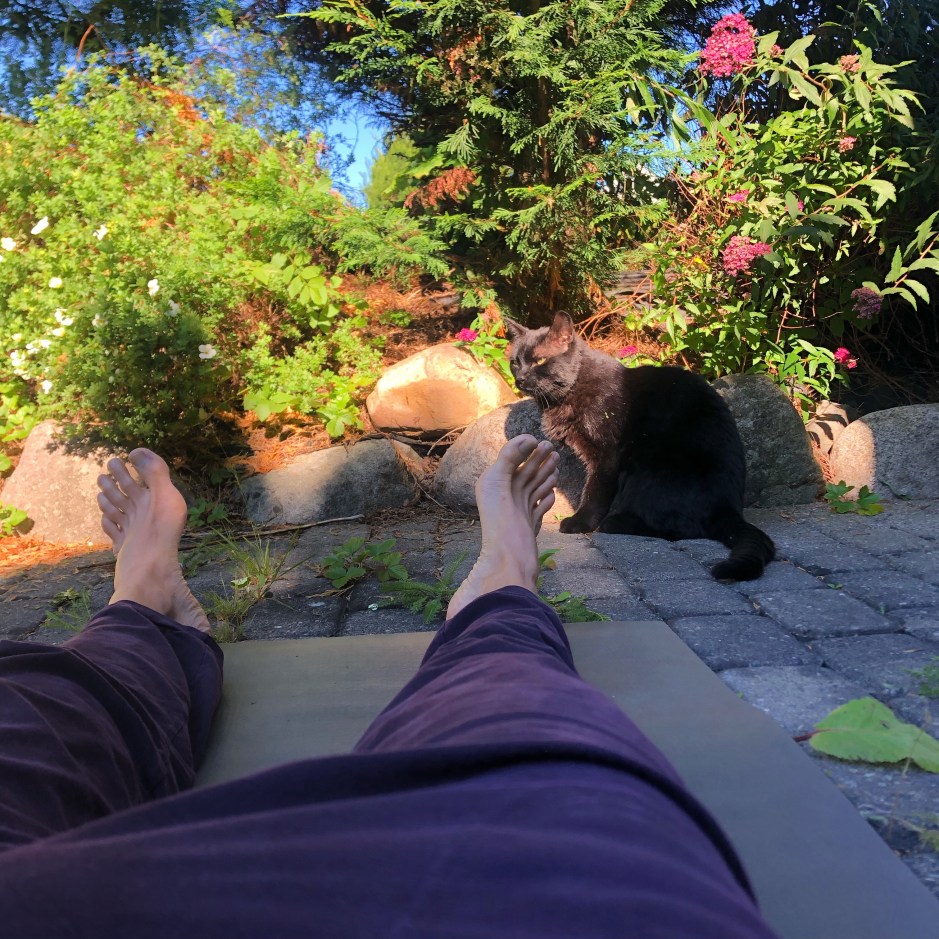
I like to observe our cat. She has a safe home and food. She spends a lot of time sleeping like all cats, but she also has what I see as her everyday chores. She protects her territory from the other cats in the neighborhood, she ‘talks’ to the magpies through the window and tries to hunt -oftentimes without luck to our big relief. I remember once thinking, why does she stress so much? She doesn’t need to hunt since we feed her, and the other cats have their own homes. But that is her instinct. That is probably what makes her life ‘purposeful’. She most probably doesn’t have the awareness to decide not to stress unnecessarily.

But we do. Still, we often choose to keep moving. Keep running. Either chasing something or escaping from something. Acting impulsively. Creating more suffering for ourselves and others.

Life seems like a mystery to me and I often wonder why we dread death so much when we spend so much time in pain whilst alive.

I believe in working with the aspects of my mind that add unnecessary and unfounded suffering to my life and those around me. I don’t know what the future will bring to me, I don’t know how long I will live, but maybe the most important for me is how I live.