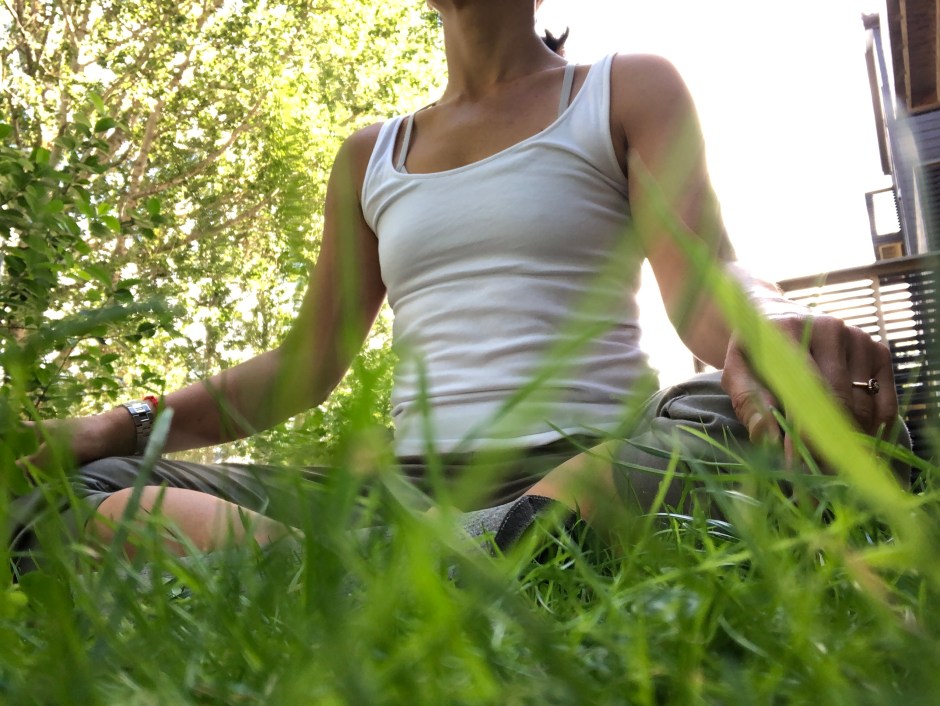
It hasn’t always been easy
Between you and I
At times, I have loathed you
Dissatisfied with your looks
Too short
Too small breasts
Too fat thighs
Curls when what I wanted
was straight hair
As I grow older however
I have learned to take better care of you
To know what makes you stronger
What helps you thrive
So I make better choices for you
Because you have carried me all my life
And I am over and over amazed
By what you are capable of
Your resilience
Your ability to adapt
To heal
I am sorry for all the times
I stood in front of the mirror
With a critical eye
Author: Vanessa
Stressed and demotivated teens
I have been working as a middle school teacher for over fifteen years now, and in the last four years, I have observed an increase in the number of students who struggle with motivation, stress, and depression. There are, of course, varied reasons for this, but there is one thing I have been thinking a lot about lately: lack of clarity. I am not an expert in teenage psychology, so I wonder to which extent, it is possible to lead teenagers to create their own clarity.
Clarity of mind is something that is difficult for everyone, and often, the lack of it can be the root of our stress. When we lack clarity, we run like headless chickens from one thing to another, everything is important, everything is our priority, and we end up stressed and exhausted. We are like this plastic bag being blown around depending on the wind. Therefore, it is often a good idea, when we feel overwhelmed with stress, to take the time to stop and get our priorities clear, know what we actually want, what our assets are, and decide our own direction.
Of course, as a teenager, it is not expected to have life figured out, but I think we should talk about clarity with kids and teenagers. The big challenge here, I think, is that we live in a society that often sends contradicting messages to kids and teenagers. On one hand, many parents give more freedom to kids to do what they want at home, we struggle to keep routines in place, and protect our kids as much as we can from unpleasant situations. On the other, there is this underlying expectation that kids and teenagers have to succeed at school and have one or more afterschool activities where they also should do their best.
I have very talented students who excel in other areas than schoolwork, that already have a passion, but that have very low self-esteem because they don’t get high grades at school, and no matter how much I talk with them, they won’t believe me when I tell them that they are great. They want to do perfectly everywhere, they are very afraid of making mistakes or failing, so they often give up before they even try.
How about sitting down with our teenagers and making a list of what they do and how much time they invest in it? Then make another list of goals, and our own expectations towards them, and try to merge these into a priority list? Maybe such a conversation can also help us create some clarity for ourselves of what is really important for our children to learn in life and which expectations we can let go of.
I also feel that often, we allow teenagers to make choices they are not ready to make. This is also some sort of clarity. Since there is no clear framework for them, they can get lost in bad habits. I can see that at home with our fifteen-year-old son. Until he was around fourteen, going on a hike or a skiing trip with the family during the weekends was an expectation, but since he turned fifteen, we stopped insisting. This has resulted in him doing much less physical activity now, and I am not comfortable with it. I think we made a mistake by not pushing him to at least one trip with the family a week. It might be annoying for him, but it won’t hurt him, and it will definitely be good for him to get out, get some fresh air, and do some exercise. Not to mention spending time with his family.
Getting enough sleep is also a challenge at home. We gave in for some time during the weekends and holidays, but we realized we needed to go back to having strict routines and sticking to them with our son…Writing this, I wonder if this is where part of the confusion is.
On one side, we are not teaching our kids and teenagers anymore the importance of having routines and taking care of themselves, and on the other, we keep telling them that they need to succeed in life by doing well at school and everything else they engage in but we are not giving them the tools to do so.
I also think that although it is good to listen to our children and teens and respect their opinions, we sometimes need to make some unpopular decisions for them that we know will benefit them in the longrun. This only teaches them that they are stronger than they beieve. I saw that with one of our daughters. She hadn’t been thriving at school since she was in fifth school, but she didn’t want to change shools and my husband and I didn’t want to push her, until last year. We finially decided that it would be good for her to change environment and meet new people. It was a bit tough to begin with, but she’s doing great and I think this was a boost in her self-esteem. Not only she managed to adapt to a new school, she even made new friends! Sometimes, our kids can’t find their clarity, and we as adults, need to find one for them.
Transferring skills
I love working with my hands. Ever since I was a kid, I think. The difference is that when I was little, and as a young adult, I had a fixed mindset when it comes to handcraft and art. I somehow believed that either you were born with the talent to do something or you didn’t so I didn’t explore much since I often felt that I wasn’t good enough.
In the last ten or fifteen years, however, I have learned to knit, sew and bake my own bread. Last summer, I started baking with sourdough, and it is by far my favorite way to bake bread. I love how, since I bake every single day, I am starting to ‘understand’ the dough. When it is ‘happy’, when I should let it rest, when it needs more water or more flour. In most handcrafts, with experience, one learns to feel the material one is working with, and how to make the best out of it. It is the same when I sew using old garments. It is a process of exploring the fabric, the shape the garment already has, and figuring out, what is the best way to approach the task. What can this become?
I was talking with a friend about it this week. She’s a great painter, and she was telling me that the work I have been doing on living a more mindful life most probably is benefiting my handcraft skills. Maybe. I have a more relaxed approach to what I make. If it doesn’t work, I will learn something and try again. I do spend time observing and feeling in between my fingers and deciding how is the best way to continue. I am not an excellent seamstress… yet, nor a knitter … yet, and I am still experimenting with my bread, but all these activities bring me calmness and joy, and a feeling of achievement
So I told my friend I wished I had the same feeling when it comes to human interactions. Especially in my role as a teacher. The biggest challenge with human interactions to me is that we talk, and things go way too fast. I have developed the skill to see people and understand their needs, but communication is still tough. I find myself often being misunderstood or wanting to say something and then something else comes out of my mouth. Maybe I don’t have as much patience with people as I have with my dough, and I want to develop it. Maybe, I need to get past the words to feel the other person and myself and act more skillfully. Maybe, just like with any handcrafted project, I need to know when to put it down for a while to let ideas come to me.
This week, as I was about to start a yoga class, this quote popped up on my phone screen when I was searching for soothing music:
“Look past your thoughts, so you may drink the pure nectar of this moment” – Rumi
This is also what we do in yoga, we try to get past our thoughts to be with what is knowing that our deeper self (if I can call it like that) is the same as any other living being’s deeper self. If we manage this, we certainly ‘drink the pure nectar of this moment’.
A little theory of mine
On my way home on Friday, I heard on a French radio station a program about the increasing use of laughing gas among teenagers all the way down to 14 years old and its consequences. It reminded me that not so long ago, I read in the newspaper that in certain cities in Norway, the use of cocaine and hash has become as common as alcohol among high school students. A friend of mine back in Mexico told me recently that the use of drugs among teenagers has increased in the last few years too.
I can’t help but wonder if this is not partly a result of the way my generation is bringing up our kids in what we call the “Western world”. One thing that I think kids in France, Norway, and among the middle and upper classes in Mexico have in common is easy access to what brings sensory pleasure.
We can start with food. Many kids nowadays can eat sweets and drink sugary drinks daily if they want to. What in some cultures used to be limited to special occasions or at least the weekends, has become part of everyday life. Whenever a kid feels the need to be rewarded somehow, they can do it through the sense of taste.
Another way to get an immediate reward is by buying things. It is enough for a kid to express their wish for something to get it almost right away. It can be toys at a young age, clothes, makeup, and devices. What used to be left for birthdays and Christmas, is now part of everyday life. So, when special occasions come, we tend to give more than our kids need.
Lastly, we have the immediate reward electric devices give. Either through social media or gaming.
So, my theory is that we have created a generation of pleasure seekers. Kids nowadays are used to satisfying their senses almost constantly. It is not enough to go for a holiday by the beach, there is the pressure to make it exciting for the kids. So we book activities, or rent or buy equipment so the kids do not get “bored”.
As we all know, the more we get, the more we want. There is always something more exciting to experience, something bigger, better, or tastier.
Added to this is our well-intentioned need to protect our kids. Whenever they experience something unpleasant, especially socially, we intervene. We solve the problem for them. We remove them from the situation. We demand others to solve our kid’s problems. Leaving them incapable of dealing with disappointment, sadness, or pain. We do this to protect them, but we forget that the muscle of resilience needs to be trained.
My point here is not to criticize. I belong to this generation and I have observed in myself and my husband many of the behaviors I describe here, and I wonder if we are not doing more harm than good in some cases. Wouldn’t our kids benefit from having to strive a bit more to get what they want? Wouldn’t they benefit from learning to live simple lives? Wouldn’t they benefit from learning to be satisfied inside out instead of believing that the world around them owes them and that their happiness is in how much they get and how much they experience? Wouldn’t they grow for experiencing difficult situations and getting through them?
I know that the curiosity to drink alcohol and use drugs is not new. I know that the problem of substance abuse can have many reasons, but I wonder if the unlimited and often unconscious access to sensory pleasure is not also contributing to this tendency.
It is great that we have enough to give our kids everything they need and more, but maybe we sometimes need to stop and wonder where happiness really comes from.
Body image vs healthy body
I have joined a clothing redesign course this Spring. I went to the first session this week, together with five other women and our teacher. The goal of the course is to acquire some basic knowledge about different kinds of fabrics, how they are produced, and the impact they have on the environment as well as to acquire basic skills to adjust or recycle garments to create something new.
As we set to work on our garments, I noticed that most of the other women in the course, at some point, made negative comments about their bodies. Mostly because they felt they ‘needed’ to lose some weight. I was surprised by this since most of the women in the course are either my age or older. Beautiful women, all different with different backgrounds, professions, and skills. I couldn’t help but feel sad, that still at our age, women struggle to accept their bodies and the conversations often lead to the ‘need’ to go on a diet.
Coincidentally, my youngest daughter (12 years), told me this week that she wants to start taking better care of her body. I did my first diet when I was around 14 years old, and from there, I spent most of my teenage years feeling bad about my body and trying different ways to lose weight. When I first came to Europe, I was 160cm tall and weighing 45 kilos, and I still felt that I was fat. Besides the unnecessary pressure I put on my body during those years, I regret having spent so much energy and time worrying about how I looked instead of enjoying my years in high school. Therefore, I want to do what I can to help my daughters (and son) develop a healthy relationship with their bodies. So my youngest and I engaged in a conversation about what is a healthy body instead of what is a nice body. Is being slim the same as being fit? Why do I eat like I do? How can my daughter create good habits? Why should she?
As an adult, and after many years of loathing my body, I have come to some sort of stability. It always makes me laugh when people comment on my body and tell me that I am so slim. Often insinuating that that is just how I am. If they only knew how many years I spent going up and down in weight. What I have learned during these years of struggle is:
- To accept my body as it is with it’s strengths and weaknesses and treat it accordingly. Work with it and not against it.
- Phisical activity doesn’t need to be synonym with running a marathon, joining a gym or sweating for two hours each day. Any phisical activity is better than none. It is all about creating habits. I use each given opportunity to move: take the stairs, walk or ride my bike to work, choose a bus stop that is a ten or fifteen minutes walk from my home/destination, go for a short run when I have time. Maybe most importantly, find ways to move that are simple and make me happy, and try to move away from the presure of moving to change your body. Move more and see how your body and mind benefit from it. Energy levels incereas, sleep quality improves, and the mind can also feel lighter. One constant in my life is my asana practice. It is very rare that one day passes by without me doing at least 10 minutes of asana. I have learned to listen to my body and move accordingly. I have also learned to balance between poses and movements for strength and those for flexibility. I keep my practice very simple. I see it as maintenance work to stay in contact with my body, and keep it stable and mobile at the same time.
- Have a conscious relationship with food. Choose more of the food that makes me feel good throughout the day, and less of the food that gives me immediate pleasure but empty calories. I know that a diet rich in fiber, fruits, nuts and vegetables is what my body likes, so I eat accordingly, but I do not deprive myself of anything. I just try to control my impulse to indulge. If I have a piece of chocolate with my evening tea, I do not eat in addition a brownie before I go to bed. I try to find a balance. Since I love good food, I do not put just anything in my mouth to fill my belly or my emotional void. I make conscious choices, but I try to be flexible and whenever I get out of balance, I just tell myself, “tomorrow, I’ll make better choices”, and I do.
- Avoid throwing myself at every single new advice from “experts”. I do enquirer a bit and like to read and listen to different views when it comes to diet and exercise, but I have stoped believing that there is one miracle diet out there. The best is to listen to my body and stick to habits that are sustainable for my lifestyle.
If you have kids, try to have open conversations about habits and explore what is good for a healthy body and mind. If you struggle with your own self-image, start by being kind with yourself. Be thankful for your body that allows you to take part in life, praise it for its strengths and have realistic goals to work on its weaknesses. Think more about health and life quality than the set of esthetic standards from society.