
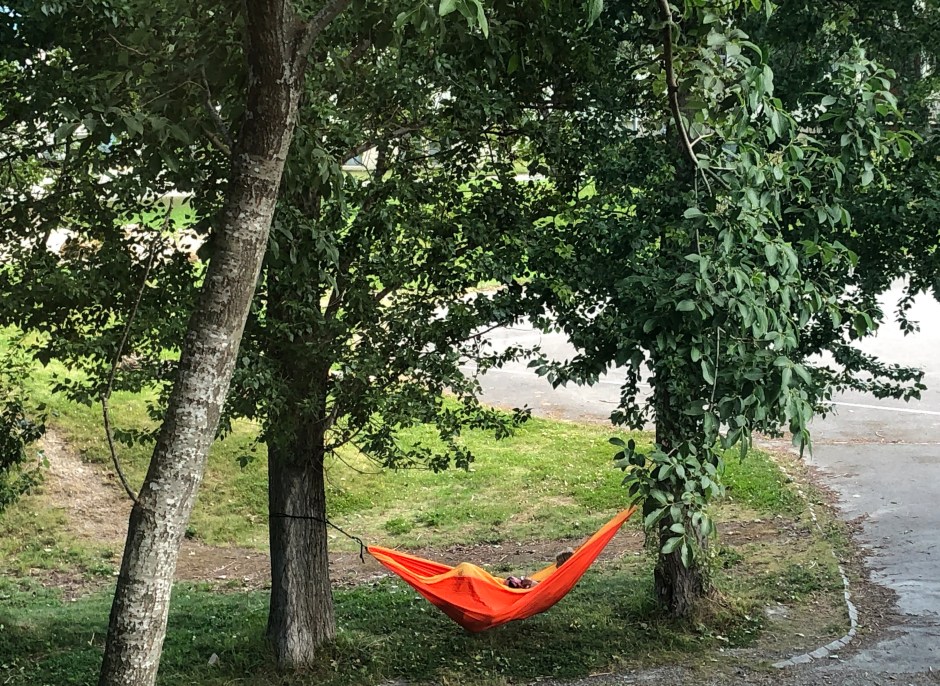
You CAN make time for yourself

Lately, I have been thinking a lot about the concept of balance between responsibilities towards the outer world and towards myself. It seems like, a lot of people struggle to find this balance. I know that I am constantly trying to find the right balance between responsibilities and myself. Sometimes, I am good at it, sometimes my responsibilities take over, sometimes I exaggerate on what I want for me. I have come up with some points with suggestions that might help you if you feel that you aren’t good at balancing between you and the rest of the world.

  1. Make choices with a clear mind and try to be at peace with what they bring by accepting, adapting and letting go of what you can let go of. One example is motherhood. I wanted to have kids but I didn’t know what I was signing up for until, in the lapse of three years, I was suddenly standing there with three kids aged 0, 1 and a half, and 3 years old. It was hectic, it was tiring, and it was amazing at the same time. We didn’t plan to have them so close to each other, but we were actually told we couldn’t have children in the first place, so we were happy to prove the doctors wrong. Having three young kids meant that we had to think differently, at least for some time. The main focus became to take care of and enjoy them as much as we could. I am not saying that this should be everybody’s main focus in life, but I do believe we need to be clear about our priorities so we don’t get overwhelmed. I stayed home for five years from the day our oldest was born and until our youngest was two to avoid the stress for us and for the kids of everyday life. This meant less income, and therefore we had to change our lifestyle. This meant balance for us back then. But I do remember that in several occasions, I had to remind myself of the choices we had made and their consequences. I remember so well the year we decided to sell our apartment to buy a house. It was the same year I went back to work . I dreamed of a big house which we obviously couldn’t afford because of our reduced income the last five years. I was frustrated, and I was angry at ourselves for some days until I reminded myself why we had made the choices we had made and what they had meant for us and the kids.
  2. Be brutally honest with yourself: the world will not go under without you, especially if you are only taking two minutes to drink water. You think I’m exaggerating? I’m not! Some years ago, I read an article about an American mum of three that had to be hospitalised because she forgot to eat and drink during two days because she was too busy taking care of her kids. This is, of course, an extreme case, but I know by own experience that I believe I need to do everything around the house so my family can thrive. The truth is that they enjoy the freedom of being left to their own devices from time to time, and most of the time, I am the one putting pressure on myself. This applies to work, extended family and friends too. It is not possible to be at my 100% all the time everywhere.
  3. Ask yourself, what is the priority now? And let me drop a bomb on you, you can’t prioritise everything if you don’t want to end up exhausted. I have (or hopefully I can say ‘I have had’…) fixed ideas of how my house should look like, so for some strange reason, I have always had the habit of tidying up before I leave the house. Maybe for the mice to have a cosy time while we’re away? I clean the kitchen, I arrange the pillows on the couch, take dirty clothes to the washing room, make beds, open curtains, and if I have time, clean the bathroom sink and mirror and sweep the floor under the dining table and in the kitchen… All this until this summer. When I’m alone with the kids during the summer, I plan some sort of outing with them everyday but since we all like taking it easy in the morning, I spend a good amount of time doing things that I enjoy and I allow my kids to do the same. We then eat breakfast fairly late so if we want to get somewhere, we need to be efficient after breakfast. This means leaving the house in what I see as a mess. It is a good compromise with myself in order to be able to spend time doing something that I enjoy, that gives me energy and that gives me the feeling that this is my vacation too. I would lie if I said that the outings with my kids are some sort of sacrifice, but it is slightly different because I am ‘on duty’ then. The aim is to have a good time, but the focus is them.
  4. Make your well-being a priority above all priorities. If you aren’t doing well, if you are ill, or if you are struggling in any way, you need to take care of yourself first. Actually, I believe you need to take care of yourself no matter what, but especially when you’re not doing well. A very important thing in this point is that you need to be very honest about what is good for your well-being. You might need more physical activity and a walk would benefit you more than going on social media before bedtime, or you might need to spend some time in silence for your peace of mind instead of going to a party. I remember some years ago, a friend of mine was having problems in her marriage. The good news was that she and her husband agreed on what the source of their struggles was, the bad news was that none of them knew how to get out of the hole. When I asked if they had considered therapy, she said yes, but that they didn’t have time for it. What can be more important at that moment in their life than saving their marriage? I hear things like this all the time. A friend that is stressed and would benefit from doing some sort of physical activity, but she ‘doesn’t have time for it’. A friend that has a pain somewhere but he never takes the time to find a good doctor. I don’t know why we do this. For some, it might be cultural. You feel that you are selfish when you let go of some obligations in order to do something good for you. For some it might be frightening to take care of themselves. Others might have become consciously or unconsciously accustomed to the role of victim and can’t get out of it. Whatever your reason is, try to find it, don’t judge yourself, and change this negative pattern of thinking.
  5. Organise your time. It might be a good exercise to spend some days, at the end of your day, writing down everything you did that day. Not in detail, but for example: waking up at 7am and describe your morning routine: breakfast, shower… Work from 8 to 4:30, lunch from 11:30 to 12, what you did after work, what you did during the evening. Do it for at least three days, and look for things you spend time on that are not your priority, that are stealing your time and you can let go of, that you do but could ask someone else to do, that you do and don’t even know why, etc. This will allow you to make some time for yourself. For example: instead of going to bed at 12 because you were watching a TV show, go to bed at 11 so you can wake up earlier to go for a short walk before your morning routine, or meditate, or read, or whatever you know would help you feel better. If you are not a morning person, use your evenings instead. Talk with people around you to support you. You need to be systematic and disciplined to manage this, but you also need to show yourself compassion when you skip out. Try to set yourself small goals instead of big goals. For example, if you want to start running, start with 15-20 minutes two or three times a week instead of dreaming of running for “at least” half an hour five days a week. When life is very hectic at home, I sometimes eat lunch while working, and then take a 10 minute pause to meditate, or to go for a short walk. This really helps me rebalance. But it requires some planning, some discipline and the mindset of doing something good for me is not selfish.

I hope this helps.

Bikes, Cars and Karma Yoga

Our car broke down some weeks ago, and we decided to try out a life without a car for some time. This means that we are using our feet, our bikes and the public transportation more often than before, and we occasionally rent a car from a car collective we’ve joined.

This is possible because we live in a city where the infrastructure for pedestrians is very good, public transportation is quite efficient, and lately, the authorities have been investing a lot in improving the bike lanes.

However, almost every day, I observe distracted car drivers creating dangerous situations for themselves, pedestrians and cyclists. Needless to say, this really scares me when I’m biking with my kids even though I keep drilling them about predicting possible tricky places where a car can suddenly appear.

Today, I was riding my bike alone so I was going a bit faster than when I am with my kids, when I started approaching a gateway. Luckily for me, I instinctively started slowing down because from behind came a car, and without using his blinkers, it turned just in front of me. I had to stop abruptly, and almost fell off the bike, and the driver never saw me. I wasn’t angry, but this isn’t the first time this happens to me in the last few weeks, and I really considered going in to talk with him but I decided to let it go because I didn’t want to end up in a conflict. I still don’t fully trust myself not to get angry.

I think the key word here is distracted mind. I have been there too as a car driver. Driving my car in a hurry, or with a million things in my head, or trying to find something in my purse on the passenger seat, or all the three above plus more. The more I reflected about it, the more I was making connections with some of the principles of Karma yoga.

We all play different roles throughout the day and in this particular story, the man was the driver. According to Karma yoga, each role has its dharma, it’s nature and purpose. So, let’s say that the dharma of a car driver is to get from A to B, but not only that. According to Karma yoga, he should play this role in a skilful way, and my interpretation of this in this story is basically to find the most effective way to get where he needs to go, get there on time, and stay safe. That, in my head is the dharma of a car driver. The problem is, most of the things we do, most of the roles we play, we don’t really pay attention to them. Maybe because we do so much…too much? Our minds are distracted. Maybe, if we started paying more attention to what we do, and ask ourselves what the purpose of it is, how our different attitudes and actions affect the role we play and those involved, we would avoid scary situations in traffic, or conflicts with people we cross throughout the day.

If, when I decide to sit in my car (when I had one), I spend ten seconds to remind myself of my dharma in that moment: get to where I need to go in an efficient way and stay safe. I might then avoid distractions, drive slower, show consideration to other drivers, pedestrians and cyclists. What if I’m in a hurry because I left home later than I should? I then have to remind myself that rushing, not stopping at intersections, driving on red lights is selfish and does not fulfil my dharma as a car driver.

This is what I love about the teachings of the Gita, it is all so practical! It is all intended to help us live a more skilful life and thus be more peaceful and influence our surroundings in a positive way. Lately, I try this quite often, sometimes to play with my mind, sometimes to come out of challenging situations. I stop and ask myself, what is my role right now? How is the skilful way to play this role without attaching to my ego? I sincerely believe that if we all did this, we would be less stressed.

One thing did come to my mind though, when this man sat in his car, he “became” a car driver, that was his role then, but it doesn’t mean that he stopped being a father, or a husband, or a son, or an employee/employer. Maybe, one or several of his roles was one of the reasons why he was distracted. Maybe he was worried about something, maybe he was rushing because there was some sort of emergency. So, yes, we are constantly juggling all the roles we have, but when all these roles keep us in a state of constant distracted minds, we need to take a step back and reflect on what we are doing and why we are doing it. It might be time to reconsider our priorities. But that, is subject for another post. 😉

Parenting reflections

I am a mum of three. Needless to say, all three are quite different, so part of my job as a parent is to figure out ways to guide them through life respecting their personality at the same time as I try to teach them the values and attitudes I believe are important in life. That is partly tricky, isn’t it? I get to choose the values and attitudes that I think are important for them. That is why, in this role, I feel that I have to be constantly observing and reflecting and adjusting , at the same time as I have to believe in my instincts, otherwise, both my children and I would be lost in space.

Some days after the summer break had started, I had to take one of those pauses to reflect as I started noticing that I was constantly ending up in quarrels with my youngest daughter about almost anything and everything and nothing at all. My youngest is the one that challenges me the most, and it is most probably because she is so herself. She is pickier than the other two with food, she can often be quite dissatisfied with what I perceive as trivialities, situations with her friends, siblings and us parents turn often into drama, and what challenges me the most is that it is not very easy to have what I perceive as a ‘reasonable’ conversation about all these issues with her. Situations often start with me being very patient, trying to explain, she getting more and more frustrated and either start crying or answer back, to me then loosing my cool and getting all stern and teacherly.

Obviously, my way of approaching challenging situations with her is not working . I do think that my job as her mum is to point out the attitudes that won’t help her in life and encourage her to change them, but the way I do it is not working. If you have been reading my blog, you know by now that I am a student of yoga, so I use what I learn in all possible situations. Reflecting on my daughter and our challenging interactions, here are some points:

I don’t always agree with my daughter’s attitude and/or actions, but judging her won’t help me guide her appropriately. Labelling her, even if it is only in my head, as immature, picky, drama queen, or other is a waste of energy and time. She behaves in ways that don’t always help her or that sometimes create unpleasant moments at school and at home, but it is part of her learning process. When I bring my judgement to the situation, I just add negative emotion to it.

In my studies of the Bhagavad Gita, I have been trying to understand two concepts: swa-dharma and swa-bhava (2:31, 3:35, 18:47). From what I understand, swa-bhava could be translated as each person’s inner nature composed by aptitudes and attitudes, and swa-dharma is each person’s personal duty or purpose in life and it is directly connected to swa-bhava. It is taking for me some time to fully understand these two concepts, but I think that they mean that according to our attitudes and aptitudes, we bring a specific “flavour” to the roles we play in life.

I believe this concepts are taught in the Karma yoga tradition for self-reflection of our role in life, but I think that reflecting in swa-bhava as a mum can be useful too. If I stop and observe my daughter, I can see that she is active, she is social, she is caring and somewhat insecure. She needs a lot of love and attention and can be quite impulsive. I am trying now to keep these and other of her character traits in mind when challenging situations arise, and avoid trying to push her to think like I do and get all frustrated when she doesn’t. I have an example. I want all my three kids to get into the habit of reading. They sometimes read, but it is definitely not an activity they choose above others. We take regular trips to the library, and they always read there, but they don’t always want to bring a book home. The other day, we went into a book store, and I agreed to buy between one and two books to each one of them (they were on sale). She picked four, and I reminded her of my “rule” but she wasn’t satisfied with this rule (of course not). I looked at the books she had chosen and asked if she thought we could find some of them at the public library to borrow. She agreed to leave one, but still wanted three. Since her sister had only found one that she really wanted to read, I agreed to buy the three of them as I know they all end up sharing books. Until then, everything was ok but then, the weirdest (or what I think is the weirdest) thing happened. As I was standing in line to pay for the books, she looked more and more unsatisfied. After I had payed, I asked her, what what was going on? Was it because of the fourth book? I suggested we walk to the library and borrow it, but for my big surprise, she was thinking about something else. She was sulking because her sister had gotten a new bike this summer and not her, and because she wanted a new lock for her bike and she didn’t get one. In addition, her sister keeps borrowing her toys forgetting to return them to her room… To be honest, the first label that came to my mind is “ungrateful”, but I know that spitting out this word, would only make it worse. So, what is my role here? Well, in the old yogic thinking, I think that my role was just to point out how we can, at any situation, focus on what is wrong or choose to focus on what is good. I didn’t get angry, but I just said that I could see how the joy of getting three new books was overshadowed by the thought of not having a new bicycle. She had made that choice, and I could understand her frustration of wanting something new, but I would like her to consider whether she needed it or not. Sometimes we want something that we really don’t need. I told her that I love her, and that I wasn’t angry, and I stopped talking. I don’t know if this made any impact on her, but at least I didn’t get all worked up because of her “ungratefulness”. I just pointed out what I observed can be a bad pattern for herself, and let it marinate in her head. That is my role, I believe.

I must confess that I don’t always know how to react to certain behaviours from my kids but I believe my role in their life is to empower them as they are and maybe help them see the attitudes and behaviours that stand in the way for their thriving, but not to try to make them fit into my box of ideas. It is actually fun to try to be more observant of their different personalities and find ways to harmonise with them instead of keep hitting the wall with my old patterns of behaviour towards them.

I know for example that my son is easily scared when it comes to illnesses and injuries. The other day, we went to this trampoline park and my son was trying a new trick. I was playing with the other two when he suddenly came running towards us with his eyes wide open and fell on the floor beside me. It looked like he couldn’t breathe and I could see he was scared, but we wasn’t pale or blue (as if he wasn’t really breathing). I have to say that the floor disappeared for a moment under my feet and I felt a bit dizzy, but I very fast realised that it wouldn’t help him if I panicked. So I took a deep breath, and asked him to do the same. I asked him to look at me and tell me what he was feeling, but he was unable to respond. So I just continued talking to him as calmly as I could. It turns out, it wasn’t anything serious, but he had fallen hard on his back and experienced a sharp pain in his chest and was afraid he had broken his neck . My role in that moment was to stay calm for him, to try to calm him down. I think my role was to balance the situation by not to making him feel bad because of his reaction but not to scaring him more by over reacting. After a little while, his sisters went back to jumping around and having fun while my son and I sat and chat. When we finally were on our way back home, I did bring up what I observed and said that he has a tendency to let fear take over. I said that it is ok, and I am happy I was there to help him through it, but that he needs to gradually work with it, so fear doesn’t take over when he needs to stay calm. I did say that I was maybe as scared as he was, but I knew I had to stay calm to help him calm down, and that it has required a lot of practice and effort from me manage to do so.

It is curious to think how different we all at the same time as how alike we all are. We go around with different attitudes and aptitudes, different perceptions, different patterns of behaviour, but in the end, we all want the same. We want to be seen, we want to be appreciated and we want to feel safe and free. I think, some of us need more of one or another, but we all need all of them.

I think that we do ourselves and the people around us a favour by acknowledging that we all have different personalities and try to work around them instead of getting all frustrated because we don’t act and react the same way. I think that the idea of learning about swa-bhava is merely to encourage us to get to know ourselves well so we know how we act and react at all times, but also to help us decide where we need to make some adjustments to live a more skilful and peaceful life. We all know that we cannot change others but we can try to understand others better, and when it comes to our kids, we do have the opportunity to at least help them see which aspects of their personality aren’t helping them, but at the end of the day, it will be their choice to change them or not.

Unfortunately (or maybe fortunately?), there is no perfect parent, but we can at least be conscious parents by being clear about what our role in the life of our kids is (and this clarity is different from parent to parent) and try to act accordingly. I have many fears related to this huge role, probably the most important role I have in life, but I can’t let my fears dominate me, right? So I learn as I go, and in the meantime, I hope I don’t make too much damage.

Every year, I set myself as a goal, to let the overflow of energy during the summer break help me correct some of the useless patterns of attitudes and behaviours I have towards my kids. It does help, but I need to keep reminding myself, and when I’m tired, it is very easy to fall back to the old again. So another lesson to learn? Make sure to rest enough and have enough energy everyday to be a good version of myself when I am with them.

Coffee or early morning yoga practice? The dilemmas of a mum on vacation and my understanding of the idea of pleasure in the Bhagavad Gita.

“Al que madruga, Dios lo ayuda”, we say in Spanish. Basically, if you wake up early, you get a helping hand from God. For me this means that if you put all your effort towards your goals, you’ll get some help from the Universe. I thought of this recently while debating with myself on whether get out of bed and do my daily yoga practice or stay a bit longer in bed and then enjoy a cup of coffee on the couch.

I don’t always feel like getting out of bed early to do my asana and sadhana, especially when on vacation, but I know what a difference it makes in my day. Asana helps me get the energy in my body moving so I feel less lethargic and more motivated. Sadhana helps me cultivate a calmer clearer mind. Yesterday, I even got what feels like the only rays of sunlight available in days before it continued raining… the whole day…

This reminded me that it is important to keep on doing things that benefit me longterm even though it is not always things I want to do. When on vacation, a good cup of coffee while sitting on the couch is often more appealing than following the discipline of sitting in silence followed by yoga asana. The coffee on the couch requires less effort, but I know the benefits from keeping up with my practice so, most of the time (but not always), this argument wins over the pleasure of not doing anything.

I have been reflecting lately a lot about the principles I am studying while reading the Gita. Krisna is constantly advising Arjuna to cultivate a steady mind through, among other things, refraining from seeking pleasure and personal rewards through his actions. This is part of what is called Karma Yoga. I must confess that it has taken some time to understand the sense of this. It is not dogma. It is not because it is a “sin” in the way we understand the word in the Christian tradition. Seeking pleasure in the sensory world is normal because it makes us feel good, but it is not something that will bring us lasting peace of mind and happiness.

Sometimes, we believe we do something “good” for ourselves by giving in to indulgences. We even find some good explanations like feeling restless, stressed, sad, tired or bored, just to mention some. Yoga is not encouraging us to live an ascetic life, but it warns us from fooling ourselves to believe that sensory pleasures will bring lasting peace of mind and contentment.

Giving in to indulgences, especially when we loose control, can often end up on making us feel even worse than before. I have experienced to sit down for a cup of coffee with a chocolate square after dinner, and then have one square more, and one more “because it was a busy day at work” or whatever, and then end up eating the whole tablet. After the first feeling of pleasure, I feel almost nauseous and have bad conscience for not stopping after one or two squares. So the pleasure turn into a moment of discomfort.

Or sometimes I get so attached that I believe I can’t be happy without them. Because sensory pleasures have only a short lasting effect on us, we tend to seek them over and over again. Or we move from one to the next one, to the next one never being completely satisfied. It has happened (and still happens more often than not) with social media. I am tired, I know I would benefit from a good and long night sleep, but I check my mobile “one last time”. After verifying there are no important messages, I then pay a visit to Instagram, and I just keep scrolling , and then Facebook, scroll, scroll, scroll and before I know it, I will only get six hours sleep, again! What good did I get from it? Just instant reward of the senses. I’m not even sure what kind of reward though.

We are so lucky to live in abundance on this side of the world, most of us have all our basic needs covered, and we can have almost anything what we want. Still, most of us aren’t quite satisfied. We are running from one thing to another, we are tired, we are stressed. Often, because we want to make enough money to get more things, to experience more, to keep going, and we keep the circle going.

Yoga encourages us to work on building a sense of inner okayness called contentment which is independent of external influences. This requires practice and patience. Practice in the form of sadhana but also practice in every moment of our day by keeping certain principles in mind. Patience because the feeling of okayness is not going to come right away, finding pleasure in a quiet mind is not as straight forward as enjoying a chocolate, but the more we practice, the more we see the results, and these results are more stable and long lasting than the enjoyment of a chocolate.

The idea is not to stop eating chocolate or enjoying my cup of coffee in the morning, but to keep in mind that these are temporary pleasures, and the more I get, the more I want. So I need to create a very conscious approach to them. If I get my coffee, great! I enjoy it. If not, well, I can drink tea or water (haha). But first and foremost, avoid allowing the cup of coffee coming in the way for my more fruitful and balancing practice of yoga that brings more longterm effects.

At the end of the day, it all falls back to the same: I and only I am responsible of my own well-being, and I have to be very clear about what brings real well-being and what brings temporary well-being. This doesn’t mean that enjoying the pleasures of life is wrong. But if what I want is real contentment, real peace of mind, I might have to give up certain pleasures in life to work hard on a more longterm and lasting goal. It is said that those that have understood this principle enjoy the world more than anyone else precisely because they know very well the difference between temporary pleasures of the external world and the steady and balanced contentment of the self-cultivated inner peace.

Ultimately, when we read verses like this

One whose mind remains undisturbed amidst misery, who does not crave for pleasure, and who is free from attachment, fear, and anger, is called a sage of steady wisdom. (Bhagavad Gita Ch2 v56).

It is not because otherwise some superpower will punish us. It is because any of these states of mind only create distress and is needless for someone that is trying to cultivate a steady mind.

The whole art in here, is to find the right balance, and that is a constant work in progress. In the meantime, after I publish this post, I will reward myself with a good cup of coffee ;)… if I have any left.

Silence. How and Why.

Please note that meditation and silence are not advisable if you are under extreme mental stress or emotional distress.

[…] Those with agitated, uncontrolled minds cannot even guess that the Atma is present here within. Without quietness, where is meditation? Without meditation, where is peace? Without peace, where is happiness? Bhagavad Gita 2:66

Cultivating silence is gradually becoming part of my yoga practice. It can be for a short period of time like some hours during a day, or in the form of one to several days retreat where I spend time on my own.

The way I see it, spending time in silence is like an extension of my daily sadhana which is basically doing simple breathing exercises for ten minutes, and sitting in silence between 10 and 20 minutes. I sometimes write for fifteen minutes instead and sit in silence for five minutes. The purpose of sadhana is to get into the habit of calming the mind, and the more I practice the easier it becomes to keep a calmer mind in my everyday life. This doesn’t mean that when I sit, I don’t think. More often than not, I engage in planning, evaluating, analysing, ruminating, etc., but when I notice that I’m engaging in my thoughts, I slowly and gently let the thought go and focus my attention on my breath.

Why cultivate silence? I have noticed, since the very first time I was in a silent retreat with my teacher Prasad Rangnekar, that when I go into silence, my body starts slowing down and this has an effect in my nervous system reducing stress. When in silence, I am also able to observe my thoughts easier. It is very useful to know what is occupying my mind and work with it either practically by making some adjustments in my life, or by letting go of thoughts that don’t serve me and only create internal noise or even distress.

Most of us live quite busy lives with work, family and other obligations. This keeps our mind going on all the time. Then, when we have some spare time, what most of us do is to “relax” by going into our phones, reading a book, watching TV, meeting friends, etc. None of these activities are bad but they do not allow our mind to relax completely.

In the yoga practice, it is known that a relaxed mind is a clear mind. Cultivating a calm mind is the means of the yoga practitioner towards self-realisation. Seen it in a more practical way, when we take time to quiet the mind, to observe our thoughts and emotions, we gradually get a better understanding of how we function, and we are able to make adjustments to our patterns of thought and behaviour. Thus we live a more skilful and harmonious life following our real priorities and not making decisions by impulse or because everybody is doing the same.

Going into silence can sometimes be unpleasant because as we finally slow down we might be confronted to difficult thoughts and/or emotions that we have been pushing away in our business. It is important in this cases to receive these thoughts/emotions with an open heart, with a calm attitude, observe them and not try to push them away again or run away from them. It is also important not to engage with them either. This means that we allow them to come, but refrain from analysing, justifying and/or judging them or ourself for having them. When we try to cultivate stillness, we avoid solving problems, otherwise, we are engaged again in too much mental activity. This said, I have experienced that after a period of silence, solutions to problems come almost by themselves precisely because my mind becomes clearer.

There are different ways to cultivate silence, one doesn’t necessarily need to go hide in a cave. The simplest one is, as mentioned at the start of this post, to create the habit of sitting down in a calm place for some minutes and do nothing other than breathing slowly and deeply. When you notice you’re engaged in thinking, gently let the thought go, and go back to your breath. It doesn’t need to be for a long period of time. You can start with two or three minutes and as you get used to it, increase the time.

Another way of cultivating silence is by being aware of all the sometimes unnecessary noise we bring into our life. Maybe next time you sit on the couch to catch your breath after a busy day, you just do that, sit and observe what happens with your mind. Or whenever you are doing some chores where you usually would turn on the radio, turn on the TV, listen to a podcast, be completely present with what you do instead.

I had the habit of listening to music when going for a walk or a run. I still sometimes do, but I often chose not to, so I can try to be in silence. This one is very challenging because I always end up engaging in some mental activity, mainly planning ahead. But I’m working with it. Whenever I notice I’m again mentally “busy”, I try to let go.

And there are, of course, the retreats. If possible, leave for a place where it is calm or create that calm space at home. Decide how long you want to be in silence. Maybe it is a good idea to start slowly, with one day, and increase as you feel more comfortable with it. Tell those around you that you want to be in silence, so you don’t need to worry about feeling that you are rude. Slow down, try not to make much eye contact with those around you. Don’t talk. No reading, no music, no radio, no phone. Just you and the gradual peace that silence brings. It might feel very difficult, and that’s ok. Try not to engage with your thoughts. Thoughts will come all the time, the key is to try to let them go when we notice we’re engaged in thinking. It is very important not to be judgemental of your own process. If you feel your mind is all over the place, don’t add distress by judging yourself. Just observe with curiosity, and after the time of silence, decide what changes you need to bring into your life in order to help your mind quiet down. This is where one of the most important principles of yoga steps in: vairagya or detachment. The more we attach our thoughts to, the less our mind is calm. Find out what is it that you are clinging to that doesn’t serve you in life. What is it that you can let go of.

When I go into silence, I like to create myself a routine. I wake up at a specific time, I choose a time to do my asana (sometimes twice a day), I do breathing exercises and sit in stillness several times a day. I also go for walks, and since I am a Yoga student, I usually study the Gita under the guidance of my teacher. While in a retreat, I spend more time reflecting on how the verses I am studying apply into my life. I also write, and I rest. If I feel like taking a nap, I take a nap but beware of not falling into drowsiness, that is why the walking and the asana. If you’re not a yoga asana practitioner, just some mild movement of the body would do.

This is the stage I am at when it comes to silence. I guess the more you practice, the more you can sit in complete silence, and the less you do but remember, we all are where we are in life and we need to take that into consideration when practicing yoga. Often, what we want or think should do is not necessarily what we need or benefit from. If you’re in doubt, seek for some guidance.