
2024

As we’re getting ready to say goodbye to 2024, I’ve been dedicating some time in the morning lately to reflect. I am thankful for 2024 with its ups and downs. That for what I’m most grateful is Sofie recovering from back surgery. It’s been almost a year, and although it is still challenging to have such a stiff back, I do see some progress. Not without the help of physiotherapy and a very engaged assistant at school who has made her a strength training program they follow together each Monday, and all the “walking breaks” they take the rest of the week. All this to say that as always, I’m thankful for people who do their job with dedication and see possibilities instead of limitations.

I’m thankful for my husband and kids who bring joy and love to my life. 

I’m thankful for friends who show so much kindness and generosity. 

I’m thankful for all opportunities to learn and grow.

I might seem to present myself as having my s***t together here on social media, but I don’t 😅

I just like to share my joys, but I have also many questions, many doubts, the biggest maybe self-doubt. 🤭

Professionally, I’m at a crossroads. After changing jobs a year and a half ago, I’m really wondering if I want to continue working as a teacher. I love teaching and creating good relationships with my students. I love striving towards contributing to their learning and growth. Using my creativity to contribute towards a good and engage learning environment. But, I’m getting more and more skeptical towards schools as institutions. I feel they are run in very contradictory ways. If I am completely honest with myself, I see myself being overly stressed the last 20 years. Stressed with the pressure my role brings, and the feeling often of not being trusted by society. I see colleagues feeling exhausted. Students feeling helpless.

Is it schools? Is it me and my attention and thus attitude? I don’t know.

I resigned my jobb and from March I only have a 40% position at Dype Røtter working in a project to help refugees improve their Norwegian language skills through practical work, and gain more knowledge in how to better take care of their mind and body. A work I see as meaningful and important to help them better integrate to society. Which is all they want after fleeing from very tough living conditions in their home country. 

What to do for the remaining 60%? That is the BIG question.

I will continue my studies in Arts and Crafts. 

Should I take a one year program in Norwegian to be better suited to teach it? Is that the path I’m taking?

For the moment it seems unclear, and I need to gain some inner clarity to better see the way.

I sometimes wake up in the middle of the night worrying about my professional choices lately, but then I remember that I’m in a transition, and I need to be patient.

That is why I want to go back to my meditation practice, to create more space in my mind. 

I need to slow down and limit my eagerness to do, to find “quick” solutions. I need to remind myself that life is a process and there is no end destination, when I feel I have something figured out, I often realize it is just temporary, because life keeps happening, and all I can do is keep going. Improve my ability to observe and avoid living reacting. Give things time.

Thank you , 2024, and welcome 2025. All I wish for is for my loved ones to be healthy and peaceful. The rest, we can figure out as we walk.
Truth seeker

I started this blog some years ago because my Yoga teacher suggested it. He also helped me with the name for the blog. I remember thinking that it sounded a bit “big” maybe even pretentious, but I understood that by studying and living Yoga, I can be considered as a Truth seeker. As you might already know, one of the end goals of Yoga is to lead us to Truth with capital T. A Truth that is beyond our mind and the material world. A Truth, that to be honest, is difficult for me to grasp precisely because I haven’t found it.

My first blog post was about “love” and thus I launched this page on February 14. I assume that my teacher suggested this topic since what brought me to Yoga was partly my struggles with what we like to call romantic love. I had been married for over ten years, and I was feeling lonely and disappointed by the relationship I had with my husband. As always, it wasn’t all bad, we had a good collaboration around our kids, but I feel that I lacked something.

It’s been ten years since that crisis in our marriage, and ten years since I embarked in the study of Yoga through the guidance of my teacher. Ten years sounds like a lot, but I feel that I’ve made baby steps, if any steps at all. All I can say is that I have gained a slightly clearer understanding of what processes I need to go through in my mind to find my own clarity. There might be an absolute Truth out there, but at the level I operate, I can only create my own “small” truths about how I believe it is most skillful to live my life. It might be helpful to see what other people do and ask why they do as they do, but I cannot expect to find answers to my questions in other people’s minds and experiences. I might find ideas, inspiration that lead to more questions, but I cannot find many answers. All we I do is to focus on what we feel, translate it to what I need, and figure out what my priorities are based on my values and a clear vision of what I want my life to be like.

It is much more difficult than I first thought to create this clarity. I have come to realize that it is easier to point my finger outwards than sit with myself and figure out what I want and how I contribute to my life. It is difficult to have the courage to dream, to see myself in a situation that I wish to have. I have read and heard so many times about many of us going around feeling that we are not enough and that therefore we do not deserve much, but I never thought this was me. It turns out, that it might be me. I might not be courageous enough to dream because either I don’t feel worthy or because I am afraid of being disappointed. I recently read Atlas of the Heart by Brené Brown, and she talks a lot about vulnerability and shame. I might struggle to see myself as vulnerable and feel ashamed of my own needs and wants. This is not only in my relationship with my husband but in my relationship to my life in general.

At this point, if you’re still reading, you might start believing that I am writing this feeling despair, but on the contrary, I feel energized and motivated! It has taken me ten years (or better said 47) to understand or to assimilate that I cannot keep on looking outwards to find my truth, and that my truth is mine and might look as a big mistake for you, and that is fine! This truth will most probably not be the same in ten years, and that is fine too! All that is required from me is to live a life of awareness and that I keep reflecting on what I do and how I do it. That I strive towards honesty towards myself and those who want to be part of my life. That I show up, when things go smoothly and also when things don’t. That I am willing to be held accountable and thus reflect. That I stay open yet firm.

Going back to the topic of “love” and my marriage. I don’t know what love is, but lately, I am very inclined to accept that many of my struggles (if not all) start in my mind and end in my inability to deal with them from a space of complete openness. I have contributed to my frustration by not having the courage to show myself vulnerable, by approaching situations with a lack of clarity and/or under the influence of strong and blinding emotions.

Lately, I think a lot about something a cousin wrote recently on Instagram about “grace”. To begin with, it left me puzzled, what is “grace”? She describes a situation where she observes “grace” in her everyday life, and she asks “how do you find grace? Where do you look for it? What does it do to you?” I am not sure if this is correct, but I find grace in my husband. I find grace in his ability to accept me as I am, even when I have made enormous mistakes that have had a big impact in our lives. I find grace in whatever force there is in life that keeps carrying me and giving me new chances to do better even when I show the worst sides of me.

I haven’t found any Truth, and at this pace, I most probably won’t find it this lifetime, but I am grateful for the distance walked so far and the inspiring moments of what I like to call “assimilation”. I want to go back to study Yoga, as I have left it aside for some time now. I will go back to to what I have already learned and see if I can understand it better or differently now. How can it be applied in a more practical way to my life?

I haven’t been writing much in this blog lately because I haven’t felt I had much to share other than the same. At this point, I am considering stopping this blog altogether. Again, not as a dramatic thing I have to do, but I feel that there isn’t much I can contribute with right now other than striving towards living my life with clarity and awareness. And I need to continue creating this clarity.

Thank you for those of you who read me. A friend once told me that I process things by verbalizing them. I think she’s right. Either by talking or writing. Good luck with your own process!

Clarity

When I took my Yoga Teacher Training with Prasad Ragnekar ten years ago, and in the following lectures I have attended with him, he always emphasizes the importance of creating clarity in our life. In the context of Yoga, clarity is important to reduce stress and distress and thus develop a calmer state of mind. We cannot reach self realization, as far as I understand, with a mind that is “all over the place”.

I have written before that one of the aspects of Yoga that appeals most to me is Yoga of Meditation, precisely because I know how noisy my mind is, so when Prasad talked about clarity, it made sense. Like oftentimes, back then, I thought, I get it, easy! However, clarity requires more reflection that I first understood.

Clarity isn’t just thinking “I want this chocolate, I take this chocolate.” Clear! Done! This want needs to go through the process of me reflecting first, is eating chocolate in line with what I think a healthy diet is? Am I hungry now? How many sweets have I eaten today already? How much does this chocolate cost? Does anyone else want this chocolate?

Ok, silly example, but maybe you get my point? I am lucky enough to have a Sangha, and this Spring, we’ve been discussing values. We’ve been exploring individually and in our gatherings what our core values are and how they influence our lives. I have come to realize, that many of us grow up in homes where we don’t talk explicitly about values. This was the role of religious institutions in the old days, but as many people, in the West at least, we have taken distance from these institutions, and thus we have lost the place to talk about what is at the core of our actions unless we have a conscious relationship to them.
When I studied The Yoga Sutras of Patanjali, I decided that my core value was to be “ahimsa” or no harm, and it has been very useful in many situations, but it hasn’t been enough. Therefore, I believe that sitting down with a list of values and reflecting on which are my top 5 and why is a useful exercise to create clarity. Actually, some recommend no more than two, but I think that 5 should be fine. Maybe, if we look at the top two, we realize that the remaining three are derived or result from the top two.

So, lately, I reflect about this a lot! What are my core values, and how can I better use them to lead me in my walking through life? They are useful to create clarity while planning short and long term, and also to make decisions in my everyday life. They are also useful when facing challenging situations because I can use them as a reference to how I want to act.

Brené Brown writes in Atlas for the Heart that “language has the power to define our experiences”. Therefore, I believe we can create better clarity by spending time putting words to what drives us. Maybe there is some discrepancy between what we believe in (values) and what we do. Looking at a list of values, exploring their meaning and reflecting on how they look like in practice can help us expand our awareness in our own lives.

In the same book, Brené Brown explores different emotions and their influence in our mind and actions. She is convinced that the more knowledge we have about the different nuances each emotion described has, the more capable we are to understand ourselves. It has been said in different contexts that emotions are messengers. Me experiencing an emotion is a result of a thought process inside me, and Marshall Rosenberg explains in his book, Non Violent communication that an emotion is always a result of a need. Brené Brown seems to agree with this, we are encouraged to explore our emotions and strive towards understanding where they come from. If we can recognize the emotion and the need behind it, we can often break the pattern of trigger-emotion-(undesired)reaction-regret-repeat. This also brings clarity of mind, because we, ideally and eventually stop banging our heads towards the wall every time a specific trigger happens and an emotion arises.

I don’t know about other people, but I am a constant flow of emotions. For years I have tried to suppress the ones that have been source of distress for myself and others, guess what, it hasn’t worked! So, now, I am invested in creating clarity for myself about what these emotions try to tell me, what I can do about them, and which (few, as few as possible) expectations do I need to be clear about with my environment to live in line with myself and my values. Which choices I can make to reduce the unnecessary flow of thoughts and distress in my mind based in the clarity created by reflecting on my values and my needs.

I am excited to give this thought experiment a try. It seems easier for me to create clarity with a “map” in my hands.

Own your choices

I recently listened to an interview of a former Norwegian politician on the radio. I didn’t listen to the whole interview, but what caught my attention was that she was talking about how “everybody” wants to appear successful, especially on social media. She went on to say that she is probably ten kilos over her “normal” weight, but that is what she sees as a “bonus” for being the mother of four kids.

What does it mean to be successful anyway? The quest of it most probably ends up being an endless story cause the minute we have something, we want more, or the next thing, and most probably, when we seek success, we never totally find it. The same is true for happiness, isn’t it? If we make it our pursuit to reach a constant state of happiness, we will end up quite disappointed. How about seeking equanimity of mind? Or contentment? Something that comes from the inside that helps us better deal with whatever comes from the outside?

However, I don’t see anything wrong in striving towards making a better life for oneself and those we care for. What that means for me, most probably does not match what that means for you, or the next person. For me, it means constantly working towards living my life with awareness. If I live my life with intention, I am calmer, more present, and better suited to be around my loved ones and those who are part of my everyday life.

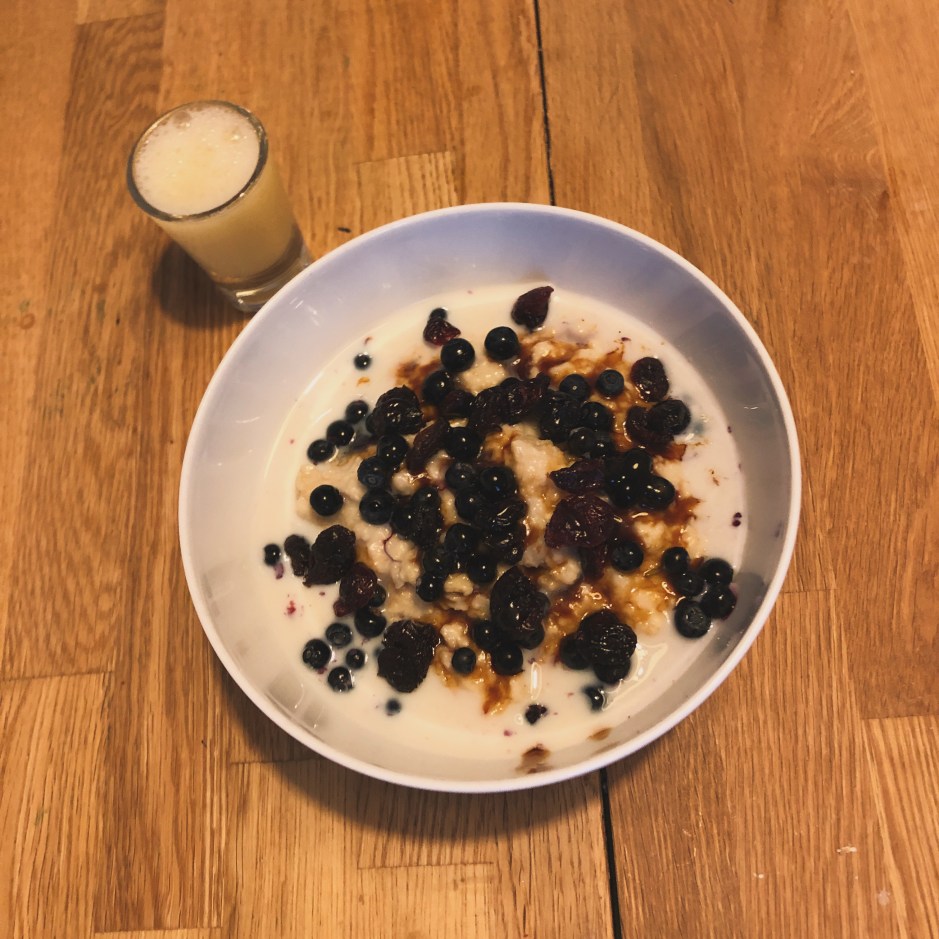
I lately think a lot about how we often make bad decisions seeking some sort of good feeling that doesn’t bring long-lasting wellness. It takes more effort to plan a balanced meal than buying fast food, it might be less appealing to eat oatmeal for breakfast than a pain au chocolat, and it might seem more relaxing to watch a reality TV show than go for a walk after a long day at work. Choosing what is right for our physical and mental health is not seeking success or perfection, it is an investment some of us choose to make because we understand that it will pay off in the long run. Through time, I have noticed how I feel after indulging in junk food compared to how I feel after having a healthy meal. It doesn’t mean that I never eat sweets or fatty food, but honestly, I try not to indulge because the price I pay when it comes to how I feel afterward is too high. I prefer to feel that I’m fit for life than go around feeling awful and thus being less balanced in my body and mind.

We often forget how everything we do or don’t do has a direct effect on our health. Therefore, this woman’s comment irritated me. I feel that ranting about “perfectionism”, often becomes a way to make excuses for not taking care of ourselves. Yes, gaining weight during pregnancy is normal, but it is also quite normal to lose it after some time if we eat what our body needs and not what our desires dictate, especially if we have a normal physically active life.

At the end of the day, it all boils down to the same, clarity of mind. Make your choices and live the life you feel like living, but stop making excuses for the poor choices you make that hurt your physical and mental health. Rather own them, and be brutally honest with yourself. Inquiry into why you don’t want to make good choices for yourself, and if you are okay with the consequences, then keep doing what you’re doing. If you care about your health and the well-being of those who love you, maybe it is about time you choose better.

Everything we consume has an effect on our body and mind, food, words, and images, not to mention alcohol, drugs, and so on. We know that, why do we ignore it?

A good fight

Some of us dislike conflict so much that we avoid it at all costs. Some of us seem to seek conflict and are in constant arguments with each other. For a long time, I thought I was not afraid of speaking up. I think this idea came from work where I often took on the role of “spokesperson” for my colleagues. But during the last year or so, I started observing myself and realized that I avoid difficult conversations. I might say what I think sometimes, but if my opinion is met with strong opposition, or if I notice that the other part gets distressed I often end up backing off and even regretting expressing myself.

With a lot of reflection, I have come to realize that I do this for two reasons: 1) I am afraid of being perceived as conflictive and difficult. In my personal life, my fear is also of being disliked to the point of losing the relationship with that person. 2) I am afraid of saying something that I will regret in the heat of the moment. I know I can sometimes say things that I regret afterwards.

Last Spring, I read Non-Violent Communication by Marshall Rosenberg, and this book changed my perspective on this. I think that sometimes, we do need to go through the discomfort of having an argument to either come to a common agreement or a crossroad where we have to decide whether we want to let go of that which we thought was so important, or move on because it is very important for us. The key is to have it very clear for ourselves what it is that we need from the other person and be ready to get the conversation beyond the conflict, beyond the discomfort. It requires a lot of patience and practice, and it also requires that the other part is willing to get through, but I think that even if the other part doesn’t know about NVC, one can try to lead them through the process.

The longer I live, the more I see how complex human interactions are, especially with our close ones. It is because we all live inside our heads, and through our perspectives. We can’t, of course, agree on everything, but we need to have very clear for ourselves what it is that we can be flexible about, and what is nonnegotiable. 

What I often observe in arguments is that, in the best-case scenario, we start a difficult conversation with a clear intention to communicate something, but as emotions start getting involved in the conversation, we lose focus of the intention of the conversation, and start throwing accusations and/or defending ourselves. In the worst-case scenario, we don’t have a clear intention of where we want the conversation to lead and the emotional mess gets even bigger.

What NVC suggests is that before we engage in a difficult conversation, we should try to identify what it is that we feel, and then what we need from the other person. It is important to avoid judging actions or words but rather express how we feel. A judgment would be something like ” you are so aggressive” or “I feel attacked”. You really need to dig into the feeling and rather use that as a point of departure. Maybe the feeling is “insecure”, or even “afraid”.

It is well-known that emotions are messengers, and they often stem from a need. We have to identify the need and communicate it as clearly as possible. This is where the most difficult part starts because the other part will receive our words, interpret them, and respond. Unfortunately, more often than not, the response can be led by emotion, and the other person might become defensive or even offensive. The key here is to try to recognize the emotion the other person is experiencing. It is a good idea to ask questions. If the other person responds by insulting or accusing, instead of engaging in a fight, we can say “I see that what I said caused a reaction in you. Do you feel angry/sad/frustrated?” Try to recognize together what that emotion is and where it comes from. What is the need? And the back and forward will start.

What I often have experienced in my personal and professional life is that I dare to start a conversation, but when the reaction is strong, I feel overwhelmed or even get a bad conscience and leave the conversation. I am too afraid to start a fight. However, lately, I feel that sometimes fights are necessary. A fight is some sort of chaos, and we know that often we need chaos to get change. Why are we so afraid of getting frustrated or even angry or sad? Aren’t these very common emotions? Why do we often strive towards showing the opposite? Why is it so difficult to deal with other people’s frustration or anger? Why don’t we give each other room for it, and then get beyond that first instinctive reaction and find out what it is that we need from each other? Imagine what a great place relationships would be if we only gave ourselves and others the time and space to feel, recognize, and express our needs.