On jogging and life

I love jogging. I have been jogging since I was a teenager. It must be genetic because my grandfather from my dad’s side used to run every morning. I think he was fond of sports all his life. He played baseball and did some boxing when he was younger. My dad told me that when my grandfather was in his sixties, he had a heart attack. After he came home from the hospital, he was so scared that for some weeks, he wouldn’t move from a chair he had placed at a sunny spot in his bedroom. My dad had to have a serious talk with him to get him up from the chair and back to life. After that, he would wake up early every morning and walk to a park called Chapultepec in Mexico City, and run. Afterwards, we would walk back home. He lived until he was around 94.

I haven’t been as disciplined as my grandfather with my jogging during the last two or three years. Partly because I feel I get enough exercise by using my bike and walking as my main means of transportation. However, whenever I have time, I love to go for a run. It is something my husband and I enjoy doing together, so often, during holidays, we make ourselves a little routine. It is a nice way to do something together, and to explore new places. It is also important to stay more or less fit in the slow pace of holidays.

This summer, we’ve been incredibly lucky. Because of the pandemic, we didn’t dare to plan any trip, but we wanted to find a place to enjoy the Norwegian nature. When I shared this wish with a friend, she and her husband offered us to borrow their cabin. My husband and I like to go for hikes, but our youngest and oldest are not as keen as we are, so we have made an agreement with them, we go hiking every other day. On the remaining days, my husband and go jogging.

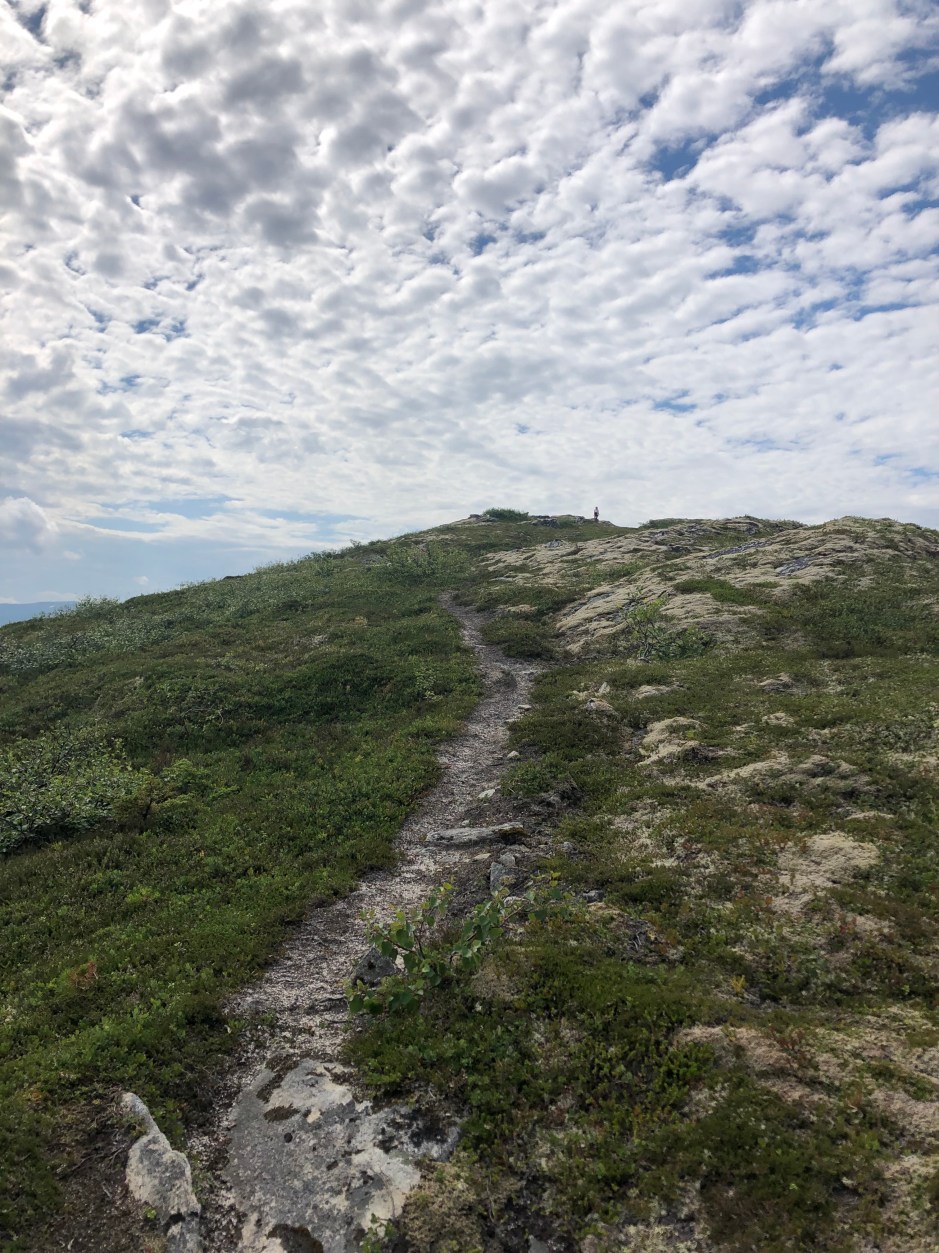
It’s been a long time since I last jogged, and the path we are running is quite hilly. We started running 3k and decided to add gradually during our stay. There is a long hill on the way out and a steep relatively long one on the way back. I have been playing with my mind when running up these hills, to see what helps me most when I feel like giving up.

I started pep-talking myself, ‘you can do it!’, ‘it will get easier throughout the weeks’, ‘the hill is almost over’. It helped to a certain degree, and I didn’t give up, but it still felt super heavy at some point. I then decided to focus on the benefits I get from running, ‘this his healthy for you’, ‘feel your legs getting stronger’, and the sorts. Still, too heavy and painful. Until I decided to rather focus on my breath and the unpleasant feeling. Not feed into the feeling, not judge the feeling, just feel it. Where do I feel it? How does it feel?

The truth is, nothing makes the hills less unpleasant. Some days, they feel easier, some days, the first one feels easier and halfway through the second I feel like crying, but I keep jogging, and most importantly, I keep breathing. It feels wonderful when we come to the top of the last hill, and I know that the last stretch to the cabin is smooth. I feel strong and powerful. I never regret going out for a run.

As usual, I can’t help but draw parallels with life. When life circumstances feel like a steep long uphill, what do I do? How do I talk to myself? How do I help myself get through the situation? Do I encourage myself and trust in my ability to get through it? Do I tend to overthink? If yes, how about just focusing on my breath to climb the hill?

We can’t always turn an unpleasant situation into a pleasant one no matter how much we try to change our outlook, but they usually have an end. There is no endless uphill. And even if it doesn’t feel like it when we’re struggling, we always come out of it a little bit stronger, a little bit wiser.
The value of contributing

This week, my youngest daughter and I decided to finally renovate her bedroom. She had inherited furniture leftovers from the house throughout the years, and her room wasn’t very functional nor adapted to her taste and needs.

It has been a relatively long and enriching process, I think. First, we had to think of what we had to sell and which pieces of furniture we could keep but use slightly differently. She had to sort all her stuff in three piles: what she wanted to keep, what could be given away/sold, and rubbish. Only this was a good exercise for her. Things that could be given away/sold had to be sorted properly and cleaned for the next owner. She had to reflect about what she has and what she needs as opposed to what she wants. She has a small room, and I think it is important that she keeps things that make her room feel pleasant to be in, not stuff that take space and gather dust. We didn’t always agree on this one so it was also a good exercise for me to let her make her own choices for some of the thing she wanted to keep.

I dismantled her bed, advertised what could be sold further, and followed up with people contacting me to come and pick up furniture and toys. This was good for my daughter to see that we don’t only throw away what we don’t want/need, it can be useful for someone else. It was also good for our project because we ‘earned’ some money to buy the furniture she needed for her room.

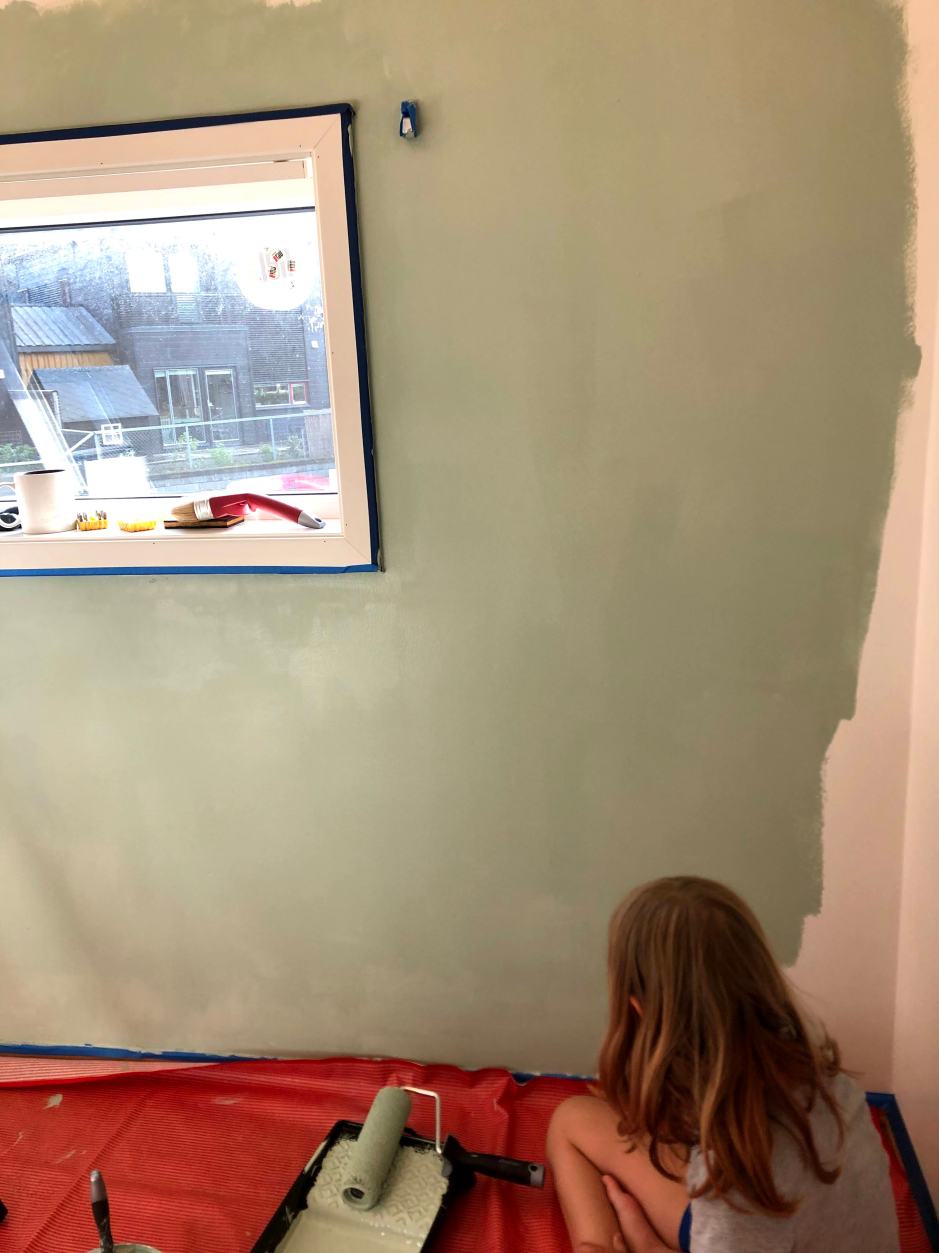
Next was to clean the room thoroughly, walls included. Over the years, she had chosen not to listen to our request not to tape things on the wall, and the walls were in quite a bad state. After cleaning them, we painted them. I was very impressed by her perseverance. It took us a couple of days to finish painting, and although I could see she was tired, she didn’t give up. She experienced how, we needed to do the job with care and patience. Mask off the areas we weren’t painting, cover the floors, not spill painting around. Once we were done, she acknowledge the hard work it required and decided that it is a good idea to take care of the new painted walls and hang up things properly.

We looked at furniture online, and she was surprised by how fast we reached a significant amount of money if we bought everything new. So we started looking at second hand furniture ads, and we ended up buying some new and some second hand. When we were at the shop, she chose away some objects because she was concerned about the final amount. This made me feel very proud of our little project as I feel it also taught her that things cost money and therefore we need to take good care of them. It also made her reflect on what we can refrain from buying as it is not really necessary.

After a whole week of hard work from morning to evening, the room is ready. All she needs to do now is to empty the boxes we filled with the things she wanted to keep. She is dreading this task, and I will help her a bit, but I think it is good to for her to reevaluate if she really needs everything she put in those boxes.

This whole experience made me think how important it is that we include our children in everyday chores. Small chores and bigger chores. This not only teaches them the value of work, material objects and time, but also gives them the opportunity to feel useful, the pleasure to start and complete a project.

While we were working on my daughter’s room, a good friend of mine came to visit, and were discussing how, we often chose not to ask our children to help because 1) It takes more time and effort to teach them to do things 2) We feel ‘sorry’ for them because they should be allowed to enjoy their spare time. I think maybe we need to rethink this and find a good balance. I have observed some of my students struggling with motivation and self-esteem because they don’t find school interesting, they don’t have any particular hobbies, and at home they don’t do much other than stay on their electric devices. I believe that even if kids and teenagers find helping at home annoying to begin with, they end up with a good feeling about themselves knowing that they are useful and capable of contributing to their family environment. My kids have had the task to clean their bedrooms for some years now, but I think it is about time that they do a bit more on a daily/weekly basis and contribute to bigger projects.

We have of course, tried to get them to do the minimum like tidying up their things, clearing the table, emptying the dishwasher, etc. But I must confess that I often also do these small things because I don’t feel like nagging. I can find ways to reinforce without getting angry, but I will definitely reinforce.

I think this is good for society too. I am not sure if there is a connection here, but lately, wherever I see young people enjoying some free time, I see a mess left behind. Yesterday, I was very surprised to go into our local shop where there is a small area to sit down, to find empty soda boxes, chocolate wraps and pizza boxes spread all over the floor. This shop is close to a park that is quite popular on sunny summer days for young people to hang out. I see this more and more often. Rubbish left behind after a fun day outdoors. My theory is that youth are not used anymore to help around, to experience the consequences of what they do. We parents tidy up after them both material rubbish and challenges they might face. All this with good intentions. We want to protect them, we want them to enjoy life, we want them to be happy. But I think, we might have misunderstood a bit. I believe we feel happier when we feel we contribute in some way to our surroundings. When we know how to do things, when we feel useful.

I have decided I will give more responsibilities to our kids from now on. Especially the oldest one. He spends way too much time on the computer and his phone, and his explanation is that he has nothing else to do. I have lots of things he can do… 😀

Lost and found

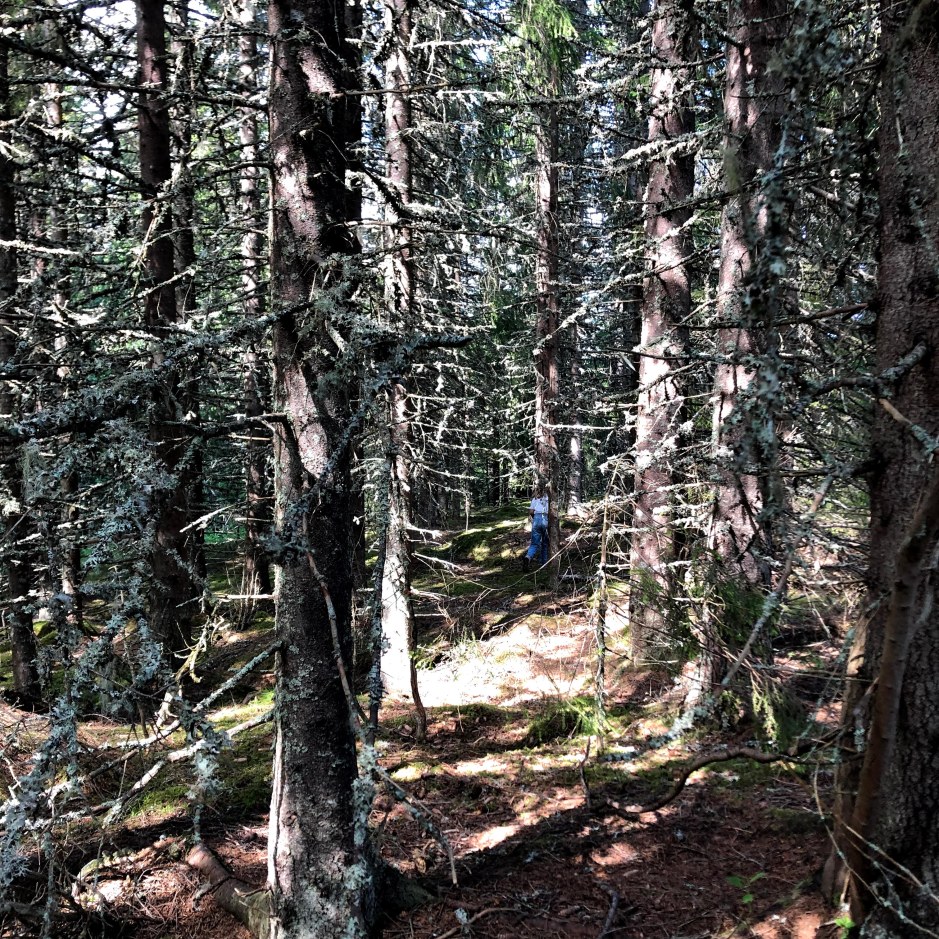
I went for a hike in the forest with two colleagues the other day. Both of them grew up experiencing nature like we do in Norway, hiking, camping, sometimes walking in the mountains for days. At some point during our hike, one of them said that she finds it exciting to sometimes get lost in nature to then find the way back. She told a story from her childhood where she and her family were hiking somewhere in Mali and got lost. They had to walk in the dark back to the cabin they were staying at. My colleague’s mum had to focus on her white shoes to not stumble as she had bad sight. It was fun, she said. In Mali. A family of five, lost in the mountains.

Her story inspired me because I don’t think I would remember as fun getting lost in nature as a kid, maybe not even now as an adult. I can imagine me getting scared, worried and maybe even angry and blaming it on my husband, as I often do. My kids complaining and blaming it on both of us.

Maybe I’m exaggerating or maybe not, but I found this story inspiring because my colleague’s family chose to have an attitude of adventure and playfulness in a moment that I most probably would have perceived as annoying and even dangerous. It brought me back to a reflection that has been coming and going in the last few years about the power of staying calm in all situations. This ability to stay calm comes with being able to take a step back from a situation and see solutions, but I also think it has to do with faith.

Observing my mind and my actions, I have noticed that I have had a tendency to get overwhelmed and almost panic in situations where things don’t go as expected. I have been afraid of challenges, problems and conflicts with people. Partly because I dread the unpleasant moments, but partly because I am worried about my ability to deal with difficulty. I don’t really trust myself. So I often have chosen to stay in my comfort zone, or to escape from the discomfort often making things worse because I don’t necessarily physically run away, I try to escape by acting impulsively, out of fear turing the situation messier than it originally was.

Since I became aware of this, I have been trying to work with it. I am trying to calm my mind down in moments of stress, distress or emotional pain, and instead of reacting impulsively, I try to take a mental step back and observe. It is an interesting exercise, to learn to give myself the space to feel scared, hurt or annoyed but not feed into the emotion. Take a deep breath and see possibilities, see options, and act -or not- from a space of calmness. Stay with the feeling without fighting it.

Life is like that, it has its ups and its downs. We instinctively seek for the ups and dread the downs. That is our nature, but lately, I have been reflecting in the beauty of going through the downs with a calm mind too. Experiencing whatever life is offering with an attitude of faith in ourselves, the process and the teachings they bring. Get lost, and find myself again. I believe that when we find our way back, we often continue slightly changed, mostly for the better.

The truth is that we all are born with this immense strength, we can overcome anything because that is our instinct. The key is the mental attitude. The teachings we draw from each situation. The energy we spend on them. The way we take care of ourselves and others in the process.

I share here one of my favourite poems from David Wagoner that I feel talk about what I just wrote.

Lost by David Wagoner

Stand still. The trees ahead and bushes beside you
Are not lost. Wherever you are is called Here,
And you must treat it as a powerful stranger,
Must ask permission to know it and be known.
The forest breathes. Listen. It answers,
I have made this place around you.
If you leave it, you may come back again, saying Here.
No two trees are the same to Raven.
No two branches are the same to Wren.
If what a tree or a bush does is lost on you,
You are surely lost. Stand still. The forest knows
Where you are. You must let it find you.

Stop and smell the flowers, literaly.

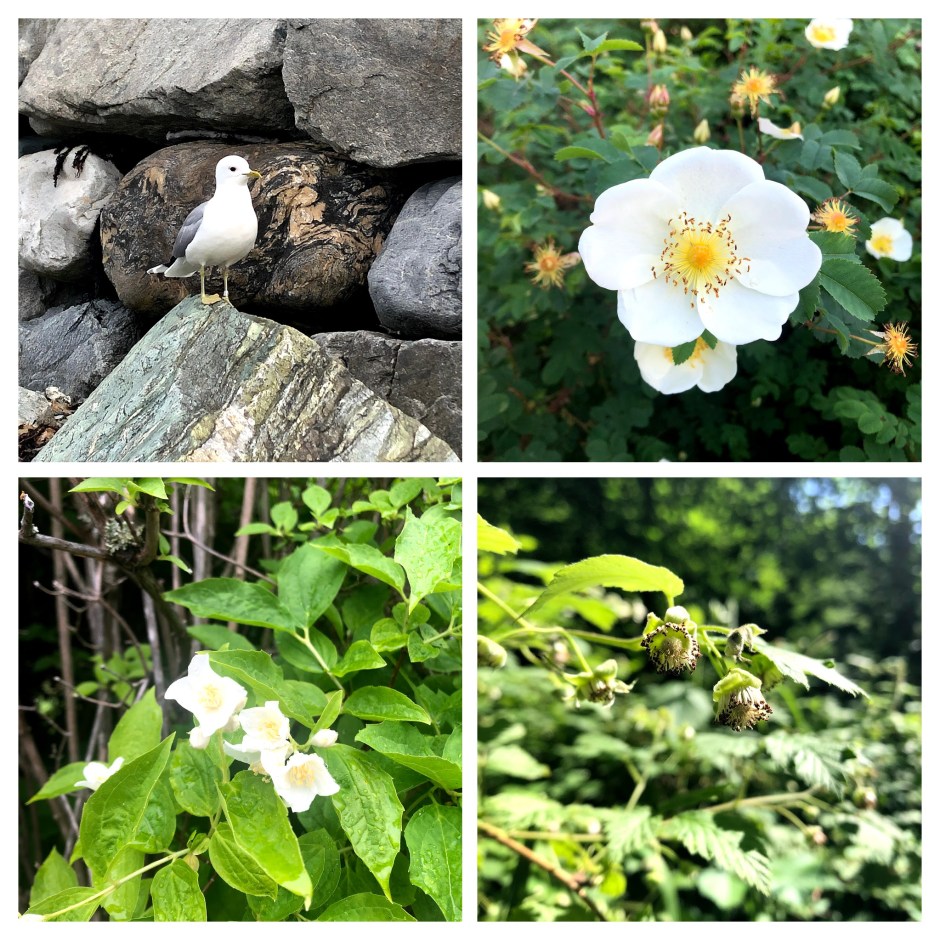
During the Summer, there are many seagulls in Trondheim. They are everywhere, by the sea, by some lakes, and of course, in the city. When the chicks are very young, the adult seagulls can be quite aggressive and attack people walking close to where the chicks are. They can also be quite aggressive to get food. Last year, we saw a seagull snap a piece of bread from a man’s hand.

This causes a lot of irritation and today, I heard my son say “I hate seagulls”. I’m not trying to be a goody-two-shoes here, but I felt a knott in my heart when he said that. Yes, they can be aggressive during the early Summer, but if we reflect a bit, we can acknowledge that we have invaded their natural habitat, and we continue to do so. There is almost no place near the fjord without human activity, so what can they do? They have to adapt. They nest on rooftops, they eat from our waste, and now, they even snatch food out of people’s hands.

It is annoying when we have to run through the street or walk another way to get somewhere to avoid the chicks and their protective parents, but it is during a short period during the year, I think we owe them that for taking so much space.

Lately, I have been thinking a lot about the distance we have created between us and nature. I guess this is different from place to place, but I feel that most of us have very little knowledge of the fauna and flora that belong to the place where we live. This is a pity, because not only we miss out a lot, we also do a lot of harm that we wouldn’t do if we knew better.

I believe that people’s littering, animal abuse and harming of other living beings would stop if they were more in contact with nature. If they spent more time outdoors, observing, being curious and learning from it.

The more time I spend in nature, the more I gain respect for its processes and its natural cycles. I think that living in Norway and being so much in the forest and in nature in general has been good for me to be more mindful of what I do, what I consume and the attitude I have towards all living beings.

My kids are growing up, and the youngest and oldest are now starting to have alternative plans to our trips to the forest and by the fjord. Still, I try to push them to come at least once a week, and share with them my interest for birds, plants, trees, and mushrooms as I keep learning about and from the local nature. They sometimes roll their eyes, or want to continue walking, but I hope this will awake in them the respect for nature that I feel we all need in order to preserve what is left of it.

Whenever I go for a walk in nature, I try to remind myself to not wear headphones either. This allows me to be more present, to listen to what is going on. It creates less distance.

In addition, I can honestly say, that nothing brings more peace to my mind than a walk in the forest, a dip in the cold fjord or a skiing trip in the middle of the long, cold and dark winter. One of the most fun things I can do with my husband and sometimes my kids is to pick berries and make jam or pick mushrooms and make a delicious dinner. It makes us feel connected with our environment, and we swear that the food we make with what we pick from nature tastes much better than the one bought in the supermarked.

Saving our children from painful situations

A friend and I were talking the other day about our sons who are the same age and soon will have to choose what kind of studies they want to do for high school. Here in Norway, they can choose to go the ‘regular’ pathway that can lead them to university, or they can choose to learn a profession and come out being able to work. The latter is, of course, less prestigious than acquiring a university degree, but a good option to those who either have a clear idea or know well their skills, or who are tired of so much theory at school and want to do more practical work throughout the three years of high school.

My husband and I believe that, if our son chooses to choose a profession oriented pathway, we will support him. She is of the idea that her son (and our son) should choose the pathway that allows them to go to university. She has good arguments, and I don’t disagree with her, but what triggered this post was what she said at some point:

‘I want my son to make choices that will allow him to do something with his life in a way that is as painless as possible.’

Or something like that. Her argument is that, if they choose the profession pathway, and they change their minds in some years and want to go to university, it might be too late for them to study for and pass the exams required for those who don’t follow the ‘regular’ pathway. Valid arguments.

Can we really prevent our kids from experiencing pain?, and maybe most importantly, should we prevent our kids from experiencing pain?

The answer, is of course neither yes nor no. It is our instinct and to a certain degree our duty as parents to protect our children as much as we can, but lately, I keep thinking that this well-meant attitude might harm our children more than help them, and what is more, will exhaust us, because lets face it, no matter how much I try to keep pain away from my kids, pain will reach them at some point. Pain is part of life.

How can we harm our children by protecting them from pain? Well, it is through the experience of pain that we learn resilience, patience and perseverance. It is through painful situations that we often grow because we are pushed to take a self-check, to evaluate our situation, to learn and move forward. Maybe the key is not to spend most of our time and energy preventing our kids from making mistakes, but rather create a relationship of trust so when they make mistakes, when life gets tough, they know they can get through it by their own strength, and/or get our support if they need it to gain the strength to stand up on their own feet again.

Don’t misunderstand me, I do want my son to make choices that allow him to live a happy and meaningful life, and I do say my opinion whenever he is about to make a choice, but I also try very hard to remind myself to let go of the need to control him. I have to accept that he needs to make his own choices and deal with the consequences. I just hope that the day he makes a mistake or a choice that brings pain to his life, we will be able to support him in a way that helps him reflect, grow and move on.

I see it as a teacher too. I am thankful that I teach in times where we have a lot of focus on students’ social and emotional well-being, but I also feel that sometimes we feel obliged to micro-mange them to avoid emotional distress. If football games during playtime get too rough, we ban them. Parents contact us often when their child has had a conflict with another child often with the expectation that we will ‘fix it’ without the kids being involved to ‘avoid the distress’ caused by heaving to deal with the situation.

Although I understand the intentions behind this kind of expectations, I think that kids need to experience all sorts of emotions and learn how to deal with them. Both their own emotions and other people’s emotions. Maybe instead of banning the football game, we can have the necessary conversations – over and over again – to help them reflect on what went right and what went wrong, and more importantly, how they can do better next time. We help the students better by creating the space for them to talk and find common ground, and understand how they feel and how their peers feel. Maybe sometimes kids need to find their own solutions without adult involvement.

If you’ve been around for more than twenty years, you would agree that in life, we go through phases, some phases are more painful than others, but often, the most painful ones bring also a lot of growth. I teach students between 13 and 16 years old, and many changes happen during those years. Some teenagers go through tough periods trying to figure out who they are and what they want. It is painful for them, and often even more for their parents. The parents that suffer the most are those who try very hard to steer their children into a specific direction believing that that is the right direction. Or being overly worried about their child’s confusion. What I often observe from the outside is that the kids that have been raised with a set of clear values, that have parents that are present and available, manage to go through and beyond phases of confusion and pain and grow from them. It requires patience, resilience and perseverance from both themselves and their parents.

Reflecting about this, I have made myself some mental guidelines as a mum and as a teacher that I try to follow:

  • Walk the talk. Live my life as much in line as possible with what I believe in. Accept my mistakes and grow from them. Reflect with my children about them. I don’t need to pretend that I am perfect, or devoid from emotion.
  • Be mindful of how I react when my children make a mistake. Try to show understanding and be open for discussion instead of being judgemental.
  • When appropriate, share my views or opinion on something, explain why I think like I do, but make it clear that the choice is theirs (and hope for the best).
  • Remember that each one of my kids is an individual with their own path to walk. Be supportive, be present, but not controlling.
  • Help them go through difficult emotions. Explore and accept the pain to then let go and learn from it.
  • Keep learning together with my kids how to better support them in their own path. After all, parenting is all about learning by doing.