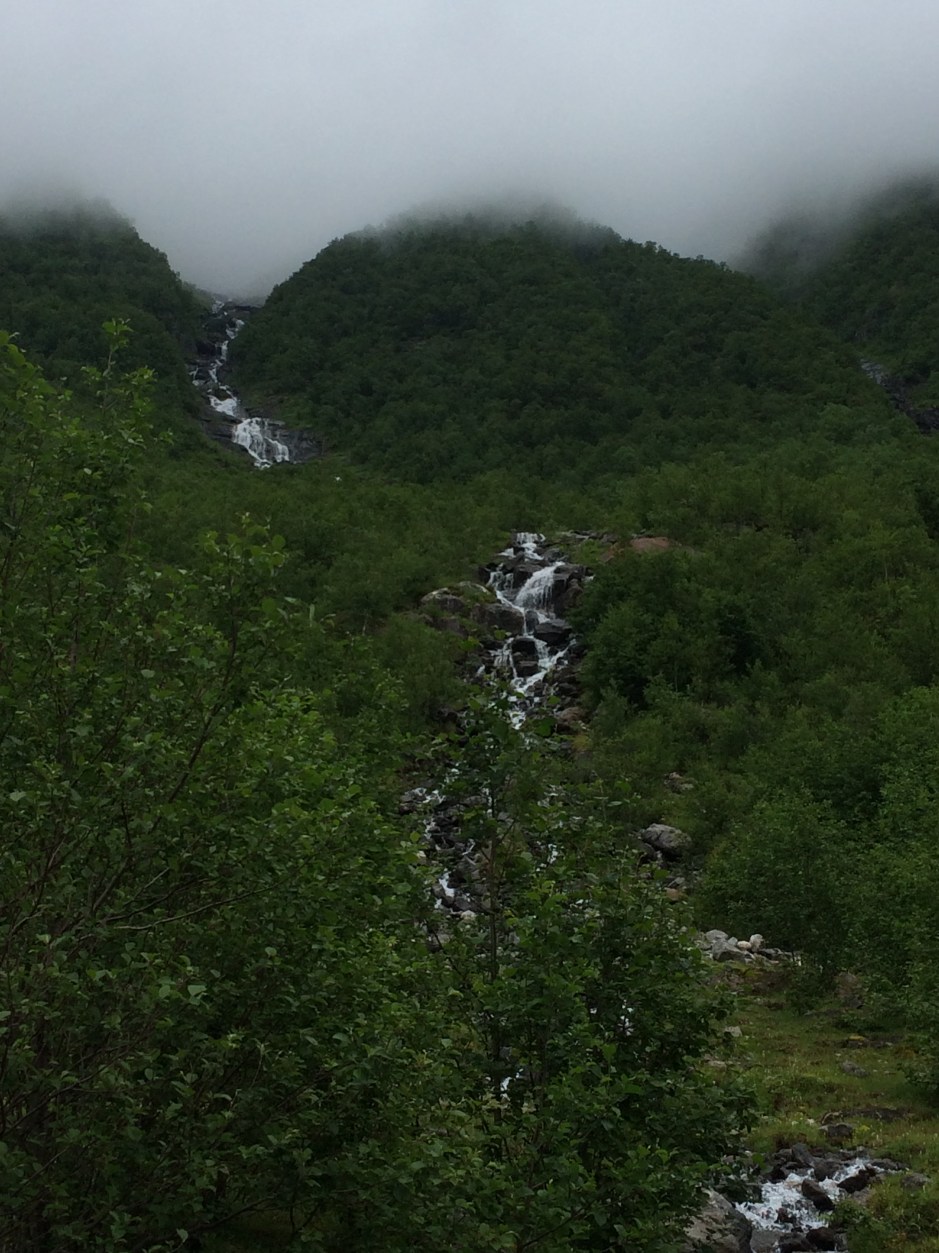
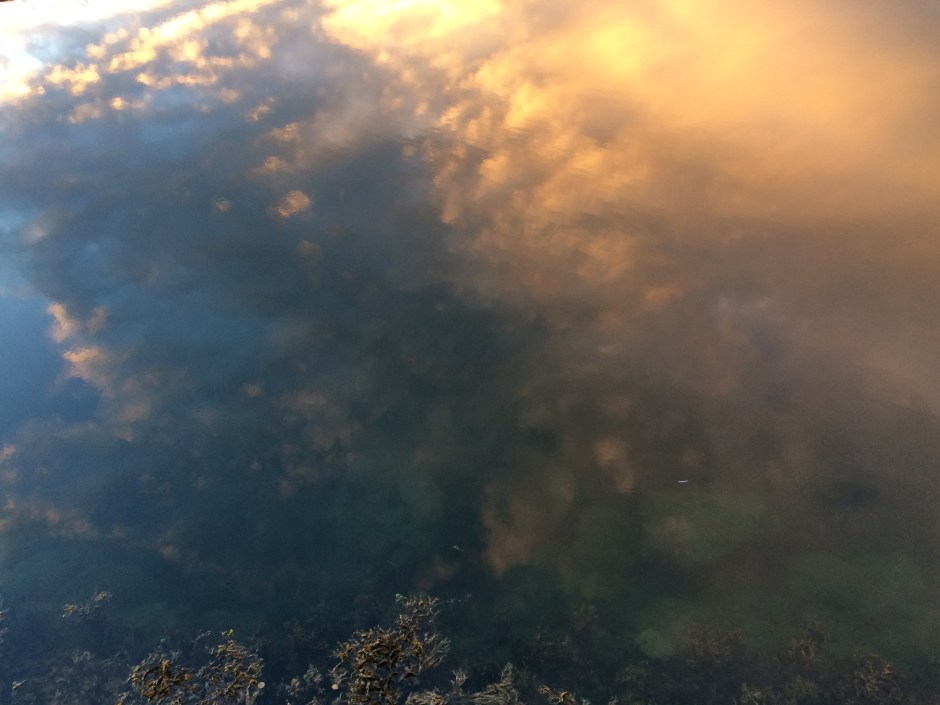
Stormy weather and refining the mind

Early one morning
feeling the storm coming
I went for a walk
I reached the shore promenade
the mood in nature was in sync with my heart
When the storm hits my heart
I believe in the stories my mind serves me
These storms form somewhere deep inside me
So I walk, and I kindly ask my mind to cease
For I won't blame it on the world I perceive
I keep walking, until I stop to observe
The sea is moving with the wind
A bird in the sky is flying in the wind
The trees are moving with the wind
For what I see no one blames, no one feels guilt
The storm is just here doing its thing
Has the storm in my heart a function?
Why the need to blame or regret?
I don't know why this storm comes
but no matter how much I reject it, it keeps coming back
Today, I'll be like the sea, the bird and the trees
I'll allow the storm to be
Maybe one day, I'll let go enough
To allow the storm be the guide towards the place it needs to take me.

We all suffer from mood swings, I presume. I think I have already talked about mine in other post. I have periods where I feel overwhelmed by everything and everyone. I have periods in my life where I feel alone.

My mind serves me with a bunch of thoughts to engage with that will feed into these challenging moods. All from analysis to justifications of why I feel how I feel. So lately, I try to observe my thoughts and tell myself that I am getting entangled in my stories again . I let go of the stories so I stop blaming everything and everyone for my mood.

What I discovered today is the level of self-loathe that I experience now when this emptiness hits me. I feel guilty for going back to that space. I feel helpless as it seems like I can’t get myself out of it so easily. But what if I just accept that I have these stormy days? What if I allow the storms to come instead of try to run away from them?

I know about these moods, and I am working on refining my perceptions. I obviously can’t stop these moods from coming yet. Can I accept that? Maybe these storms just need to happen, and the less importance I give them, the less damage they make.

Interestingly enough, after acknowledging that, I felt some relief.

I recently heard on a podcast that mindful living is a full time job. Refining the mind is so too. When we think we’ve got it, we discover it is just the tip of the iceberg. It might help to think that we are explorers in unknown lands, and approach the mind with the enthusiasm an explorer has. 🙂

On self-responsibility and the climate change

A concept in the yoga practice that I find most appealing is self-responsibility.  In order to improve our well-being, we need to stop pointing our finger at the world and take a look at what is happening inside us. The fact that life is tough at times is not denied, but precisely because life can be tough because life is unpredictable, we need to learn to stand our ground and do our best through storms.

I am a mum and a teacher, and I have been reflecting a lot about the youth movement that is going on to save the environment. I think it is great that a young girl has taken the initiative to bring awareness among children and adolescents about the challenges our natural environment is facing because of years and years of unconscious use and misuse of resources and uncontrolled development of cities and industry.

What worries me, is kids and adolescents learning to point their fingers by blindly going out on the streets, especially in countries like Norway without even knowing who the ‘bad guy’ is.

I know many countries in the world need to put the conservation of the environment higher in their priority list, I know the Norwegian government could do much better than they already do. I think marching and protesting is good, but I don’t think it is good enough.

As a teacher, I think that I can support students striking and going out on the streets to protest only if they are knowledgeable, and see the whole picture. They need to set this movement in context and know exactly what they are asking for. I cannot accept empty words like “We are marching for the environment”. How does the environment benefit from my students and my kids skipping school and going out on the streets and yell words they don’t even understand?

Consumerism is a known word in rich countries like Norway. Almost everybody nowadays has to have a certain amount of things. As a mum, I am often trying to find the right balance between educating conscious kids by reflecting on what they want and what they actually need, and not raising super alternative kids that don’t fit in. I have heard so many times parents say they just have to give in because everybody has this or has that. I admire those parents that don’t give in. I have some students in middle school that don’t have a smartphone, and even though I know they do think it sucks, they still have friends and live a meaningful life. The smartphone is just an example, but maybe we can spend more time with our kids reflecting before buying.

We adults get carried away too. We want the house, and the cabin (and maybe even two cabins), and the car(s), and the boat, the trips to faraway places at least twice a year, the clothes, the full equipment for every little hobby we start, etc, etc. Maybe we too need to reflect on how much we want and how much we actually need.

Going back to the idea of self-responsibility, yes, let’s demand from our authorities to have better policies to protect the environment, but in addition to going out there and point our fingers, let’s take a close look at our lifestyle and start making some changes. Let’s get a bit uncomfortable, eat less (or no) meat, buy less, teach our children to need less. Look at what we buy, where it comes from and investigate the impact its production has on the environment. Take our family out to nature and teach them to respect it.

Let’s allow this youth movement to open our eyes to what we do and reflect on the changes we can make to contribute to save the environment. Don’t allow this movement to become another way to escape from our responsibility.

Honestly confused

So, how honest can one be on a blog that potentially all the people that I interact with can read? One thing that I decided from the first minute when I started writing was that this was going to be about myself. Yoga, is the path of taking self-responsibility. It is practically a waste of energy and time when we’re struggling to point our fingers outside.

I have been two days home from work, sick. I have to be honest, I consider myself as a strong and tough person, so, if I had tried, I could have pushed myself to go to work. I wasn’t that sick. But I just didn’t have the energy to push myself.

Spending two days at home alone have made me realize how tired I am. I am tired of pushig myself through the day. I am confused because I honestly don’t know how much is enough. I don’t know where the self-care stops and the selfishness starts. I don’t know where the society is being unrealistic with its expectations towards a mother, a teacher, a friend, a daughter, a daughter-in-law, a woman, and where I am right to say “Stop! Stop! This is not what I want!”

My yoga practice tells me to be self-responsible. My yoga practice tells me to give without expecting anything in return. I want to believe in this, but what happens when I get so tired that I can’t go to work? I am very confused right now.

I think this starts when we are kids, we are told what we should do, what we should think how we should feel and we loose contact with ourselves. This makes me think about how I am raising my kids and pushing my students. I push my kids to do this and do that, to be “balanced”  by going to school and doing their best, by having after school activities, by this and that. But how much am I listening to them? I often ask myself this question. And it is difficult because as a child of the 70s and a teacher, I have been believing that children and adolescents don’t know what is best for them…is this ture?

I push my students to do their best in my subjects. I expect the best from them. But the rest of the world is also expecting things from them. And what about what they want to do?

I am calm in my confusion. I think this confusion is good. I think some confusion is good to sometimes check the compass and see if we need to adjust our course. But I need to get better contact with the inner compass because the outer compass is too confusing at times…

On acceptance and its benefits

I was recently listening to one of my teacher’s lectures on his YouTube channel called 10 ways to live effortlessly through Yoga where the first point is acceptance.

Have you ever experienced investing effort and time into something with a feeling that you are pushing, fighting, getting exhausted and after a while realise that you are still standing at the same point? I have experienced it in many times and every time I try to remember one of my first experiences as a mum.

When our first child was born, I wanted to be ‘ready’, so I read books about pregnancy and birth. Then, when our son was born, I read books about the “normal” development of a baby and a toddler. When our son was maybe a year or a year and a half old, according to what I read and advice from others, it was time to start potty training. I bought a pot and tried different ways to get my son to sit on it and do his job. After some days of trial, we realised he wasn’t interested at all. Swallowing our frustration, we understood he wasn’t ready yet and that we would do things worse if we chose to push him. We waited despite what the books, parenting forums and some opinions from experts or experienced parents had. When he was a bit over two, we tried again, and in a week or so, he was nappy-free during daytime and some months later in the night also. I was so amazed over how easy this was! There weren’t any tears, and there were very few accidents. This taught me a big lesson that I have tried to apply throughout my children’s upbringing. There are some milestones they have to go through to develop, but there is no point on pushing them. I think acceptance is key here. I accepted that my son wasn’t ready, but I didn’t necessarily give up, I just needed to back off, and try a bit later.

Sometimes, we have a goal, an idea, but it is so big, so overwhelming that we don’t even know where to start. This applies also to challenges and problems. Acceptance can also be a good tool in this cases. We need to accept first the situation and then see which small steps we can take to achieve the goal or to improve the situation that eventually will help us solve the problem. We accept that we have to take small steps.

The example that comes to my mind is the challenge we face today with pollution. I have long had bad conscience because I wanted to do something big for the environment, but it felt overwhelming until I decided to take small steps. The first step was to observe my lifestyle and accept that I have some habits that aren’t healthy for the environment. I have made some changes that have demanded changes in attitudes and perceptions and still felt achievable, while other changes are so big that I have to wait a bit. This doesn’t mean that I will settle for doing the minimum but I have to take it step by step to not overwhelm myself or my family. This might not be the way for everyone, but for me, it is either small steps or no steps at all.

The other day, I was talking with a yoga teacher that works also as a life coach. She was telling me about how, for people that experience chronic pain, it can be helpful to learn to accept the pain. Pain is something that scares us, it is part of our survival instinct, but sometimes we need to accept it to tolerate it. I have done the experiment sometimes when I experience a sharp pain, to relax the rest of my body and focus my breath into the pain. It doesn’t take the pain away, but it does help me deal with it better. If I reject the pain, if I start to make a thousand stories in my mind about the pain, I just get more stressed and my experience of the pain is more intense.

It is almost needless to say that acceptance is also a very powerful took when it comes to relationships. All kind of relationships. Accepting others as they are is the obvious one, but also accepting that sometimes things between us and others get stuck, and remembering that nothing lasts forever. We benefit from giving us some space to let things cool down, and then try again. Accepting also that sometimes, there is no solution, things are as they are and we have to learn to live around them.

Lastly, I have already written about strong emotions and how acceptance can help deal with them. Often, we have a tendency of rejecting, hiding or pushing away emotions such as anger or sadness. We don’t want to feel angry or sad because we should constantly feel happy and satisfied. Unfortunately, the emotion doesn’t disappear just because we don’t want it, and we end up with a pile of emotions such as frustration and regret on top of the ‘original’ emotion. Accepting the emotion without feeding into it can take us a step further. When I am sad, I can accept that I am sad and even give myself the space to feel the sadness, slow down, be kind to myself without making a thousand stories in my mind on why I have the ‘right to be sad’. Let the emotion be what it is, and when the sensation is less strong, try to understand where it comes from and see if there is anything I can do to help myself.

Acceptance is not resignation, but it is a tool that can help us save energy that we can canalise in a more constructive way than when we use it to reject, run away from or fight blindly.
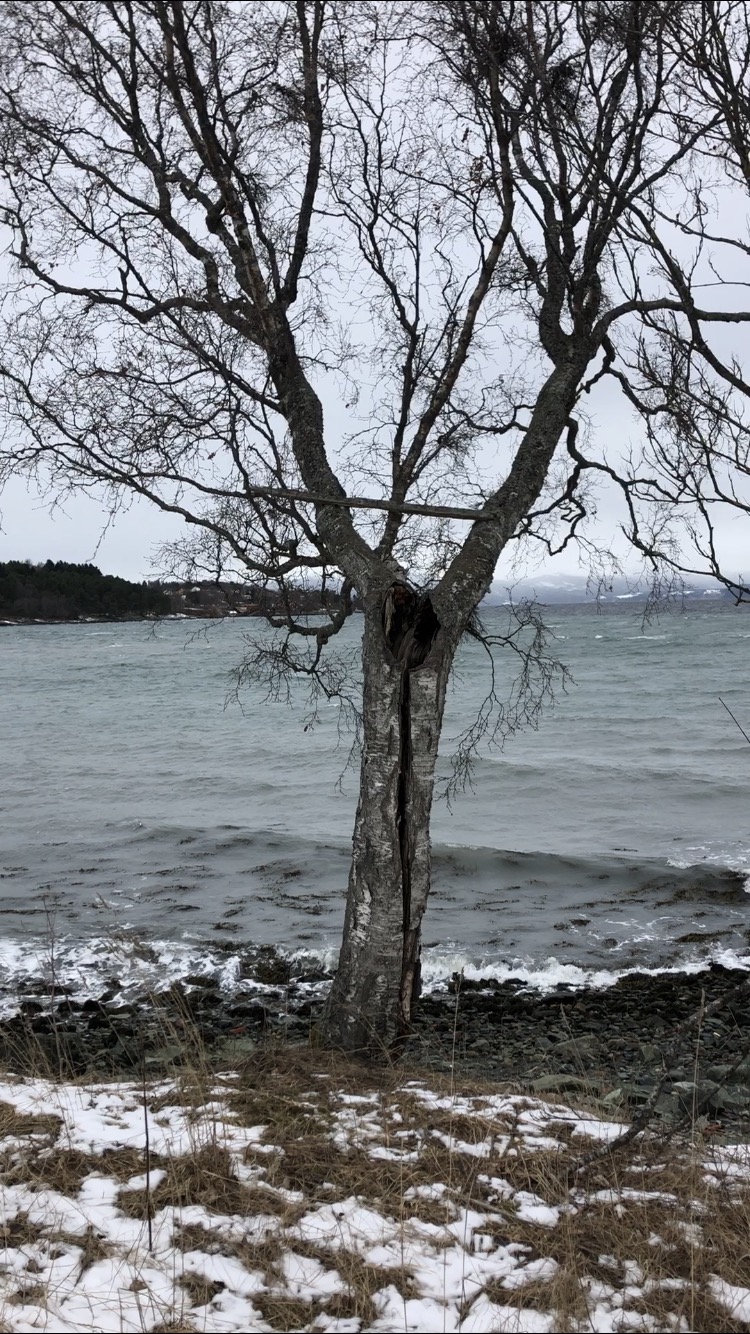
Human interactions

“The reality comes into being through interaction” Emilie Levine 2018

I recently watched a TED talk with Emilie Levine called “How I made friends with reality”. This talk is beautiful in many ways, but this quote moved me the most.

I reflect often about human interactions. I observe how important they are for us, and how difficult they can be at times. I must confess that I am not very good at them in general. I expect too much from the people that are close to me, I am bad at small talk, and patience hasn’t been my strongest skill.

Ever since I was in high school, I have been quite reserved socially. I am friendly, and I actually like to interact with people, but I don’t like to come too close because I know I often end up making a mess. I can maybe say that I don’t trust myself much when it comes to human interactions. I have few close friends, and those that I have, I am so grateful for because I know that they have taken the time to know me, accept and understand my weirdness.

I also work as a teacher, so I am in constant contact with people. My students and my colleagues. As a teacher, I have an idea of what my role is, and of course, everyday, this idea is challenged by my students. It is getting better, but I also feel I use a lot of energy avoiding getting into negative situations with my students.

I can honestly say that part of my dedication in the study and practice of yoga is with the intention of improving my way to interact with others because it came to a point where I understood that the change needed to come from me. I have spent too much energy being frustrated, sad, angry and then regretting because of the gap between my perception of things and reality.

I liked this quote particularly good because I feel that it is so true. We create our reality by interacting with the world around us, not only with other humans but with everything that surrounds us. This is a powerful quote because it means that we can always choose what kind of reality we want to create by interacting with others.

It is not always that easy because most of us are used to the idea that we need to get something in return for what we give. When we have the impression that we only give, we get frustrated or loose interest.

In Spanish we have a say cada cabeza es un mundo: “Every head is a world” or “There is a whole world in each head”, and I believe this is true. What if we keep this in mind when we interact with others? We don’t know what kind of impressions they have in their minds, we don’t know what their expectations are, nor do we know how they perceive the world.

One of the most known and general definitions of yoga is that it is a science for self-liberation. In addition different traditions can have different definitions. I recently read a definition that I think is very nice to apply in our interactions with others: “Yoga is to create space”. I believe this was said in the context of pranayama, but if we think about the basic principles of yoga: detachment and practice, space is an important aspect too.

I have been wondering a lot lately, am I able to live in love? Can I, at every situation, choose to interact from a selfless space? Can I, give space to the people around me to be and at the same time allow myself to be too? I must confess that it seems quite difficult to achieve, but I think it is worth a try. Not only in my close relationships but everywhere. 

If we create reality by interacting with others, wouldn’t we want to create a reality where we all thrive? Are we able to show unconditional understanding, compassion give each other space to grow? Can we meet others with humbleness? Nobody’s perfect, and nobody will ever be perfect in this world, but we need each other.