

What does good and bad actually mean?

We all have our stories, our dreams and our deep inner landscapes from which our actions and reactions to life arise. By shining the light of conscious awareness onto the deep within, we can begin to evaluate whether our reactions to life are serving us skillfully and, if not, begin to adopt new strategies and cultivate new habitual patterns. It all begins with the stories within: Change the stories or understand them in a new light and we can change what happens on the surface of our personalities.” Bernie Clark in From Gita to the Grail

We all have our stories, dreams and deep inner landscapes that have been formed by experiences and the environment we live in. We all have our own convictions and perspectives that influence our choices, attitudes, and behaviors and thus allow us to function in the external world.

A keyword in this citation is “skillfully”. I think that in the Yoga context, this means that if our actions and reactions to life are skillful, they will bring us closer to who we really are and by that closer to an independent state of inner peace. When we cultivate this inner peace we are then naturally in harmony with the world around us.

I invite you to reflect on your convictions and perceptions and see which ones allow you to act skillfully in the world and which ones represent a challenge.

Perceptions can represent a challenge for our inner peace when we are so attached to them that we are unable to see what is happening around us, when we are unable to adapt, when we keep experiencing the same problems because of these perceptions, when they lead us towards separateness by believing that we are right and others are wrong, or when we try to convince others that our own perception is the correct one.

I was recently listening to one of my teacher’s lectures where he says: the whole distress in the world is just a collision of perceptions. He said this in the context of detachment to find evenness of mind as he was elaborating on the teachings from the Bhagavad Gita.

What does detachment have to do here? Well, the more we are attached to our perceptions, the more difficult it is to interact with the external world because we have a premade image of it in our minds either by expectations or by judgments. The more we are attached to our perceptions, the more we operate in the duality of right and wrong, and the more distress we create in our minds.

I must confess that while reflecting on this, I had to laugh about myself because I realized how sure I often am of my perceptions and how it gets on the way between me and people around me. I have been so sure about me having the right attitude, the right idea, the right perception as opposed to the others who were wrong. But who gets to decide what is right and what is wrong? And even more, who gives me the right to judge?

Certain things that I have done in my life are difficult to understand from where I stand today, but I can see that they are the product of my stories, my dreams, and my deep inner perspectives at that time. This must mean that I will experience the same in some years when I look back at some of my actions from today. This experience can only encourage me to be more tolerant and understanding towards people when they act in ways that I perceive as harmful, hurtful or “wrong”. They too have their own stories and needs that influence the way they perceive the world and they act accordingly.

Another important point when it comes to the topic of perceptions is the perception other people have about us. I know I have struggled with this one, especially because of my sometimes explosive character. I consider myself a kind person with good intentions, but if you push my buttons on a bad day, you will perceive something else. I believe in the importance of apologizing and working with myself so impatience and frustration don’t take over, but I now think that most of the time, the perception others have of me is somewhat independent of me, and I should not spend time and energy trying to change it. What I should be spending my time and energy on is to cultivate a clear and peaceful mind so when I act, I act from a space of harmony. This way I can be at peace with myself regardless of what happens on the outside.

So again, I believe there is nothing wrong with having convictions and perceptions, we need them to function in the world, but if we keep experiencing distress because of them, we might benefit from reflecting on them to see them on another light as Bernie Clark suggests and even change them to make adjustments in our actions and reactions.

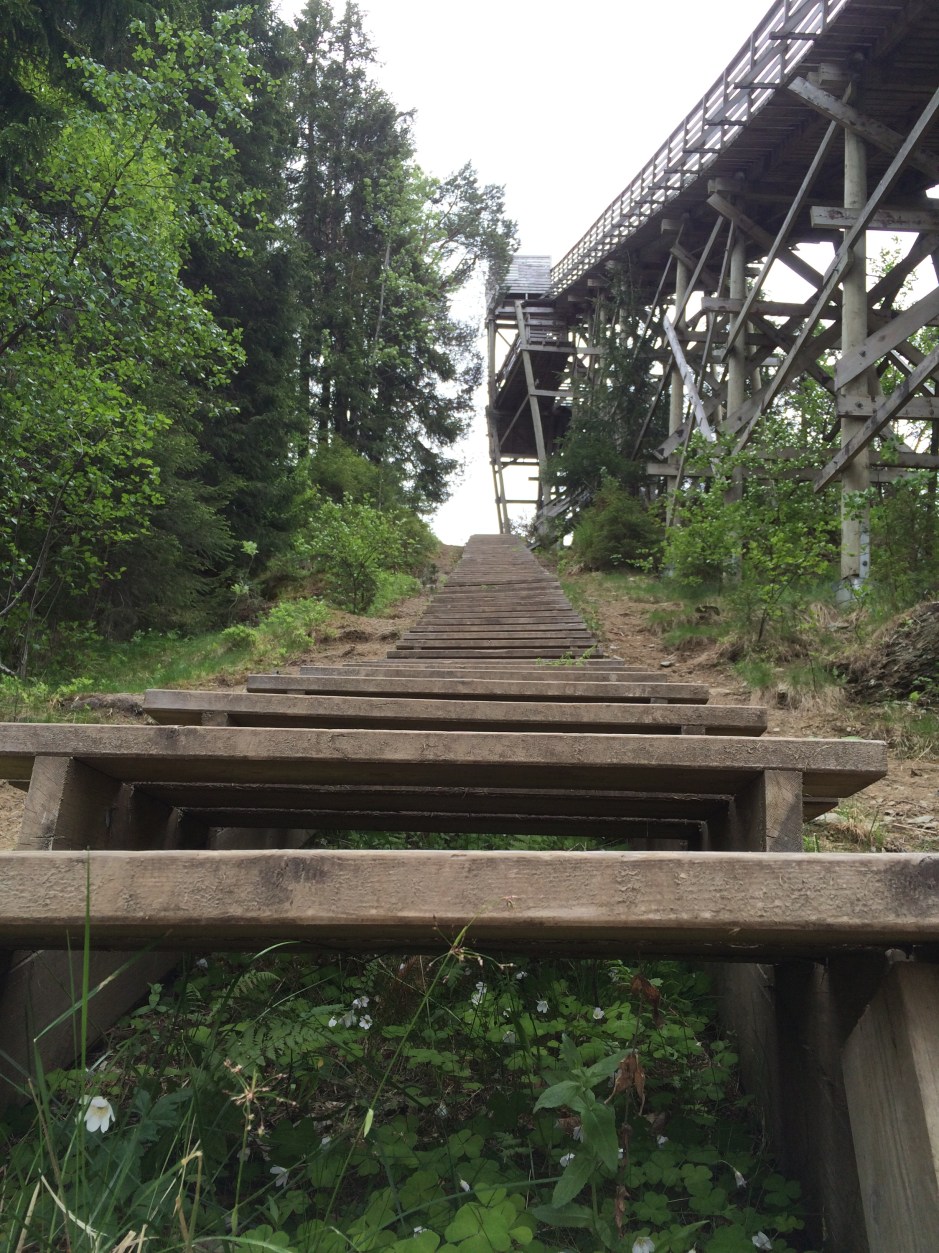

Four reasons why we shouldn’t aim towards perfection.

In some traditions, it is believed that we all go around experiencing some sense of internal void. Some of us are aware of it, some of us aren’t. I remember having this feeling of emptiness, or some sort of nostalgia since I was a little girl, and I didn’t know where it came from or what to do with it. At times it was bigger, at times it was so silent that I barely noticed it. Years passed and I never gave this much of a thought.

Then, in 2014,  the inward journey started for me when I started studying Yoga in Mumbai. I maybe wasn’t even aware that I was embarking towards an inward journey, I just felt that a lot of what my Yoga teacher was saying made sense. I wanted to explore these teachings, apply them to my life and see what happens.

One of the things we learn in Yoga is that our mind is conditioned and limited by layers and layers of ideas and false perceptions ( I won’t explain here where it is believed they come from), and one of the purposes of Yoga is to help us discover these layers, so we can peel them off, one by one, and see who we really are. In the process, our interactions with the world become easier, because we no longer limit ourselves with these layers.

This was a bit difficult to grasp for me back then, but I liked the idea that all I need is already inside me, and that the solution to all my struggles is to be found inside me, so I decided to give all this a try.

Little by little, I have been discovering my patterns of thought and behavior, I have been discovering my limits, and as I go, I try to make some adjustments here, and some adjustments there to live more in harmony with what is.

Despite all this internal work, I have bad days, I make mistakes, I fall into old patterns of thought and behavior, and when it happens, I have to confess that I have felt devastated. I have tortured myself thinking that all the work I have done so far with myself has been for nothing. Last time this happened, I realized that the lesson to be learned in these situations is one of humility.

The path of inner awareness is not the path of perfection. Perfection is sneaky because I have never considered myself a perfectionist, but I think I am. Especially when it comes to myself.

Spirituality cannot be the path of perfection as we understand perfection, and here are some reasons why I believe this:

  1. It is exhausting: who gets to decide what is perfect? And since we live in the transient world, how long will this perfection last anyhow? And once I reach perfection in this, I will want to reach perfection in that, and it will never end distracting myself from what really matters.
  2. It is unrealistic because nothing is perfect. According to Yoga philosophy perfection cannot be found in the world as we experience it, but everything is unique. I think this is very valuable. We are not a “problem” to solve. We are unique just as everyone and everything else.
  3. It increases the gap between me and the rest of the world: the more perfection I seek in myself, the less tolerant I am of others. That is not spirituality. Spirituality is to be understanding and compassionate towards my limits so I can offer the same towards others. Spirituality is to see the beauty in me so I can see the beauty in others.
  4. It increases the gap between me and Me. The more I strive for the image I have of the perfect me, the less I allow myself to see who I really am. So in a way, I would be adding layers instead of removing them.

So what I have to remind myself as I go around in life being my usual imperfect but unique self is that my goal is to reach a state of independent internal peace and by putting pressure on myself about what I should or shouldn’t be, I won’t come even close.

Slow Down!

This week was one of those weeks where I felt that I was moving against the wind. With the best intentions, I did nothing but push and push in my work. The result: conflicts with my students, misunderstandings with my colleagues and at the end of the week I was exhausted, confused and frustrated. An old and recurring question floated in my mind on Saturday morning when I woke up: Why is everyone so frustrated when I’m doing the best I can?

“Slow down, I’m in a hurry,” my grandmother used to say.

There are days, weeks, months and even years in which we feel we do nothing but run against the stream. Every day feels like a mini battle between us and the rest of the world.

There are days, weeks, months and even years in which when we go to bed, we feel that we were pushing invisible obstacles that felt very heavy.

And we keep pushing, and the body feels tired and the mind feels tired.

Our interactions with others feel heavy and a new conflict situation arises at every turn of the corner.

Unwanted words come out of our mouth, we lose patience, we lose control.

How long are we going to keep pushing? How much energy do we think we have to waste in this way?

One tool that we have and which I forgot about this week, is to slow down. Take a break, take two breaks, take lots of breaks. Play the game of paying attention to each movement we make, walk a little slower, move a little slower. In conversations, count to five or ten before answering and observe the words that come to our mind before opening our mouth. Which words are the most appropriate? Which ones will help bring the conversation to a place of dialogue and solution? And which ones won’t?

Against what and against whom are we pushing? Sometimes we behave like Don Quixote, we are fighting against monsters that do not exist. Because by going so fast, by forgetting that we have the ability of patience, our perception of the outside world and the ‘other’ is distorted.

In our hurry, we forget that everyone around us wants the same thing we do, inner peace, a happy life and freedom to be.

It is a good practice, when we feel that we are pushing, struggling and we are not going anywhere, to take the time to sit down, close our eyes and see inside ourselves. What are we really pushing against? What can we change inside ourself to help us flow and stop pushing?

Some of us find it hard to accept that in every situation, in every conflict, the best solution is to look inward. What can we change in our perception, in our desires, in our expectations to better flow? It does not mean that we should not fight for a good cause, or work hard towards some goal or dream, but pushing and pushing without getting anywhere will not help us at all. By slowing down, by giving us time to look inward, we can:

  1. Find clarity. We must take time to reflect and be clear about our objective. Take time to ask ourselves why am I doing this? Sometimes, in the rush of everyday life, we do things that we don’t even want to do, we do not have to do, and even worse, we do not even know why we are doing. We have to have our intentions clear.
  2. Filter and let go of everything we do that does not belong to that clarity. We can adjust our attitudes, our actions so that we stop pushing and start to flow.
  3. Find time to do what we consider necessary and let the rest flow. Find patience and trust that what arrives is what has to come. If what arrives is not what we want, we can ask ourselves what we can change in our way of seeing things, or doing things to be more aligned with reality. Maybe it’s not the time, maybe it’s not the best for us, maybe there’s a lesson to be learned.
  4. Take care of ourself and pay attention to our emotions. In order to do your part, you need to be well. You need to take time to reset and rest. Don’t ignore your feelings or push them away. Those emotions that you don’t like, are the ones that will teach you a lesson. Let them come, observe them, and try to understand them. Where do they come from. With practice and patience, you will see that they come from inside, from your imprints in your mind. Once you recognise the internal source, you will be able to heal them. Only taking the time to be with yourself will allow for this.
  5. Save energy and stop trying to convince others of our way of seeing things. If we make a mistake, apologise, if someone perceives our actions differently from our intention, instead of trying to convince, try to understand that perception and keep flowing.

So, my week ended with apologies given to those who were shaken by my speed, conviction that the conflict with my students was necessary to learn a lesson (from both sides), and hope that next time, I will remember to move slower.

Anger and other ‘difficult’ emotions

” […]there is an incremental experience of greater freedom as we discover ever more self-control, sensitivity, and awareness that permit us to live the life we aspire to, one of decency; clean, honest human relations; goodwill and fellowship; trust; self-reliance; joy in the fortune of others; and equanimity in the face of our own misfortune.” Iyengar, B.K.S.. Light on Life: The Yoga Journey to Wholeness, Inner Peace, and Ultimate Freedom.

Emotions fascinate me. Where do they come from? Why do they have so much control over us?  Are they caused by external circumstances?

Or are they all part of our internal storytelling? I think I could write pages and pages about this topic, but I’ll try to stick to two things: how I understand emotions through the lens of my Yoga studies and practice, and techniques to put down the fire when it is at its worst.

Negative emotions. Most of us consider anger as a negative emotion because it feels unpleasant and it can lead to conflict. I personally don’t like to get angry and for many years I’ve tried very hard and with little success not to get angry. So how about going a bit deeper into this emotion? Maybe if we get a better personal understanding of why we experience anger, we can make some changes. I challenge you to be open-minded when you read this and play a little game with your mind.

What makes you angry? We can maybe say that most of the time, the degree of our anger is related to the situation. So let’s start at what for me is level 1.

Anger coming from everyday life’s small frustrations: missing the bus, my kids not being ready to leave the house in the morning, no more coffee in the thermos at the staff room when I really want a coffee… These are “easy” to deal with, right?

Where does the frustration/anger come from in these situations? The gap between my expectations and what life is offering me.

I want coffee -> there is no coffee = I get frustrated. And what would be the easiest way to vent that frustration? I get angry at my colleagues because they never make coffee but they always drink the coffee.  Added to the small frustrations from the morning, this might be the one that makes my mind go wild, and I might send an angry email to all my colleagues complaining about their behavior. Which will most probably end up with me regretting the tone in the email afterward.

How can Yoga teachings help me here? It is a fun mental game and the keyword is detachment. I have first to detach from the situation. The fact that there is no coffee. Take a step back. Is this something that my colleagues directly do towards me? Most probably not. So, it’s not personal, I can relax a bit. But it is unfair, right? I always make coffee and they don’t! Regardless of whether this is true or not (most probably not), we can apply detachment here too. Detachment from my expectations towards my colleagues. Of course, there is no harm at all on bringing this issue up at some point and ask everyone to remember to make coffee when they drink the last drop, but if the thermos keeps being empty when I want coffee, what do I win by still expecting people to make more?

Another level of detachment in this situation would be that since I am so fond of the coffee and I like being a positive member of my community, I decide to make coffee twice a day every day, and don’t expect any reward for this like the thermos having coffee when I want a coffee, or even a thank you from anyone. This is part of the essence of Karma Yoga actually: do your work with a clear intention and detach from the desire of the outcome being as you expect it to be. I can ‘sacrifice’ myself for the wellbeing of the whole and make coffee for everyone.

Or, I can start bringing my thermos from home if this is not an area in my life where I want to make sacrifices. Thus I am accepting that the thermos is often empty, adapting to the situation by bringing my thermos and letting go of the frustration that, let’s face it, is mainly affecting my inner peace.

Now let’s look at anger caused by something bigger than everyday frustrations. Here too, I invite you to be curious and to play a bit with your mind.

Remember that we don’t win much by labeling emotions as negative.  What we see as negative or difficult emotions can, in reality, be opportunities for us to learn something new about ourselves. Anger, for example, can be triggered to remind us of what our boundaries are. It can also be triggered by fear, or even by tiredness. An experiment I consider interesting when I get angry (and when I manage to not act on it) is to turn my attention inwards, because I have come to realize that most of the time, I cannot change situations or the way people act, so the only thing I can do is to be curious about the processes that happen in my mind. I try to be very honest with myself and often, the anger diminishes if I change my perspective on things.

Here, like on level 1 detachment is a good tool. Detach from the situation as it being directed towards you. Even if it is. We all live in our own minds and act accordingly. If you can acknowledge that those around you want the same as you, mainly happiness, love, and peace, and that they might at times be as confused as you often are, well, it is not that strange that they sometimes act in ways that you consider hurtful.

Detachment from expectations is a good tool here too. The idea you have in your head of how people should behave will most probably never resemble reality and then it gets distorted by your perception and interpretation of it. Adapt your expectations. Here again, you can communicate your needs, talk, but expecting others to change is a tiring experience.

And the last one that I personally struggle a lot with is: detach from the desire of the outcome of your actions being as you imagined it to be. Be kind to others, give love to others and every day erase the addition you make in your head. If you really want to achieve internal freedom, this one is crucial. Very difficult, but crucial.

Lastly, there are situations where an emotion is so strong that we cannot work with it right away. Here are some things you can do in the heat of the moment to calm the mind:

  • Don’t reject the emotion but don’t feed into it either. To do this, you focus on the sensations in your body when you experience this emotion, try to slow down by breathing deeper, especially when you exhale and whenever your mind starts making stories go back to focusing on your body and/or your breath.
  • Show compassion and understanding to the person that is experiencing the emotion, that means YOU, but again, without feeding into it. Without justifying and explaining why you “have the right to be angry”. Like you would talk to a good friend, talk nicely to yourself, say that you understand, that you are there for yourself.
  • Imagine that this emotion is something you can hold. Hold it carefully and gently. Give it attention like you would give to a little child when its hurt, and when you’re ready, gently let it go.

And when the fire is out, remember to take the time to learn something new about yourself, and hopefully, next time anger shows its face, it won’t take control over you.

What are we lacking?

“The only release from our longing may be to stop demanding a perfect love and noting its many absences at every turn, and instead start to give love away with oblivious abandon without jealously calculating the chances of it ever returning.” The Course of Love by Alain de Botton.

The sense of lack, the feeling of longing, manifested itself to me in my interactions with others. Especially with those closest to me. Little by little a feeling grew inside me of not being loved enough, and the more I sought, the less I found.

Some of us operate with the idea that there are different kinds of love: the love of a mother, the love of a father, romantic love, etc… and we have different expectations from each of these ‘loves’.

The love I saw as the most important and the one I was lacking was romantic love. I often felt alone, and I took for granted the “other” loves in my life because I was very busy trying to find the “real” romantic love.

Therefore, five years ago, I set myself the goal to ‘find love’. The imagined outcome of that long ago goal turned out to be completely different from what I have come to realize today.

It has been a long, sometimes painful and interesting journey so far. I am lucky to be surrounded by people who love me and are patient. I am lucky to have a guide that keeps pointing towards the right direction. My guide patiently observes and redirects me, from time to time, through his teachings and his advice.

This guide is my Yoga teacher, Prasad Rangnekar. Yes, my journey has been guided by the teachings of Yoga. I am a Yoga student and I am a Yoga teacher.

So what can I write about love that hasn’t been written before? Poets, artists, philosophers have pondered on this topic long before me.

All I can write is from my own personal experience and share my own understanding. I hope that you can identify with my learnings, maybe even find some comfort, or feel a sense of belonging. One thing I am quite sure about is that we all seek love in one way or another.

My understanding today is that love is beyond my understanding. I can get a glimpse of it, but I don’t think I’m there yet. When having challenging interactions with someone I have, in moments of lucidity, let go of expectations, perceptions and judgments and tapped into the love I have for that person. I have listened, been curious and allowed the interaction to progress. In those moments, I felt free and happy. I felt I managed to give without wanting anything in return…or maybe I have to be very honest here, I did want something in return- peace of mind.

I believe that love is something we need to grow inside ourselves, we cannot get it anywhere. As Prasad recently wrote one of his posts: “Let us all be that Tree which firmly roots itself, is able to spread wide and thus supports everyone with Love and compassion.”

The last challenge I see in the concept of love I have been operating with my whole life is the fact that we usually love those we either like or those we “have to love” because they are family. We expect them to love us back in ways that we consider are suitable.

So, further work for me is to:

  1. stop classifying those around me as ‘lovable’ or ‘not lovable’.
  2. continue peeling off the layers misconceptions I have about love, and
  3. continue working on building a solid inner love. This one is difficult to explain but I think that before achieving 1 and 2, I have to reach inner love. Stop thinking that love is something I can “get” “out there”. Love is everywhere, and love is everything, but we just have to feel it.

So, I move slowly and patiently with these as of my main goals in my life. There are still people that push my buttons, there are people I “expect” quite a lot from, and I am aware of it and I am “working” with it, but I am still not there. So my choice is to take a step back, observe myself and try to let go of these limitations.

I am aware that love is much more than what I am describing here, but I need to be curious, to go deeper and find out more about me. There is the love we put in our actions too, the love that unites us with all beings, with our environment, with everything. But maybe that is for another post, another time.

Oh, and by the way. Through the internal work I have been doing, I have discovered that I am not lacking anything. I am lucky enough to be married to a man that is patient and understanding. Little by little, we are rebuilding our partnership and it feels harmonious.