Reflections from a reluctant traveler

It is so easy to trick myself into believing my own limiting stories. One is that I don’t have the extra energy to get out of my comfort zone. I work as a middle school teacher, and even though I have a schedule and a plan for each day, every day brings unforeseen situations and extra tasks. The same at home with three teenage kids, a husband, and a cat. At the same time, I am trying to get my yoga teaching up and going, and it is taking time. So, lately, just the idea of planing anything that requires a bit of effort seems overwhelming.

Thus, last week, when the date for a trip with some of my students was approaching and my to-do list kept growing, I regretted volunteering for this trip. My tired and overwhelmed mind kept going through all the worst-case scenarios that could happen during this trip. Oversleeping and not catching the bus to the airport, the plane being canceled, students getting sick or even worse, hurt…

Sitting in the bus on the way to the airport, I started wondering why I was dreading traveling so much. I used to love to travel, but now, I was filled with anxiety. I think it was partly because I haven’t been traveling since before CORONA.

The trip went smoothly, and just a few hours after the event we joined had started, I realized what a great experience this was for both my students and myself. We spent three days in a camp learning about the importance of democracy. There were students from several schools in Norway, each small group accompained by a teacher. Students and teachers had slightly different programs each day. It was so inspiring in so many ways.

I realized how easy it is to get caught in going around in circles when we stay in the same place without being exposed to different ways of seeing things, and new knowledge. I would argue that it is almost dangerous for our growth and mental health.

During the last day of our camp, while talking with one of the other teachers, we agreed that this trip was worth the effort, and that unfortunately, not all courses or conferences we can attend are as good.

This made me think about the importance of getting out of my comfort zone from time to time to meet new people and learn new things, but it needs to be done with awareness and clarity of mind, not just for entertainment.

According to Yoga philosophy, one can classify our attitude towards life’s experiences into two: one can have the attitude of a bhogi or the attitude of a yogi. A bhogi is someone who seeks experiences for the sake of experiencing, and most of the time the goal is to satisfy the senses. A yogi is someone who uses life’s experiences to reflect on her attitudes and behaviour and improve them. A yogi‘s main goal is to continue transforming herself for the better. To get closer to her Truth. A bhogi can easily fall into indulgence and restlessness, while a yogi has to constantly create inner clarity to be able to discern between acting to please the senses and the mind and acting with awareness for her long-term benefit avoiding harming others.

When the yogi steps out of her comfort zone, it is at a different level than the bhogi. It is not to experience strong emotions, it is to challenge the limitedness of the mind. Emotions do arrise, but the yogi does not get stuck in the emotions, the yogi needs to see past them and learn something about herself and the world around her.

At the stage I am in life and in my willingness to integrate Yoga teachings to my life, I think I am still somewhere between acting like a bhogi and acting like a yogi. I do reflet a lot about my attitudes and behaviors, but I tend to seek what is emotionally safe for me and reject what feels challenging. I get stuck in situations out of fear of letting go and experiencing pain, but oftentimes, when I let go, I experience freedom. Freedom from being attached to something that doesn’t help me develop, that doesn’t allow me to go a bit deeper in my quest for the Self.

This trip made me think of that, and the importance of getting out of negative spirals…

What do you need?

I went for an evening walk with my youngest who is now 13 years old. Together with her friends, she is going through changes, and with those changes seem to come challenges related to friendship. It is interesting to observe that their conflicts are not that different from what we could experience as adults, but with the lack of life experience, these conflicts feel much more dramatic than we might experience them after a few years of life (45, for example).

She started the conversation by telling me everything that frustrates her with her friends, and I tried to patiently listen asking sometimes if it wasn’t her own perspective. It is tricky to try to give advice, but here is what I told her that I think can help even ‘experienced’ adults when in conflict, especially with close friends and/or in a romantic relationship.

  1. Try to always remember that the other person, just like you, has more than enough with their own insecurities, inner struggles, and feeling of lack, so, whatever they do, is 8% about you and 90% about their inner life. So, if a friend suddenly acts cold, ‘ditches’ you for another friend, or doesn’t want to do something you used to do together, before assuming it is about or against you, talk about it. Try to not talk when you are upset. Wait until things are calm and ask. AND, even when it is about you, it is often a matter of perspective. If, however, the other person tells you there is something you have done that has hurt them, be open to reflect and consider saying sorry and avoiding doing the same again.
  2. Avoid talking with your friend by listing what is ‘wrong’ with them, or what they do ‘wrong’ (Very difficult!) Focus rather on expressing how you feel (or felt) in a given situation and wait for a response. Listen with an open heart. Most of the time, the intention behind the action is not to hurt. But when it is, try to find solutions together. I know, this one is difficult for a teenager, but at least expressing how they felt is better than ‘attacking’ the friend.
  3. Say clearly what you need. Write a short list of what you think you need from your friend to feel valued, safe, and included. Try to be as concrete as possible describing actual actions your friend can take.
  4. Listen to what your friend has to say. Consider their point of view.
  5. Consider accepting some of the sides that you see as challenging for the sake of those you value/like. Write a list of the pros and cons of your friendship with this person and decide if you want to continue investing time in it.

As I have been hearing since I started studying Yoga, when we move the focus inwards, when we are aware of how we perceive things, what we need vs what we think we need, and what we can give, it often is easier to communicate with others. It sometimes brings you to a better space in a relationship (although it might take time), and it sometimes might mean you need to let that person go, but at least you don’t feel like you are constantly banging your head on the wall.

Reflections over Karma Yoga, Pancha Klesha and Yamas/Niyamas

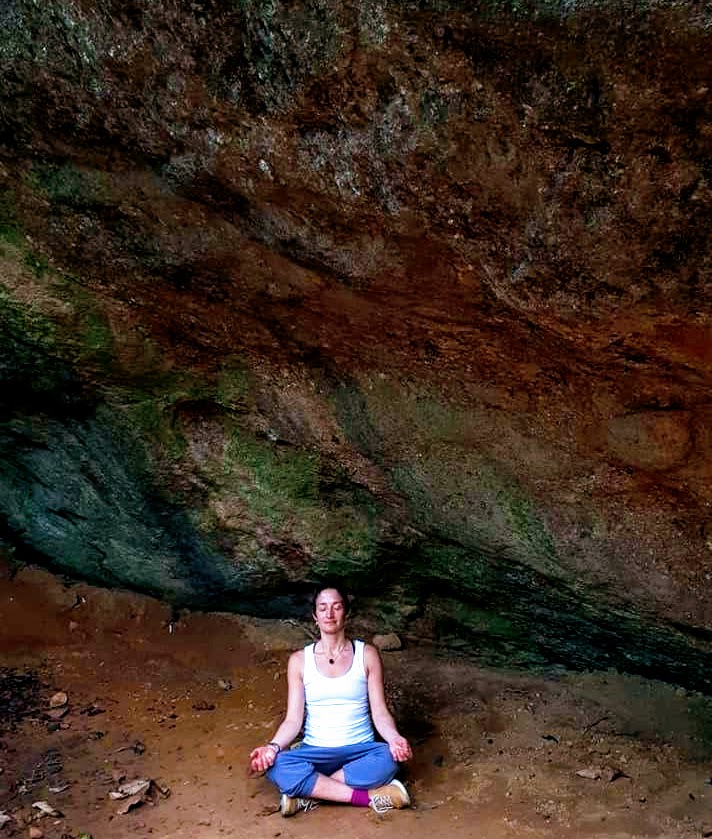
Although the path to liberation from suffering described by Patanjali is through meditation, we cannot reach a state of meditation as long as our mind is a mess. In order to calm the mind, we need to live a mindful life, and this can be done through the modalities Patanjali gives us in the method of Ashtanga Yoga, which in some aspects, seem to me to be connected to the principles of Karma Yoga as I have studied them in the Bhagavad Gita.

I recently wrote a post about the Yamas and Niyamas which can be seen as values and observances that when used in our interactions with ourselves and others, help reduce and eventually eliminate the fuss in our minds (chitta vrittis). In the same scripture, The Yoga Sutras of Patanjali, we learn about the five kleshas (pancha klesha) or afflictions which are described as the obstacles to cultivating a calm state of mind. As long as our actions are a result of these afflictions, we are stuck in the cycle of karma – cause and effect. If we, on the other hand, choose to live a life of awareness and apply the Yamas and Niyamas, we avoid increasing the karmic load for ourselves, and contribute to a better world.

II.12 The stock of karma has the kleshas as its root. It is experienced in present or future lives. -Patanjali Yoga Sutras

The five kleshas are: avidya (ignorance), asmita (egoism), raga (attachment), dvesha (repulsion or aversion) and abhinivesha (fear of death – clinging to a life of delusion).

The klésha that keeps us in the loop of the other four is avidya, or ignorance. In the context of Patanjali’s Yoga Sutras, the ignorance referred to is our inability to see what is called our True Self (Purusha) which lies beyond our thoughts and physical body. This ignorance bounds us to act out of attachment and/or aversion and their derivates such as anger, fear, greed and so on. Purusha is described as eternal consciousness or pure potential. It is said, that once we realize our True Self, we find inside us a steady state of peace, love, freedom, and happiness. The problem, and the source of our suffering, is that since we’ve lost contact with Purusha, we keep seeking for peace, love, freedom and/or happiness through our actions, but nothing in the world around us -called Prakriti in the Yoga Sutras and Sankhya philosophy- can give us a constant unchangeable feeling of peace, love, freedom, and happiness because the nature of the world is transient.

“II.5 Ignorance is the notion that takes the self, which is joyful, pure, and eternal, to be the nonself, which is painful, unclean, and temporary.” [Commentary: ] Patañjali here gives a very important definition of ignorance, the primary cause of all bondage: Avidyā, ignorance, entails confounding the nature of the soul with that of the body. The body is here described as painful, duḥkha; unclean, aśuci; and temporary, anitya, unlike the puruṣa who is joyful, sukha; pure, śuci; and eternal, nitya.” Bryant, Edwin F.. The Yoga Sutras of Patañjali (pp. 216-217). Farrar, Straus and Giroux.

I have to say at this stage, that I often see the path of Yoga as a game with levels. At the level, I operate today, the idea of Self Realization, or reaching a state of complete awareness of Purusha seems a bit far out for me and challenging to grasp. However, the path towards it is what motivates me to study and practice Yoga which, will lead me to develop a better version of myself by living more mindfully and creating less suffering for myself and others- note that suffering is used as a common term for distressing feelings such as frustration, anger, regret, stress, and anxiety.

Also, the idea of having, inside me, a place of peace, love, freedom, and happiness that is constant and independent of my mind and the world around me gives me comfort, even though I still have a long way to go, sitting down in silence, practicing breathing exercises and studying and reflecting upon scriptures such as The Yoga Sutras, bring peace and reassurance to my mind and body, especially when being challenged by life and/or my thoughts.

I believe that the two main ways avidya is at the source of all the other kléshas are:

  1. Since we don’t know who we really are, we identify ourselves with our physical body, our mind, what other people think and say of us, and all the different roles we play in life. From the moment we are born until we die, we become the child of someone, the grandchild, the sibling, the student, the friend, and as life advances, we keep adding to the list. We create, in a way different identities in relation to each role. Each identity has its attachments and aversions and whatever happens, through the lens of the identity (ego) will be liked (attachment) or disliked (aversion) leading to a specific thought and emotion in our minds and a possible action or reaction. For example, in my role as a teacher, if I step into a classroom and the students are unable to be quiet and listen, I can experience frustration and anger. Why? Because I expect the students to show respect since I am the teacher. If I go into the same classroom as a guest, I most probably won’t experience the same strong emotion since I have no attachment to the role of being a teacher nor expectations towards the kids in the room. On the other hand, if I start my lesson and things are flowing smoothly, I might feel a pinch of anxiety for the rest of the lesson hoping that the students continue displaying the same expected attitude (attachment). I can observe the same in every role I play. If my husband forgets something that I asked him to do in the morning, I might get offended because I have expectations towards him in my role as the wife. If I ask my neighbour to do the same thing and she forgets, I might not react the same way since my relationship with her and expectations are not the same as towards my husband. But I might get annoyed at her if she parks her car in my carport. And so we move around in the world, each role we play is the ground for likes and dislikes creating a bunch of emotions and thoughts in our heads.
  2. Since we don’t know that we are love, freedom, and bliss, we seek it outside ourselves. We use our identities to find them through validation, recognition, achievements, and so on. Every time we do not meet our own expectations in our role, we experience aversion to what we see as a failure or mistake. We seek our value in our roles and in other people’s opinions about how we perform in these roles. Here again, we get trapped in the cycle of attachment and aversion. One example can be that I get caught up in seeking pleasurable experiences to keep feeding into the idea I have of happiness. Overconsumption can be a good example. We believe our happiness is in having things. Clothes can be a good example for me. I wish for a specific pair of trousers, when I finally get it, the joy of having a new pair of trousers lasts for a little while until I find out that I also want the shoes that go well with them, or the jacket, or the sweater, and so on. In recent years, I have become more mindful of the impact the garment industry has on the environment, so I buy used more often than new. This summer, while tidying up in my closet, I realized that I have lured myself with this. I need to stop buying altogether! It happens also with our roles. I am attached to my idea of a ‘good mum’, My idea of a ‘good mum’ is, among other things, that she is liked by her children, so when I set boundaries, or are strict, and my kids show their displeasure, I experience self-doubt and thus distress because I am not getting the validation that I unconsciously expect from my children. This can lead me to be an unclear and stressed parent affecting also the well-being of my children – I realized this recently too.

So, because we don’t know our True Self, we identify ourselves with our body and mind and the different roles we play in life. For each role, we have consciously and unconsciously a list of likes and dislikes that trigger emotions and thus actions and reactions. When we are not aware of this, we trap ourselves in some sort of hamster wheel (the wheel of karma). Reflect on the following quote written by my teacher, Prasad, for the Yoga Sutras course from 2021:

“The wider the net of I, Me and My, the more our energy dissipates.”

This is the essence of the Pancha Klesha teachings, I think.

The theory of pancha klesha, Karma Yoga and the study and understanding of Yama and Niyama can help us develop better habits to calm our minds and thus live a simpler, more content life. This in return affects in a positive way our environment because we become clearer, more confident, and compassionate members of society.

One way I use to get myself out of an aversion-attachment situation is to tell myself that things are happening and it is when I add ‘to me’ and especially ‘to me in the role of ____’ that distress happens, or at least it is amplified.

Changes

This Summer, I am observing that I have a tendency to be anxious about my role as a mother. This feeling is rather new to me because as the mum of babies, toddlers, and young children although demanding, I felt relatively sure about what I was doing. During the last two years, however, I have become more and more worried about not having done the right thing until now, not having made good enough choices that affect my children, not giving them enough, not giving them the right upbringing, etc.

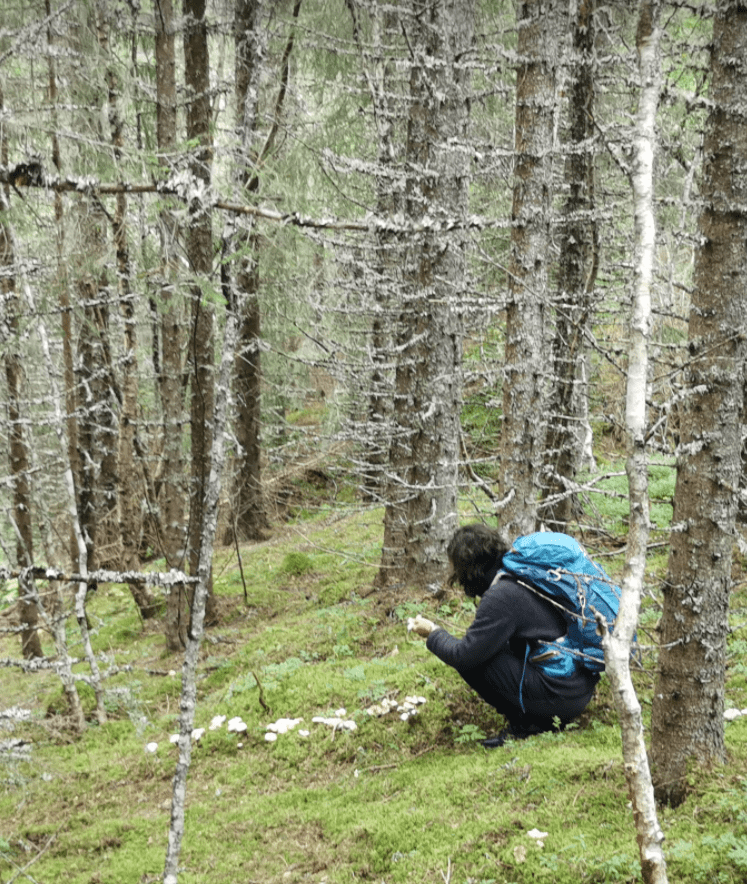
Needless to say, it is quite tiring, and I must confess that all these worries and anxieties do wake me up in the middle of the night sometimes. My latest anxiety has been the summer break. My husband and I decided not to plan any trip abroad partly because we didn’t want to have to deal with COVID-related complications during a possible trip, partly because we didn’t plan economically for it, and partly because we love spending the Summer in Norway. It is the best time to be here for us because we like riding our bikes, hiking, orienteering, bathing in lakes and the sea and lately, my husband and I have become more and more interested in learning about edible wild plants and mushrooms.

Our plan was to visit my husband’s family that we don’t meet very often in the south of Norway, stopping on the way to make it a bit of a road trip, and maybe spend some days in the mountains in the end of July. The road trip was very nice and spending time with family is always well-spent time, especially for the kids. After ten days, though, we drove back home because our cat was home alone, and although she was being fed by friends and neighbors, she is not used to us being away for long periods of time.

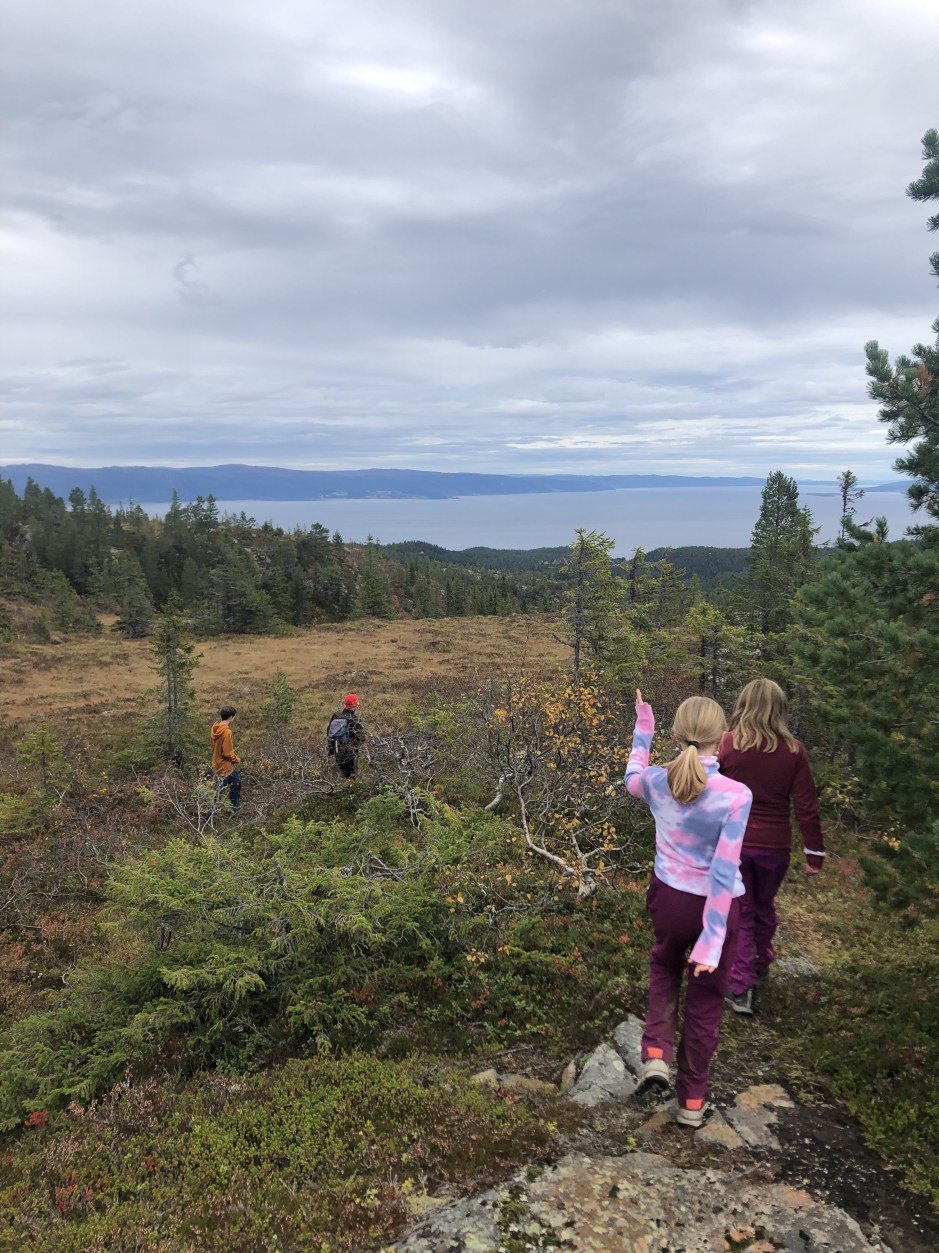
This Summer, the weather in Trondheim hasn’t been great, so we spent some time doing some home improvements, I finished some sewing projects, and we managed to take some trips to the forest too. One of my daughters and I have been also bathing quite regularly even though it is a bit cold.

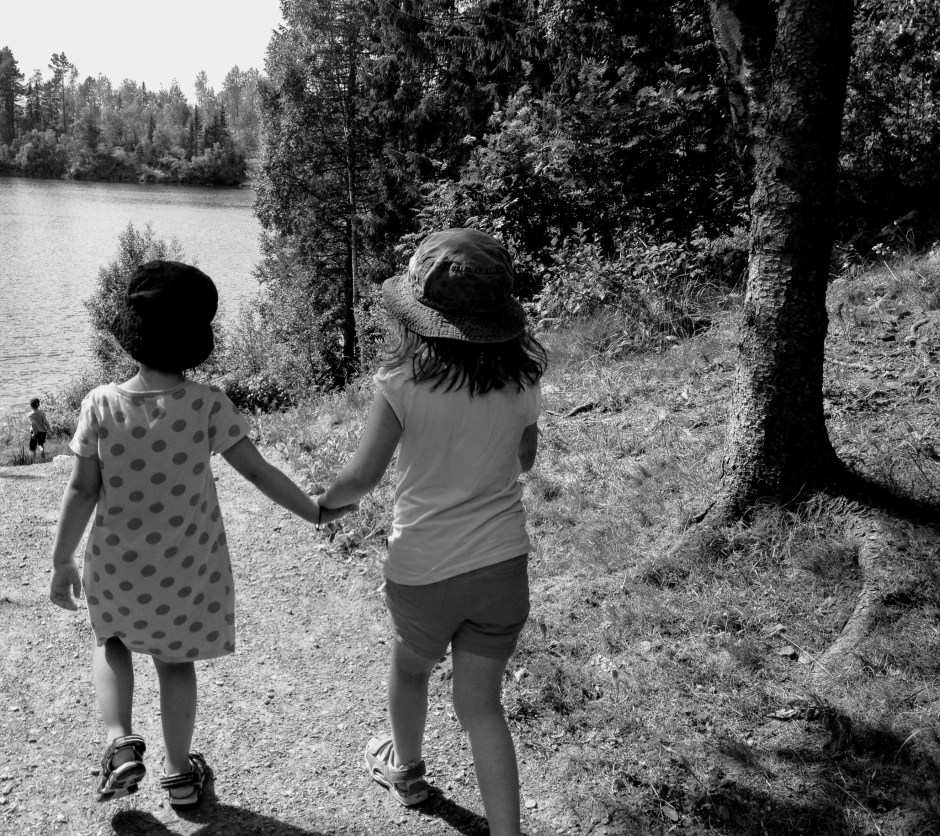
Our youngest daughter is very social and has a couple of good friends in the neigborhood with whom she has been spending a lot of time. We live close to the sea, and close to a farm, and they spend their days visiting the sheep, visiting a neighbor whose dog just had puppies, and when the weather allows, at the beach.

Our oldest has had a less exciting summer, I think, and maybe that is where my anxiety comes from. He is sixteen and at what I see as a crossroads. He will start High school this Fall, and he is a bit in limbo for the moment. Not much to do. Not many friends to hang out with since some are traveling and others are busy with other friends and/or family. Although I do feel for him, I also think this is quite normal. I also went through a period like that when I was around his age.

So, why my anxiety? Well, it has taken me quite a few days to sit down and write this in my journal and realize that my worries are unfounded. It sometimes seems like ‘everybody’ travels abroad at least once a year in Norway, but although it might be true for some, it is not everybody. And why is traveling abroad better than enjoying time together in nature? Or with family? We made a choice not to travel, why spend time stressed questioning a choice I can’t change now? We do try to give our kids experiences. For us, developing awe, love, and respect for nature has been important. Not to mention joy in simple things.

Maybe what is important to acknowledge here is how everything is in constant change. Our oldest and youngest don’t share the same interests with us anymore. Thus, they don’t always want to join us for our hikes, and they might complain if we insist. But hey! that’s partly the job of a teenager, isn’t it? So why do I torture myself like this?

Being a teenager is going through so many changes, but being the mum of three teenagers also requires changes in my mindset and attitude. I realize that I try to be everything for my kids because that is what I was when they were younger. I don’t need to do that anymore. I just need to be a clear, steady, and reliable adult for them. They might not always like my choices and my ideas, but that is part of allowing them to become more steady in who they want to be. I can listen to them, and we can start making projects together instead of my husband and I deciding for everyone, but I most probably won’t always be able to or even wish to do as they want.

So, to reduce my anxiety, I need to be steady in the choices we make as the adults in the family and accept that some or many of them won’t necessarily be popular among the teenagers in the house.

What do we know?

Last week, I went for a hike with a couple of friends, and somehow our conversation moved to grizzly bears. One of my friends is Canadian and she worked as a guide in nature while living in a small town in the Rocky Mountains so she obviously knows how to behave around a bear. My other friend does too because she has spent time in Canada too, and most probably because she is interested in nature.

I shared with my husband the stories they told about close encounters with bears, and we started pondering the importance of learning how to behave around wild animals and in nature in general. He is Norwegian and believes that most Norwegians nowadays, even those who live in remote rural areas, have lost this kind of knowledge. This lack of knowledge creates separation and fear and has led to what we see as little respect for certain animals such as bears and wolves. We constantly hear about how low the bear and wolf population in Norway is and it is because they are often killed out of fear.

This morning, after hearing about the heat wave in Europe, I asked myself, how long have humans been on Earth (according to atlas.com, six million years if we count our ancestors, 300 000 years as we are now!) and how come it seems like the destruction of our planet to such the scale we see now with pollution and abuse of natural resources seems to be relatively new?

I believe that one of the reasons why we are abusing nature and leading our planet Earth towards climate change is the distance we have created between nature and natural processes and ourselves. In part, urbanization is responsible as more and more people move to the cities attempting to improve their lives and lose contact with nature, in part capitalism, especially in rich countries, which teaches us to believe that our well-being is in buying stuff and experiences.

I am constantly surprised by the attitude many people have towards nature and especially animals. It often seems to me that animals are seen as objects and not as sentient beings. Even thousands of domestic animals are dumped every single summer in Norway because people want to go on a vacation and can’t bother to find someone who can take care of their cat or dog.

We buy our food in supermarkets, spend a lot of money on fruits and vegetables that come from abroad, and are ignorant of all the local edible plants. We recently visited a botanic garden in Hamar, where the guide explained that for hundreds of years, Scandinavians got their vitamin C from among other things, Elderberry. Until someone in the 1700s, I think, introduced lemons as the better option. Lemons that need to travel from afar. Then, gradually, the knowledge about elderberry started fading away. The same has happened with medicinal plants. We have no clue on how to heal ourselves from minor ailments other than going to the doctor and getting a prescription where we could easily use plants and/or common sense.

My point here is that I feel we have lost so much valuable knowledge that on one side would contribute to our immediate well-being and on the other help us develop respect for all living beings. As a global community, we need to stop and reflect on what kind of information we keep feeding our minds and our children’s minds, and whether half of this information is useful.

The more I spend time in nature and learn about the local ecosystems, the more in awe I am and develop a respect for it.

Luckily, I see a trend at least in Norway, where people are going back to traditional knowledge. We are also rediscovering the importance of making and repairing things ourselves. For the benefit of the Earth, but also for our personal well-being. Just remember how well you felt last time you made something with your own hands.

As one of my students said the other day, it is not about going back to the old way of living, but it is about not forgetting the valuable knowledge and values we had before the industrial revolution at the same time as we benefit from the advances and inventions we have today.