I stood in line busy in my own thoughts when from the corner of my eye I noticed the body language of impatience in front of me It is true it is taking longer than usual I thought Long weekend Holiday on Tuesday many things to prepare many places to go And then this? At the counter A man trying to do his best from where he was standing a bit unsure quite stressed I felt a pinch in my heart How long will he last in this job? Why isn't there anyone supporting him more? I smiled He smiled back A good reminder We are all doing as good as we can from where we stand Let's drop the judgement and take out our best smile
Slow progress that often feels like going backwards
First, in January, I wanted to quit my job and do something else. I came to a point where I felt that I had had enough of the high tempo, the stress and the increasing demands of being a teacher. I felt that I wasn’t qualified for these demands and that I probably wasn’t skilled enough to have this job. I started seeking for a new job. I thought I could change professions. Maybe become a baker (I am not kidding), or something “more practical”.
When I calmed down, I realized I do like my job and I wondered if the problem is not the job in itself but the attitude I have towards it. Yes, it is demanding, yes I am often running against the clock, but a lot of the stress comes from my constant worry of not doing things “good enough”, my anxiety of not being “as good as”, and believing that I have to solve all these challenges and problems that my students encounter in and outside school. However, if I tone down the “I”, the job becomes lighter. If I try to see each situation as it is and not as something related to me, it makes it easier to deal with it. It also helps to have a more pragmatic approach to the job. In a day, I have the time I have to do my work, and if the tasks keep piling up all I can do is prioritize and the rest can wait. Maybe most importantly, do my job with the right attitude but avoid putting my worth in my job. Stop worrying about how I am perceived by my students and their parents and rather concentrate on why I do things as I do.
The second semester turned out to be less stressful. I want to believe it was partly because of my change of attitude.
However, shortly after that, my worries about my kids and marriage started. I must say that I have to laugh when I think about it, but I haven’t been laughing much related to that during the last few months. And the same questions kept coming just in another setting, am I doing enough? Have we done enough? We should have this and we should have that. Why don’t we do this? Why don’t we have that? Why is our relationship like this and not like that? Why am I not able to fix all these?
From the self-blame ride, I slowly but steadily move towards the ‘other-is-to-blame’ ride. This other is, of course, my husband, and as usual, when I get caught in this way of thinking the spiral goes downwards.
Luckily for me, I was invited to take part in a group to study the Upanishads through the guidance of my Yoga teacher, Prasad, and with some time, mindful silence and reflection, I managed to remember that I tend to get caught up in a big mental knot. Do you see the same pattern as with the job? I do! Self-doubt, an exagerated sense of responsibility, and what I think is pure and simple a restless mind that for some weird reason likes to invent drama.
To begin with, it annoys me that I still get into this negative spiral and don’t manage to get out of it before I make a big deal about things, but I feel at the same time that these mini-crises have their purpose. They allow me to see better my patterns of thinking and thus adjust my attitudes and actions.
I see that my husband and I dread having “difficult” conversations. I thought it was just him, but I am the same. The minute I sense some resistance from his side, I give up, or I give in. I need to gather the courage to push a bit more, to argue and listen, and maybe the answer is still not the one I want to hear but at least we have a better understanding of what we think or want.
I think we are in a transition period as a family and also as a couple. Our kids are getting older. We need to make some changes in the way we “run” the house, and in the way we see the kids and we see ourselves. We need to accept that they have to make certain choices that we don’t agree with, but we also need to be clearer about what we stand for. I tend to worry that the kids don’t feel like we care enough and maybe sometimes give in to things they ask for that go against what my husband and I believe in or sometimes even can afford. But my husband made me realise today that the most important has been to have a safe home for them to grow up in where we are present. At least we have managed that and the basics like schooling and having healthy routines, the rest, is just a bonus. And let’s face it, they are teens now so no matter what we say and do, they will be in some opposition, it is part of growing up and growing out of our home.
It is nice to know that we both want to live a simpler life. We both find meaning in slowing down, being in contact with nature, staying physically active, eating what we believe is healthy, and otherwise, trying to enjoy life. We both want to be more in contact with friends and family. Each on our side, we have noticed that we have isolated ourselves from people because we have been overwhelmed for years by the day-to-day life, but we believe that one of the points of being here must be to have close relationships that keep teaching us lessons about ourselves and others. To help each other.
So, I still get caught up in the mess of my mind, and keep forgetting to go inward when things feel heavy and overwhelming, but luckily, I do manage to change my perspective and learn from it. For that, I am thankful, and I have to say that this is thanks to the practice and study of Yoga.
Things are not and will never be perfect, everything is in constant change, and I am more and more convinced that the best way to go is towards silence beyond the noise of my mind.
The same but different
You might have heard this quote before:
“Hating someone is like drinking poison and expecting them to die.”
I can’t remember when I heard this quote the first time. I think it was one of my fellow Yoga students during my YTT in 2015 who shared it with us at some point, and I think it is rather paraphrasing something that is often attributed to the Buddha. Regardless of who said it (or not), I have found this quote useful ever since then.
I praise myself lucky because I don’t hate anyone. However, there are of course people that have or still trigger me, and throughout the years I have been practicing and studying Yoga, I have been constantly working with my attitudes towards people around me.
This month, I am studying for the first time the Upanishads through the guidance of my teacher, Prasad Rangnekar, and one of my favorite concepts is the idea that we all are part of the same whole, which in Yoga is often translated to Universal consciousness or Brahman, and that it is through our experience of mind and physical body that we create the illusion of separation, or individuality.
Furthermore, we all have the same need to find lasting peace, love, and freedom, and we seek it in different places and in different ways. Our interactions with the world around us are mainly motivated by an often unconscious seeking to feel ‘whole’ (or loved, or safe, or free) and our actions are tainted by our limited perceptions of who we are and the world around us.
Therefore, I often strive toward removing the I from a situation and focusing on the action itself, trying to understand where it comes from. Try to understand the thinking process that might have been at the source of the action. I often end up feeling some sort of connection with the other person, some sort of understanding. I see myself in them and understand that just like them, I act out of my mind in ways that maybe others don’t understand either.
If you think about it, most of what we do is a result of what we feel and think and has very little to do with the person in front of us. The person just happens to be the receiver of our actions. In the same way, I am receiving something from someone but the I is almost irrelevant. It could have been someone else at my place, but for some reason, fate put us on the same path and I can learn something from it.
The challenge for me is often when I feel people don’t ‘try hard enough’, or when I feel I have done my best, and still the reaction is what I perceive as negative or unfair. But it helps me to remember that my best is not your best and your best is not the neighbour’s best. Also, all I can do is act mindfully and with a clear intention, and the response is out of my hands. This is one of the main principles of Karma Yoga which I really like, and I have already written quite a lot about. What I know about Karma Yoga, I have learned through the studies of the Bhagavad Gita, mainly chapters 2 and 3, but this week, we learned a little bit more through the study of Isha Upanishad, which added a useful tool to guide our actions:
- Sattvik Karma (righteous actions): actions that are morally right.
- Paropkara Karma (selfless actions): actions that are done selflessly.
No matter how I perceive the actions of others, if I go back to either 1 or 2 for my next step, I will be able to find peace of mind.
When I move my attention inwards, in all situations, I find peace faster. I ask myself questions such as why do I react to this so strongly? Why is this challenging me? How can I identify myself with this person? Where could this action come from? What can I learn from this?
It requires (self-)reminders and practice, but it works, and in all cases, it helps me move emotionally away from the situation and recenter myself… in myself.
And those who see all beings in the Self and the Self in all beings has no hatred by virtue of that realization. – Isha Upanishad shloka 6
Yoga and the senses
Most Yoga practitioners are familiar with Patanjali’s Ashtanga Yoga that, if practiced sincerely, disciplined, and with the right support, will lead us to the liberation of our conditioned mind and thus the realization of who we really are: ‘love, freedom and bliss’ (Prasad Rangnekar 2011)
One of the so-called ‘eight limbs‘ of Yoga is pratyahara or control of the senses.
“Withdrawing the senses, the mind and consciousness from contact with external objects, and then drawing them inwards towards the seer is pratyahara.” Yoga Sutras of Patanjali book II, sutra 54.
The goal is to get in touch with that part of ourselves that is beyond our body and mind and the means to achieve this goal is to calm down the mind. Therefore, an important part of our practice towards controlling the mind is the control of the senses.
In the Bhagavad Gita, we learn that we have five senses of perception or jñānendriya: the ears, nose, tongue, eyes and skin; and five organs of action or karmendriya: legs, arms, mouth (for speech), genitalia and anus. It is through the senses and the mind that we experience and take part in the world. We are however warned that what the senses bring to our mind is impermanent and we, therefore, have to learn to seek stability within ourselves.
“[…]the contact between the senses and the sense objects gives rise to fleeting perceptions of happiness and distress. These are non-permanent and come and go like winter and summer seasons […] one must learn to tolerate (endure) them without being disturbed.” Bhagavad Gitra Ch. 2 v.14
If we seek happiness in the outer world, we tend to get attached to the pleasures that the senses bring because these pleasures are short lasting. This kind of attachment is easy to see in our actions and in our mind. I can observe myself thinking about getting home, opening the cookie box and eating a cookie. I can observe myself daydreaming about the cookie. Maybe, the thought of eating that cookie is what helps me get through the day, and what is wrong with that? Nothing is wrong with enjoying a treat after a long day at work. The problem is when my welbeing depends on that treat or any other treat. Here are three main reasons I see why it can be a problem:
- The pleasure of eating a cookie lasts for just a short moment which can lead to either overindulging because I want to extend the moment or me seeking the next sensory stimulation to continue feeling ‘good’/’happy’.
- My happiness is dependent on something exterior to me but what if I get home and the cookie box is empty? I will then find myself with an unmet expectation. What will my reaction be? How will that make me feel?
- All the time and mental energy spent in thinking about the cookie distracts my mind and does not allow me to be present in the moment. It becomes nothing more than a distraction.
“While contemplating on the objects of the senses, one develops attachment to them. Attachment leads to desire and from desire arises anger.” Bhagavad Gita, Ch2 v.62
Pratyahara in the context of meditation is when we sit down with ourselves in our daily practice and start by “turning off” our senses to bring the attention inwards. We aim to let go of the need to register and identify sounds, let go of getting caught up in specific smells and for most of us it is easier to close our eyes to avoid getting distracted by our sight. But the senses don’t necessarily stop when we avoid using them. Thoughts continue to fly in our head, and if we haven’t been practicing non-attachment in our daily life, it is when we sit in silence that all these sensory attachments can become stronger. They way we live our daily life affects our practice and in return, our practice affects our daily life.
Throughout the years I have been studying Yoga, I have come to observe other ways I overindulge my senses that I wasn’t aware of like for example when I sometimes want to know certain things that are unnecessary for me to know. I have sometimes catched myself wondering if so and so has said this or done that just to stop and ask myself, why do I need to know this? Gossip is maybe the right word here. How would my life improve if I know more details about other people’s lives that do not have any direct effect in my own life? It’s just a way to ocupy my mind really. Or how about reading and listening to the news? I think that as a mum and a teacher, I should stay updated about what is happening in the world, but to what degree? How much is too much? How much is necessary and how much is just overinduging?
What I like about Yoga is that it is never dogmatic. We are encouraged to take part in life and enjoy it, but we are warned of getting attached to the external world because as mentionned above it only feeds into the limited idea we have of who we are and most importantly, everything in the exterior world is transcient so we doom ourselves to a life of Sisyphus.
“That person who gives up all material desires and lives free from a sense of greed, proprietorship (I and mine) and egoism, attains peace.” Bhagavad Gita ch2 v71
By controling our senses, we filter what we allow into our mind and by doing this we gradually regulate our reactios to the external world. It is all cyclic. Less sensory innput helps create more inner silence in the long run which allows us to access our inner peace, this in turn results in less seeking of sensory stimuli which leads to a quietter mind. It is not simple, it requires courage, perseverance and a lot of practie. The inner void before the inner peace can be quite scary.
On purpose
It’s Spring break, and we have now time to do things we usually don’t prioritize like renting a car to go plant shopping and on the way back home visit a dairy farm to buy some fresh milk for my very first attempt to make milk kefir.
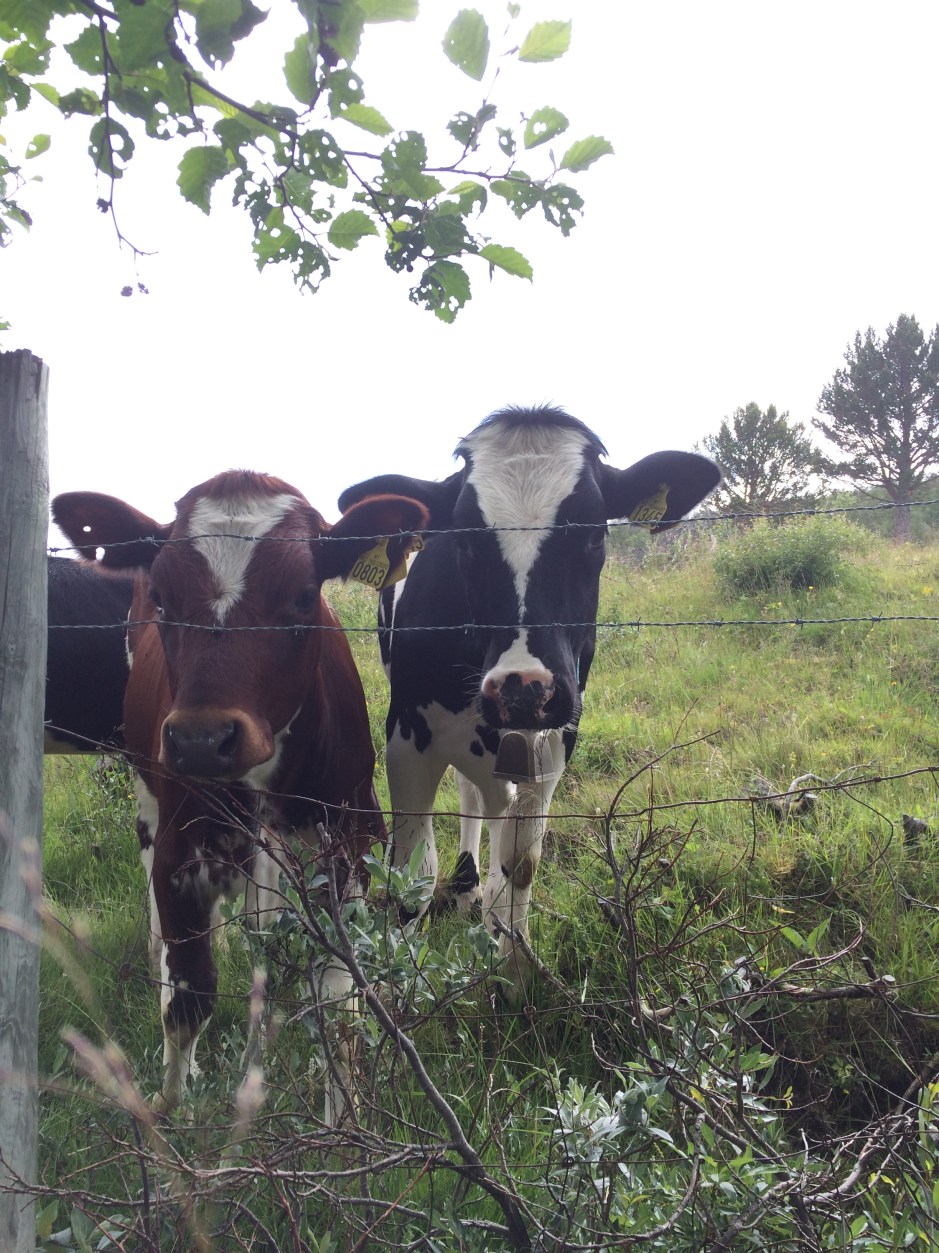
I was especially excited about the dairy farm. It has a small self-service shop where they have a fridge with milk and other dairy products and they trust people to grab and pay for their products without the need of an expeditor. In the same little shop, there is a big window where one can take a peek into the cows’ stall barn. I don’t know what I expected to see, but what I saw made me sad. Don’t misunderstand me, this farm is known for being clean and taking “good care” of their animals, and I guess that compared to many other farms, this one holds a very good standard for the cows, but still. The place is gray, with little sunlight and not much space for every single cow. I read on their website that they have robotized machines that milk the cows, and we did see some cows standing in line, so I guess they go to the machine when they feel the need. From what I know, some farms have the opportunity to let their cows be outdoors during the summer, but the rest of the year, especially when it is very cold outside, they stay in the stall barn. One would then argue that this is good for the cows since they would otherwise freeze to death, but this also means that these animals do not belong to this climate in the first place.
What made me most sad is to think that these cows spend all their time in this gray space without going out for a long part of the year. That their life’s purpose is to produce milk for us human beings. Imagine, being born to be used pretty much as an object! And I know very well how the cows keep producing milk, what it means for them and their calves.
Two things have been flying in my mind since then:
- What gives us the right to decide over the lives of other living beings just because we can?
- Is it wrong to make another living being’s life purpose into what we want?
I keep thinking about the concept of ‘swadharma’ or one’s purpose in life. Can we say that the purpose of a dairy cow is to produce milk and be content with that idea? Or can we challenge it because it is something we have created for our own benefit?
We humans like to believe that we get to choose what kind of life we want to live, but do we really? I sometimes believe we are equally slaves to the systems we have created as the poor dairy cows. No matter how freely we try to live, society dictates many aspects of our way of living. Many people are stuck in gray structures without seeing much sunlight either. Is that their “purpose” also?
Maybe there is no purpose to any living being per se and it is us who create this idea of purpose, but at any rate, I would argue that applying the principle of no-harm or ahimsa can never fail, and I see how the food industry has pushed us into often unknowingly be part of a system that does not respect life.
My husband took the huge step of becoming vegan this year, I try to follow most of the time, but I think it is ‘too complicated’ not to eat dairy products or eggs… I might have to rethink this statement in the near future.