The expert’s advice was “don’t follow any advice”

It’s the Fall break here in Norway, and as usual, when we don’t have any special plans, I am using the free time to do some crafts. This morning. while sewing, I was listening to a program on the Norwegian radio where they were discussing parenting which I have been reflecting on a lot lately.

One of the things the interviewed experts in the radio program said this morning is that we need to acknowledge that there is no such thing as “perfect parenting”. We are human, and we sometimes make mistakes, we make poor choices, and all we can do is reflect, accept, and adjust the way we parent. There is no “right” or “wrong” way of parenting, and what works with one child might not work with another. This interview inspired me to write down my reflections, and here are some points that I have recognized during the years I have been parenting my children:

  1. The importance of setting boundaries. This is a well-known research-based fact. Children, especially teenagers, thrive when they know we are steady adults. Being perceived as a strict parent can be beneficial for our children provided that we talk with them, that we explain why we have the rules that we have which most of the time is for their own safety and well-being. We can listen to their arguments, maybe even sometimes adapt, but not take every single boundary we put as negotiating material. It is not fun to reinforce the rules we set in our homes, it can actually be quite uncomfortable, but unpleasant conversations often lead to growth which brings me to point two.
  2. We need to learn to deal with unpleasant situations and the feelings they bring, this way we can create the space for our children to feel frustrated, angry, and sad and help them put words to their feelings instead of complying with all their wishes and demands to avoid the pain certain feelings bring to them and ourselves. We need to remember that our children will be with us only for a short period of their lives, after which they will have to deal with life mostly on their own. Thus, emotional intelligence is a crucial tool for them to have. This leads me to point three.
  3. Think long-term when parenting. Which values do you want your children to have at the core of their actions? Which skills do you think are important for them to have as they become more independent? What will help them navigate through life once they are out on their own? What can they learn in our care that will allow them to stand on their own feet? I think we tend to forget that our children will not live forever in the safety of our homes and that we are social beings. Are we teaching our kids to contribute to their environment (natural and human)?
  4. This one hit me recently when my three children reached teenage: each of our children is an individual. They have their own personality, their own way of perceiving the world, their own path to walk (or run), and all we can do is try to create a conscious framework for them to grow up in, but at the end of the day, they will make their choices, they will create their own mental world, and there isn’t much we can do about it other than being reflective about our relationship with them so we can look back and feel that we have done what we could with what we have. Unfortunately, I hear, and I recognize myself in this, that a lot of parents express their fear of making mistakes in their parenting. Fear is not a good advisor. Fear makes us uncertain, it can veil our own intuition and make us follow ways that we wouldn’t follow if we listened to our inner voice.
  5. One thing is certain, in parenting as in anything else we do in life, we will make mistakes, and all we can do is acknowledge them, maybe even talk about it, and move forward.

In parenting as in life in general, we do better to have a conscious approach, be aware of the why of our attitudes and actions, and avoid doing things on autopilot. Maybe the most important thing we can do as parents is to slow down, spend time with our kids, and spend time on our own so we can listen to our inner voice instead of getting all confused by all sorts of opinions and advice.
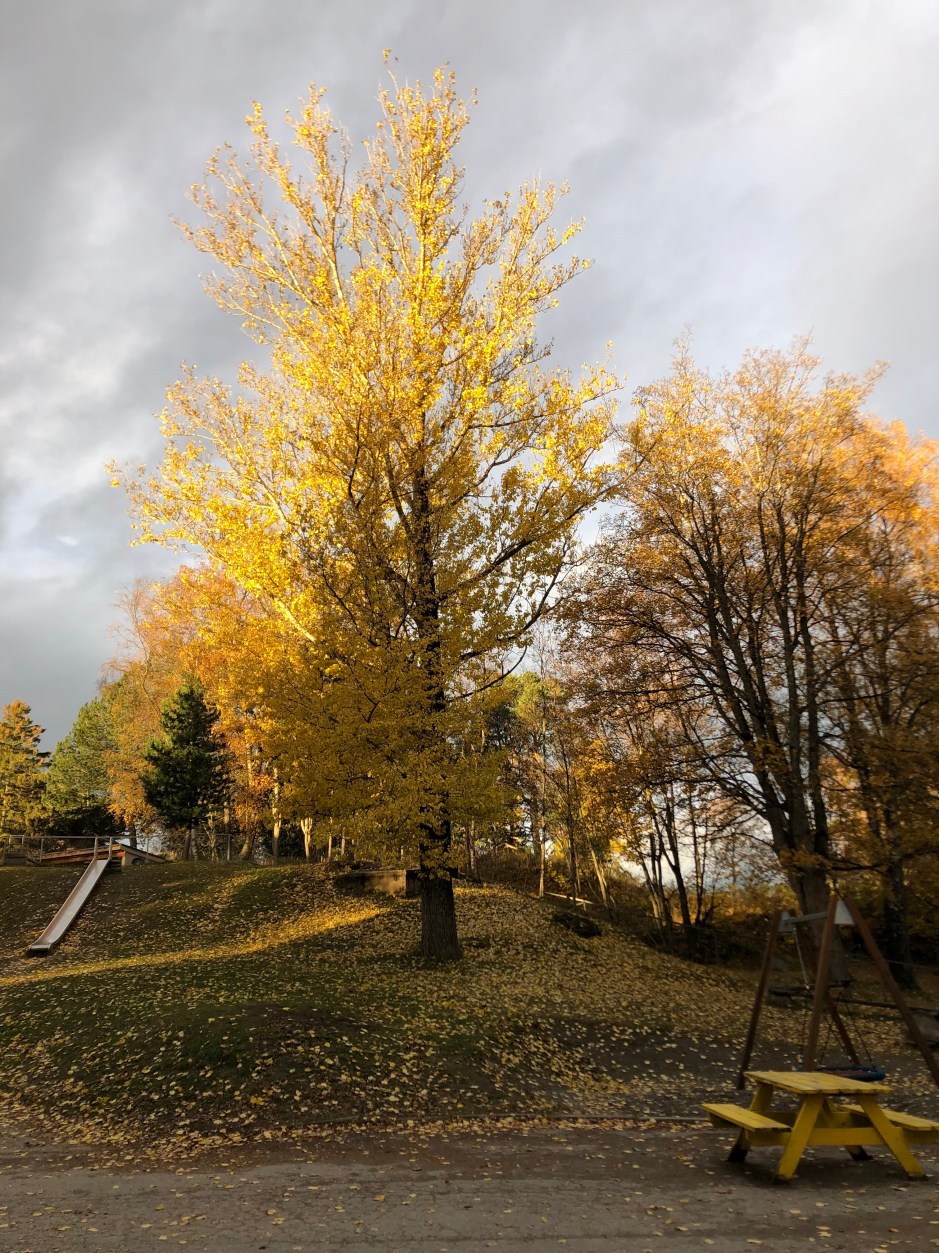
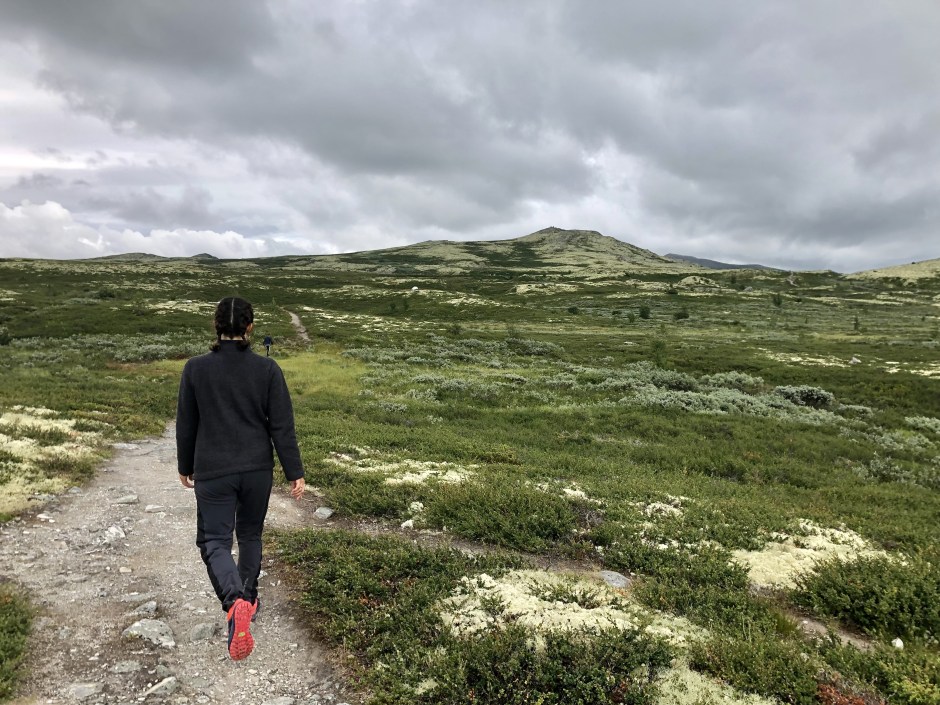
Fall again

In a moment of inspiration
When the grip of my limited mind is loose
I ride my bike under the Fall sun
Life feels simple
And I pray
Please, help me remember
Today is sunny
Tomorrow might be rainy
The Winter darkness is approaching
and whether I'm here or not
the Spring light will come back
And so life goes
Up and down
Round and around
Today I'm happy
tomorrow I might be sad
Can I be with what is?
without judgment, without rush
Nothing remains
Can precicelly this be beauty of it all?

Shades of green

Three weeks in my new job, and I have already concluded that the grass is not greener on the other side, it is just of another shade. The most important is to reflect on what attitude I bring to that environment.

Any work environment is a system, and no human-created system is perfect. Some systems are directly rotten, and luckily for me, I did not end up in such an environment. Most systems are well-functioning in spite of their flaws and lacks. Over the years, I have identified myself as someone who always sees areas of improvement which is a rather positive way to say that I often see where problems are. I don’t do this on purpose, it is part of my mindset. Don’t ask me where it comes from. This can be an asset if I don’t get stuck in the frustration of what I see as a problem, and if I can actually do something to improve it but it can also be a curse if I get mentally fixated, but can’t do anything to change it. The same way, I have a tendency to pay more attention to my shortcomings than what I do well.

Awareness on these two thinking patterns, has led me to make an agreement with myself. On the professional plan, I made a choice of changing environment, and I am committed to do my best to thrive. Reflecting on what sometimes brought frustration and stress in my previous work, I think that a lot could have been avoided if I had chosen to put my energy elsewhere. Among other things, focus more on what I do and how I do it, be more assertive, and let go of what I have no control over.

I am trying also to change my mindset when it comes to myself. I honestly believe that one of the things that makes life worth living is to be a life long learner, to develop the skills we have and acquire new ones, but also develop spiritually. Fot this, I need to find a better balance between observing my limiting actions and attitudes with the purpose to let go of them, and observing my qualities and skills to build myself up from them. If I only focus my attention on what I see as flaws and shortcomings, I feel I just put more pressure on myself.

Furthermore, I believe that if I manage to change this mindset, I will also be able to see more what is positive around me instead of what needs to be “fixed”.

Changes are a very good oportunity to reflect on what we want to bring to the new environment that helps us further, and what we need to let go of that hasn’t helped us so far. So, the grass might be healthier on the other side, but if we bring along what dammaged the grass where we were at, we will soon be looking over the fence wondering if there is an even greener grass somewhere else.

This said, I acknowledge that sometimes, it takes several jumps to finally find the place where we feel we can better contribute and thrive. Luckily for me, I think I have landed in a fertile environment where there is room for learning and staff is very supportive. Now it is up to me what I do with this opportunity, to find my place and an area where I can contribute.

On time and mindful living

I have been trying to simplify my approach to life with the intention to create slience and thus peace of mind. I realize I have been exposed to many different concepts within the Yoga and Buddhist traditions that resonate with me, but I haven’t been able to internalize them in such a way that they really make a difference in my state of mind. Even worse, I suspect I have been using them to put more pressure on myself as I wrote in my previous post resulting in more overthinking.

During the last three weeks, every time I start stressing about something, I have reminded myself of the power of silence, and since I am not able to create complete silence in my mind yet, I do my japa (repetition of a chosen/given mantra with focus on my breath). It has sometimes helped by slowing down the constant stream of thoughts that tend to just go in circles. Following this intention, I started reflecting on where my thoughts usually go, and not surprisingly, they are either in the past like regretting something I did or didn’t do, trying to understand why someone said or did something, longing for something I enjoyed that no longer is, and repeating a situation that brought stress or distress- what we call ruminating; or in the future like planning for whatever is coming, but not only that, also imagining the worst case scenarios and dreading them. My fear is mostly not being able to cope with them. But when am I in the present? And what would bring to be in the present? Well, if you’re reading this blog post, you are most probably familiar with the concepts of “mindfulness” and “mindful living”. It’s power lies in letting go of the past to be completely present in the moment with a fresh mind free from judgement and prejudice. It allows us to better notice our role in the now, and to save energy from dreading what might come. So, why do we keep traveling with the mind back and forward? I honestly don’t know. Personally, I think it is connected to fear and lack of trust in myself. How do I build that trust? I think it goes back to silencing my mind, and repeating my japa. I have tried to use “reason” against my anxious thoughts. To list the moments I have been challenged and managed to get through. It doesn’t help. The best I can do with my own mind is to not engage in the stream of overthinking.

I am also learning to better be with my emotions without trying to change them but without elaborating on them either. So, if I suddenly feel fear for the challenges I might meet tomorrow, I allow myself to feel the fear. I do not push it away, but I do not try to make explanations or even find solutions for it either. When I manage to do that, it seems to fade away faster. I go back to my japa, and remind myself that the only thing I can do now is to do what I need to do now.

If you are a seeker like me, you have most probably understood that we don’t reach conclusions. We just keep walking, keep trying, and we have to constantly remind ourselves of the tools we have in hand to go inwards.

Like the Gita tells us, the world “out there” is so vast and varied, it is constantly changing. It is good to engage in it, but we do better to fix our peace of mind inwards, in this silence that I still haven’t found, instead of in any given situation, person or object.My inner peace needs to be build inside out. Why do I keep forgetting this? Because I keep forgetting.

So, my advice here is, find what it is that you want to cultivate in you and stick to simple principles and techniques. You will have to keep reminding yourself to go back to them because the mind is like a restless bee, it will keep flying from one flower to another if you let it.

I leave you with a quote that kind of relates to this and it kind of doesn’t but I really liked it. It is from a book called The Forty Rules of Love by Elif Shafak:

” Rule 28
The past is an interpretation. The future is on illusion. The world does not more through time as if it were a straight line, proceeding from the past to the future. Instead time moves through and within us, in endless spirals. Eternity does not mean infinite time, but simply timelessness. If you want to experience eternal illumination, put the past and the future out of your mind and remain within the present moment.”

On Yoga or another way to put pressure on myself

You might have noticed that I haven’t been writing much on my blog lately. This Spring, I noticed more than ever that my mind keeps going in circles, and it wasn’t a very nice feeling to begin with. I came to a point where I felt I was driving myself crazy with my thoughts. I felt that my way to approach challenges that kept coming back both at work and in my personal life was the same over and over again without helping me or the situation.

How can my “knowledge”in Yoga help me? I kept going back to the same principles, especially “non-attachment” (vairagya), but no matter how much I tried to let go of the feeling, I still felt frustrated, sad and even angry. What’s the use? I thought. Maybe Yoga is not for me. Maybe I’m not “spiritually mature enough” for this. What can “really” help? I asked myself. I felt so tired of my doubts, my struggles, and my seeming inability to help myself. I felt that I needed a more systematic approach to myself. Yoga has many good tools, but I felt I was unable to use them most of the time in a way that helped me “move forward”.

I wrote in a post earlier this Spring that I read Marshall Rosenberg’s book about non-violent communication. I did this prior to a meeting I was going to have with one of my leaders to try to formulate my thoughts in a constructive way because I have a tendency to get lost in my emotions with the unfortunate outcome of either saying things that I regret afterward or staying passive and accepting that my emotions are “wrong” to avoid making a big fuss. The principles in this book were a game-changer for me. It started the process of me accepting that my emotions are not “wrong”, and that I get so scared by them, that I put all my energy into trying to suppress them forgetting the most important thing to do which is to figure out why I am feeling like I do. Without judgment. What is the need behind the emotion, and how can I communicate it or what do I have to do in order to meet that need?

I had been using my understanding of the Yoga teachings to suppress myself, to judge my emotions, my needs, and my thoughts. In my quest to be a “good” person, I have been using Yoga to put more pressure on myself. We tend to think that people that have a big ego are selfish and self-absorbed and that people with a big ego do things that harm others, I believe that having a big ego can also harm yourself. My ego is built in the idea of being good to everyone, of making everyone feel well, of not creating problems for others, and of being perceived as helpful, compassionate, kind, and a problem solver. The problem is that I am human. I am limited. I have needs and wishes, and no matter how much I try to suppress them, they often resurface in shapes that I don’t like such as frustration, anger, and sadness. The more I try to push away these feelings, the less I see my needs and wishes, the more confused I become, and the more mixed messages I send. And this keeps repeating itself. So the idea I want to build of myself, even though it is in theory “better” than being what I see as a selfish person, is not helping me and is not helping anyone around me.

Knowing this, and observing other people I know that could be described as “spiritual,” I can’t help but ask myself if not this idea of spirituality attracts people that tend to put too much pressure on themselves. Are we misunderstanding spirituality? What is spirituality, really?

Yoga tells us that we are all at the core the same. We are love, freedom, and bliss. This is a beautiful idea, but I think that my limited understanding of love, freedom, and bliss represents another layer that stops me from seeing precisely this purity in me. The more I fight against myself, trying to be this ideal person, the less I can see who I really am.

I am no better or worse than anyone else. I don’t deserve more or less, but I do owe myself to listen with compassion. Why do I put my needs under others? Why do I keep believing that I am wrong?

I don’t think I am rejecting Yoga and its teachings, but I am doubting my understanding and the way I have been applying some of it in my life. I wonder what the purpose of it all is. I feel confused, and I think this is a good thing. I think I need to think less and live more. I think I need to take myself more seriously at the same time that I need to let go of the overwhelming spin of my thoughts. I think I need to listen more carefully to what my heart is trying to tell me.

One thing that I keep going back to is silence. I need more silence. Not more principles. No more techniques. Just the courage to be still and listen to me and take it from there.

No conclusions, and no resolutions, just keep walking but with less judgment towards myself, more self-compassion, and a willingness to meet my own needs.