What’s been on my mind lately

Short version : a lot.

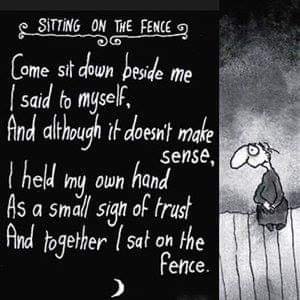
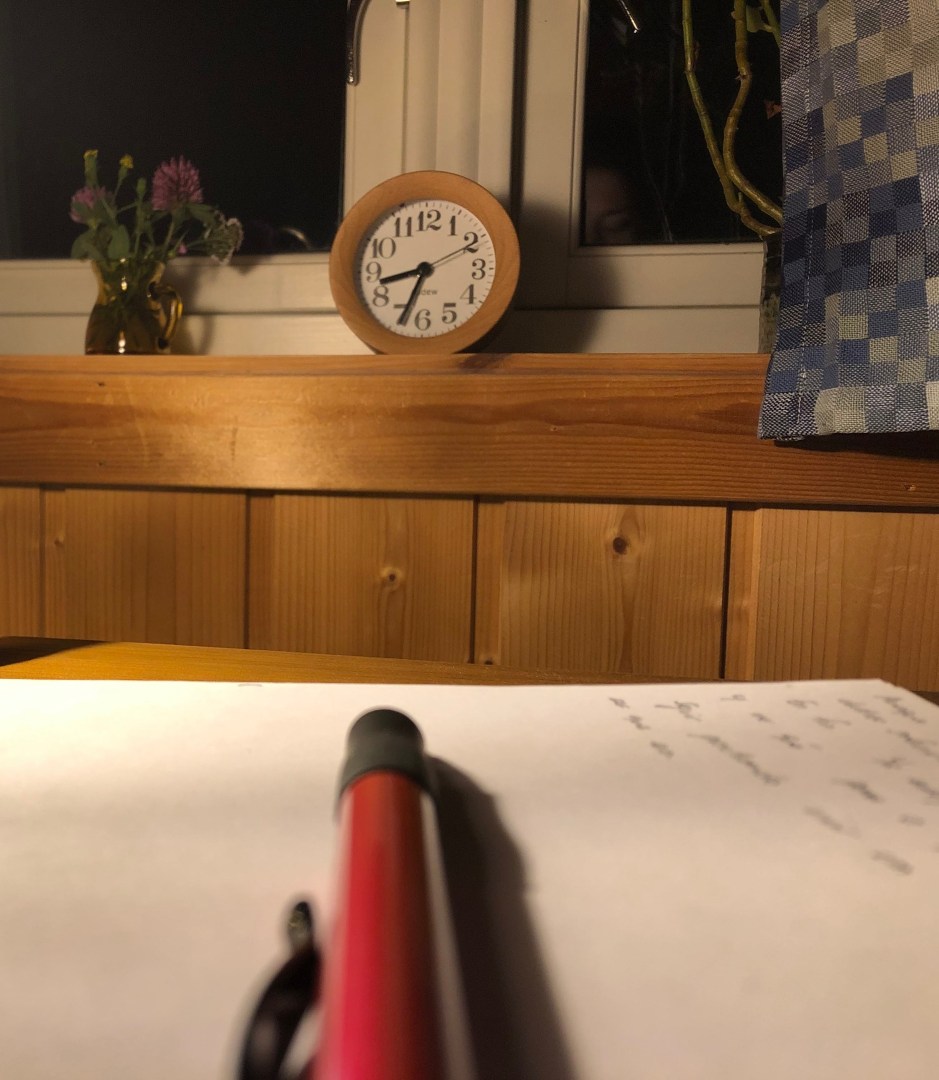
I notice my mind has been all over the place lately. Even at night, I catch myself thinking half asleep. I don’t know why. I guess it’s a phase, so I just partly asume but I am also working on noticing and letting go, when possible. If I wake up in the middle of the night and notice my thoughts, I start repeating a short mantra I have and it always helps me go back to sleep right away.

I have also been reflecting about all the things that affect my mood wondering how I can keep a more stable state of mind, and it all goes back to the idea of grounding myself in my intentions and letting go of the expectations. Which keeps being easier said than done. I am so used to do things with a certain attitude that changing patterns is taking time. But I keep trying, I keep reminding myself, and some days, I manage.

My dad used to call me the satellite dish when I was little, because I was able to notice everything. I guess, in a way it is an asset because I can read people quite fast. I can see when someone is distressed, or sad, or angry often before others notice. If I use this ‘skill’ properly, I can show understanding and compassion and even give a helping hand if necessary. The problem is that, this skill, combined with my need for validation and my fear for doing something ‘wrong’ can be emotionally tiring because I read other people’s emotions as a direct result of my actions. Leading me to feel bad conscience in some cases and being judgemental towards the ‘other’ in others. So, it all ends up being about ‘me’ and not about the situation or the person experiencing a certain emotion in my presence.

An example, I go into the classroom, with my lesson ready but I am received by tired and frustrated students. Some of them can at times be rude. My first reaction is often to become defensive. I want to go through the lesson, I want them to learn, but with that attitude, we won’t get anywhere. I get caught up in my emotion, and by the end of the lesson, I am exhausted because I spent the whole lesson fighting against my own frustration and disappointment to act as a ‘professional teacher’.

What can be done differently here? Change the focus. It is not about me wanting to teach them. It is about the whole experience of being in the classroom, seeing each and every one of them, and letting go of my judgement of their behaviour or the circumstances. It is about putting my whole heart in the situation and forget about my own insecurities.

Don’t misunderstand me, I do care about their learning, but ultimately, I can only come prepared to the classroom with a plan that aims to meet their individual needs but if their minds are elsewhere, if they are experiencing some sort of emotional distress (which is very common for their age), all I can do is meet them with curiosity, with openness and at the same time stand my ground by setting a clear framework for our interactions, without allowing myself to believe that their actions and reactions are in any way a validation or rejection of me as a teacher.

I am also experiencing this in other relationships. I am reminding myself to give space for others to be who they need to be without allowing it to affect my inner peace. I have been observing myself for a while now, and I know that most of the time, my reactions to other people are 99,9% a product of my inner world. So why would I believe that it is different for others? How others behave with me has little to do with me and more with their inner world. So, why judge? Why try to see who I am in the gaze of others? Here too, the key is to meet everyone with an open heart but stand my ground. Know my limits, and remember that we are all doing as good as we can out of our own perceptions and belief systems.

So, to summarise, during the last few weeks, I have noticed how much I still live ‘out there’, and how peaceful I feel when I move my focus to my intentions and my actions and let the reactions be what they need to be. Sometimes I wonder what is the purpose of my life. I wonder if I am living the life I am supposed to live or if I should be doing ‘more’ or ‘bigger’. Lately, I’ve been reminding myself that it is not the size of what we do but with what attitude we do it. How we make people feel. How often we manage to detach from the I in order to create a space for the we to be. Maybe that is my ambition in life for the moment. To be able to meet everyone with an open mind and an open heart and keep my mind at peace.

Heroes and villains

During the last few years, I have been asking myself why, growing up, and also as a young adult, I have been seeking the perfect person. Not the perfect husband, or the perfect lover, but the perfect person. Someone who is good and nothing else.

The awareness of this need came gradually as I experienced extreme disillusion when I discovered that this one person I thought was flawless suddenly did or said something I would judge as mean or bad. The feeling of disenchantment was such, that I had to completely cut all contact with that person.

I don’t know how many times I experienced this, maybe three or four throughout my life but it makes me think of the collective need we have to find heroes and how difficult it is for a person that has been labelled as such by the public opinion to live up to the ideal we have of pure goodness and flawlessness.

Why would I expect someone to be flawless when I know that I am not? Is it to put myself in his/her hands? Is it to escape from my shortcomings? Is it out of hope that this person somehow will save me from myself? I don’t know. Maybe I don’t need to know, but I think that I make myself and other people a big favor by acknowledging that our mind is characterised by duality. Some of us are able to do more good than harm around us, while some of us are more limited by our mind and do more harm than good. Some people have created a lot of pain and realised it timely to change their ways. There are also examples of people who have done good things for some and really bad things for others.

Maybe this need to believe in heroes comes from our need to connect with our Higher self? Beyond our thoughts, beyond our experiences and actions, this promise that at our core, we are Pure Potential, that we are Love, Freedom and Bliss. So until we touch it, until we realise it, let’s cut ourselves and others some slack. Applaud good actions, support good deeds, be inspired and inspire and remember that what we see is all a product of our mind.

I did not sign up for this!

Earlier this week, I stood in front of one of my classes ready to start the lesson when one of the students snapped loudly ‘What’s up with your outfit? You look like a flight attendant!’ Surprised by her remark, I stood there some seconds trying to figure out how this made me feel and what I should reply. I don’t really care if my students approve of how I dress or not, but I did feel uncomfortable with a student making such remarks. I decided to reply that I wasn’t sure how to take her remark, and moved my attention towards the rest of the class.

The same evening, as I walked home from work, my mind brought me back to this incident. My first thought was ‘I did not sign up for this when I became a teacher’, followed by ‘And what did you sign up for?’ ‘What did you expect?’ I realised that at some point in life, I have thought the same about most of the roles I play in life.

What do we expect when we choose a profession? What do we expect when we choose a partner? In a friendship? We don’t choose our family, but we do expect quite a lot from them, and our friends and even our neighbours.

Many of the choices we make in life, we make when we are quite young. I know that when I chose a career and a partner, I had very little understanding of who I was. I chose to have children because most of the people around me were having children and because it felt right, but I didn’t really reflect much on the implications, on why I wanted so badly to become a mum.

I don’t say that any of this is ‘wrong’, but as time has passed, I have sometimes been quite dissatisfied with certain aspects of my life and I believe it is because unreflected, almost unconscious expectations started to grow in my mind of how things should be. How I should feel, how people should make me feel, how things shouldn’t be.

One problem that I see with this is that when I go around with lack of clarity of what my role is and what the purpose of engaging in something is, the expectations I have tend to change almost with the wind surprising sometimes even myself. Furthermore, I am putting the responsibility of how I feel in the hands of other people or the circumstances.

I believe more and more that the less we expect from the external world, the more peaceful life we can live. This is easier said than done. Everyday, in many situations, I catch myself getting annoyed or frustrated because of an expectation I have that is not met. I am trying to learn to catch myself before I react in situations when some unspoken, unfounded, unrealistic expectation is not met, but its taking time to make it a habit.

Going back to my initial thought, what did I sign up for when I decided to be a teacher? I could write a long essay about this, but I will spare you. I can honestly say that I had a certain vision when I decided to become a teacher, and this vision has obviously changed with age and experience. What I keep forgetting, is that in that role and any role I play, all I can do is have a clear and pure intention in every action I take, do my best and learn from the rest. Every class is different and every student is different. Og I could choose, I would of course love to have classes where students are eager and focused and motivated so I can share my passion for learning. But students come with their own background, experiences, expectations and preconceptions. Every moment is an invitation for me to create a space between behaviours and my reaction. To grasp the moment and turn situations into a learning experience both for them and for me. Now that I am in this role, for whatever reason I chose it, I can’t go around blaming big classes, noisy students, little time, lack of motivation and whatnot for how I feel in the classroom. I have to show up clear about what I want to achieve, and that should be something for the benefit of my students. I am not there to ‘get’ anything from them.

This said, it is also my role, I think, to prepare them to life beyond school and patient teachers. I need to lead with the example, be assertive, firm and sometimes maybe even stern, but for their learning and not to fulfil some kind of need in me.

Life is not easy especially because of human interactions, I feel. We all go around living life through our minds believing that the way we see things is the right one. Things don’t always go as we expect them to go, people don’t always behave as we wished they would. We can of course talk and try to understand each other, find compromises, but it isn’t always easy. Therefore, I believe that the way to a more peaceful life is to always go inwards. Always ask myself ‘why do I think like this?’, ‘what can I do?’, ‘what do I really want?’, ‘can I give myself what I am seeking out there?’, ‘is it realistic or even fair to have this expectation?’. This kind of reflections are helping me a lot.

Who will you spend the rest of your life with?

Have you ever asked yourself that question? What is the obvious answer?…You!

You might spend a lot of time and energy trying to make sense of your relationships with other people. You might invite people to your life and say good bye to others often connected to what they bring to your life, but how much time do you spend trying to figure out the person who will be with you until your last breath, namely you?

If I ask you how well do you know yourself? What would be your answer? Hopefully, you know your likes and dislikes, and you know your strengths and weaknesses. Often, however, our introspection stops there. We know how we think, how we feel and how we act in different situations, and we limit ourselves to believe that there is nothing we can do about it believing that that’s just how we are.

Yoga teaches us that there is more to ourselves than what we usually think, and taking the time to get to know ourselves better can help us:

  1. Accept ourselves better
  2. Gradually let go of the aspects of our mind that bring suffering to bring lasting peace of mind
  3. Cultivate the qualities that bring inner peace

Rude honesty, acceptance and refinement

The work of introspection starts with self-observation, honesty and acceptance. Observe your behaviour, thoughts and attitudes, and find what doesn’t help you cultivate inner peace, what creates distress, what hurts others and yourself. Honest reflection is required here but do this with the same kindness you would use to rise your own child. Do this with acceptance and without judgement, because if you don’t accept yourself, the work of refining your thoughts will be very difficult. Being judgemental towards yourself will mislead you and you will get stuck in the negative emotion created by your judgement missing the opportunity to go deeper.

Let us say that you have a tendency to get very angry and you don’t like how you behave when you do so. Every time you get very angry you end up doing and saying things that you know hurt others. After an outburst of anger, you then end up feeling frustrated and angry towards yourself regretting the whole situation for hours or even for days. Ruminating, blaming yourself for not being patient, blaming others for their behaviour, blaming the world for being as it is.

Do you see how much time and energy is invested in a pile of emotions that are not helping you? What we learn through the study and practice of yoga is to first and foremost accept that you experience anger but you are not anger. Anger is an emotion that comes to you as some sort of messenger, and you are invited to listen to this emotion, figure out why you get angry. The tough part is that you need to look inside yourself to find the answer instead of pointing your finger toward other people, or the circumstances that make you angry.

In yoga psychology, we learn that anger is often connected to our expectations or to fear. If we manage to recognise the source of the emotion, we then are able to do the work by asking ourselves if we can change or let go of the expectation or if our fear is unfounded. This kind of process requires patience, time and a lot of practice. Awareness is the first step, acceptance is the next one and then we can start the work of refining our perception in order to change the behaviour.

That is where the regular practice of meditation comes in handy. When we sit in silence with ourselves, we learn breathing techniques that help us slow down and relax. We learn to observe our thoughts as if they were some sort of movie playing on the screen of our mind. When we sit in meditation we do not act. We just observe. With practice, we can bring some of the elements of meditation to our everyday life. When I notice that I am angry, I can take some deep breaths to calm myself and create some space between the emotion and the reaction. I can observe my thoughts and allow them to stay as thoughts and not as actions. I can then remind myself where this emotion comes from, and choose the best way to deal with the situation without hurting myself or others in the process.

Another useful practice is to start noticing your self-talk as you go about throughout the day. Whenever you catch yourself being nasty towards yourself, stop, and try to change it to constructive self-talk. It is okey to be critical, to want to improve, but it is not okey if you are constantly putting yourself down.

Cultivate qualities that bring inner peace

The work of introspection is not easy, and it can leave us feeling vulnerable. It is not easy to see with full honesty into the limiting ideas we have about ourselves and those around us. It can be tough at times. That is why, we need to see ourselves as our most important ally in life. We need to accept, love and show compassion towards the aspect of ourselves that we do not like, and keep cultivating the aspects of ourselves that we know bring peace to our mind.

Both in the Bhagavad Gita and in Patanjali’s Yoga Sutras, we are encouraged to replace limiting thoughts that bring pain to ourselves and others with thoughts, attitudes and actions that bring inner peace and by consequence peace around us.

There are several ways to do this, but I want to highlight three:

  1. Decide which values you want to live up to, write them down somewhere. They shouldn’t be more than five. You can maybe range them from your topmost important. Every morning, read your values, and either choose to live consciously by applying them every moment of the day, or choose one for a period of time. Whenever you are in a situation where you need to make a choice on how to behave, go back to your value and reflect how you are applying it in the situation. It might happen that you sometimes go back to acting in a reactive way without reflecting, and realise that you went the completely opposite direction than the one shown by the chosen value. This is completely okay. Practice is one of the main principles in the yoga tradition, and it is not by chance. Every deep change needs practice. So, forgive yourself, learn the lesson, and keep trying.

In Patanjali’s Yoga Sutras, we find some guidance if we were unsure on what to choose, in Chapter 2, sutras 29-32, he talks about the Yamas or great vows, and Niyamas or observances. The Yamas are non-violence, truthfulness, non-stealing, continence and non-greed, and the Niyamas are purity, contentment, accepting but not causing pain, study of spiritual books, and self-surrender or worship to God (the Divine).

Furthermore, in chapter 1, Sutra 33, he gives practical advice on what kind of attitudes we can cultivate towards other people in order to cultivate inner peace:

‘By cultivating attitudes of friendliness towards the happy, compassion for the unhappy, delight in the virtuous, and disregard toward the wicked, the mind-stuff retains its undisturbed calmness.’

In the Bhagavad Gita, Chapter 16 verses 1-3, we find many uplifting values and attitudes that can help us:

‘(1) Fearlessness, purity of heart, perseverance in acquiring wisdom and in practicing yoga, charity, subjugation of the senses, performance of holy rites, study of the scriptures, self-discipline, straightforwardness;

(2) Noninjury, truthfulness, freedom from wrath, renunciation, peacefulness, nonslanderousness, compassion for all creatures, absence of greed, gentleness, modesty, lack of restlessness;

(3) Radiance of character, forgiveness, patience, cleanness, freedom from hate, absence of conceit—these qualities are the wealth of a divinely inclined person, O Descendant of Bharata.’

2. Whenever you catch yourself having thoughts that limit yourself. Thoughts that bring distress, stress and/or pain, acknowledge them, accept them, and remind yourself what you want to replace them with. Let’s say I want to live in Trust instead of Fear. Whenever I am worried about an uncertain situation in the near or far future, I can remind myself to trust I will be able to deal with it, and that I will get through whatever life brings.

‘When disturbed by negative thoughts, opposite [positive] ones should be thought of. This is pratipaksha bhavana.’ Patanjali’s Yoga Sutras translated by Swami Satchidananda

3. Create yourself an affirmation. If you know in which area of your life you struggle the most, for example, having a feeling of unworthiness, or feeling a lack of love, or feeling unsafe, create an affirmation for yourself: ‘I am enough’, ‘I am loved and protected’… During the day, whenever you remember, repeat your affirmation in your head, and especially in moments of distress.

You are much more than what you believe

Lastly, in the yoga tradition, we are constantly reminded that our body and our mind are only the vehicle through which we experience life, but we are much more than that. Every sentient being is at their core what in Sanskrit is called Atma. My favourite translation to English is Pure Potential. We all are this Pure Potential which is source of infinite love, creativity and happiness. That is why we keep seeking love and happiness throughout our lives! The challenge is that throughout our life (and lives, if you can accept the idea of reincarnation), our mind has been shaped by experiences, and this Pure Potential is covered with layares and layers of limiting ideas that do not allow us to see our real nature.

Our job is then to peel off the layers of limited thoughts to come closer to our core. We start by replacing our thoughts and behaviours that cause pain with what doesn’t cause pain, and little by little we are able to let go of everything that limits us to finally see the infinite goodness in ourselves and others.

Whether you believe in this or not, you should at least know that we all are capable of much more than we limit ourselves to believe. We all have the ability to change our mindset. It is not easy, it won’t happen in a day or two, but with practice and perseverance, you will notice the gradual changes.
Tiempo robado

Esta frase vino a mi mente un día en el que, a media tarde y entre semana, me tomé la libertad de sentarme un momento a no hacer nada. Por alguna razón, me sentí incómoda. Como si estuviera haciendo algo malo. Lo primero que pensé fue: ‘¿no tengo nada que hacer? Y obviamente que la respuesta era ‘sí’. Como ama de casa y maestra de secundaria, siempre tengo algo que hacer. Pero no tenía nada urgente que hacer. Mis clases del día siguiente estaban listas, no tenía tiempo tanto tiempo como para ponerme a limpiar la casa y no había tanta ropa sucia, además teníamos comida para los próximos días en el refri. Aún así, me senté con la sensación de que si alguien me viera, me juzgaría.

Desde hace dos o tres años, mi marido y yo estamos tratando de simplificar nuestra vida lo más que se pueda. La razón principal es que queremos pasar tiempo en familia. Tenemos tres hijos de 14, 12 y 11 años, y vemos con cierto horror lo rápido que el tiempo ha pasado desde que nuestro hijo mayor nació. No queremos un día ver atrás y darnos cuenta de que pasamos el tiempo que nuestros hijos estaban a nuestro cuidado corriendo de un lado a otro o exhaustos después de largos días llenos al tope de actividades. Este año, parece que al fin lo estamos logrando. Tiene que ver que nuestros hijos son más independientes ahora, pero también que hemos tomado decisiones con este objetivo en mente.

También me doy cuenta de que aunque todavía soy relativamente joven (43 años), mi nivel de energía no es el mismo que hace diez años. Mi actitud también tal vez ha cambiado. Después de varios años de practicar meditación, de ir a retiros de silencio y sentir lo que es tener la mente y el cuerpo tranquilos, no se me da la gana conscientemente llenar mis días tanto que por más que intente evitarlo, mis niveles de estrés regresen a lo que eran hace unos años.

La práctica de meditación y de vivir una vida consciente ayudan a mantener un estado mental más tranquilo, pero tampoco es magia. Si uno no hace mas que correr de un lado al otro, el sistema nervioso simpático es activado y cuando se vuelve algo crónico acaba uno agotado.

¿Tal vez el proceso de simplificar la vida es en cierta manera un efecto del trabajo de vivir una vida consciente? Cuando sabe uno cómo se siente vivir estresado, cuando sabe uno cómo quiere sentirse, no queda más que tener sus prioridades bien claras.

Pero regresando a la idea del ‘tiempo robado’, aunque tengo como objetivo en mi vida simplificar y correr menos, tengo bien anclado en mi inconsciente que cada minuto de mi día, especialmente entre semana, tiene que ser utilizado en hacer algo ‘productivo’ o algo para mi familia. Pero, ¿a quién pertenece el tiempo? ¿quién decide qué debo hacer con ‘mi’ tiempo?

Cada quién vive su vida como mejor puede, y últimamente pienso que si hago mi trabajo consciente de cuál es mi responsabilidad y poniendo mi mejor esfuerzo, puedo al mismo tiempo buscar el equilibrio entre el tiempo que paso haciendo mi trabajo y el tiempo que me doy para descansar o hacer algo que me ayude a desconectar mi menter por un rato. Lo mismo aplica para mis otras responsabilidades.

Tal vez parte de la ecuación es encontrar qué es lo que yo aporto en cada lugar en donde tengo responsabilidad. Esto me ayuda a tener más claro qué es suficiente, qué es lo mejor que puedo hacer bajo las circunstancias que tengo (tiempo y recursos) en vez de estarme comparando con otras personas o con un ideal inalcanzable.

Así que la próxima vez que me salga a caminar durante mi trabajo para airear mis pensamientos, o me siente a tomar un té un martes por la tarde, si las palabras ‘tiempo robado’ vienen a mi mente trataré de recordar que nadie es dueño de mi tiempo ni del tiempo de nadie. El tiempo es una herramienta que inventamos en un principio, seguramente para facilitarnos la vida, pero se ha vuelto un concepto que trae mucho estrés para la mayoría de la gente.