
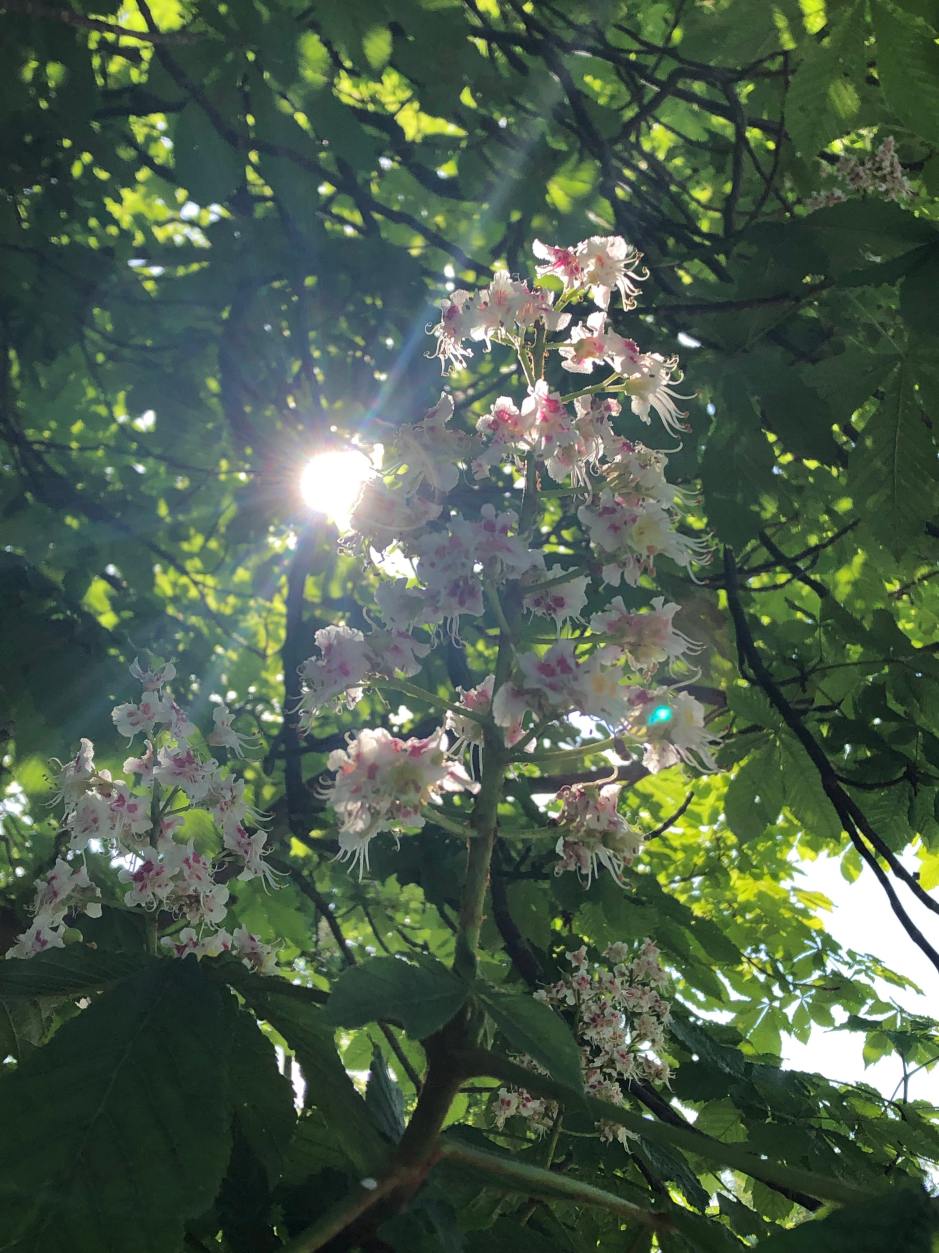
A serene mind for meditation and meditation for a serene mind.

6:7 “With a self-disciplined mind, you experience a state of constant serenity, correctly identifying with your highest Self (Atman) who remains unaffected in heat or cold, pleasure or pain, praise or blame.” Satchidananda, Sri Swami. The Living Gita: The Complete Bhagavad Gita: a Commentary for Modern Readers (p. 82). Integral Yoga Publications.

The practice of meditation requires self-discipline. We exercise and develop discipline by taking the time to sit in silence every day no matter what. Furthermore, we exercise mental discipline when we sit in silence and keep bringing the mind back to the here and now.

There are different ways to focus the mind while siting in silence, one of the most common ones being bringing our attention to the breath. We observe the breath either by noticing it coming in and out of our nostrils, or by feeling the rise and fall of our chest/belly as we breathe in and out.

The repetition of a mantra or affirmation is also a good tool to focus the mind, and as we notice ourselves engaging in our thoughts, we go back to the breath or the mantra until we manage to let thoughts come and go without engaging with them. This is what is called dharana in meditation, and could be the equivalent to mindfulness in the Buddhist tradition.

It is said that beyond dharana is dhyana – meditation – and through this we can get in touch into our Higher Self (Atman) which is ever peaceful and unshaken by whatever is happening around us.

The practice of disciplining the mind continues in our everyday life. We learn to discern between uplifting and limiting thoughts. We learn to take life as it is without overindulging in our perceptions and judgement of the external world. This way, we are able to stay serene, as the cited verse states.

It is a loop, or an upward spiral. We discipline the mind when we sit in silence so we are able to meet everyday life with serenity, and because we are able to keep cultivate a serene state of mind no matter what, we can easier sit in silence and get in touch with your Higher Self.

To the ideas presented in this verse is connected the principle of the transient nature of the world we perceive including our physical body and our thoughts, and thus the importance of accepting pleasantness and unpleasantness equally. Avoiding to put our stability in this changing world and rather in our inner peace.
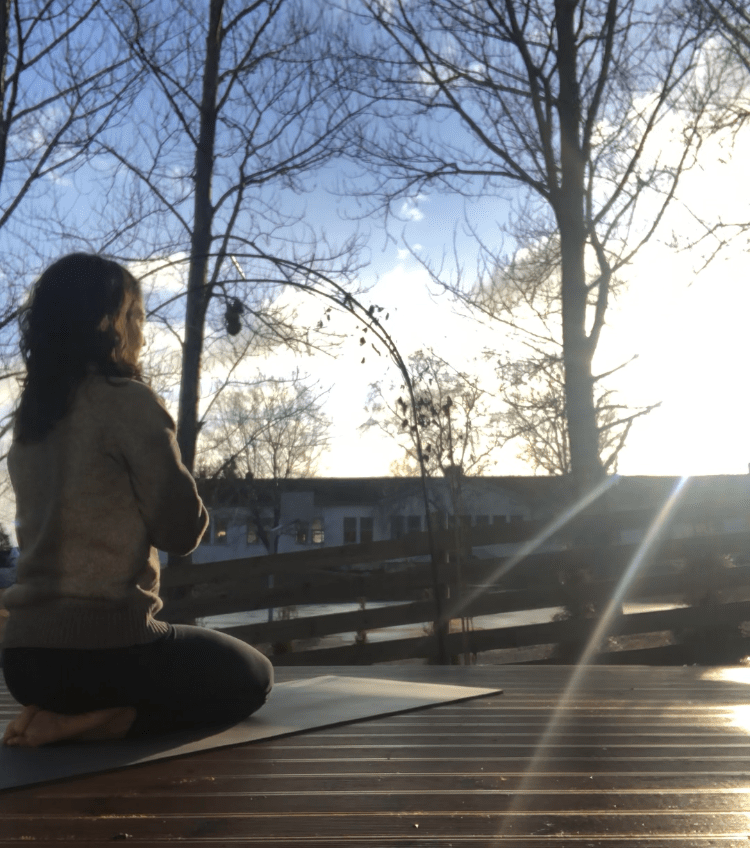
#30daysthreeminutessilencechallenge

I recently started a ‘sitting in silence challenge’ on my Facebook page where I film myself guiding a three minute long meditation. I came up with the idea because I see there are often plank, push-up and burpee challenges on Facebook and Instagram. They are often intended to bring awareness to an important cause. The intention for my challenge is to encourage people to slow down and spend some time with themselves.

It is fun to see how the people taking exercise challenges seem to struggle the first days to complete the set amount of repetitions, but as they continue day after day, it seems to get easier. The same applies to meditation practices. It requires practice and patience. Just like our muscles, the mind can be trained to slow down and to focus.

I started practicing meditation about five years ago, and like many, my practice wasn’t very steady. I started for a period of time, and then left it, and then came back to it. A year ago, I made the commitment to myself that I would not let a day pass without siting in silence, and I have sticked to it. One year of daily practice, and I observe, almost every day that I come to my practice with the intention of focusing my mind, to then realise that my whole life is passing in my mind, as a movie while I sit still. Either analysis of past events, or planing my immediate and long-term future. But I don’t allow this to discourage me because I have noticed the benefits from siting with myself every day.

It is like a mini vacation from the constant flow of stimuli and information the outer world sends me. It is is a mini vacation from my almost compulsive need to do something. It slows down my body and my nervous system. When I practice in the morning, I feel it allows me to center myself before I meet the world. When I practice in the evening, it helps me unwind and get ready to rest.

In connection with this 30-days challenge, I will try to write a bit more often about meditation. One of my favourite reads is Chapter 6 from the Bhagavad Gita which is about Meditation. The beauty of Yoga Meditation is that it is not just a new activity we add to our daily schedule, it is a way of living. I love to go back to this chapter from time to time because it is so inspiring to read how we can gradually change our mindset to live a more harmonious and peaceful life.