
We all do as good as we can

-and if not, can we understand and forgive each other?

Some days ago, my youngest daughter who is almost twelve was very upset. She felt she had messed up with some of her friends and wanted some advice. She is friends with especially two girls in our neighbourhood. One of them had just gotten a kitten, and the other one was still on vacation with her family. The latter had sent my daughter a message asking her how the new kitten was, and she replied by talking about the kitten but also added her opinion on how the youngest children in the family are behaving around the cat. It wasn’t a nasty message, but seen from the outside, it was an unnecessary comment.

What happened next was that the receiver of the message shared my daughter’s message with the kitten owner, and not surprisingly, she was upset. She then wrote an upset message to my daughter asking her why she was criticising her siblings.

My daughter understood what she had done, and didn’t know how to fix it, so she came to me. Beside repeating to her two golden rules I once read to keep away from drama: 1) Talk with people and not about people and 2) Avoid having a conflict by mail/messaging, I asked my daughter, what the intention of her message was. Was it to gossip? Was it to criticise her friend? She wasn’t sure about her intention, but she acknowledged that it wasn’t kind. So, I told her the easiest thing to do was to then go to our neighbour’s house and apologise directly. She was afraid of meeting her friend’s mum. I told her I understood her fear, and that all she could do was to say ‘I’m sorry’, to take responsibility of what she did and accept that the people involved might be annoyed.

It all turned out well. Her friend accepted her apology, and the next day they were out playing as if nothing had happened. It wasn’t a big ‘crime’ my daughter had committed. However, this episode kept me thinking about two things that I find very important in my interactions with other people:

  1. The importance of being clear about my intention behind my actions
  2. Having the courage to face the consequences of my actions.

The first one, is one of the main principles of Karma Yoga, and I find it so helpful. When I am clear about the intention behind my action, I can be at peace with myself even if the result of the action is unexpected or even unpleasant because ideally, the intention behind my action was thought through. When I however act from impulse, emotion or anger, I can also go back to my intention, acknowledge it and accept the consequences. This can be scary because I don’t like conflict, but if I show up with an attitude of humbleness, I feel I am doing what I can do to straighten things up. All I can do, is learn from the experience and move on.

I know it is not that simple because it requires that the other part has the ability and willingness to show understanding and sometimes even forgive. I know from own experience that it is not always that easy. I have been on the other side too. Feeling frustrated, confused, hurt or even insulted but it is easier if I manage to take a step back and tell to myself that we are all doing as good as we can.

They key is to be a good communicator. I think it is often important to let others know how their actions affect us so we give them the opportunity to reflect. After that, what they choose to do is out of our hands and ideally should be out of our head for our own peace of mind.

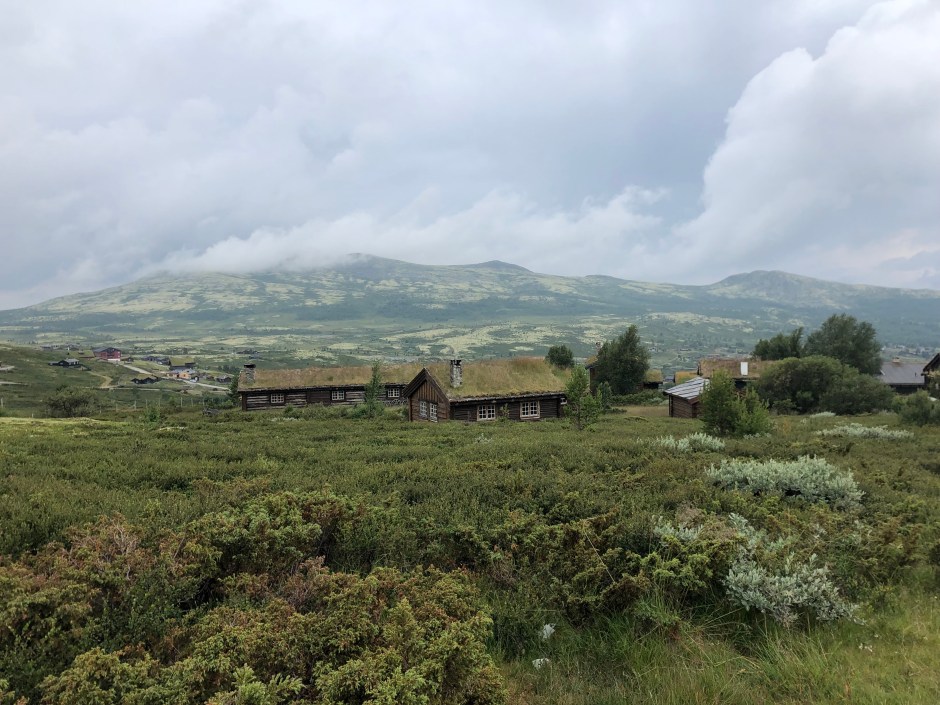
We planned to meet my husband’s parents this summer close to a national park called Rondane. We know they are fond of hiking and so are we. I checked possible places to stay, and I chose a place that had good reviews. The description of the cabin I booked seemed just quite right for seven people, and the place had a quality certificate given nationwide for good food. To our big surprise, the cabin was much shabbier than expected and since the place is run by one man alone, things are not always perfect. He does everything! No other staff whatsoever. From day one, we had the impression that something is not quite as it should be. He seems forgetful and a bit lost in space to be honest. In my opinion, something unforeseen must have happened this year or in the last couple of years. When I read his website, it seems like it was a pretty well run and successful place.

Even though the cabin did not meet my expectations, especially thinking about what I had thought would be comfortable for my in-laws, it was still possible to live there and have a good time together. Seeing that my in-laws didn’t really mind the place and seemed more or less comfortable, we decided not to spend time and energy complaining or even trying to find another place to stay in. Since we made that choice, I then decided to show some understanding towards the man. There is no point on staying and be irritated all the time. During our stay, we heard many people complain, a family even left the place before they had planed to and refused to pay for the time they spent there. I totally understand them too. Summer vacation is important for all of us. There is a lot of expectations connected to it. It is a time where we want to relax, have a good time with our family. We save for it, spend money on it, and time to travel where we want to be.

I decided that even if I think the man that runs the place is doing as good as he can, he needs to know how his actions affect others. I decided to not make our stay unpleasant by complaining, but I will write a letter to explain how the place wasn’t as it should be and suggesting he improves. I know that if we come back to this area, we won’t be staying here, and I unfortunately won’t recommend the place either. This is not good for him and the place he runs.

So what is my point here? My point is that it is important to constantly be aware of what the intentions behind our actions are, and to be willing to be held accountable for them. Constantly reflecting on what we do and how we do it gives us the opportunity to also acknowledge that we are all doing as good as we can. This allows us to be less judgemental towards others. But this does not mean that we don’t speak up when other people’s actions affect us in a negative way. To continue cultivating a peaceful state of mind, we can then find a way to express ourselves that invite to reflection and dialogue instead of conflict which brings us back to the principle of intention. When we speak up, what is the intention behind it?

Self-centered

The other day, I dreamed that someone called me self-centered. I can’t remember how I reacted to it, but it stayed in my mind beause, from time to time, I do ask myself if I am self-centered.  If I play a bit with the idea, I have to say, that yes, I am self-centered. The world around me unfolds itself through the lens of my mind. This lens is tinted with my own perceptions. Thus, every experience is a self-centered experience.

I am also self-centered in my practice of Yoga because I want to improve my interactions with the world around me and the only way I see to achieve this is by directing my vision inwards. I believe that spending my energy on getting to know, accept and refine my thoughts and perceptions is a better investment than trying to change the world to make it fit my expectations.

I also believe that through this inner work, it will become clearer for me how to invest my energy in the world in a more positive and meaningful way instead of blindly engaging in everything with unconscious and sometimes conscious expectation that the world around me will fulfill my deeper needs such as love, peace and happiness.

Through my study of the Yoga philosophy, I have learned that we all have something called svadharma. Svadharma is our individual duty in the world and it is connected to our capabilities. For what I understand, it has an element of service for the benefit of the whole.

The challenge for some of us is to find out what our svadharma is since from birth, we play many different roles in life (i.e. son/daughter, student, friend, boyfriend/girlfriend, employer/employee, etc). An interesting idea to reflect over is that none of these roles can define who we are.  Each role has its own sort of “job description” and we put our own personal touch to it, but if we were to stop playing any of these roles, we would still be who we are. These roles are here to help us realize ourselves as we learn something new at each experience.

Some of us play many roles, some of them by obligation, and there is nothing wrong with that as long as it doesn’t become a struggle for us. But I believe that the thiner we spread ourselves in the practical world, the less we have to give, and evenmore, we might end up loosing ourselves in these roles without knowing who we are and what our capabilities really are.

Therefore, I think I benefit from prioritizing the roles I believe are important, and letting go of those that I can let go of. I want to give my best in my roles and still have energy for myself. So, yes, I am often self-centered but my theory is that at the start of the inner journey we need to let go of a lot that we are not. Such as things we do and roles we have out of habit or social expectations. Then, as we start feeling more confident and comfortable with who we are, the opportunities to engage positively and meaningfully in the world will present themselves to us.

And then, these roles will be played more naturally, with what in Yoga is called “effortless effort”.


Intention and visualization

The more I walk on the path of Yoga, the more I want to learn and apply its teachings to my life. It is like running a life experiment. We all perceive life in different ways, but at some moment in life, not so long ago, I came to a point where I had to question where I was investing my energy and why. I kept pointing my finger out, until, with the guidance of my Yoga teacher, I started studying the principles of Karma Yoga, Bhakti Yoga as well as Meditation by reading and reflecting on the Bhagavad Gita.

What I like about the teachings of the Bhagavad Gita is that they are applicable to practical life. The adjustments that are required to make in order to reach an independent state of inner peace are internal and they all are my own responsibility.

I like the idea that my well-being is my own responsibility, at the same time as I find it challenging and sometimes overwhelming. In the Gita and following the teachings of Karma Yoga, we are encouraged to engage in the practical world, to play our roles, but with a change in our attitude, perceptions, and expectations. I will elaborate on this in another post.

The Bhakti aspect of Yoga is one that I have been reflecting about in the past months. The teachings in chapter 12 of Bhagavad Gita are inspiring and I can see the liberating aspect in them because as we all know, most of the time, we cannot control what happens around us, but we can with practice and patience control how we act and react in different situations, and this has a direct impact on our well-being.

During the last few days, I have taken the task to read one verse every morning and imagine how it could look like if I put it into practice during my day. I use the verse to set myself an intention and I write a few lines on how I think this could look like in practical life, like a visualization. Here is today’s verse:

18-19  “I love devotees whose attitudes are the same toward friend or foe, who are indifferent to honor or ignominy, heat or cold, praise or criticism—who not only control their talking but are silent within. Also very dear to Me are those generally content with life and unattached to things of the world, even to home. I love those whose sole concern in life is to love Me. Indeed, these and all the others I mentioned are very, very dear to Me.”

So imagine a day where you can skillfully move from task to task, interact with people around you without spending time or energy on judging whether you like or dislike the situation and/or the person you are dealing with. With grace and peace of mind, you deal with what you need to deal, and you move forward to the next task/interaction. Such a liberating idea! You would then “neither be a source of agitation in the world nor agitated by the world” (ch. 12 v.15) You keep your inner peace.

Further, we are encouraged to control our talking and cultivate silence within. This is also a beautiful idea. Through the practice of Yoga and meditation, we learn to let go of thoughts and emotions that do not serve us, we learn to quiet the mind, and thus have clarity of mind. When our mind is clear, we have more control over what comes out of our mouths. By doing so we are “neither a source of agitation in the world nor agitated by the world” (ch12 v.15). This one is often challenging for me because I talk a lot, but I am trying to practice being clear about the intention of my words before I allow them to come out of my mouth. Are these words going to help or am I going to make things worse? I use what some of my colleagues use with our younger students I “THINK” before I speak: is it True? Is it Helpful? Is it Important/Interesting? Is it Necessary? Is it Kind? This way, I also take responsibility for my well-being because I don’t need to go around with either bad conscience for my words or have to deal with people being angry/annoyed at me.

Detachment and contentment are also important principles in the practice of Yoga. Detachment from material things, detachment from habits, from thoughts and emotions and even from people. For an intense person like me, this one is very challenging because I’m often an all or nothing person. The idea is not to leave everything and everyone and go live in a cave. The idea is to engage with the world, enjoy the things we have, the people we interact with, but be aware of the fact that we don’t own any of them. That their nature is ever changing. People change, things deteriorate, things get lost, our perceptions can be modified, etc.

Contentment is something that we have to develop inside ourselves and for ourselves independently of what is happening in the practical world if we want to improve our well-being. When we develop contentment, we gracefully and skillfully deal with whatever is. So, when I am standing in front of a class with a “super” idea of a lesson and my students are not the slightest interested, I can be content with the effort I put to prepare this lesson, acknowledge that it is not working, and grasp the opportunity to move forward together with my students instead of against them.

The last part of this verse talks about the idea of total surrender, total trust in something bigger than us. Instead of expecting some kind of reward from the practical world for setting the mentioned principles as our intention, we dedicate our actions to something bigger than us, whatever we want to call it. I definitely see the liberating aspect of doing my best, giving my best and not expecting anything in return, but I often fall in the trap of becoming a victim, especially when I’m tired. In thinking that it is unfair that I do my best but “the rest of the world” doesn’t. Quite a useless thought and a big waste of energy, but I still get into this space.

It is so easy to go back into old habits, so this is like learning to do something new. I have to keep practicing, and I have to keep reminding myself, and hopefully one day, this will be part of my habits.

If you also would like to cultivate a peaceful inner life, I encourage you to try at least one of the principles in this verse. Set it as an intention for the day, imagine your day and in which situations you would use it. Try this for today, or for some days, or for some months and see what happens.