A fight with my husband and a burnt bread

Each Summer, I spend quite a lot of time reflecting about the school year. I reflect about my role as a teacher, but also about my general mental and emotional state because there is a connection. If I am mentally and emotionally in balance, I am able to make better decisions both at work and at home.

This summer, I decided I needed to create better routines for myself when it comes to work and home. I realised that since I became a contact teacher, I felt a big responsibility to deal with student related issues and spent often what I see as family time answering emails, writing reports, worrying about my students or catching up with lesson planning. It wasn’t until about a week after the summer break started that I noticed how stressed and tired I had been.

I want my students to thrive, and I would love to be able to help each and every one of them to develop to their own potential, but I need to remember that I am not a superhero, and that nobody is expecting me to be one. Being a good teacher is to act within the framework that I am given with clear intentions, and with support and in collaboration with parents, the school and support systems when necessary. Not all the responsibility lies on my shoulders.

With these reflections in mind, I decided I was going to find a better balance between work and home. I had made myself a mental schedule for school work.

Then, the school year started. I don’t know how I manage, but every year is the same. Every year, I seem to forget how crazy the first weeks of school are. No matter what I do when I finish the school year, I will always end up feeling that I am drowning in ‘to-do’ lists the first weeks of school.

This year was no exception, and you might have already guessed, as the tasks started to pile up and my days gathered momentum, I forgot my resolutions from the summer to balance work and family better, to avoid stressing, to prioritise better.

Half way through my first week at work, one day, I managed to squeeze too many things into my schedule. After a busy day at school, I came home to a busy evening at home. I had promised my youngest to take her somewhere, at the same time as I wanted to bake bread, wash clothes and tidy up the house. With the extra energy saved during the summer, I felt I could manage. And I did… partly. The problem is that the more I multitask, the more hyper I become, the less patient I am, the more things can go wrong. That day culminated with me losing my patience with my husband and (surprisingly) my husband losing patient with me and we had a huge fight. It was a big shock for me, our kids and for my husband as we almost never yell at each other.

Reflecting about it, I came to the conclusion that the reason why I lost my patience was that I had turned into a human tornado that day. I started the day doing one thing at a time, but as my day advanced, I kept seeing things that needed to be done ‘immediately’. So I kept doing, and doing, and doing, and at some point I was tired but I just couldn’t stop. When this happens, I start resenting my husband because he seems oblivious of what ‘needs to be done’, and I keep hoarding things to do until one little thing goes ‘wrong’ and the whole situation explodes in our faces.

The solution: do less. Leave some work for tomorrow. Sit down. Take a breath. Why do I keep forgetting this simple solutions?

I finished my week with these reflections. All good. Until yesterday.

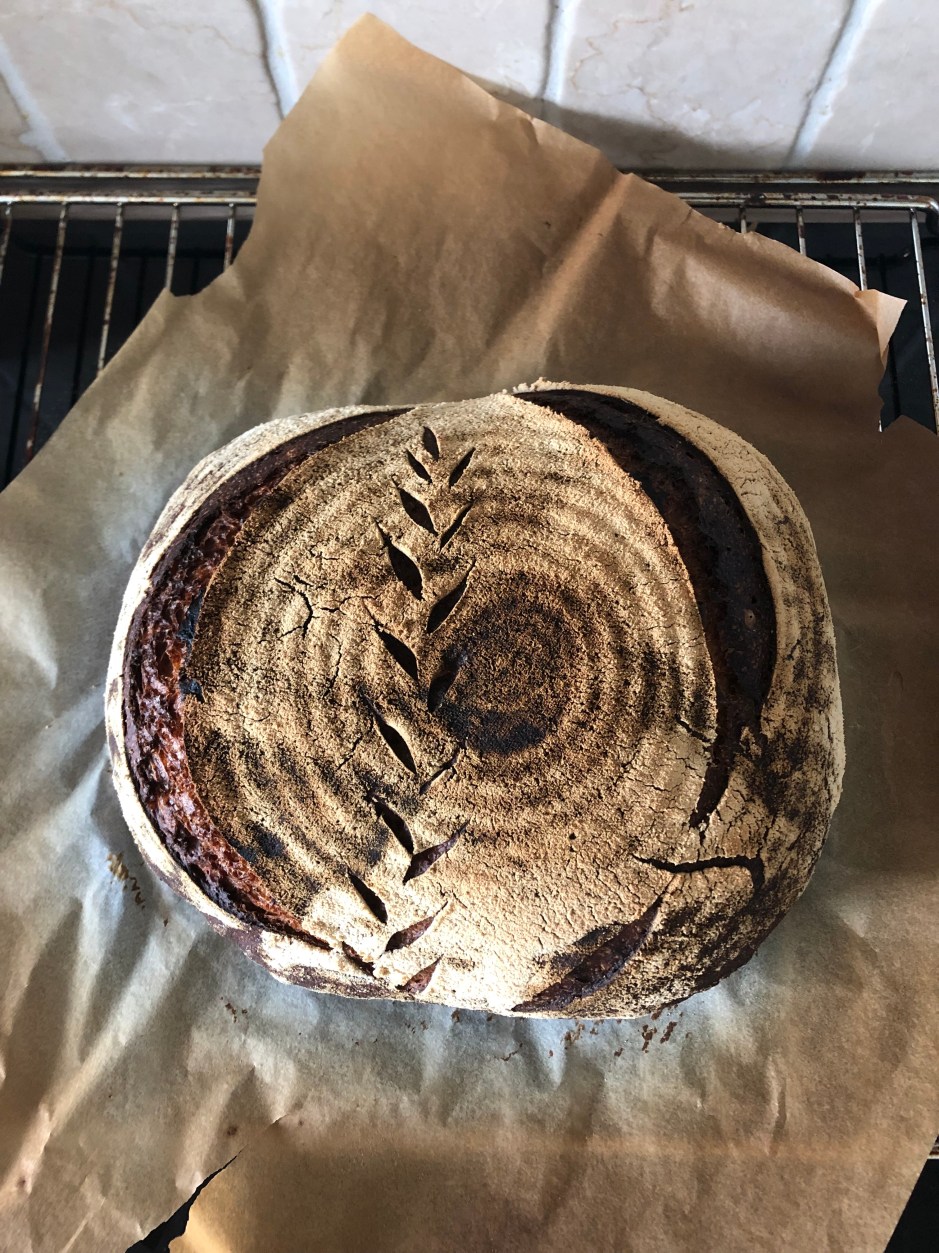
New week, new pile of things to do. New possibilities for me to create chaos (he he). Yesterday, I forgot again my resolution to not work during ‘family hours’, lost track of time, and managed to forget a loaf of bread I had carefully prepared the day before for almost two hours in the oven. I was so disappointed and frustrated! Baking with sourdough is a long process, and I ruined it because I was multitasking again and even worse, I had not stick to my promise to take a break from work during the evening. But I had to laugh too. Such a good reminder.

My husband has forgiven me for yelling and thinks a bread with a ‘well done’ crust is delicious. I am lucky. I have gained some perspective. I know that stress is a choice. It seems like it’s not, but it really is. I will work on not choosing stress in the future.
We all do as good as we can

-and if not, can we understand and forgive each other?

Some days ago, my youngest daughter who is almost twelve was very upset. She felt she had messed up with some of her friends and wanted some advice. She is friends with especially two girls in our neighbourhood. One of them had just gotten a kitten, and the other one was still on vacation with her family. The latter had sent my daughter a message asking her how the new kitten was, and she replied by talking about the kitten but also added her opinion on how the youngest children in the family are behaving around the cat. It wasn’t a nasty message, but seen from the outside, it was an unnecessary comment.

What happened next was that the receiver of the message shared my daughter’s message with the kitten owner, and not surprisingly, she was upset. She then wrote an upset message to my daughter asking her why she was criticising her siblings.

My daughter understood what she had done, and didn’t know how to fix it, so she came to me. Beside repeating to her two golden rules I once read to keep away from drama: 1) Talk with people and not about people and 2) Avoid having a conflict by mail/messaging, I asked my daughter, what the intention of her message was. Was it to gossip? Was it to criticise her friend? She wasn’t sure about her intention, but she acknowledged that it wasn’t kind. So, I told her the easiest thing to do was to then go to our neighbour’s house and apologise directly. She was afraid of meeting her friend’s mum. I told her I understood her fear, and that all she could do was to say ‘I’m sorry’, to take responsibility of what she did and accept that the people involved might be annoyed.

It all turned out well. Her friend accepted her apology, and the next day they were out playing as if nothing had happened. It wasn’t a big ‘crime’ my daughter had committed. However, this episode kept me thinking about two things that I find very important in my interactions with other people:

  1. The importance of being clear about my intention behind my actions
  2. Having the courage to face the consequences of my actions.

The first one, is one of the main principles of Karma Yoga, and I find it so helpful. When I am clear about the intention behind my action, I can be at peace with myself even if the result of the action is unexpected or even unpleasant because ideally, the intention behind my action was thought through. When I however act from impulse, emotion or anger, I can also go back to my intention, acknowledge it and accept the consequences. This can be scary because I don’t like conflict, but if I show up with an attitude of humbleness, I feel I am doing what I can do to straighten things up. All I can do, is learn from the experience and move on.

I know it is not that simple because it requires that the other part has the ability and willingness to show understanding and sometimes even forgive. I know from own experience that it is not always that easy. I have been on the other side too. Feeling frustrated, confused, hurt or even insulted but it is easier if I manage to take a step back and tell to myself that we are all doing as good as we can.

They key is to be a good communicator. I think it is often important to let others know how their actions affect us so we give them the opportunity to reflect. After that, what they choose to do is out of our hands and ideally should be out of our head for our own peace of mind.

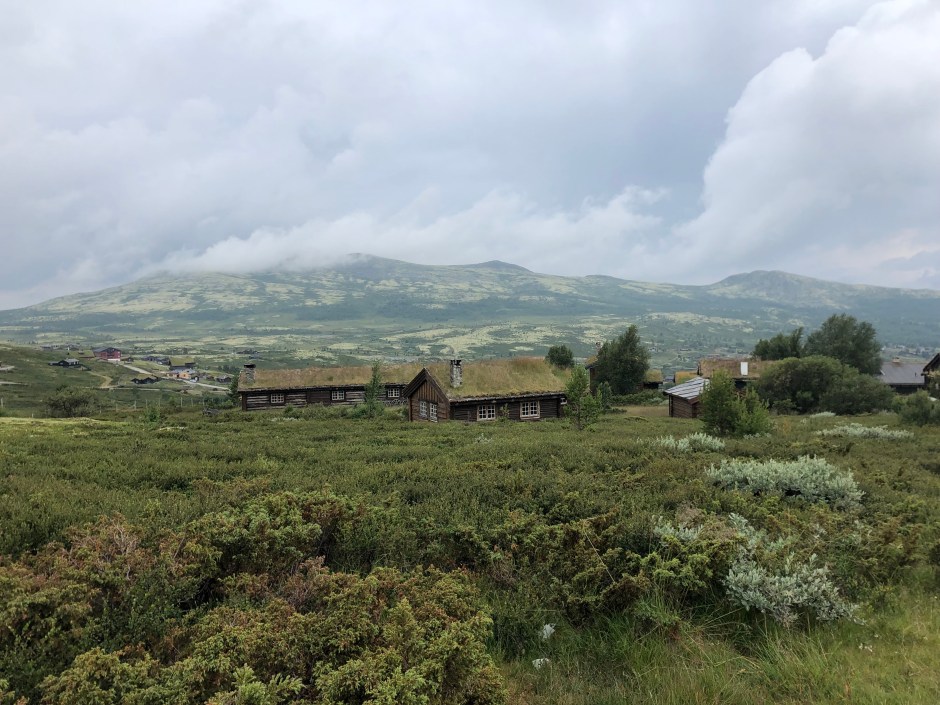
We planned to meet my husband’s parents this summer close to a national park called Rondane. We know they are fond of hiking and so are we. I checked possible places to stay, and I chose a place that had good reviews. The description of the cabin I booked seemed just quite right for seven people, and the place had a quality certificate given nationwide for good food. To our big surprise, the cabin was much shabbier than expected and since the place is run by one man alone, things are not always perfect. He does everything! No other staff whatsoever. From day one, we had the impression that something is not quite as it should be. He seems forgetful and a bit lost in space to be honest. In my opinion, something unforeseen must have happened this year or in the last couple of years. When I read his website, it seems like it was a pretty well run and successful place.

Even though the cabin did not meet my expectations, especially thinking about what I had thought would be comfortable for my in-laws, it was still possible to live there and have a good time together. Seeing that my in-laws didn’t really mind the place and seemed more or less comfortable, we decided not to spend time and energy complaining or even trying to find another place to stay in. Since we made that choice, I then decided to show some understanding towards the man. There is no point on staying and be irritated all the time. During our stay, we heard many people complain, a family even left the place before they had planed to and refused to pay for the time they spent there. I totally understand them too. Summer vacation is important for all of us. There is a lot of expectations connected to it. It is a time where we want to relax, have a good time with our family. We save for it, spend money on it, and time to travel where we want to be.

I decided that even if I think the man that runs the place is doing as good as he can, he needs to know how his actions affect others. I decided to not make our stay unpleasant by complaining, but I will write a letter to explain how the place wasn’t as it should be and suggesting he improves. I know that if we come back to this area, we won’t be staying here, and I unfortunately won’t recommend the place either. This is not good for him and the place he runs.

So what is my point here? My point is that it is important to constantly be aware of what the intentions behind our actions are, and to be willing to be held accountable for them. Constantly reflecting on what we do and how we do it gives us the opportunity to also acknowledge that we are all doing as good as we can. This allows us to be less judgemental towards others. But this does not mean that we don’t speak up when other people’s actions affect us in a negative way. To continue cultivating a peaceful state of mind, we can then find a way to express ourselves that invite to reflection and dialogue instead of conflict which brings us back to the principle of intention. When we speak up, what is the intention behind it?

The value of contributing

This week, my youngest daughter and I decided to finally renovate her bedroom. She had inherited furniture leftovers from the house throughout the years, and her room wasn’t very functional nor adapted to her taste and needs.

It has been a relatively long and enriching process, I think. First, we had to think of what we had to sell and which pieces of furniture we could keep but use slightly differently. She had to sort all her stuff in three piles: what she wanted to keep, what could be given away/sold, and rubbish. Only this was a good exercise for her. Things that could be given away/sold had to be sorted properly and cleaned for the next owner. She had to reflect about what she has and what she needs as opposed to what she wants. She has a small room, and I think it is important that she keeps things that make her room feel pleasant to be in, not stuff that take space and gather dust. We didn’t always agree on this one so it was also a good exercise for me to let her make her own choices for some of the thing she wanted to keep.

I dismantled her bed, advertised what could be sold further, and followed up with people contacting me to come and pick up furniture and toys. This was good for my daughter to see that we don’t only throw away what we don’t want/need, it can be useful for someone else. It was also good for our project because we ‘earned’ some money to buy the furniture she needed for her room.

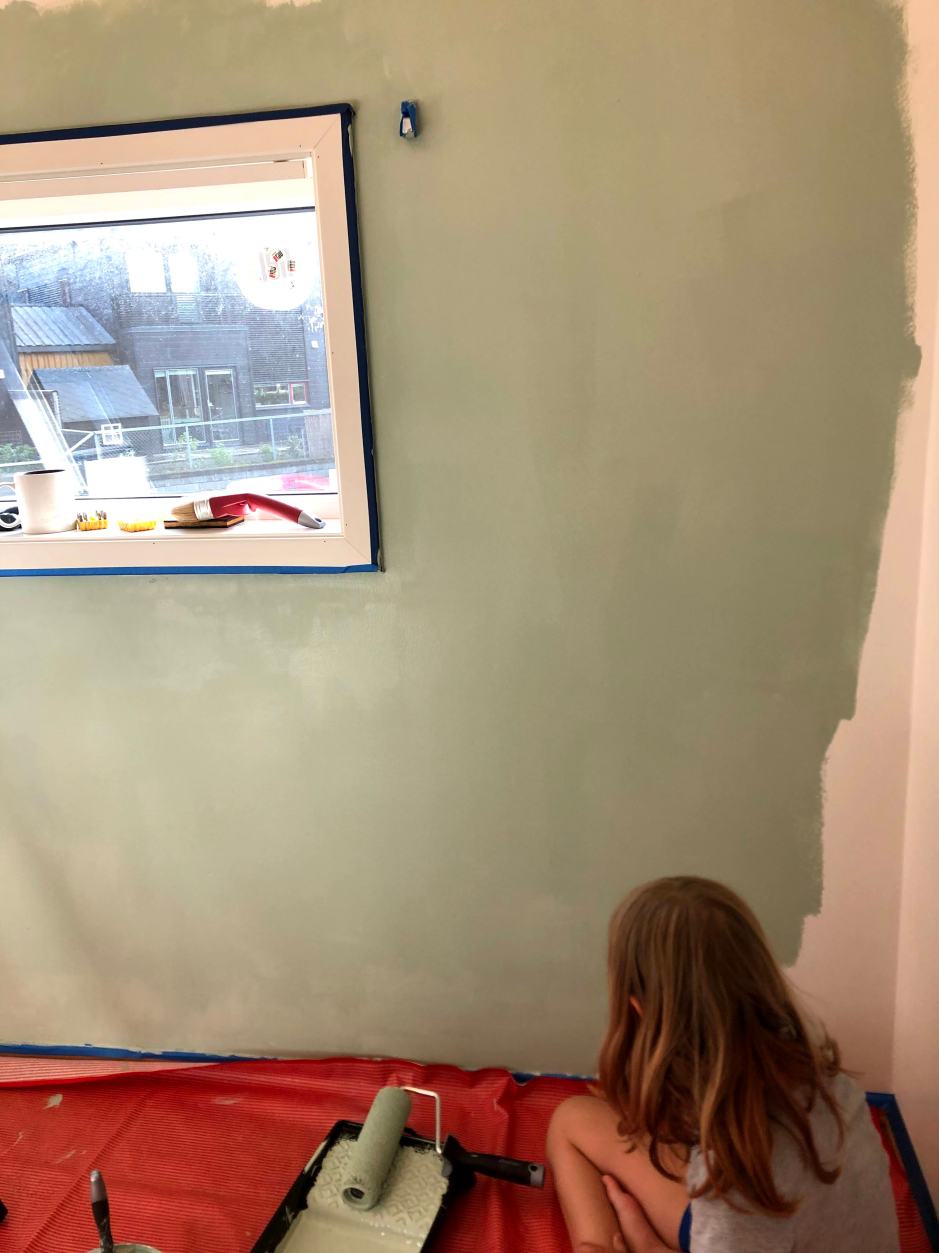
Next was to clean the room thoroughly, walls included. Over the years, she had chosen not to listen to our request not to tape things on the wall, and the walls were in quite a bad state. After cleaning them, we painted them. I was very impressed by her perseverance. It took us a couple of days to finish painting, and although I could see she was tired, she didn’t give up. She experienced how, we needed to do the job with care and patience. Mask off the areas we weren’t painting, cover the floors, not spill painting around. Once we were done, she acknowledge the hard work it required and decided that it is a good idea to take care of the new painted walls and hang up things properly.

We looked at furniture online, and she was surprised by how fast we reached a significant amount of money if we bought everything new. So we started looking at second hand furniture ads, and we ended up buying some new and some second hand. When we were at the shop, she chose away some objects because she was concerned about the final amount. This made me feel very proud of our little project as I feel it also taught her that things cost money and therefore we need to take good care of them. It also made her reflect on what we can refrain from buying as it is not really necessary.

After a whole week of hard work from morning to evening, the room is ready. All she needs to do now is to empty the boxes we filled with the things she wanted to keep. She is dreading this task, and I will help her a bit, but I think it is good to for her to reevaluate if she really needs everything she put in those boxes.

This whole experience made me think how important it is that we include our children in everyday chores. Small chores and bigger chores. This not only teaches them the value of work, material objects and time, but also gives them the opportunity to feel useful, the pleasure to start and complete a project.

While we were working on my daughter’s room, a good friend of mine came to visit, and were discussing how, we often chose not to ask our children to help because 1) It takes more time and effort to teach them to do things 2) We feel ‘sorry’ for them because they should be allowed to enjoy their spare time. I think maybe we need to rethink this and find a good balance. I have observed some of my students struggling with motivation and self-esteem because they don’t find school interesting, they don’t have any particular hobbies, and at home they don’t do much other than stay on their electric devices. I believe that even if kids and teenagers find helping at home annoying to begin with, they end up with a good feeling about themselves knowing that they are useful and capable of contributing to their family environment. My kids have had the task to clean their bedrooms for some years now, but I think it is about time that they do a bit more on a daily/weekly basis and contribute to bigger projects.

We have of course, tried to get them to do the minimum like tidying up their things, clearing the table, emptying the dishwasher, etc. But I must confess that I often also do these small things because I don’t feel like nagging. I can find ways to reinforce without getting angry, but I will definitely reinforce.

I think this is good for society too. I am not sure if there is a connection here, but lately, wherever I see young people enjoying some free time, I see a mess left behind. Yesterday, I was very surprised to go into our local shop where there is a small area to sit down, to find empty soda boxes, chocolate wraps and pizza boxes spread all over the floor. This shop is close to a park that is quite popular on sunny summer days for young people to hang out. I see this more and more often. Rubbish left behind after a fun day outdoors. My theory is that youth are not used anymore to help around, to experience the consequences of what they do. We parents tidy up after them both material rubbish and challenges they might face. All this with good intentions. We want to protect them, we want them to enjoy life, we want them to be happy. But I think, we might have misunderstood a bit. I believe we feel happier when we feel we contribute in some way to our surroundings. When we know how to do things, when we feel useful.

I have decided I will give more responsibilities to our kids from now on. Especially the oldest one. He spends way too much time on the computer and his phone, and his explanation is that he has nothing else to do. I have lots of things he can do… 😀

Lost and found

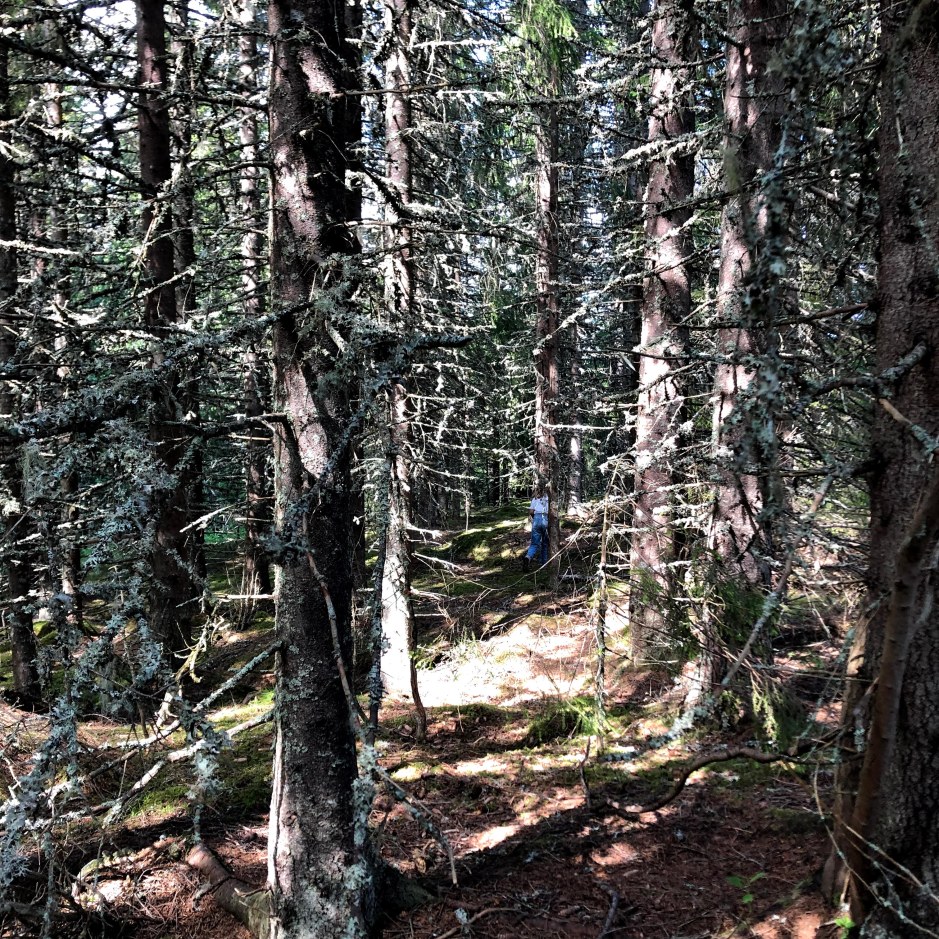
I went for a hike in the forest with two colleagues the other day. Both of them grew up experiencing nature like we do in Norway, hiking, camping, sometimes walking in the mountains for days. At some point during our hike, one of them said that she finds it exciting to sometimes get lost in nature to then find the way back. She told a story from her childhood where she and her family were hiking somewhere in Mali and got lost. They had to walk in the dark back to the cabin they were staying at. My colleague’s mum had to focus on her white shoes to not stumble as she had bad sight. It was fun, she said. In Mali. A family of five, lost in the mountains.

Her story inspired me because I don’t think I would remember as fun getting lost in nature as a kid, maybe not even now as an adult. I can imagine me getting scared, worried and maybe even angry and blaming it on my husband, as I often do. My kids complaining and blaming it on both of us.

Maybe I’m exaggerating or maybe not, but I found this story inspiring because my colleague’s family chose to have an attitude of adventure and playfulness in a moment that I most probably would have perceived as annoying and even dangerous. It brought me back to a reflection that has been coming and going in the last few years about the power of staying calm in all situations. This ability to stay calm comes with being able to take a step back from a situation and see solutions, but I also think it has to do with faith.

Observing my mind and my actions, I have noticed that I have had a tendency to get overwhelmed and almost panic in situations where things don’t go as expected. I have been afraid of challenges, problems and conflicts with people. Partly because I dread the unpleasant moments, but partly because I am worried about my ability to deal with difficulty. I don’t really trust myself. So I often have chosen to stay in my comfort zone, or to escape from the discomfort often making things worse because I don’t necessarily physically run away, I try to escape by acting impulsively, out of fear turing the situation messier than it originally was.

Since I became aware of this, I have been trying to work with it. I am trying to calm my mind down in moments of stress, distress or emotional pain, and instead of reacting impulsively, I try to take a mental step back and observe. It is an interesting exercise, to learn to give myself the space to feel scared, hurt or annoyed but not feed into the emotion. Take a deep breath and see possibilities, see options, and act -or not- from a space of calmness. Stay with the feeling without fighting it.

Life is like that, it has its ups and its downs. We instinctively seek for the ups and dread the downs. That is our nature, but lately, I have been reflecting in the beauty of going through the downs with a calm mind too. Experiencing whatever life is offering with an attitude of faith in ourselves, the process and the teachings they bring. Get lost, and find myself again. I believe that when we find our way back, we often continue slightly changed, mostly for the better.

The truth is that we all are born with this immense strength, we can overcome anything because that is our instinct. The key is the mental attitude. The teachings we draw from each situation. The energy we spend on them. The way we take care of ourselves and others in the process.

I share here one of my favourite poems from David Wagoner that I feel talk about what I just wrote.

Lost by David Wagoner

Stand still. The trees ahead and bushes beside you
Are not lost. Wherever you are is called Here,
And you must treat it as a powerful stranger,
Must ask permission to know it and be known.
The forest breathes. Listen. It answers,
I have made this place around you.
If you leave it, you may come back again, saying Here.
No two trees are the same to Raven.
No two branches are the same to Wren.
If what a tree or a bush does is lost on you,
You are surely lost. Stand still. The forest knows
Where you are. You must let it find you.

Whose expectations?

My husband and I are what we would like to call low-maintenance. We enjoy holidays and special occasions, but we don’t feel like we need to make what we call a ‘big fuss’ out of them to enjoy our time. (I sometimes suspect it is more laziness than low-maintenance, but who cares as long as we both are happy?).

The challenge to this attitude came almost twelve years ago when our youngest daughter was born. She has high expectations, especially for birthdays, Christmas, New Year’s Eve and Norway’s national day. I understand and I try to balance between complying to her wishes and keeping things to what I think is reasonable both when it comes to our economy, the environment and our energy.

During the last few years, as she is getting older, I am trying to be more sporty and supportive when she has big ideas trying to encourage her to take some of the responsibility to run them through. She doesn’t always only think about herself, she also plans how to surprise friends or her siblings for their birthdays, which I think is a nice way to show that she cares.

The interesting part is that, often the more I agree, the more she gets things her way the more she wants. As a mum, I am trying to figure out whether this is good or not. I don’t want to kill her personality, but at the same time, I feel I have to remind her about how important it is to focus on the positive and be thankful for what we have instead of focusing on what we feel we lack.

Like today, for example. It is Norway’s national day, and it is a BIG deal for children. Usually, there is a big parade downtown where all schools take part, and many celebrations with friends and family throughout the day. Because of the pandemic, the last two years, the parade has been cancelled for most students, and the celebrations have been restricted.

Traditionally, our little family eats dinner with a couple of friends and their son who are like part of our extended family, so my husband and I were happy we could keep this plan. My youngest had, of course, other plans. She decided to plan a picnic with her classmates, since it is allowed to meet outdoors in bigger groups if one keeps distance, especially if it is part of your daily cohort.

Yesterday evening, we baked cookies and muffins for the picnic, and this morning, I agreed to follow her to the park for a couple of hours. The weather was decent, and most of her classmates showed up. They played games, ate their lunch, and had what seemed like fun from where I was standing chatting with the other parents.

When it was time to leave, we all picked our stuff up, said goodbye and the girls and I walked to the bus stop. On the way, my youngest told me that one of her classmates had ice cream for breakfast, and that he is allowed to eat as many ice creams as he wants all day today. We have a daughter with PWS, so this kind of attitude towards food is not what we want to encourage at home. So, I said that I didn’t feel one needs to eat ten ice creams to have a good day. This was enough for her to be angry for the rest of the trip home and for a long while.

I must say that I find this very challenging, and I am working very hard with myself not to lecture her every time it happens. I feel that she knows what I stand for, she is allowed to disagree, but I can’t help but thinking that she is being ungrateful, and that my role as a mum is to teach her to be grateful.

Or, is it? One thing is her attitude, and the other is how I interpret it and transform it into my problem. “I have complied to this and that, and she’s still not satisfied?!”. Aha! The ego, comes through. I think. And I love it because this kind of situation teaches me over and over again what I can summarise into three main points:

  1. Be clear about what I stand for and act accordingly.
  2. Never do something with the attitude of ‘sacrifice’. Better say clearly ‘no’ and go through the unpleasant moment than to say ‘yes’ without meaning it and going into the martyr role when I don’t get a positive response for my ‘efforts’.
  3. Good enough is good enough and let other people’s expectations (even my sweet daughter’s) be their own problem.

The good thing is that, like many kids her age, after some time being back home and playing some board games before leaving for our dinner party, she had already forgotten her ‘disillusion’.

Before going to bed today, she said: It was a fun day mamma. I didn’t think it would be because of the pandemic, but it was.

My little cute teacher. Good lesson to remember as I am dreading a meeting tomorrow where I feel I will be confronted to the exact same problem. Expectations vs the reality of what I can provide. May I be wise enough to remember today while I’m in the middle of it.

PS I do talk with her from time to time about how we create the world around us by choosing where we want to focus our attention.