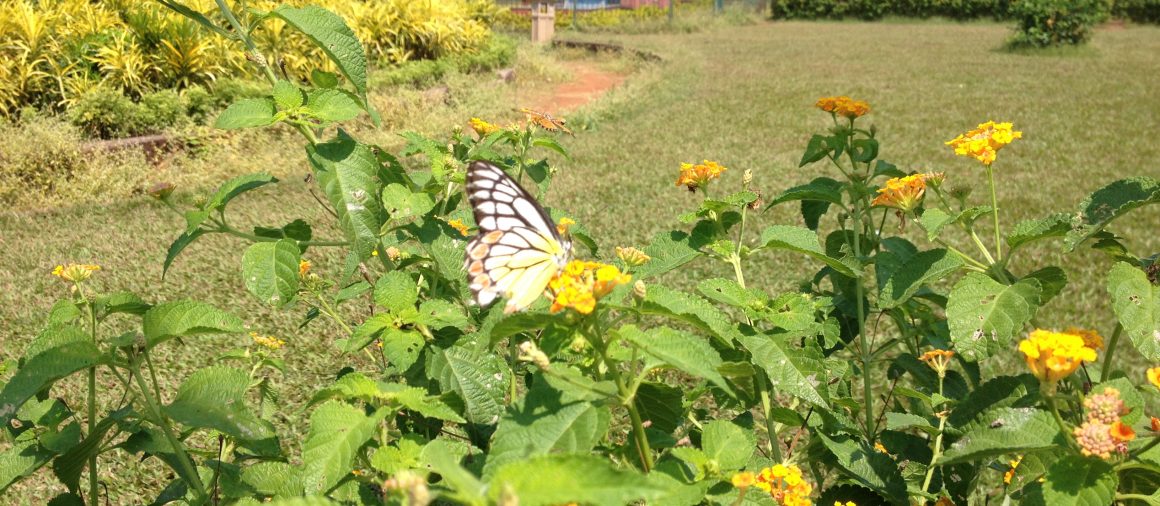

The picture I didn’t take

I like to share pictures on social media. They are often pictures I take from nature or places we go to, but also some of my family and I. Yesterday before bed time, I had a discussion with one of my daughters and I was quite firm with her which, of course, she didn’t like. The situation turned rather unpleasant for all of us especially since we are staying in a little apartment we are borrowing from my sister-in-law. It wasn’t a big argue but I could see our other two kids be uncomfortable.

When I went to bed I thought, that’s holiday together. Some really good moments and some not that good moments. It would be interesting to post a picture of this situation on social media, but what would it bring? Discomfort for many. Why would I share the difficult moments too? It would also be disrespectful towards my daughter. But why is sharing the good moments okay but not the challenging ones?

I also think that I don’t want people to believe I’m looking for sympathy, but again, what would be wrong with that?

We often criticize social media for showing a too glossy picture of people’s lives, and I guess some do use social media to appear as perfect, but that is not the case for me. Maybe I don’t share the challenging moments because it could be misinterpreted. We all know that most of everyday life challenges come and go, and the only thing to do is to get through them. I feel that sharing them would make them appear bigger than they are.

Maybe sharing life’s little and not so little challenges on social media wold normalize them too. When things turn sour, I tend to panic and want to ‘fix the problem’. I regret my part in the conflict, but yesterday, as we all went to bed, I thought, this is not a big deal, and it is good to also get through the discomfort that disagreement brings. Both for me and my kids. Not everything needs to be pleasant, not even during the holidays.

This morning, after my sadhana, I drove to buy fresh fruit and vegetables, and when I came back, our youngest daughter set the table, and we had a lovely breakfast. The discomfort from last night was washed away and maybe we all five were a bit more resilient than yesterday morning.
Patience

Every morning, after my sadhana, I read a page in Eileen Caddy’s book Opening Doors Within. She has a page for each day of the year with what I see as inspiring and useful reminders to align myself towards a more harmonious life. Towards the path I want follow.

Here’s July 10:

HOW VITALLY IMPORTANT is your right and positive attitude towards today and all that it holds for you! You can make or mar the day for yourself simply by the way you approach it. Your reactions to things as they take place can make all the difference. When your reactions are negative and aggressive, you immediately put up barriers and create opposition, finding fault and blaming everyone else. You are so blind you fail to see that you are the one at fault, and you go around with a chip on your shoulder. When your reactions are positive and constructive, all barriers come tumbling down and you will find you will get help and cooperation from every side. If you have made a mistake, admit it, say you are sorry and move on. Then no precious time is wasted in trying to justify yourself and prove you are right. You have many lessons to learn. Learn them quickly, and try never to make the same mistake twice.

If you have read some of my blog posts this summer you might have noticed that I have been reflecting a lot about the moments where I get carried away by frustration and/or anger.

When I read this page, I thought ‘Yes! That is what I want to strive towards!’ Who doesn’t prefer life to flow instead of creating opposition and conflict? Why is it, then, that I still see myself in certain situations shutting out? In opposition to what is happening?

My Yoga teacher, Prasad, once told me ‘Patience will be your most important asset in life’. He was so right! Lack of patience is often at the source of my unskilled way of dealing with my thoughts and emotions especially in challenging situations.

Does it ever happen to you that you wake up in a weird mood? That from the first moments in the morning you notice some sort of inner discomfort? I am learning to observe this and be with it during my sadhana and remind myself that whatever happens during the day, it is more ‘the mood’ that will throw me off balance than the outer circumstances. This requires patience towards myself, not to try to escape from ‘the mood’ and patience towards what happens during the day.

Unfortunately, I don’t always notice ‘the mood’ or in the haste of everyday life, I forget my morning’s reflection. Too much to do and the wish to things to ‘go my way’, and a feeling of self-righteousness are often the reason why I forget to open up, to listen, to slow down and be constructive. In other words, lack of patience.

What can I do? Keep practicing. Keep giving myself the time to sit in silence in the morning to notice my mood. Keep reminding myself to be mindful. Slow down. Do less at a time. Let go of my perceptions when they are not helping.

I have managed this year to be better at accepting my mistakes. Not to be too afraid to see them, and apologize. Accept that I can’t do everything according to everyone’s expectations, and move on. This has been rather liberating.

Trust

Is it a given or is it earned? Does the responsibility to create trust lies on the one who trusts or the one to be trusted?

Since it is a word, a concept that we have created, I believe there is no absolute answer to my questions. However, it is important to reflect on it and maybe create clarity around it.

There are behaviours and these behaviours, when repeated, turn into patterns. Either in the one who has the behaviour or in the one who experiences the consequences of it. Or both.

Following this line of thought, if you constantly behave in a way that does not match my expectations, I might lose trust in you. If there is a discrepancy between what you say and do, or if I ask for your help and you let me down, or if you lie…

On the other side of trust, there might be people who, because of past experiences, are distrustful. Either generally or towards people in specific roles. One could then say that we have to strive towards gaining the other’s trust.

Last week, I did something that I think cost me the trust of one of my students. It was, of course, a mistake, and I will now have to work next school year towards gaining their trust again. If I am given the opportunity. If this student leaves the school for some reason, they might then decide that teachers are not trustworthy.

I struggled with trusting last week too, and this is partly what led me into a distressed state of mind. I had an overly strong reaction to a change in my roles at work, and I wonder why I am so distrustful. Is my lack of trust directed towards the person? The role that person plays? Or me? Is my lack of trust in reality insecurity in disguise?

In any case, I think that the best I can do is to approach situations with curiosity. Ask the difficult questions both to the other person and also myself. I need to understand where my distrust comes from and work with it because, like in any relationship, it is difficult to have healthy interactions if there is no trust. Can we build that trust together? What is my part to play?

Most importantly, not take my mind so seriously. Take a break from it. Question my perspective before acting. The longer I live, the more surprised I am by my limitedness that, to begin with, seems so ‘real’ and ‘clear’…

Grading life

I recently sat with some colleagues at the end-of-the-school-year lunch and asked one of them “So, how is life?” He was surprised and amused by my question, and chose to answer by giving his life a grade out of ten. We asked him if he was pleased with the grade he gave to his life, and he replied, yes. Sooner than later we all started asking each other to grade our lives.

As an IB teacher, I started playing with the idea of “the criteria” to set a grade: marriage, kids, work, material comfort, and so on. I asked myself, what are the strands? Many of us were struggling to set a grade. What does a 10 mean? Can anyone reach a 10? Is my 10 the same as your 10? Many agreed that we all had our basic needs met and more.

Playing with this question during the last few days, I have come to the conclusion that no matter what is happening in my life, no matter what I have and don’t have, the best way to grade my life is on how I feel inside. My inner peace, my attitudes, and my general flow of thoughts.

Yoga teaches us that the world around us is transient, and that how we perceive this world is a result of our minds. Each mind has its own perceptions and limitations, so my 10 is of course not your 10. Furthermore, since the world is impermanent and ever-changing, if I put my well-being in what the external world can offer, I most probably will never be fully satisfied. Once I acquire something, I will discover that there is something else to acquire, or I will eventually have to go through the painful process of experiencing losing it.

We can agree that setting a grade to life is a silly exercise, but it is also a good way to reflect on what really matters. Maybe a 10 is not necessarily the goal. To me, what makes the most sense right now is to continue working with my inner world to better function in the outer world. It seems like a safer investment in this unstable and fluctuating world.

This reminds me of an important concept in Yoga that we find both in the Bhagavad Gita and Patanjali’s Yoga Sutras: santosha or contentment. Contentment is developed inside out and it is directly dependent on our attitude towards life. Cultivate contentment, and the rest will just flow.

Frustration and the way out of it

When things don’t go the way I expect them to, I go through a series of emotions. The first one unsurprisingly is frustration. Depending on the level of attachment that I have to the situation, I can sometimes work with my mind to let go of the frustration and see the possibility in the situation. If my attachment is stronger, the turmoil of emotions doesn’t stop with frustration, and unfortunately, it often culminates in self-doubt. It is an awful feeling, self-doubt, and the problem is that I don’t always manage to see it. So the spiral of negativity takes me really low.

So, what to do? I think that although it is important to be assertive and speak up for myself when I feel unfairly treated, once I have said what I think, the best I can do is to bring my attention inwards to stop feeding into the frustration and counteract the self-doubt that only makes me feel even worse.

Throughout the years, I have been trying to create a method. This time, I have even come up with some bullet points. To begin with, I ask myself:

  • Why am I so attached to this situation? Can I let go? Can I make a compromise with my mind?
  • What is my part in this? Is there something I could have done better? Is there something I can change in my future actions, attitudes and expectations?

And I forgive myself. For the reaction, for what I think I could have done better before the situation and whilst in it.

It is not fun to realize that I could have done better when it is too late, but luckily for me, as long as I can breathe, I can learn. I don’t win anything by doubting myself and my capabilities. The bottom line is that like anyone else, I am constantly doing the best I can with my set of skills and limitations, and it is in moments like this that I am offered the opportunity to stop, reflect and realign myself.

So, stand up, brush the dust, look up, and keep walking. No idea of myself is worth my peace of mind.