Own your choices

I recently listened to an interview of a former Norwegian politician on the radio. I didn’t listen to the whole interview, but what caught my attention was that she was talking about how “everybody” wants to appear successful, especially on social media. She went on to say that she is probably ten kilos over her “normal” weight, but that is what she sees as a “bonus” for being the mother of four kids.

What does it mean to be successful anyway? The quest of it most probably ends up being an endless story cause the minute we have something, we want more, or the next thing, and most probably, when we seek success, we never totally find it. The same is true for happiness, isn’t it? If we make it our pursuit to reach a constant state of happiness, we will end up quite disappointed. How about seeking equanimity of mind? Or contentment? Something that comes from the inside that helps us better deal with whatever comes from the outside?

However, I don’t see anything wrong in striving towards making a better life for oneself and those we care for. What that means for me, most probably does not match what that means for you, or the next person. For me, it means constantly working towards living my life with awareness. If I live my life with intention, I am calmer, more present, and better suited to be around my loved ones and those who are part of my everyday life.

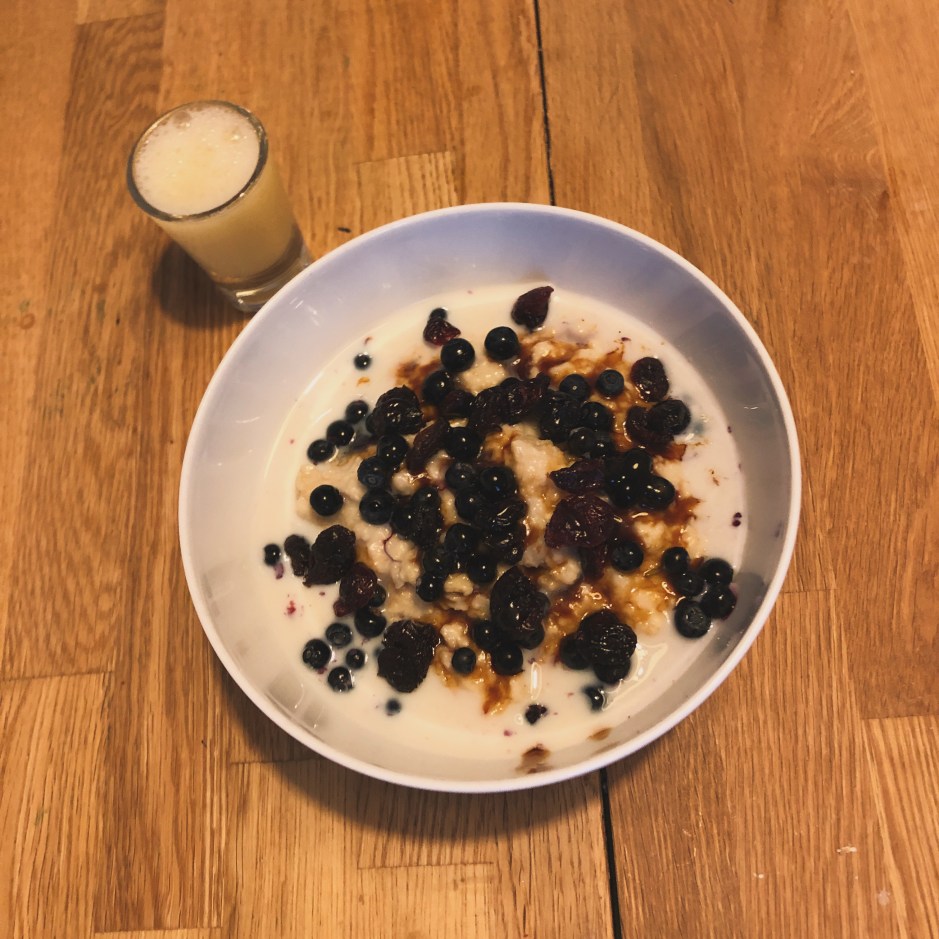
I lately think a lot about how we often make bad decisions seeking some sort of good feeling that doesn’t bring long-lasting wellness. It takes more effort to plan a balanced meal than buying fast food, it might be less appealing to eat oatmeal for breakfast than a pain au chocolat, and it might seem more relaxing to watch a reality TV show than go for a walk after a long day at work. Choosing what is right for our physical and mental health is not seeking success or perfection, it is an investment some of us choose to make because we understand that it will pay off in the long run. Through time, I have noticed how I feel after indulging in junk food compared to how I feel after having a healthy meal. It doesn’t mean that I never eat sweets or fatty food, but honestly, I try not to indulge because the price I pay when it comes to how I feel afterward is too high. I prefer to feel that I’m fit for life than go around feeling awful and thus being less balanced in my body and mind.

We often forget how everything we do or don’t do has a direct effect on our health. Therefore, this woman’s comment irritated me. I feel that ranting about “perfectionism”, often becomes a way to make excuses for not taking care of ourselves. Yes, gaining weight during pregnancy is normal, but it is also quite normal to lose it after some time if we eat what our body needs and not what our desires dictate, especially if we have a normal physically active life.

At the end of the day, it all boils down to the same, clarity of mind. Make your choices and live the life you feel like living, but stop making excuses for the poor choices you make that hurt your physical and mental health. Rather own them, and be brutally honest with yourself. Inquiry into why you don’t want to make good choices for yourself, and if you are okay with the consequences, then keep doing what you’re doing. If you care about your health and the well-being of those who love you, maybe it is about time you choose better.

Everything we consume has an effect on our body and mind, food, words, and images, not to mention alcohol, drugs, and so on. We know that, why do we ignore it?
Self-help = egocentrism?

This weekend, I can’t remember in which context, my husband said something that I’ve been hearing quite often in the last few years, namely that all this “self-help B.S.” that has become so popular is turning us into individualists, egocentric and selfish. I must say I totally disagree. I think that one of the reasons why we see people behaving more selfishly is precisely because they have little contact with their inner selves.

I think self-help is often confused with indulging in sensory pleasures, and/or indulging in the spiral of our thoughts to escape the discomfort that arises from being part of this life. There is, however, a deeper, more challenging self-help which is to have the courage to look ourselves directly in the mirror. To recognize and accept our vulnerability, our weaknesses, and our patterns that do not help us and thus do not help others. Deeper self-help requires a lot of work and a lot of trial and error, it requires honesty and courage, and it requires compassion. Maybe more importantly, it requires good guidance rooted in a solid tradition or at least solid knowledge, maybe even research, and that we stick to it for a while.

I believe that if we all were able to see ourselves with this kind of honesty, and still give ourselves the love and compassion that we need, we would then be able to see the same in others and thus show the same love and compassion. It is when we go around in the world covering our [unconscious] discomfort with thoughts, ideas, material things, and uncontrolled sensory experiences that we forget our humanity and thus forget others’ humanity.

This said, when we do the work of getting to know ourselves better, we also learn to listen to ourselves better. We learn to recognize our boundaries, to recognize our needs, and thus might be perceived as more demanding and “difficult” than we were before. This is not being selfish or egocentric, this is being assertive, but it might be hard to digest for some of those around us who have gotten accustomed to the old patterns of our behavior.

I must confess at this point, that it is sometimes rather confusing to try to live up to the idea of non-attachment and a the same time be “kind” to myself by listening to my inner voice when it sometimes feels that it might upset others. But this is the world we live in, isn’t it? A world of opposites. A world of contradictions, and as long as we live with awareness and act with clear intentions rooted in the values we have chosen to be our guides in life, I think we are doing more good than not. Self-help for me is also that. Making clear choices of what is going to guide our lives.

So, don’t stop the self-help work you are doing, and if you have been wondering, don’t get discouraged by the selfishness narrative. Honest, consistent, disciplined, and well-guided self-help can only lead you to a better place, and that in turn will have a good influence on those around you in the long term. I sincerely believe in this.

Shades of green

Three weeks in my new job, and I have already concluded that the grass is not greener on the other side, it is just of another shade. The most important is to reflect on what attitude I bring to that environment.

Any work environment is a system, and no human-created system is perfect. Some systems are directly rotten, and luckily for me, I did not end up in such an environment. Most systems are well-functioning in spite of their flaws and lacks. Over the years, I have identified myself as someone who always sees areas of improvement which is a rather positive way to say that I often see where problems are. I don’t do this on purpose, it is part of my mindset. Don’t ask me where it comes from. This can be an asset if I don’t get stuck in the frustration of what I see as a problem, and if I can actually do something to improve it but it can also be a curse if I get mentally fixated, but can’t do anything to change it. The same way, I have a tendency to pay more attention to my shortcomings than what I do well.

Awareness on these two thinking patterns, has led me to make an agreement with myself. On the professional plan, I made a choice of changing environment, and I am committed to do my best to thrive. Reflecting on what sometimes brought frustration and stress in my previous work, I think that a lot could have been avoided if I had chosen to put my energy elsewhere. Among other things, focus more on what I do and how I do it, be more assertive, and let go of what I have no control over.

I am trying also to change my mindset when it comes to myself. I honestly believe that one of the things that makes life worth living is to be a life long learner, to develop the skills we have and acquire new ones, but also develop spiritually. Fot this, I need to find a better balance between observing my limiting actions and attitudes with the purpose to let go of them, and observing my qualities and skills to build myself up from them. If I only focus my attention on what I see as flaws and shortcomings, I feel I just put more pressure on myself.

Furthermore, I believe that if I manage to change this mindset, I will also be able to see more what is positive around me instead of what needs to be “fixed”.

Changes are a very good oportunity to reflect on what we want to bring to the new environment that helps us further, and what we need to let go of that hasn’t helped us so far. So, the grass might be healthier on the other side, but if we bring along what dammaged the grass where we were at, we will soon be looking over the fence wondering if there is an even greener grass somewhere else.

This said, I acknowledge that sometimes, it takes several jumps to finally find the place where we feel we can better contribute and thrive. Luckily for me, I think I have landed in a fertile environment where there is room for learning and staff is very supportive. Now it is up to me what I do with this opportunity, to find my place and an area where I can contribute.

On time and mindful living

I have been trying to simplify my approach to life with the intention to create slience and thus peace of mind. I realize I have been exposed to many different concepts within the Yoga and Buddhist traditions that resonate with me, but I haven’t been able to internalize them in such a way that they really make a difference in my state of mind. Even worse, I suspect I have been using them to put more pressure on myself as I wrote in my previous post resulting in more overthinking.

During the last three weeks, every time I start stressing about something, I have reminded myself of the power of silence, and since I am not able to create complete silence in my mind yet, I do my japa (repetition of a chosen/given mantra with focus on my breath). It has sometimes helped by slowing down the constant stream of thoughts that tend to just go in circles. Following this intention, I started reflecting on where my thoughts usually go, and not surprisingly, they are either in the past like regretting something I did or didn’t do, trying to understand why someone said or did something, longing for something I enjoyed that no longer is, and repeating a situation that brought stress or distress- what we call ruminating; or in the future like planning for whatever is coming, but not only that, also imagining the worst case scenarios and dreading them. My fear is mostly not being able to cope with them. But when am I in the present? And what would bring to be in the present? Well, if you’re reading this blog post, you are most probably familiar with the concepts of “mindfulness” and “mindful living”. It’s power lies in letting go of the past to be completely present in the moment with a fresh mind free from judgement and prejudice. It allows us to better notice our role in the now, and to save energy from dreading what might come. So, why do we keep traveling with the mind back and forward? I honestly don’t know. Personally, I think it is connected to fear and lack of trust in myself. How do I build that trust? I think it goes back to silencing my mind, and repeating my japa. I have tried to use “reason” against my anxious thoughts. To list the moments I have been challenged and managed to get through. It doesn’t help. The best I can do with my own mind is to not engage in the stream of overthinking.

I am also learning to better be with my emotions without trying to change them but without elaborating on them either. So, if I suddenly feel fear for the challenges I might meet tomorrow, I allow myself to feel the fear. I do not push it away, but I do not try to make explanations or even find solutions for it either. When I manage to do that, it seems to fade away faster. I go back to my japa, and remind myself that the only thing I can do now is to do what I need to do now.

If you are a seeker like me, you have most probably understood that we don’t reach conclusions. We just keep walking, keep trying, and we have to constantly remind ourselves of the tools we have in hand to go inwards.

Like the Gita tells us, the world “out there” is so vast and varied, it is constantly changing. It is good to engage in it, but we do better to fix our peace of mind inwards, in this silence that I still haven’t found, instead of in any given situation, person or object.My inner peace needs to be build inside out. Why do I keep forgetting this? Because I keep forgetting.

So, my advice here is, find what it is that you want to cultivate in you and stick to simple principles and techniques. You will have to keep reminding yourself to go back to them because the mind is like a restless bee, it will keep flying from one flower to another if you let it.

I leave you with a quote that kind of relates to this and it kind of doesn’t but I really liked it. It is from a book called The Forty Rules of Love by Elif Shafak:

” Rule 28
The past is an interpretation. The future is on illusion. The world does not more through time as if it were a straight line, proceeding from the past to the future. Instead time moves through and within us, in endless spirals. Eternity does not mean infinite time, but simply timelessness. If you want to experience eternal illumination, put the past and the future out of your mind and remain within the present moment.”

Living Yoga little by little

I recently watched a Reel where a woman shows how she gets rid of stress by one by one taking out of her home her kids, her dog, her husband, and some objects representing house chores. Funny video, and relatable. I also sometimes wish to take everyone and everything out of the house, except for my cat, of course, or simply run away from it all.

Although meant to be funny in a very simple way, this Reel kept me thinking, mostly because I have been reflecting lately about how I keep going mentally to the same spaces that create stress related to my family life. We all want to run away from what creates stress in our lives at some point. Even the great warrior Arjuna before the battle of his life, as described in the Bhagavad Gita:

  1. “Sanjaya said: After speaking this way to Krishna, the Lord of the senses, Arjuna, who is the terror of his enemies, said: “I won’t fight” and became silent. “Satchidananda, Sri Swami. The Living Gita: The Complete Bhagavad Gita: a Commentary for Modern Readers (Ch 2 p. 12). Integral Yoga Publications. Kindle Edition.

It is the Eater break and with it comes more time spent together in the house, and multiple expectations, many of them unmet. Some are my own expectations, and I have to “deal” with the emotions they bring, and some of them are my kids and my husband’s and for some reason, they feel like my responsibility too, so I also “deal” with the emotions they bring in me and in them. This has been the dynamic since I can remember every time we are on holiday.

The easiest would be to go on a holiday on my own, but I like to spend time with my family, so this time, I decided to be mindful of my frustrations and use my breath to let go of them or communicate in a positive way. When it comes to expectations and frustrations from others, I am working on not making them mine. Allow my kids to feel what they feel, ask critical questions if relevant, and let go as much as possible.

The Easter break has become in our family a time we spend at home, relaxing, the girls and I usually have some handcraft projects, our oldest son does his thing, and my husband does too. This, in reality, should be a very chill holiday, but I make a mental mess out of it having a bad conscience for not taking the kids anywhere, having a bad conscience for not doing something in the house like Spring cleaning or deep tidying up, or any other chore that requires more time that I have been procrastinating for long. The bad conscience is then mixed with annoyance because “only I see the work that needs to be done” while my husband “just sits there are does nothing”. The funny (or tragic) part is that no one knows about all these thoughts. I go through the holiday dealing with them myself. So, this Easter break, when I went into the shed to get something and I saw, again, the mess “nobody” takes the responsibility to clear, I took a deep breath and asked myself “Do I want to tidy up now?”, the answer was obviously no, so I made a mental note, I will do this at the beginning of the Summer break. No expectation of anyone else doing it, I see it, it bothers me, and I will do something about it, but not now.

  1. “You can rise up through the efforts of your own mind; or in the same manner, draw yourself down, for you are your own friend or enemy.” Satchidananda, Sri Swami. The Living Gita: The Complete Bhagavad Gita: a Commentary for Modern Readers (Ch 6 p. 80). Integral Yoga Publications. Kindle Edition.

I am a strong believer that stress and distress are mostly a result of our thoughts, and although there are situations that do create immediate distress such as illnesses and accidents, it is how we deal with them that makes the difference. Life is full of surprises, and we owe to ourselves to live mindfully in the small moments (like my frustrations of everyday life), so we are equipped to deal with what I see as the “real” moments of distress.

I have now been studying Yoga for eight years, and most of what I study and learn makes sense, it is about time that I have a more conscious approach to its modalities and apply them more actively if I really want to see a change happen in my mindset. Little by little, step by step.

And in moments where I feel nothing else helps, I like to think of the Self, this deeper part of myself that is pure, at peace and unaffected by whatever happens in the palpable world.

  1. “Weapons do not affect the Self; fire does not burn it, water does not wet it and wind does not dry it.” Satchidananda, Sri Swami. The Living Gita: The Complete Bhagavad Gita: a Commentary for Modern Readers (Ch2 p. 16). Integral Yoga Publications. Kindle Edition.