A long story to get to my reflections this week

I have learned some good lessons this week. My youngest daughter who is 12 years old was invited to take part in a performance directed by an Australian choreographer who lives in Bergen. The piece is called Working With Children. It was the theater that took contact with the school and asked if there were any students in lower middle school who were interested to participate. My daughter and two other classmates decided to give it a try.

Beforehand, parents were contacted by email by the producer with practical information. Parents were also invited on Monday to meet the choreographer and see the place where the children were going to rehearse for five days and perform on Friday and Saturday.

I came to the meeting on Monday with my daughter. Her two classmates were there and the parents to one of them, as well as three other kids from other schools and their parents. We met the choreographer, who briefly presented herself and explained what was going to happen during the week and what the performance was about. She explained that the performance was going to be experienced differently by the children in it and by the audience. The purpose of the performance was to focus on the process and they weren’t going to show a finished, polished piece. This sounded exciting to me. Maybe it also sounded safer to the kids? There was no expectation to perform, to show dancing skills. The expectation was just to take part. To be curious and open-minded and maybe even trusting.

After the meeting, parents left, children stayed. When my daughter came home, she was excited but also slightly puzzled because the choreographer had explained a bit more about what was going to happen during the performance. Apparently, at some point, she was going to run naked on the background, but the kids weren’t going to see her. She had explained to them that this was going to last for just a few seconds. She also explained that during the performance, there was going to be a screen on the background with text. There was going to be some ‘mild swearing’ on the text at some point.

I wasn’t shocked by this. I think kids are exposed to swearing everywhere. I don’t necessarily agree with the need to swear, but I trusted that it was put in the context of the performance and it would make sence for the audience. The kids weren’t going to see the swearing words anyhow. The nakedness didn’t bother me either. She is a contemporary dancer and I chose to believe that there was a reason for this too. There is nothing wrong with showing a naked body, it is more how we choose to see it or in which context that it is shown that can be maybe difficul to digest for a 12 year old, and again, she reassured the kids that they wouldn’t going to see her.

My daughter and I talked about it, she didn’t seem to be bothered by it anymore. Tuesday evening, she came home after the practice. She had been given a lift by the mum who couldn’t make it to the meeting on Monday. Her child and my daughter told her about what they had been doing during the rehearsal, and apparently, when she found out about the ‘naked part’ and the ‘swearing part’, she was distressed. My daughter started doubting. I tried to reassure her again. It is contemporary art, you won’t see any of it. Did you have fun? – Yes, she repiled. They were doing all these ‘weird’ movements. Playing with movement, basically.

The next moring, I woke up to find a message from the mum. She had sent it to me and the parents of the third child from my daughter’s class. She and her husband (who doesn’t live here for the moment) were very worried about this performance. They were shocked by its content, and wante to pull their child out. Until here, all good. As parents, they have the right and obligation to make their own choices for their child.

The challenge is that to me, it seemed like they had made up their mind and wanted to convince us to think and do the same as them. I choose to believe that it was with good intentions. Maybe they thought that we didn’t know about the contents of the performance. However, the other parents and I did go to the meeting and got to get a feeling about the whole setting. This is a professional space. I don’t believe the theater would put the children in a space where they would feel unsafe or humiliated. I had a busy day at work, and didn’t have time to talk with the parents, but kept receiving messages of distress and distrust. At the same time, I was hearing from the school because I work there too.

Sometime in the early afternoon, all parents received an email from the producer of the play, explaining the ‘naked part’ and the ‘swearing part’, and reassuring us again that this was done with care for the children. All this time, I was thinking that I didn’t want my daughter to quit this experience. I thought it was a great experience and I was looking forward to the discussions about the dance (which was also challenging my daughter’s idea of what dance ‘should’ be) and the rest of it.

I finished work, and was ready to have a telephone conference with the other parents. I wanted to let them know that I respected their choice, but that I had decided to let my daughter continue. It seemed to me that the parents of the third child had the same opinion as me. To my big surprise, as I leave work, I get a phone call from my daughter. She had decided to quit. When I asked why, she said she was worried about the content, that her friend had been pulled out. I tried to reassure her, but she had made up her mind, and I felt I couldn’t force her.

I told her she had to call the producer (I didn’t have the choreographer’s number), and explain why she wanted to quit. The producer called me later, and explained that there was nothing to be worried about, but my daughter had decided not to join, and I felt I couldn’t convince her to change her mind. After all, I hadn’t been there during the rehearsals. I couldn’t be a hundred percent sure of my daugher’s experience of it.

The choreographer called me too. I guess she was worried. She had called the mum of my daugher’s friend, but she didn’t take the phone. She explained a bit more about the preformance. I wasn’t worried, I said, but I felt I couldn’t push my daughter more. This was supposed to be a positive experience, and I felt that if I pushed, I would get the opposite effect than what I wished for.

I felt very annoyed, to be honest. Because of many reasons. One, I try my best to teach my children that when they committ to do something, they need to stick to it til the end unless there is something of real importance that hinders them from doing so. From what I knew, my daugher was pulling out just because her friend was pulling out. I hadn’t seen any sign of distress or discomfort in my daugher after the first two days of practice.

I also try to teach my children to be open-minded, ask questions and make their own choices. I was annoyed that my daughter was quitting because her friend was quittting and based on fear from their parents who didn’t even go to the meeting with the choreographer. They never gave her or the theater the chance to explain, to reassure them.

I was also annoyed because I thought this was a great opportunity for my daughter to be part of something different, and learn about the process of being part of something outside the box.

But, I had to let go. When I got home, I talked with my daughter and explained my point of view, and tried to let go.

The third kid from my daugher’s class also pulled out. They didn’t want to be part of it without my daughter and the other classmate. This was sad. Very sad, I thought.

I was unsure on whether I should let the first couple of parents know my opinion. As I have written earlier this week, I often feel it is unecessary to try to convince others of what I believe in. Wednesday evening, however, when I was on my way to teach a yoga class, I received a message from the mum wondering how I felt about the whole situation. I guess I should have called, but I was sitting on the bus. I decided to reply that although I respected their views, I disagreed with them. I had no problem with my daughter being part of this, and that I felt sad and annoyed that she had decided to pull out. I didn’t get a reply.

Friday evening, I got a message from my colleague who is my daughter’s contact teacher. The theater had given the school two tickets to the performance. Do you want to go?, he asked. Of course!, I replied. I wanted to see what the whole fuss was about. I was so convinced that this had been a mess without any real reason, and I wanted to see the performance to have a ‘real’ opionion about it. I also had a bit of doubt, I asked myself, what if you watch it, and realize it was too much for a bunch of 12-year-olds? I just had to see for myself.

It turned out to be a beautiful experience. The choreographer ended up with only three kids for her performance, but she made the best out of it. She had managed to create a safe and trusting atmosphere between her and the kids and they all seemed comfortable on scene. As she had explaned, what we saw, wasn’t a ‘final product’ but part of a process. The text behind was spot on connected to what had happened during the week. The few swearing words were put in context and weren’t more shocking than hearing them on in a movie or sitcom on Netflix. And yes, there was a naked part. But it was beautifully done, and as she said, the kids in the show didn’t see any of it.

What I love about this kind of art is that it awakens the mind. You sit there in awe for the atist, and either relate to what is happening, or you wonder about it. And the thinking doesn’ stop there. The piece stays with you for a while (or even for the rest of your life) and makes you think and reflect.

In retrospective, I think I could have pushed my daughter to finish the week with the choreogrphper. Like the producer explained, there is something called as the artistic process. Not everything is easy in this process. There is always a moment of doubt, there are tough moments too, but artists know that they just have to get passed those moments. That is life too, isn’t it? The sooner we learn perseverance, the better.

On the other side, since this whole piece was seen as a process, I also think that my daughter’s process was the two days she was part of it and the whole mess that happenned afterwards. She is still young, and I wonder what kind of reflections will happen with time.

I am very happy we were invited to watch the performance. It made me remember how we have to have informed opinions. I was convinced there was nothing to fear about it, but my conviction was based on my gut feeling from the whole setting. The communication beforehand, the meeting with the choreographer. Although the gut feeling is something useful, in discussions about what happens around us, we need to stick to the facts and the actual experience of things because I think that sometimes, what we think is a gut feeling is nothing else than fear in disguise.

I have also decided to expose my kids more to art. Challenge their perception and opinion of what is art and what is not.

I had to laugh a bit last night too. My husband and I were watching TV with the grils, and we saw an ad for a show called Mascorama. It was very popular last year, and now there’s a new season. To me, it seems like nonesense, and I said it out loud. My husband then said ‘and your opinion is based on your excperience of the show, because you have watched it, right?’. Oops! I guess the better attitude would be that it doesn’t interest me, but I cannot say it is nonesense since I haven’t watched it…
Allow and give your mind a break

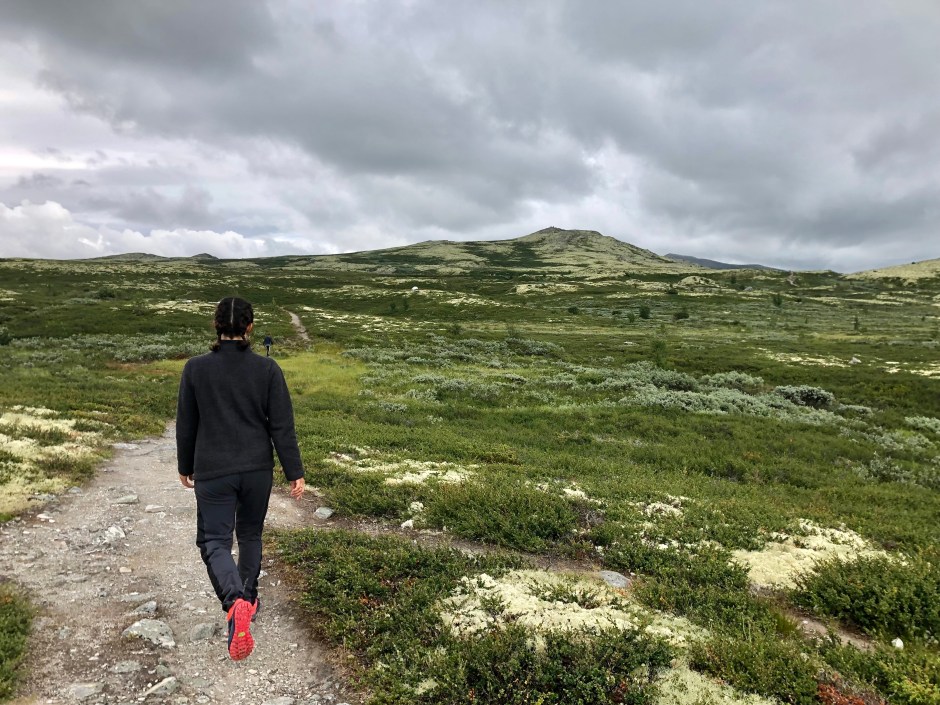
Whenever I am in a course or retreat with my Yoga teacher, Prasad, he reminds us to use the time we spend at the retreat to reflect about what we are learning, but avoid trying to solve our lives during that time. I have always interpreted this as an invitation to reflection and a warning against over-thinking.

Throughout the years I have been studying with Prasad, I have gradually learned to mentally put my life on hold for some days whenever I am at one of his courses or taking a silence retreat on my own. Surprisingly enough, I manage quite well to stop worrying about the things I usually worry, I don’t make any plans, I avoid ruminating about past events. The only times my everyday life pops up in my mind is through reflection on how I can apply what I learn in the course or retreat to my life to have a positive change.

Because of the pandemic, I haven’t been able to meet my teacher in person for over two years now, and the possibility to take silent retreats has also been limited during this time. I try as much as I can to create space for myself to slow down and reflect in everyday life, but my mind is used to going at a certain pace when I’m at home. It is more difficult to ‘tame’ it here. This means that during the last six months, I have been feeling the need to take a break. It is not a break from anyone or anything else than my own mind, and I have been going around believing that I can only do it if I get out of the daily routine, preferably on my own.

Yesterday, I took our daughter to a meeting with the Norwegian Labor and Welfare Administration (NAV). My husband and I had decided to apply for an assistant that can be with her a few hours a week and take her to one of her after school activities or maybe that can support her if she wants to start going out with people her age. People with PWS usually have such assistants. Some of them start at a young age to release the load from parents, but we had never really felt we needed it. However, our daughter is a teenager now, and we considered it important to start now because she will most probably need an assistant as an adult too.

Right before the meeting, I noticed our daughter getting into a bad mood, and when I asked what was going on, she managed to express her discontent with our plan of getting her an assistant. Once at the NAV office, she was clearly frustrated, and was answering the person who wanted to meet her in short phrases without even looking at her. I tried as much as I could to stay quiet and let them talk since the purpose of the meeting was for my daughter to talk about herself, but as the meeting went on and she clearly expressed she didn’t want to have an assistant, I felt I had to chip in and explain that this was meant as a measure to give her more freedom. But it didn’t help.

Our daughter can be considered as high functioning despite her PWS diagnosis , and this can be a big burden for her because she is aware of her struggles and knows that she’s different. At this age, she’s struggling to accept that she has different needs than her peers, and she has – like many teenagers, I would argue – a slightly distorted idea of what she can achieve independently. Because of her condition, we cannot trust that she won’t seek food when she’s not with someone who knows her. She can also get stuck in situations when something unforeseen happens or when she misunderstands a person or a situation. She can also be quite passive. If no one suggests her something to do, she can sit for a long period of time doing nothing. Especially this last aspect of her condition is what affects me the most as a mum because whenever I prioritise to do something else than to get her engaged in some sort of activity, I feel I am letting her down. Also for all these reasons, we would like her to have an assistant. Unfortunately for her, she cannot see this, and it is difficult to talk about it without making her feel bad.

So, during the meeting, I sat, most of the time, feeling tired, helpless and frustrated because I know that if she refuses to have an assistant, she won’t get it. I felt incapable of dealing with the situation other than stay calm, be quiet and let the person from NAV talk. She decided to finish the meeting saying that if my daughter doesn’t want an assistant, she cannot be forced to have one.

Many thoughts were flying in my head, and I was mainly wondering if it is right to allow a person with special needs to decide something that most probably won’t benefit her. Especially when she’s only 13 years old. But at some point, I told myself what I tell myself with my other two children, she’s an individual and she will have to live her own life. Yes, she’s only 13, and certain things we can still decide for her like her diet, when she goes to bed, how much time she spends on her screens, etc, but certain things she just has to decide herself and live with it. I also realised that maybe she’s happy not doing anything from time to time. Maybe the only one having a problem with that is me.

For the last five minutes or so of the meeting, I told myself ‘allow’. I sat and heard my daughter talk with the woman from NAV, and didn’t intervene, didn’t resist, avoided having an opinion. I had a similar feeling than when at one of my retreats with Prasad. I gave my mind a break. I stopped the movie of the possible future catastrophes that could happen if my daughter doesn’t have an assistant, I stopped the self-pity of how tired I sometimes am of being a mum of a special needs teen, I just simply stopped, listened, observed and accepted.

Ever since that experience, I have been reflecting about how much I feel is my responsibility everywhere. I think that I am responsible for bringing up my kids according to our values, but I am not always responsible of their happiness and enjoyment. As they grow older, I am less responsible of what they choose to eat outside our home, what they think, what they do and do not do. I am not responsible for their choices. I am not responsible for their social interactions. I observe that as they grow older and contest more and more my views, resist my advice, choose to disobey our rules, I grow more and more worried.

I have to stop. My mind needs to stop. I need to allow more. If my youngest doesn’t like that we are concerned about the effect consumerism has on the environment and gets angry because I don’t want to buy her new clothes when she has a closet full, it is okay. She can be frustrated and show it, and I don’t need to do anything about it. If our son chooses to play on the computer instead of doing his homework even though we keep reminding him to do so, it is his choice and he will have to deal with the consequences. Even our daughter with special needs will have to make her own choices and we will have to allow for her to learn from them.

With this in mind, I decided that for the remaining of the Fall break, I will get into ‘retreat’ mood. I am going to give my mind a break. I am with my three kids this week while my husband has to work. We will enjoy. I will try to share my time between doing what they want to do and what I want to do, and give my mind a break. Whenever I start worrying, I will tell myself ‘allow’.

How many choices have I made in my life that weren’t optima?, and still, here I am. I don’t think I would be happier today if I had chosen differently back then. My life might have been different, but not happier. The most important is to have someone who can support you in the ups and downs in life. Someone who can help you reflect when you need it.

Choices, choices

We are all the time making choices. Even not choosing is a choice. With age, experience and after yoga reached my life, I have learned to understand the importance of being aware of the thinking behind my choices. Am I choosing out of fear? Am I choosing with my heart? Am I avoiding to choose? If yes, why?

With age also, I have gained perspective. I can deal with most of the consequences of the choices I make because I know the intention behind them. Somehow, it is easier to deal with unexpected results when I know that my intention was clear. I always tell myself that I can accept the mistake, or the criticism, say ‘sorry’ and move on.

However, there is an area in my life where I struggle a lot with when it comes to choices, and that is my children’s upbringing. I think many parents can relate to this. I observe other parents, especially those who choose differently than me – us, we are after all two parents – and ask myself, why don’t I do like this? I am sometimes invaded by self-doubt.

Our kids are now less dependent on us, and I have started evaluating many of our choices. I have come to realise that some of these choices were less fortunate than others. For example, we chose to live in a place where we don’t have any family, and even though we managed quite well to get through everyday life without any help, I see now that our kids missed quite a lot that kids who grow up with their grandparents, uncles, aunts and cousins have. We don’t have a strong network that can support them. I think more and more about the importance of growing up with different role models. At the start of their lives, my husband and I were our children’s world, but little by little, they affirm more and more their personality and maybe (most probably even) our personality, our views, our way of doing things, might not align with them. If they had other adults to connect with, they would maybe get different ideas, different sources of inspiration. Also, they are getting into the age where they stop believing their parents when they say how fantastic they are, maybe hearing it from other adults that have a connection with them would work better.

We have never wanted to push our kids too much with school work either. In primary school, the most important was that they thrive, that they enjoy learning, and that they like going to school. I personally did expect certain effort, but I rarely sat with them to do homework. My explanation was that they went to an international school where they had longer days than the kids going to public schools, and I felt that they should be allowed to do other things in the evenings. They also were quite active with different after school activities and I wanted them to relax once at home. Once in middle school, I have talked about my expectation of them trying their best at school.

I don’t necessarily regret this choice, but I think that I should have helped them set a routine for homework because they will need it once they are in highschool.

Like this, I have quite a few reflections on what we could have chosen that might have meant something different or better for our children. However, I feel that I have made some important choices that I haven’t regretted at all.

I want my kids to grow up as caring, balanced and resilient people. I know they have come to the world to write their own story, and I will have to accept however they develop, but at least I will not look back and regret not having these values as my core values. Therefore, I have made some choices that sometimes have brought self-doubt in other areas like professional development, or even how our home looks like.

I know that I don’t tackle stress very well. I know that I am not good at doing many things at the same time because I don’t like doing things halfheartedly. It has been a priority for me that my kids feel loved, supported and seen in everyday life. That they feel that we are present. Not only physically but also mentally. Therefore, I have tried to not overload myself. I have a job, I have some hobbies, but I try as much as I can that nothing stands in the way for me showing my care and love to my kids. I haven’t always succeeded at this, and I have also gone through periods where I have had to work more or been away some evenings or even days, but I have been present as much as I can.

I know my resumé would look much better and I would have more job opportunities if I had a Masters degree. But I also know that studying would mean take away time from some area in my life, and most probably it would end up being my family. Our house is functional and pleasant to live in, but if we made an effort we could make many improvements. This would again mean taking away time to spend outdoors, or on sewing projects, or just sit and watch a movie with my kids.

I keep telling myself that I still have many years to study, to renovate, and to set myself goals, but the opportunity to spend time with my family will never come back. This said, I see how much people are able to do, and I sometimes do ask myself if I’m not a bit lazy. If I shouldn’t be doing this or that.

But, in days like today, I feel that I have at least done some good choices. That there is no one right answer on how we should live our lives. That we all have to find our way. Our priorities and try as hard as we can to avoid comparing our life to the life of others.

Why do I talk specifically about today? I will tell you a little story. Our youngest daughter is 12 years old. She just started middle school this Fall. On Thursdays, she has dance classes after school, and it has become our little thing to eat together somewhere in town before we take the bus to the dance studio. We then have a lot of time to talk. It is very nice to hear her experiences and her reflections.

Today, she told me she went to the toilet during one of her lessons and she found a girl from yr4 sitting in a corner crying. She immediately sat beside her and asked her what happened. The girl told her that a boy in her class had said something mean to her, and my daughter said something like ‘he must not feel very good about himself and that is why he is nasty to others, you shouldn’t pay attention to that kind of comments.’. She stayed with her until she was ready to go back to her classroom.

When I praised her for taking the time to talk with her and showing empathy, she said ‘I am now one of the older kids in our school, we have to be good role models. I couldn’t just go in, pee, and go out when someone is crying. I would have felt so bad.’

Anyone who knows our youngest daughter knows that she has many colours. She is not the most responsible always, but can be quite responsible. She enjoys learning, but she can also be quite lazy. She is caring, but can often be selfish. So this action only tells me that she is balanced and caring and that makes me happy.

Maybe, some of the choices I’ve made have helped her develop empathy? I am not saying that it is thanks to me that she is as she is, but at least our way of bringing her up hasn’t killed this in her.

I observe other families around us and I see kids developing the same and other skills. Sometimes I do think, why can’t my son or daughter do like that? What have they lacked in their upbringing that hasn’t inspired to that attitude? But then I think that luckily for the world, we are different, grow up in different settings with parents with different values and views, so we develop different skills and assets. There is no recipe. We just have to make conscious choices out of who we are, who our kids are and within the context we live in, and enjoy when our kids display their best attributes for their own benefit and the benefit of others.

The value of contributing

This week, my youngest daughter and I decided to finally renovate her bedroom. She had inherited furniture leftovers from the house throughout the years, and her room wasn’t very functional nor adapted to her taste and needs.

It has been a relatively long and enriching process, I think. First, we had to think of what we had to sell and which pieces of furniture we could keep but use slightly differently. She had to sort all her stuff in three piles: what she wanted to keep, what could be given away/sold, and rubbish. Only this was a good exercise for her. Things that could be given away/sold had to be sorted properly and cleaned for the next owner. She had to reflect about what she has and what she needs as opposed to what she wants. She has a small room, and I think it is important that she keeps things that make her room feel pleasant to be in, not stuff that take space and gather dust. We didn’t always agree on this one so it was also a good exercise for me to let her make her own choices for some of the thing she wanted to keep.

I dismantled her bed, advertised what could be sold further, and followed up with people contacting me to come and pick up furniture and toys. This was good for my daughter to see that we don’t only throw away what we don’t want/need, it can be useful for someone else. It was also good for our project because we ‘earned’ some money to buy the furniture she needed for her room.

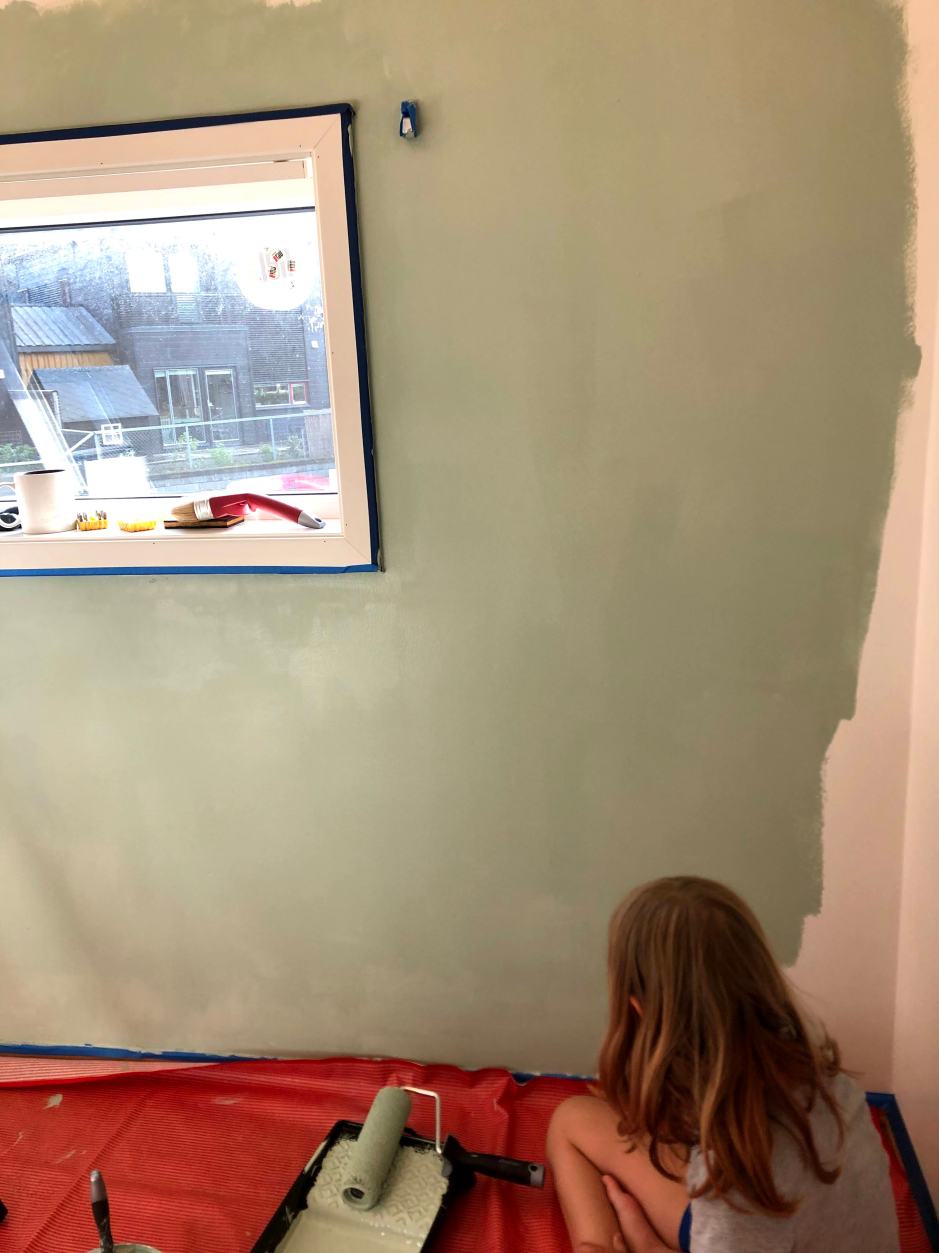
Next was to clean the room thoroughly, walls included. Over the years, she had chosen not to listen to our request not to tape things on the wall, and the walls were in quite a bad state. After cleaning them, we painted them. I was very impressed by her perseverance. It took us a couple of days to finish painting, and although I could see she was tired, she didn’t give up. She experienced how, we needed to do the job with care and patience. Mask off the areas we weren’t painting, cover the floors, not spill painting around. Once we were done, she acknowledge the hard work it required and decided that it is a good idea to take care of the new painted walls and hang up things properly.

We looked at furniture online, and she was surprised by how fast we reached a significant amount of money if we bought everything new. So we started looking at second hand furniture ads, and we ended up buying some new and some second hand. When we were at the shop, she chose away some objects because she was concerned about the final amount. This made me feel very proud of our little project as I feel it also taught her that things cost money and therefore we need to take good care of them. It also made her reflect on what we can refrain from buying as it is not really necessary.

After a whole week of hard work from morning to evening, the room is ready. All she needs to do now is to empty the boxes we filled with the things she wanted to keep. She is dreading this task, and I will help her a bit, but I think it is good to for her to reevaluate if she really needs everything she put in those boxes.

This whole experience made me think how important it is that we include our children in everyday chores. Small chores and bigger chores. This not only teaches them the value of work, material objects and time, but also gives them the opportunity to feel useful, the pleasure to start and complete a project.

While we were working on my daughter’s room, a good friend of mine came to visit, and were discussing how, we often chose not to ask our children to help because 1) It takes more time and effort to teach them to do things 2) We feel ‘sorry’ for them because they should be allowed to enjoy their spare time. I think maybe we need to rethink this and find a good balance. I have observed some of my students struggling with motivation and self-esteem because they don’t find school interesting, they don’t have any particular hobbies, and at home they don’t do much other than stay on their electric devices. I believe that even if kids and teenagers find helping at home annoying to begin with, they end up with a good feeling about themselves knowing that they are useful and capable of contributing to their family environment. My kids have had the task to clean their bedrooms for some years now, but I think it is about time that they do a bit more on a daily/weekly basis and contribute to bigger projects.

We have of course, tried to get them to do the minimum like tidying up their things, clearing the table, emptying the dishwasher, etc. But I must confess that I often also do these small things because I don’t feel like nagging. I can find ways to reinforce without getting angry, but I will definitely reinforce.

I think this is good for society too. I am not sure if there is a connection here, but lately, wherever I see young people enjoying some free time, I see a mess left behind. Yesterday, I was very surprised to go into our local shop where there is a small area to sit down, to find empty soda boxes, chocolate wraps and pizza boxes spread all over the floor. This shop is close to a park that is quite popular on sunny summer days for young people to hang out. I see this more and more often. Rubbish left behind after a fun day outdoors. My theory is that youth are not used anymore to help around, to experience the consequences of what they do. We parents tidy up after them both material rubbish and challenges they might face. All this with good intentions. We want to protect them, we want them to enjoy life, we want them to be happy. But I think, we might have misunderstood a bit. I believe we feel happier when we feel we contribute in some way to our surroundings. When we know how to do things, when we feel useful.

I have decided I will give more responsibilities to our kids from now on. Especially the oldest one. He spends way too much time on the computer and his phone, and his explanation is that he has nothing else to do. I have lots of things he can do… 😀

Saving our children from painful situations

A friend and I were talking the other day about our sons who are the same age and soon will have to choose what kind of studies they want to do for high school. Here in Norway, they can choose to go the ‘regular’ pathway that can lead them to university, or they can choose to learn a profession and come out being able to work. The latter is, of course, less prestigious than acquiring a university degree, but a good option to those who either have a clear idea or know well their skills, or who are tired of so much theory at school and want to do more practical work throughout the three years of high school.

My husband and I believe that, if our son chooses to choose a profession oriented pathway, we will support him. She is of the idea that her son (and our son) should choose the pathway that allows them to go to university. She has good arguments, and I don’t disagree with her, but what triggered this post was what she said at some point:

‘I want my son to make choices that will allow him to do something with his life in a way that is as painless as possible.’

Or something like that. Her argument is that, if they choose the profession pathway, and they change their minds in some years and want to go to university, it might be too late for them to study for and pass the exams required for those who don’t follow the ‘regular’ pathway. Valid arguments.

Can we really prevent our kids from experiencing pain?, and maybe most importantly, should we prevent our kids from experiencing pain?

The answer, is of course neither yes nor no. It is our instinct and to a certain degree our duty as parents to protect our children as much as we can, but lately, I keep thinking that this well-meant attitude might harm our children more than help them, and what is more, will exhaust us, because lets face it, no matter how much I try to keep pain away from my kids, pain will reach them at some point. Pain is part of life.

How can we harm our children by protecting them from pain? Well, it is through the experience of pain that we learn resilience, patience and perseverance. It is through painful situations that we often grow because we are pushed to take a self-check, to evaluate our situation, to learn and move forward. Maybe the key is not to spend most of our time and energy preventing our kids from making mistakes, but rather create a relationship of trust so when they make mistakes, when life gets tough, they know they can get through it by their own strength, and/or get our support if they need it to gain the strength to stand up on their own feet again.

Don’t misunderstand me, I do want my son to make choices that allow him to live a happy and meaningful life, and I do say my opinion whenever he is about to make a choice, but I also try very hard to remind myself to let go of the need to control him. I have to accept that he needs to make his own choices and deal with the consequences. I just hope that the day he makes a mistake or a choice that brings pain to his life, we will be able to support him in a way that helps him reflect, grow and move on.

I see it as a teacher too. I am thankful that I teach in times where we have a lot of focus on students’ social and emotional well-being, but I also feel that sometimes we feel obliged to micro-mange them to avoid emotional distress. If football games during playtime get too rough, we ban them. Parents contact us often when their child has had a conflict with another child often with the expectation that we will ‘fix it’ without the kids being involved to ‘avoid the distress’ caused by heaving to deal with the situation.

Although I understand the intentions behind this kind of expectations, I think that kids need to experience all sorts of emotions and learn how to deal with them. Both their own emotions and other people’s emotions. Maybe instead of banning the football game, we can have the necessary conversations – over and over again – to help them reflect on what went right and what went wrong, and more importantly, how they can do better next time. We help the students better by creating the space for them to talk and find common ground, and understand how they feel and how their peers feel. Maybe sometimes kids need to find their own solutions without adult involvement.

If you’ve been around for more than twenty years, you would agree that in life, we go through phases, some phases are more painful than others, but often, the most painful ones bring also a lot of growth. I teach students between 13 and 16 years old, and many changes happen during those years. Some teenagers go through tough periods trying to figure out who they are and what they want. It is painful for them, and often even more for their parents. The parents that suffer the most are those who try very hard to steer their children into a specific direction believing that that is the right direction. Or being overly worried about their child’s confusion. What I often observe from the outside is that the kids that have been raised with a set of clear values, that have parents that are present and available, manage to go through and beyond phases of confusion and pain and grow from them. It requires patience, resilience and perseverance from both themselves and their parents.

Reflecting about this, I have made myself some mental guidelines as a mum and as a teacher that I try to follow:

  • Walk the talk. Live my life as much in line as possible with what I believe in. Accept my mistakes and grow from them. Reflect with my children about them. I don’t need to pretend that I am perfect, or devoid from emotion.
  • Be mindful of how I react when my children make a mistake. Try to show understanding and be open for discussion instead of being judgemental.
  • When appropriate, share my views or opinion on something, explain why I think like I do, but make it clear that the choice is theirs (and hope for the best).
  • Remember that each one of my kids is an individual with their own path to walk. Be supportive, be present, but not controlling.
  • Help them go through difficult emotions. Explore and accept the pain to then let go and learn from it.
  • Keep learning together with my kids how to better support them in their own path. After all, parenting is all about learning by doing.