Save the world, and save ourselves…where to start?

My yoga teacher keeps repeating to us every time we meet him, ‘slow down and simplify your life’. I think that if we are going to succeed in reducing the amount of pollution we create, we need to follow this advice. I keep observing my life, and the life we collectively live and I must confess that it feels like this big knot that I don’t really know where to start unknotting. I want to use less my car, but I pack my days with so many things ‘to do’ that this is going to be almost impossible during the winter months (it is quite difficult to achieve already now, but I’m still managing…almost every day). I want to produce less waste, but I do buy food that helps me cook faster: pre-cooked pulses in tetra pack, vegetables at the local supermarket that come packed in plastic because the option to buy at the Asian shops downtown seem too time consuming for the moment, cereal for the kids for breakfast, etc… Why? Because I don’t have time during the week to spend that much time cooking, and I still want to give my kids a varied diet (exclude the cereal in this statement).

I could continue writing about how I am NOT contributing to stop global warming and waste production, but I think you get my point. My point is not to go on a self-blame ride either, I am just observing, and hopefully, will find better ways to really simplify my life so I have time to make choices that don’t affect the environment in a negative way.

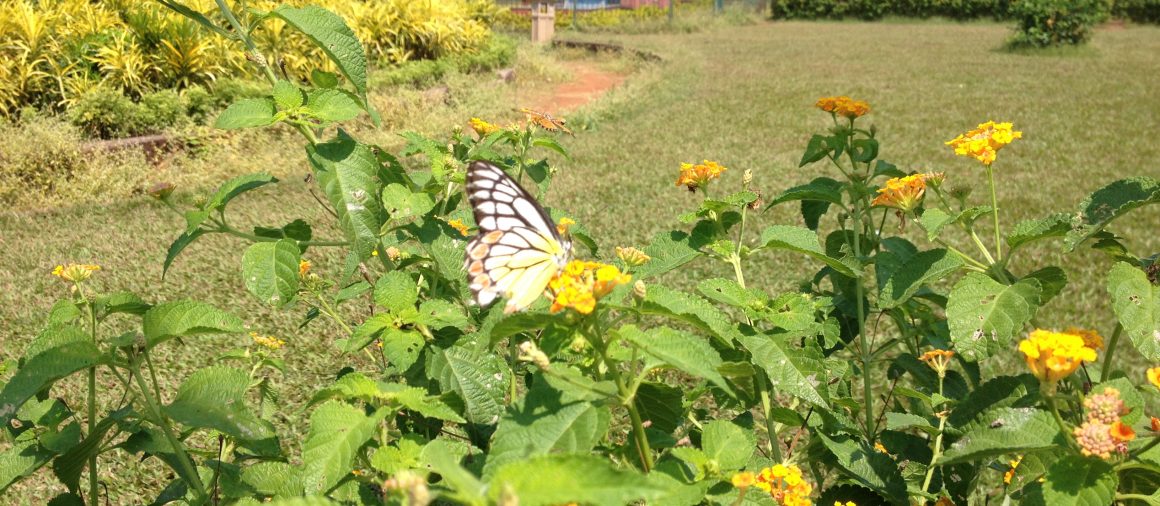
I see this happening at the bigger scale too. I was lucky enough to be among the teachers at our school that took the middle school students to an interdisciplinary day about biodiversity some days ago. One of the highlights of the day was a political debate led by a couple of our students where local politicians were confronted with questions about the environment written by our students or asked ‘live’ by the audience during the debate. All politicians in the panel seemed to agree on the fact that we need to take care of the environment to take care of biodiversity, but their answers were for me quite wishy washy. One of the questions was about protecting the bumblebees. All the politicians in the panel agreed that keeping or increasing green spaces in our city was the way to go, as well as encouraging people to grow grass on their roofs, and many other very innovative and positive ideas.

Our school is by a big public park . It has mainly trees and grass, and some weed does grow like dandelions, and other wild flowers. During the last four or five years however, the municipality (or whoever owns the park) has started to rent (or lend?) the park to different instances to run festivals. There is a kids festival in the Spring, a “neighbourhood festival” at the end of the summer with concerts, this weekend was another kind of festival. I understand the motivation and the thinking behind it: to bring people together and promote culture, but here we are again wanting too much at the same time. Every time these festivals are finished and the organisers take their stuff away, the grass is damaged by the amount of people tramping on it in the lapse of some few days/hours, the equipment they bring, the cars/trucks they need to use to transport all the stuff they need for the festivals. This is what I see, but what about the insects and birds that live in the park? How are they affected by this? So what is the priority here? Protecting the park to protect biodiversity or to use the park as a festival arena? Can we have both? Do we need to prioritise something?

This brings me to another advise I have been hearing from my Yoga teacher the last five years: prioritise and live with clarity. What is your clarity now? Is it to experience this and that, to not miss out, to do this and do that, to get this and get that, or is it really to take care of the environment? If we take this seriously, we need to start making some serious changes. Changes that I feel need to be made both individually and collectively in order for them to make an impact.

I have started to think that to simplify our lives is not what we have grown to believe is to simplify our lives. To buy fast food because we don’t have time to cook, is not to simplify our lives. To use the car instead of public transportation because we don’t have time is a sign that we don’t have a simple life.

I am trying to take small steps, but I must confess that I still feel that it is not enough. I am much more conscious of what I buy and where I buy it, I have stopped eating meat, and serve less meat to my family. I am trying to encourage my kids to reflect on what the want and what they really need. I am avoiding using the car as much as I can except when I have to drive to the other side of town to take my girls to swimming on weekdays. This makes me wonder, should we give up swimming just because of that? Should we change clubs to the one that is at the swimming pool on this side of town? Oh, but we like that other club so much better! That is one of the dilemmas we’re in for the moment.

So what is my point? My point is that I think that in order to be able to start taking more care of nature, we need to start slowing down, look at our lives and prioritise what really matters and let go of what we can let go of. We have to create some clarity, what is it that really matters right now? We need to live closer to nature too. How can we respect something that we have become disconnected from? We certainly don’t need to panic or loose motivation when we look at the challenge we have before ourselves, but we need to take it seriously and reevaluate what we think is simplifying our lives because I believe a lot of it is simplifying it short term, but not longterm.
You CAN make time for yourself

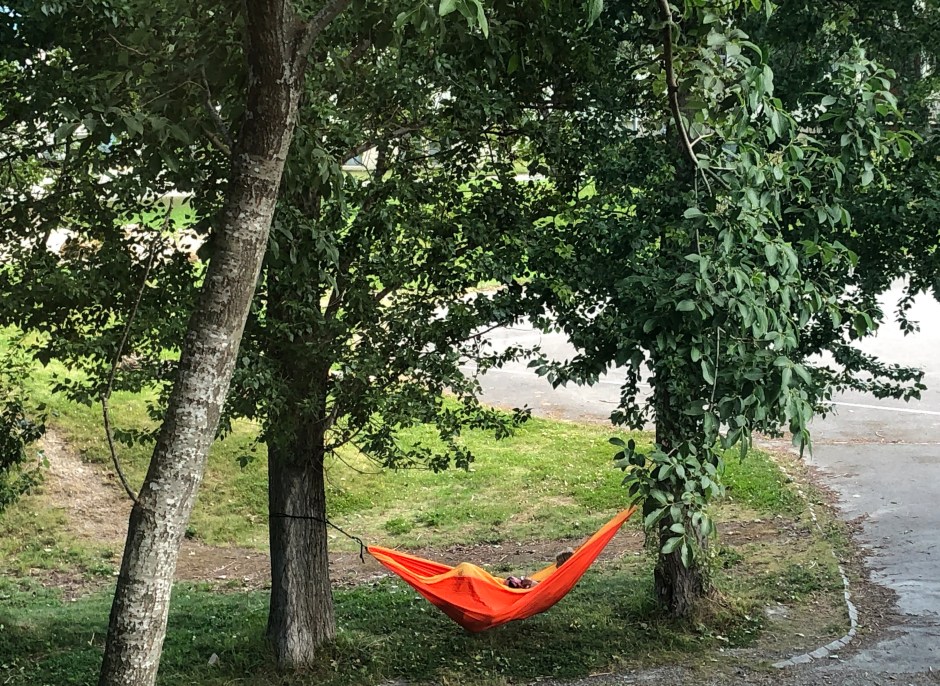
Lately, I have been thinking a lot about the concept of balance between responsibilities towards the outer world and towards myself. It seems like, a lot of people struggle to find this balance. I know that I am constantly trying to find the right balance between responsibilities and myself. Sometimes, I am good at it, sometimes my responsibilities take over, sometimes I exaggerate on what I want for me. I have come up with some points with suggestions that might help you if you feel that you aren’t good at balancing between you and the rest of the world.

  1. Make choices with a clear mind and try to be at peace with what they bring by accepting, adapting and letting go of what you can let go of. One example is motherhood. I wanted to have kids but I didn’t know what I was signing up for until, in the lapse of three years, I was suddenly standing there with three kids aged 0, 1 and a half, and 3 years old. It was hectic, it was tiring, and it was amazing at the same time. We didn’t plan to have them so close to each other, but we were actually told we couldn’t have children in the first place, so we were happy to prove the doctors wrong. Having three young kids meant that we had to think differently, at least for some time. The main focus became to take care of and enjoy them as much as we could. I am not saying that this should be everybody’s main focus in life, but I do believe we need to be clear about our priorities so we don’t get overwhelmed. I stayed home for five years from the day our oldest was born and until our youngest was two to avoid the stress for us and for the kids of everyday life. This meant less income, and therefore we had to change our lifestyle. This meant balance for us back then. But I do remember that in several occasions, I had to remind myself of the choices we had made and their consequences. I remember so well the year we decided to sell our apartment to buy a house. It was the same year I went back to work . I dreamed of a big house which we obviously couldn’t afford because of our reduced income the last five years. I was frustrated, and I was angry at ourselves for some days until I reminded myself why we had made the choices we had made and what they had meant for us and the kids.
  2. Be brutally honest with yourself: the world will not go under without you, especially if you are only taking two minutes to drink water. You think I’m exaggerating? I’m not! Some years ago, I read an article about an American mum of three that had to be hospitalised because she forgot to eat and drink during two days because she was too busy taking care of her kids. This is, of course, an extreme case, but I know by own experience that I believe I need to do everything around the house so my family can thrive. The truth is that they enjoy the freedom of being left to their own devices from time to time, and most of the time, I am the one putting pressure on myself. This applies to work, extended family and friends too. It is not possible to be at my 100% all the time everywhere.
  3. Ask yourself, what is the priority now? And let me drop a bomb on you, you can’t prioritise everything if you don’t want to end up exhausted. I have (or hopefully I can say ‘I have had’…) fixed ideas of how my house should look like, so for some strange reason, I have always had the habit of tidying up before I leave the house. Maybe for the mice to have a cosy time while we’re away? I clean the kitchen, I arrange the pillows on the couch, take dirty clothes to the washing room, make beds, open curtains, and if I have time, clean the bathroom sink and mirror and sweep the floor under the dining table and in the kitchen… All this until this summer. When I’m alone with the kids during the summer, I plan some sort of outing with them everyday but since we all like taking it easy in the morning, I spend a good amount of time doing things that I enjoy and I allow my kids to do the same. We then eat breakfast fairly late so if we want to get somewhere, we need to be efficient after breakfast. This means leaving the house in what I see as a mess. It is a good compromise with myself in order to be able to spend time doing something that I enjoy, that gives me energy and that gives me the feeling that this is my vacation too. I would lie if I said that the outings with my kids are some sort of sacrifice, but it is slightly different because I am ‘on duty’ then. The aim is to have a good time, but the focus is them.
  4. Make your well-being a priority above all priorities. If you aren’t doing well, if you are ill, or if you are struggling in any way, you need to take care of yourself first. Actually, I believe you need to take care of yourself no matter what, but especially when you’re not doing well. A very important thing in this point is that you need to be very honest about what is good for your well-being. You might need more physical activity and a walk would benefit you more than going on social media before bedtime, or you might need to spend some time in silence for your peace of mind instead of going to a party. I remember some years ago, a friend of mine was having problems in her marriage. The good news was that she and her husband agreed on what the source of their struggles was, the bad news was that none of them knew how to get out of the hole. When I asked if they had considered therapy, she said yes, but that they didn’t have time for it. What can be more important at that moment in their life than saving their marriage? I hear things like this all the time. A friend that is stressed and would benefit from doing some sort of physical activity, but she ‘doesn’t have time for it’. A friend that has a pain somewhere but he never takes the time to find a good doctor. I don’t know why we do this. For some, it might be cultural. You feel that you are selfish when you let go of some obligations in order to do something good for you. For some it might be frightening to take care of themselves. Others might have become consciously or unconsciously accustomed to the role of victim and can’t get out of it. Whatever your reason is, try to find it, don’t judge yourself, and change this negative pattern of thinking.
  5. Organise your time. It might be a good exercise to spend some days, at the end of your day, writing down everything you did that day. Not in detail, but for example: waking up at 7am and describe your morning routine: breakfast, shower… Work from 8 to 4:30, lunch from 11:30 to 12, what you did after work, what you did during the evening. Do it for at least three days, and look for things you spend time on that are not your priority, that are stealing your time and you can let go of, that you do but could ask someone else to do, that you do and don’t even know why, etc. This will allow you to make some time for yourself. For example: instead of going to bed at 12 because you were watching a TV show, go to bed at 11 so you can wake up earlier to go for a short walk before your morning routine, or meditate, or read, or whatever you know would help you feel better. If you are not a morning person, use your evenings instead. Talk with people around you to support you. You need to be systematic and disciplined to manage this, but you also need to show yourself compassion when you skip out. Try to set yourself small goals instead of big goals. For example, if you want to start running, start with 15-20 minutes two or three times a week instead of dreaming of running for “at least” half an hour five days a week. When life is very hectic at home, I sometimes eat lunch while working, and then take a 10 minute pause to meditate, or to go for a short walk. This really helps me rebalance. But it requires some planning, some discipline and the mindset of doing something good for me is not selfish.

I hope this helps.