What do you need?

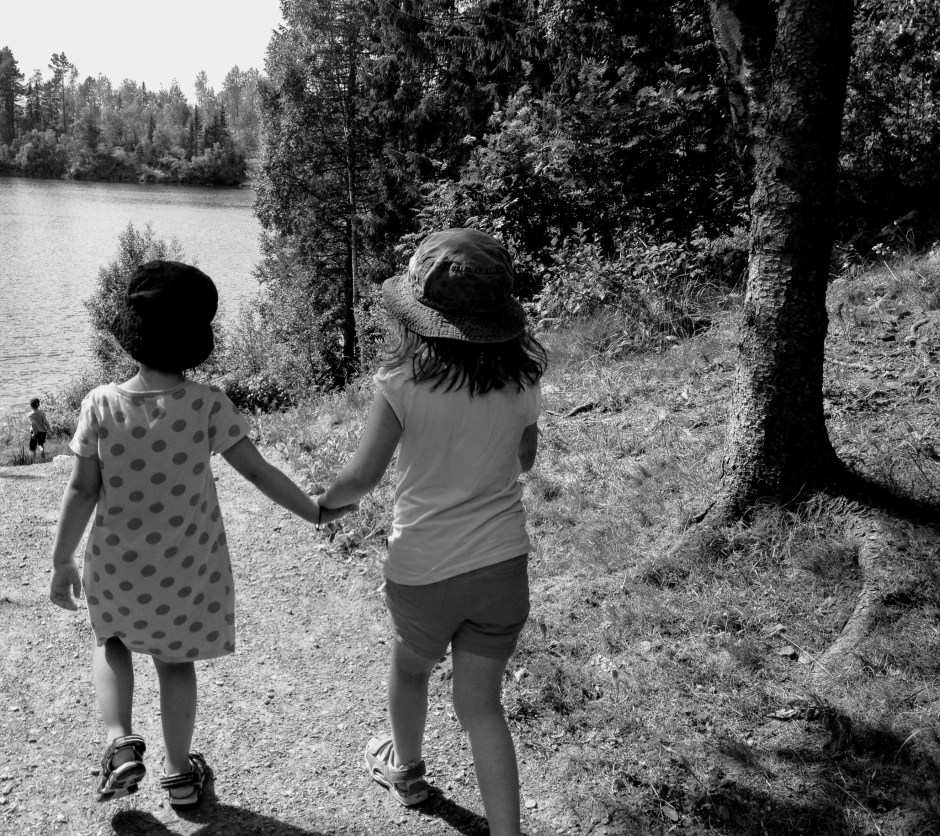
I went for an evening walk with my youngest who is now 13 years old. Together with her friends, she is going through changes, and with those changes seem to come challenges related to friendship. It is interesting to observe that their conflicts are not that different from what we could experience as adults, but with the lack of life experience, these conflicts feel much more dramatic than we might experience them after a few years of life (45, for example).

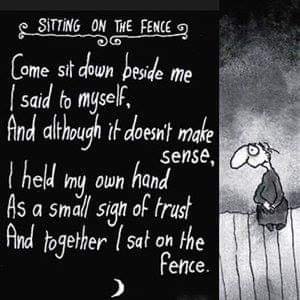
She started the conversation by telling me everything that frustrates her with her friends, and I tried to patiently listen asking sometimes if it wasn’t her own perspective. It is tricky to try to give advice, but here is what I told her that I think can help even ‘experienced’ adults when in conflict, especially with close friends and/or in a romantic relationship.

  1. Try to always remember that the other person, just like you, has more than enough with their own insecurities, inner struggles, and feeling of lack, so, whatever they do, is 8% about you and 90% about their inner life. So, if a friend suddenly acts cold, ‘ditches’ you for another friend, or doesn’t want to do something you used to do together, before assuming it is about or against you, talk about it. Try to not talk when you are upset. Wait until things are calm and ask. AND, even when it is about you, it is often a matter of perspective. If, however, the other person tells you there is something you have done that has hurt them, be open to reflect and consider saying sorry and avoiding doing the same again.
  2. Avoid talking with your friend by listing what is ‘wrong’ with them, or what they do ‘wrong’ (Very difficult!) Focus rather on expressing how you feel (or felt) in a given situation and wait for a response. Listen with an open heart. Most of the time, the intention behind the action is not to hurt. But when it is, try to find solutions together. I know, this one is difficult for a teenager, but at least expressing how they felt is better than ‘attacking’ the friend.
  3. Say clearly what you need. Write a short list of what you think you need from your friend to feel valued, safe, and included. Try to be as concrete as possible describing actual actions your friend can take.
  4. Listen to what your friend has to say. Consider their point of view.
  5. Consider accepting some of the sides that you see as challenging for the sake of those you value/like. Write a list of the pros and cons of your friendship with this person and decide if you want to continue investing time in it.

As I have been hearing since I started studying Yoga, when we move the focus inwards, when we are aware of how we perceive things, what we need vs what we think we need, and what we can give, it often is easier to communicate with others. It sometimes brings you to a better space in a relationship (although it might take time), and it sometimes might mean you need to let that person go, but at least you don’t feel like you are constantly banging your head on the wall.
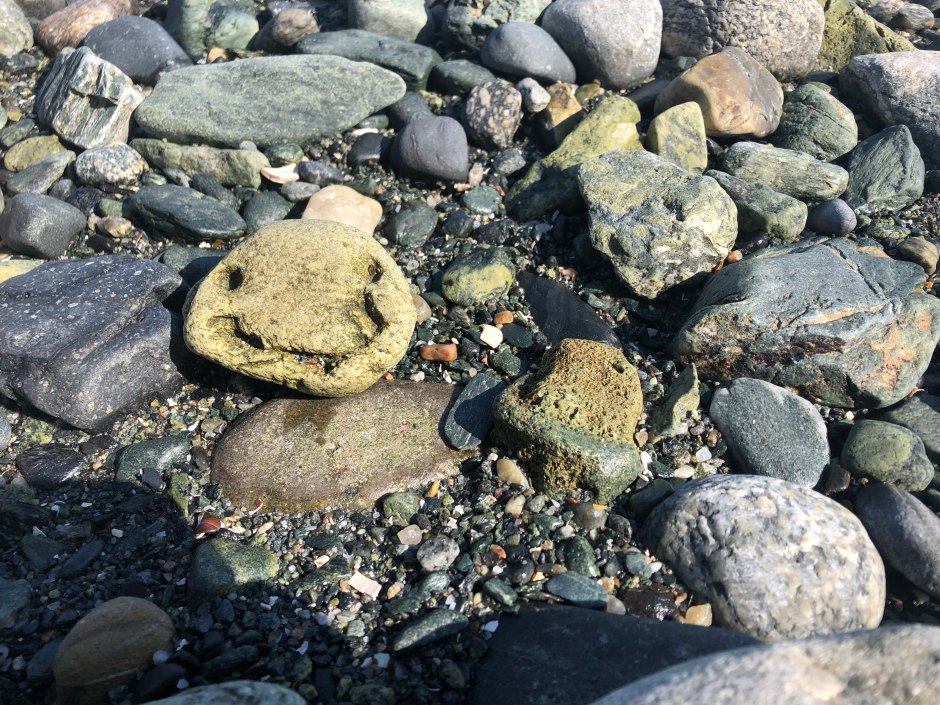
The picture I didn’t take

I like to share pictures on social media. They are often pictures I take from nature or places we go to, but also some of my family and I. Yesterday before bed time, I had a discussion with one of my daughters and I was quite firm with her which, of course, she didn’t like. The situation turned rather unpleasant for all of us especially since we are staying in a little apartment we are borrowing from my sister-in-law. It wasn’t a big argue but I could see our other two kids be uncomfortable.

When I went to bed I thought, that’s holiday together. Some really good moments and some not that good moments. It would be interesting to post a picture of this situation on social media, but what would it bring? Discomfort for many. Why would I share the difficult moments too? It would also be disrespectful towards my daughter. But why is sharing the good moments okay but not the challenging ones?

I also think that I don’t want people to believe I’m looking for sympathy, but again, what would be wrong with that?

We often criticize social media for showing a too glossy picture of people’s lives, and I guess some do use social media to appear as perfect, but that is not the case for me. Maybe I don’t share the challenging moments because it could be misinterpreted. We all know that most of everyday life challenges come and go, and the only thing to do is to get through them. I feel that sharing them would make them appear bigger than they are.

Maybe sharing life’s little and not so little challenges on social media wold normalize them too. When things turn sour, I tend to panic and want to ‘fix the problem’. I regret my part in the conflict, but yesterday, as we all went to bed, I thought, this is not a big deal, and it is good to also get through the discomfort that disagreement brings. Both for me and my kids. Not everything needs to be pleasant, not even during the holidays.

This morning, after my sadhana, I drove to buy fresh fruit and vegetables, and when I came back, our youngest daughter set the table, and we had a lovely breakfast. The discomfort from last night was washed away and maybe we all five were a bit more resilient than yesterday morning.

Conflict and chaos

It is interesting how, with age I gain perspective, and with this perspective, I am more willing to see unpleasant situations as opportunities to grow rather than potential mini-apocalypses.

I have never liked conflict. I have always been afraid of ending up in an argument because conflict for me has always seemed as the end of something. It has taken me a while to understand that this is my attitude towards conflict, and that it is not healthy. I think it is because I know that when in conflict, we show our worst side, and I have always been afraid of my own behaviour when angry and maybe even worse, getting hurt and disappointed.

I have also seen conflict as a sign of irreconcilable differences. If we fight now, it must be because we shouldn’t even be talking to each other in the first place.

I have had a similar attitude towards chaos. I don’t like chaos. It makes me feel out of control. I don’t necessarily feel the need to be in control all the time, but I do feel that it is expected from me- as an adult, as a mum, as a teacher, as a wife- that I am in control of all situations and especially of myself. So, if I end up being in the middle of chaos, I panic, I loose patience, and I feel low self-esteem.

However, during the last few weeks, I have been changing my mind towards these two dreaded situations, and I am starting to think that they are necessary for us to recenter ourselves, create change around us and allow growth.

The key is to not let ego get in the way which, as usual, is easier said than done. Usually, when conflict arises, it is because there is a need to stop, evaluate and consider realigning ourselves. It is also a great opportunity for us to revisit our values and priorities and act accordingly. Sometimes, this might mean that we have to let go of a certain idea we have of ourself, the other or the situation we are in for the benefit of the whole.

Sometimes, when we are in the middle of a conflict, we might feel that the opposing parties want completely different things, but if we look closer, we might realise that the needs at each extreme are the same, only manifested or expressed in different ways. This can help us open up, listen, and meet the other part half-way.

Conflict and chaos, in my opinion, are not that different. They often arise when the need of a change of direction is necessary. They arise to wake us up and give us the opportunity to see things from a different perspective, learn something new and thus grow.

It does happen, that sometimes, a conflict opens up our eyes to the fact that we need to move in a different direction than the other part, and although this is sad, it is also an opportunity to let go and allow for something new to come.

I did not sign up for this!

Earlier this week, I stood in front of one of my classes ready to start the lesson when one of the students snapped loudly ‘What’s up with your outfit? You look like a flight attendant!’ Surprised by her remark, I stood there some seconds trying to figure out how this made me feel and what I should reply. I don’t really care if my students approve of how I dress or not, but I did feel uncomfortable with a student making such remarks. I decided to reply that I wasn’t sure how to take her remark, and moved my attention towards the rest of the class.

The same evening, as I walked home from work, my mind brought me back to this incident. My first thought was ‘I did not sign up for this when I became a teacher’, followed by ‘And what did you sign up for?’ ‘What did you expect?’ I realised that at some point in life, I have thought the same about most of the roles I play in life.

What do we expect when we choose a profession? What do we expect when we choose a partner? In a friendship? We don’t choose our family, but we do expect quite a lot from them, and our friends and even our neighbours.

Many of the choices we make in life, we make when we are quite young. I know that when I chose a career and a partner, I had very little understanding of who I was. I chose to have children because most of the people around me were having children and because it felt right, but I didn’t really reflect much on the implications, on why I wanted so badly to become a mum.

I don’t say that any of this is ‘wrong’, but as time has passed, I have sometimes been quite dissatisfied with certain aspects of my life and I believe it is because unreflected, almost unconscious expectations started to grow in my mind of how things should be. How I should feel, how people should make me feel, how things shouldn’t be.

One problem that I see with this is that when I go around with lack of clarity of what my role is and what the purpose of engaging in something is, the expectations I have tend to change almost with the wind surprising sometimes even myself. Furthermore, I am putting the responsibility of how I feel in the hands of other people or the circumstances.

I believe more and more that the less we expect from the external world, the more peaceful life we can live. This is easier said than done. Everyday, in many situations, I catch myself getting annoyed or frustrated because of an expectation I have that is not met. I am trying to learn to catch myself before I react in situations when some unspoken, unfounded, unrealistic expectation is not met, but its taking time to make it a habit.

Going back to my initial thought, what did I sign up for when I decided to be a teacher? I could write a long essay about this, but I will spare you. I can honestly say that I had a certain vision when I decided to become a teacher, and this vision has obviously changed with age and experience. What I keep forgetting, is that in that role and any role I play, all I can do is have a clear and pure intention in every action I take, do my best and learn from the rest. Every class is different and every student is different. Og I could choose, I would of course love to have classes where students are eager and focused and motivated so I can share my passion for learning. But students come with their own background, experiences, expectations and preconceptions. Every moment is an invitation for me to create a space between behaviours and my reaction. To grasp the moment and turn situations into a learning experience both for them and for me. Now that I am in this role, for whatever reason I chose it, I can’t go around blaming big classes, noisy students, little time, lack of motivation and whatnot for how I feel in the classroom. I have to show up clear about what I want to achieve, and that should be something for the benefit of my students. I am not there to ‘get’ anything from them.

This said, it is also my role, I think, to prepare them to life beyond school and patient teachers. I need to lead with the example, be assertive, firm and sometimes maybe even stern, but for their learning and not to fulfil some kind of need in me.

Life is not easy especially because of human interactions, I feel. We all go around living life through our minds believing that the way we see things is the right one. Things don’t always go as we expect them to go, people don’t always behave as we wished they would. We can of course talk and try to understand each other, find compromises, but it isn’t always easy. Therefore, I believe that the way to a more peaceful life is to always go inwards. Always ask myself ‘why do I think like this?’, ‘what can I do?’, ‘what do I really want?’, ‘can I give myself what I am seeking out there?’, ‘is it realistic or even fair to have this expectation?’. This kind of reflections are helping me a lot.

LOVE

Almost a year ago, my teacher gave me the task to write a text about love. Love is something that has occupied my mind a lot, especially during the last five years. Five or six years ago, I experienced something that turned my world upside down, and it made me start questioning the idea I had about love, especially what we tend to call ‘romantic love’.

The last weeks, I have been listening to an audiobook called God Speaks to Each of Us which is a compilation of lectures Thomas Merton had using Rainer Maria Rilke’s texts to talk about different topics related to the meaning of life and how we interact with each other.

One of the last lectures is about what Merton calls human love. In it, he quotes from Rilke’s book called Letters To A Young Poet:

‘For one human being to love another human being: that is perhaps the most difficult task that has been entrusted to us, the ultimate task, the final test and proof, the work for which all other work is merely preparation[…] Loving does not at first mean merging, surrendering, and uniting with another person (for what would a union be of two people who are unclarified, unfinished, and still incoherent?), it is a high inducement for the individual to ripen, to become something in himself, to become world, to become world in himself for the sake of another person; it is a great, demanding claim on him, something that chooses him and calls him to vast distances. Only in this sense, as the task of working on themselves (“to hearken and to hammer day and night”), may young people use the love that is given to them. Merging and surrendering and every kind of communion is not for them (who must still, for a long, long time, save and gather themselves); it is the ultimate, is perhaps that for which human lives are as yet barely large enough.

But this is what young people are so often and so disastrously wrong in doing: they (who by their very nature are impatient) fling themselves at each other when love takes hold of them, they scatter themselves, just as they are, in all their messiness, disorder, bewilderment. And what can happen then? What can life do with this heap of half-broken things that they call their communion and that they would like to call their happiness, if that were possible, and their future? And so each of them loses himself for the sake of the other person, and loses the other, and many others who still wanted to come. And loses the vast distances and possibilities, gives up the approaching and fleeing of gentle, prescient Things in exchange for an unfruitful confusion, out of which nothing more can come; nothing but a bit of disgust, disappointment, and poverty, and the escape into one of the many conventions that have been put up in great numbers like public shelters on this most dangerous road. No area of human experience is so extensively provided with conventions as this one is: there are life-preservers of the most varied invention, boats and water wings; society has been able to create refuges of every sort, for since it preferred to take love life as an amusement, it also had to give it an easy form, cheap, safe, and sure, as public amusements are.

There are many things in this quote that resonate with me. To begin with, the fact that love is hard work. Any love. To love each human being we interact with requires that we are willing to accept the good and the difficult. To love is to observe ourselves reacting and rejecting what we don’t like and be curious enough to discover why we react so strongly. To love is to grow because once we decide we will love, we have to move away from our instinctive way of clinging to what we like and pushing away what we dislike.

We have to accept that our happiness doesn’t come from other people fulfilling our needs, it comes from our ability to see our neediness and work on it. We have to learn to accept the emptiness and fear that come with the realisation that regardless of how much we seek in the other, we are in reality alone. Once we have taken the first step of acceptance, we can gradually feel comfortable in this loneliness and build a relationship of trust with our own self. We are ok on our own. This relationship with the self can then be the bridge between us and the other. We can then see the same vulnerability in the other and show understanding and compassion. That is when the real love happens.

My teacher often says that not all love needs to become a relationship. I think that what we call ‘romantic love’ is a kind relationship and as my teacher defines it, relationship is a contract. We all have our explicit and implicit terms for the different contracts we have with people: mum, teacher, lover, children, etc. There is nothing wrong with it, but we should learn to make the difference between being ‘in a contract ‘ with someone and loving someone from the deepest of our hearts.

I like how Rilke writes that to love is to become world. To me, this means that we become space for the other to be, without judgement and without neediness. It doesn’t mean that we have to put up with whatever the other brings. Some relationships are toxic, some people hurt, and sometimes it is necessary to part, but we can still love without the contract, without the relationship.

Only this kind of love will set us free.

PS He keeps referring to ‘young’ people, I am not in that category anymore, and still, I know that I have a long way to go to be able to fully understand and live up to this kind of love.