Yamas and Niyamas

During this Summer, I have been spending my mornings revising the notes we got for an online course I took in 2021 with my Yoga teacher, Prasad Rangnekar, about The Yoga Sutras of Patanjali. I wasn’t completely unfamiliar with the Yoga Sutras since they were part of the syllabus during my YTT in 2015, but this time, we spent eight weeks going a bit deeper.

Ever since 2015, it has resonated with me that one of the best ways to reduce suffering is to get to know my mind better and thus work with the modalities Patanjali offers to gradually change the aspects of it that create stress and distress. The goal of Raja Yoga, as it is called, is “to bring the seeker from a restless state of mind to a completely regulated state of mind.” (Prasad Rangnekar, 2021) However, the Yoga Sutras seemed a bit dry to me back then, and shortly after, in 2016, I started studying the Bhagavad Gita through Prasad’s guidance. Back then, the teachings in the Gita felt more accessible and easier to grasp, and I focused all my attention on them. This said, out of the little I know about the Gita, the chapter that is closest to my heart and that oftentimes has taken me out of moments of distress is chapter 6 called Dhyana Yoga, which Jack Hawley translates as Taming the Mind and the Senses.

Now, going back to the Sutras after several years of focusing mainly on the teachings of the Gita, I feel that I am getting more out of my studies, and I feel the motivation to approach the teachings in a more systematic way.

In the Yoga Sutras of Patanjali with commentary from Bhashya, it is explained where human suffering comes from, and a model called Ashtanga Yoga is given to calm the mind and thus stop the suffering. This model has eight components, and the two first ones are Yamas and Niyamas which can be seen as values and observances that the practitioner should follow at every moment in thought and in action. In the mentioned course, Prasad explained that by living an ethical life following the Yamas and Niyamas we refrain from doing actions that cause harm to others and simultaneously create mental disturbances in us that can generate suffering and keep us in the ignorance of Self. It is important to clarify here that the end goal of all Yoga traditions is to unite us with this Self with a capital ‘s’. This Self is pure, and independent from anything that happens in the mind and physical world. It is said, that once we get in contact with this Self, we will realize that we don’t need anything else. It is called Self-realization. This end goal seems a bit too high for me, so at this stage in my life, I am content with creating clarity, harmony, and peace of mind. Anyhow, back to the Yamas and Niyamas.

The Yamas are called ‘the great vows’ and they are Ahimsa or Non-harming, which is considered the most important value, Satya or Truthfulness, Asteya or Abstinence from Stealing, Brahmacarya or Continence/Moderation, and Aparigraha or Abstinence from Covetousness (for a more in-depth explanation of each of the Yamas and Niyamas, please consult one of the many translations and commentaries on The Yoga Sutras of Patanjali in book 2. I like especially, Swami Satchidananda’s, but there are also some resources online).

The Niyamas are often described as observances, and they are Sauca or Purity, Santosa or Contentment, Tapas or Zeal/Penance/Austerity, Svadhyaya or Study of the Sacred Scriptures for Self understanding, and Isvarapranidhanani or worship/faith in something bigger than us, often translated as God.

They seem simple, but, I believe they are difficult to follow at all times, so I have decided to be more systematic about how I try to apply them to my life. I started by writing in my journal how I will apply each Yama and Niyama in my life as I am right now, and I will revise them regularly to remind myself and also to decide if I need to be more precise or if I have to change them.

I wanted also to find a way to be reminded as I go about in my everyday life. First, I thought about getting a tattoo, but that seemed a bit too drastic and expensive, I then checked online if there are bracelets that have some sort of image that symbolises the Yamas and Niyamas, but I landed on making my own bracelets. One with the word ahimsa, one with ASABA (Yamas) and one with SSTSI (Niyamas).

The first day wearing the bracelets, we went for a hike in the forest. We have three teenagers in the house, and our oldest and youngest aren’t very keen anymore to join us on our hikes. However, 1) they spend way too much time sitting in front of screens during the Summer break 2) we like spending time with them. So, my husband and I decided to gently force them to join every other day we go for a hike this Summer. A way to motivate them this time was by planning a stop at a cabin to get a sweet treat during our hike. Halfway through it, however, we realized that we weren’t going to make it to the cabin before closing time. This didn’t help for motivation, and especially our youngest started showing very clearly her discontent. I noticed how this was affecting me. I was getting stressed by her discontent, and somehow it started creating a feeling of annoyance in me.

I decided to quietly stay in the back as we walked to observe my emotions and thoughts for a while. I started to feel guilty for pushing them on this hike, for not bringing an extra snack, I asked myself -should we make it shorter than planned? I then realised that I am often stressed when our three kids join us for a hike, or when they don’t because ‘maybe we should have pushed them to come instead of allowing them to stay in the whole day with their phones’. Either way, my mind creates stress for me. So, what am I going to do? While lost in my rumination, I got a glimpse of my left wrist, and I read ASABA, where the S stands for Satya, truthfulness. What do I believe in? I believe in my kids benefiting from being physically active, I believe in my kids being in contact with nature, and I believe in my kids spending time with us. They might not always like it, but this is being true to my beliefs as a mother, and thus, I should stick to it and get through their discontent without making a big fuss. It felt like removing a heavy weight from my shoulders. Unsurprisingly enough, after a few minutes, the frustration from our youngest was gone, and she and I had a very nice chat on our way back. I didn’t react to her discontent and even better, I noticed my unnecessary stress. I used one of the Yamas to help me accept my choice and the consequences it brought.

I am very curious what the next days of using my bracelets will bring. I am sure there will be plenty of opportunities daily. 😀

Stressed and demotivated teens

I have been working as a middle school teacher for over fifteen years now, and in the last four years, I have observed an increase in the number of students who struggle with motivation, stress, and depression. There are, of course, varied reasons for this, but there is one thing I have been thinking a lot about lately: lack of clarity. I am not an expert in teenage psychology, so I wonder to which extent, it is possible to lead teenagers to create their own clarity.

Clarity of mind is something that is difficult for everyone, and often, the lack of it can be the root of our stress. When we lack clarity, we run like headless chickens from one thing to another, everything is important, everything is our priority, and we end up stressed and exhausted. We are like this plastic bag being blown around depending on the wind. Therefore, it is often a good idea, when we feel overwhelmed with stress, to take the time to stop and get our priorities clear, know what we actually want, what our assets are, and decide our own direction.

Of course, as a teenager, it is not expected to have life figured out, but I think we should talk about clarity with kids and teenagers. The big challenge here, I think, is that we live in a society that often sends contradicting messages to kids and teenagers. On one hand, many parents give more freedom to kids to do what they want at home, we struggle to keep routines in place, and protect our kids as much as we can from unpleasant situations. On the other, there is this underlying expectation that kids and teenagers have to succeed at school and have one or more afterschool activities where they also should do their best.

I have very talented students who excel in other areas than schoolwork, that already have a passion, but that have very low self-esteem because they don’t get high grades at school, and no matter how much I talk with them, they won’t believe me when I tell them that they are great. They want to do perfectly everywhere, they are very afraid of making mistakes or failing, so they often give up before they even try.

How about sitting down with our teenagers and making a list of what they do and how much time they invest in it? Then make another list of goals, and our own expectations towards them, and try to merge these into a priority list? Maybe such a conversation can also help us create some clarity for ourselves of what is really important for our children to learn in life and which expectations we can let go of.

I also feel that often, we allow teenagers to make choices they are not ready to make. This is also some sort of clarity. Since there is no clear framework for them, they can get lost in bad habits. I can see that at home with our fifteen-year-old son. Until he was around fourteen, going on a hike or a skiing trip with the family during the weekends was an expectation, but since he turned fifteen, we stopped insisting. This has resulted in him doing much less physical activity now, and I am not comfortable with it. I think we made a mistake by not pushing him to at least one trip with the family a week. It might be annoying for him, but it won’t hurt him, and it will definitely be good for him to get out, get some fresh air, and do some exercise. Not to mention spending time with his family.

Getting enough sleep is also a challenge at home. We gave in for some time during the weekends and holidays, but we realized we needed to go back to having strict routines and sticking to them with our son…Writing this, I wonder if this is where part of the confusion is.

On one side, we are not teaching our kids and teenagers anymore the importance of having routines and taking care of themselves, and on the other, we keep telling them that they need to succeed in life by doing well at school and everything else they engage in but we are not giving them the tools to do so.

I also think that although it is good to listen to our children and teens and respect their opinions, we sometimes need to make some unpopular decisions for them that we know will benefit them in the longrun. This only teaches them that they are stronger than they beieve. I saw that with one of our daughters. She hadn’t been thriving at school since she was in fifth school, but she didn’t want to change shools and my husband and I didn’t want to push her, until last year. We finially decided that it would be good for her to change environment and meet new people. It was a bit tough to begin with, but she’s doing great and I think this was a boost in her self-esteem. Not only she managed to adapt to a new school, she even made new friends! Sometimes, our kids can’t find their clarity, and we as adults, need to find one for them.

A fight with my husband and a burnt bread

Each Summer, I spend quite a lot of time reflecting about the school year. I reflect about my role as a teacher, but also about my general mental and emotional state because there is a connection. If I am mentally and emotionally in balance, I am able to make better decisions both at work and at home.

This summer, I decided I needed to create better routines for myself when it comes to work and home. I realised that since I became a contact teacher, I felt a big responsibility to deal with student related issues and spent often what I see as family time answering emails, writing reports, worrying about my students or catching up with lesson planning. It wasn’t until about a week after the summer break started that I noticed how stressed and tired I had been.

I want my students to thrive, and I would love to be able to help each and every one of them to develop to their own potential, but I need to remember that I am not a superhero, and that nobody is expecting me to be one. Being a good teacher is to act within the framework that I am given with clear intentions, and with support and in collaboration with parents, the school and support systems when necessary. Not all the responsibility lies on my shoulders.

With these reflections in mind, I decided I was going to find a better balance between work and home. I had made myself a mental schedule for school work.

Then, the school year started. I don’t know how I manage, but every year is the same. Every year, I seem to forget how crazy the first weeks of school are. No matter what I do when I finish the school year, I will always end up feeling that I am drowning in ‘to-do’ lists the first weeks of school.

This year was no exception, and you might have already guessed, as the tasks started to pile up and my days gathered momentum, I forgot my resolutions from the summer to balance work and family better, to avoid stressing, to prioritise better.

Half way through my first week at work, one day, I managed to squeeze too many things into my schedule. After a busy day at school, I came home to a busy evening at home. I had promised my youngest to take her somewhere, at the same time as I wanted to bake bread, wash clothes and tidy up the house. With the extra energy saved during the summer, I felt I could manage. And I did… partly. The problem is that the more I multitask, the more hyper I become, the less patient I am, the more things can go wrong. That day culminated with me losing my patience with my husband and (surprisingly) my husband losing patient with me and we had a huge fight. It was a big shock for me, our kids and for my husband as we almost never yell at each other.

Reflecting about it, I came to the conclusion that the reason why I lost my patience was that I had turned into a human tornado that day. I started the day doing one thing at a time, but as my day advanced, I kept seeing things that needed to be done ‘immediately’. So I kept doing, and doing, and doing, and at some point I was tired but I just couldn’t stop. When this happens, I start resenting my husband because he seems oblivious of what ‘needs to be done’, and I keep hoarding things to do until one little thing goes ‘wrong’ and the whole situation explodes in our faces.

The solution: do less. Leave some work for tomorrow. Sit down. Take a breath. Why do I keep forgetting this simple solutions?

I finished my week with these reflections. All good. Until yesterday.

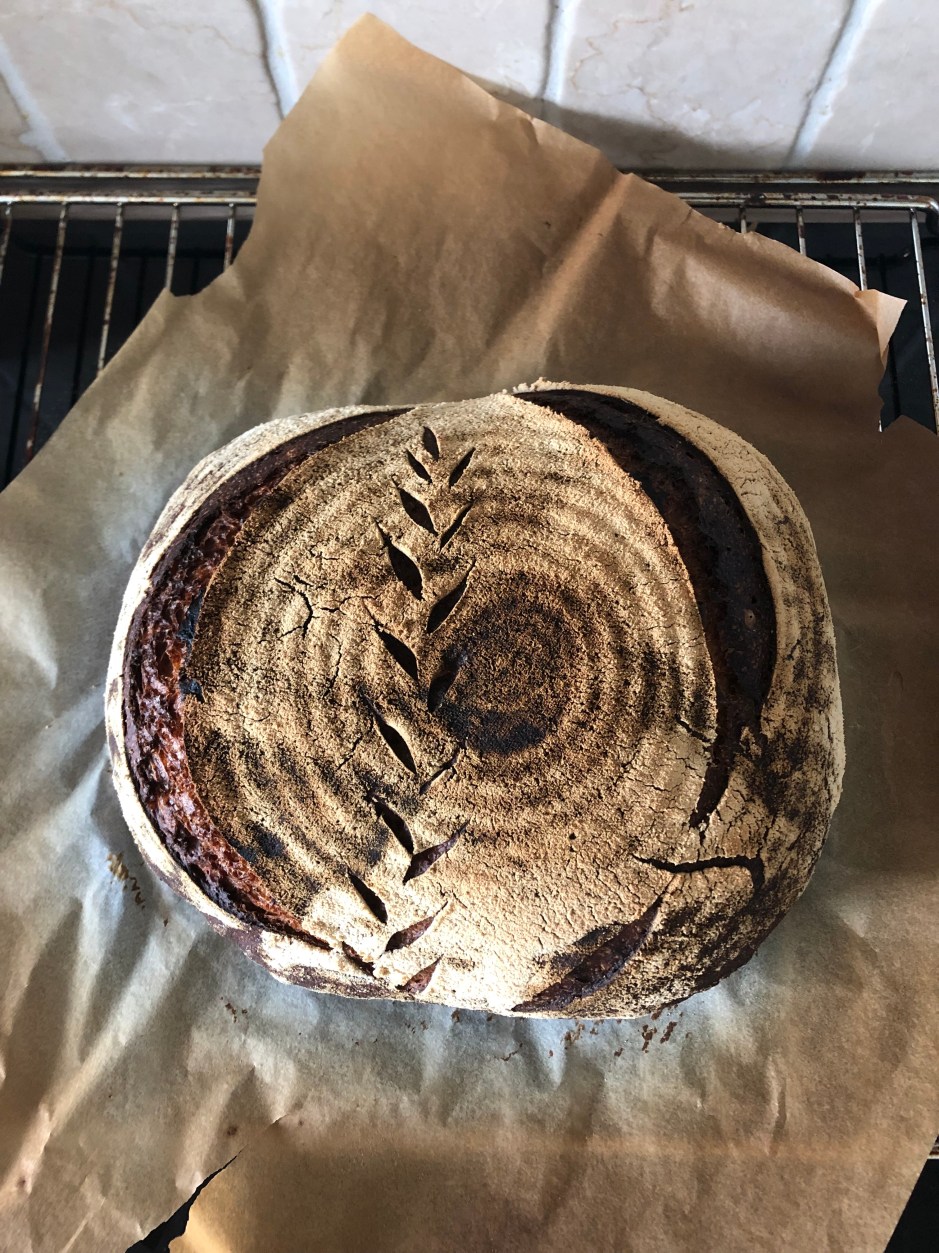
New week, new pile of things to do. New possibilities for me to create chaos (he he). Yesterday, I forgot again my resolution to not work during ‘family hours’, lost track of time, and managed to forget a loaf of bread I had carefully prepared the day before for almost two hours in the oven. I was so disappointed and frustrated! Baking with sourdough is a long process, and I ruined it because I was multitasking again and even worse, I had not stick to my promise to take a break from work during the evening. But I had to laugh too. Such a good reminder.

My husband has forgiven me for yelling and thinks a bread with a ‘well done’ crust is delicious. I am lucky. I have gained some perspective. I know that stress is a choice. It seems like it’s not, but it really is. I will work on not choosing stress in the future.

Spring reflections

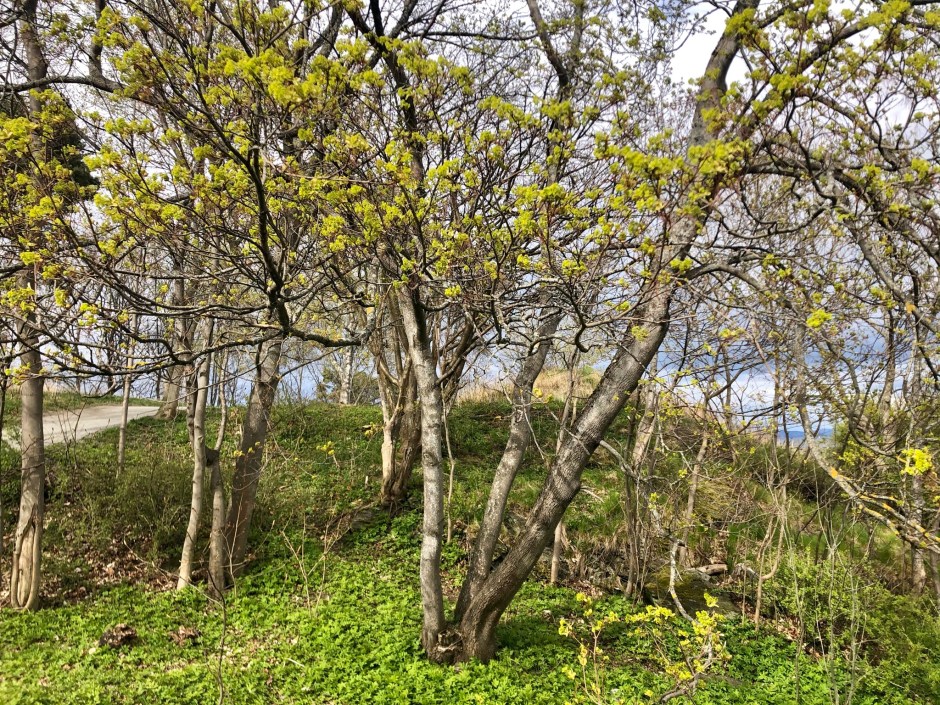
The Spring is here and with it comes the awe of nature waking up to life after a long Winter. I enjoy observing how days are getting longer and longer, feeling the warmth of the sun, the birdsongs, and seeing plants and trees growing leaves and flowers.

Spring always brings me so much joy, but the start of the season is always challenging for me. I don’t know why, but I often feel tired physically, mentally and emotionally, and it takes a lot of inner work to get myself through it without allowing this tiredness to push me into a negative space. It has taken me some years to understand this pattern and even more importantly, to accept it.

My theory is that I spend so much energy keeping up with life during the dark and cold Winter, that when the Spring comes, my body is exhausted. I tried this Winter to follow better the rhythm of the daylight and allow myself to rest more and do more indoor activities that inevitably require less energy such as sewing, knitting, reading, playing board games with my kids and watching movies. Still, the tiredness of the Spring did come along.

Spring is also a quite busy period for me. As a teacher, May is an intense month with many holidays sprinkled throughout the month, and although I do appreciate the breathing pause they bring, they also interrupt the rhythm of school life in what I see as one of the most critical periods of the school year as we should be wrapping up, doing our last assessments to start writing report cards, write the end-of-the-school-year student reports, and prepare for next school year. In addition, all clubs my kids are part of, want to mark the end of the school year with celebrations, and on top of all that we have the Norwegian national day and all the expectations around it. Fighting all this, my desire to be outdoors and enjoy the better weather.

So, even though the light and the milder weather call me to be more active, I am trying this year to work with my expectations and what my different roles require from me. Not an easy task, but I keep learning:

  1. Prioritise: I can’t have a hundred items on top of my priority list. Remind myself of what is important for me and make my list accordingly.
  2. Put some things aside both practically and mentally. I can’t do everything right now. Some things will have to wait. This is very connected to nr1.
  3. Keep my sadhana rock steady. At least twenty minutes of sitting in silence preferably preceded of some yoga asana.
  4. Say no when needed. This one is very though because I don’t want so seem rude nor disappoint anyone, but it is also very necessary.
  5. Good enough is good enough.
  6. Give myself time and space to feel tired, confused and frustrated but do not feed into the emotions. Time and space will always allows me to get some perspective and find a way to get through situations.
  7. Make choices based on what I know and the resources I have with clear intentions and trust that whatever happens will be for the best. I must confess that making choices is one of the most energy-draining activities for me, but I am learning to follow this little formula. Trust is an important ingredient to not spend too much energy on them.
  8. REST. Go to bed early, listen to my body and mind and take a break during the day when I need it. I often eat lunch with my students or in meetings, but when I can, I take a half hour break during my work day and go for a walk in the park, literally. Walking in nature always recenter me. When I get home, if my kids are at their respective activities or with their friends, I take a coffee break to rest my mind and body.
  9. Move outdoors. I have as a goal to walk at least 7km a day, some days I walk more, some days slightly less. The key is in using my legs as my means of transportation. I walk or ride my bike to and from work and to whatever errands I have during the day.

Who knows what is best for you?

“You can rise up through the efforts of your own mind; or in the same manner, draw yourself down, for you are your own friend or enemy.” Bhagavad Gita ch6v5

This quote is from chapter 6 in the Bhagavad Gita where the path of meditation is explained (Yoga Dharana). Krishna, Arjuna’s friend and guide emphasises that we have the power to make our lives good or bad.

Notice how Krishna talks about the ‘efforts of [our] own mind’.  The mind is key and the outer circumstances are secondary in this theory of Yoga.
The work of self-observation and self-reflection is crucial in order to decide which aspects of our life and mind we can continue cultivating and which ones we need to change, and more importantly, how.

In the quest towards making choices that will improve your well-being, you can start by avoiding taking your mind and body too seriously. What does this mean? Avoid over-identifying yourself with the shape of your body or the state of your mind. Avoid the extremes of overindulging or neglecting yourself. In both cases, you are feeding into your ego mind which prevents you from reaching deeper into your Higher self which, according to Yoga, is Pure Potential.

Overindulging 

What do you associate with overindulging? How do you overindulge? We often think about food and alcohol, but there are other ways to overindulge: sex, work, sleep, social media, reading the news… It is basically any activity we do to stimulate our mind through our senses where we lose control.

Beside the possibility of harming our health, by losing control of our senses, we also lose the opportunity to keep a calm and clear state of mind. Patanjali talks about thoughts that bring pain, and thoughts that bring suffering. Thoughts that bring suffering are selfish thoughts. Whether we like it or not, when we lose control over our senses we are being selfish. We are seeking to feel good through the experience of sense objects. The problem is that, when we seek comfort by satisfying our senses, we end up in a negative spiral. We either experience momentary pleasure in sensual experiences, but the moment the stimulus is over, we start craving for more, or even worse, we don’t experience satisfaction until it is ‘too much’ leaving us feeling overstimulated, and maybe even remorseful for the loss of control over ourselves.

Overindulging often comes from a conscious or unconscious feeling of void. This void is felt in different ways by different people and we often connect it to past experiences or trauma. The truth is that if we all observe our mind, we all experience some sort of emptiness. For some, it is stronger, and for others it is more bearable. 

So, what to do?

  1. Slow down: when we slow down, we are more aware of what we do and why we do it.
  2. Make sure you rest enough: lack of sleep and rest can lead to overindulgece. The mind seeks stimulation to get out of tiredness or the emotional instability tiredness brings.
  3. Enjoy life with moderation: we are not encouraged to neglect ourselves. We are encouraged to use our senses to experience the world with its ups and downs but we are warned of the consequences of being controlled by our senses. Instead, we should aim to live a life of discipline, where we control the senses.
  4. Try not to put your well-being in sensory experiences. Cultivate contentment that is independent of the external world. Contentment is mentioned in Patanjali’s Yoga Sutras, it is anchored inside ourselves, no matter what is happening outside us.

By contentment, supreme joy is gained.” Book II sutra 42 Patanjali’s Yoga Sutras.

Swami Satchidananda writes in his commentary on Paranjali’s Yoga Sutras that one must understand the difference between contentment and satisfaction: ‘Contentment means just to be as we are without going to outside things for our happiness. If something comes, we let it come. If not, it doesn’t matter. Contentment means neither to like nor dislike.’

“ The contact of bodily senses with objects and attractions in the world creates feelings like sorrow or happiness, and sensations like heat or cold. But these are impermanent, transitory, coming and going like passing clouds. Just endure them patiently and bravely; learn to be unaffected by them.” Bhagavad Gita ch2 v14

The Bhagavad Gita invites us to live a life of moderation and of constant awareness over and control of the senses. The problem with putting our happiness in sensory experiences is that they do not last. Everything we experience in the outer world is transient. If we want to experience a constant feeling of contentment, we need to put our focus inwards. According to Yoga, all we need is already inside ourselves, beyond our mind and our body. If we take the time to slow down, to make contact with this inner core, we will gradually experience this feeling of contentment that is independent of anything that is happening around us.

  1. Take time to know yourself in all aspects of your life. Observe what happens when you sleep less, what happens when you sleep more. Try different techniques to improve sleep: reading, light exercise before bedtime, meditation, yoga, staying away from electric devices. Observe what happens with your body and mind when you eat certain food. Be honest with yourself. It might be possible that you feel satisfied after overindulging, but what happens next? Do you experience discomfort? If not, continue as you do. If yes, what can you change? If we take the time to listen to ourselves, to observe how our body and mind react to different stimuli, we find out what best suits us.
  2. Create habits and stick to them. We are all different, and it is good to listen to advice, but if you keep jumping blindly from one thing to another, you are not listening to yourself. It has taken me many years of either overeating or dieting to finally realize that something in between is what is best for me. I have tried different things and have come to a sustainable diet. Something that I can live with, that doesn’t complicate my life, on the contrary, it makes it easier.
  3. Be patient. Be consistent. Be kind and compassionate towards yourself. 

Self-neglect

“I must emphasize that you have to lift yourself by your own efforts! You must not allow yourself to be demeaned by your ego-self. Know that the self can be both friend and foe – a friend when used to conquer the mind, senses and body; a foe, when it drags one into the mind, senses, and the body. True Self (Atma) is the ally; the ego-mind self is the enemy.” Bhagavad Gita ch6 v5-6

Some feed into their ego by overstimulating their senses, some, by self-neglect. Many move from one to the other constantly beating themselves for either overindulging or for not taking care of themselves.

In any case, we are only feeding into our ego mind creating stress and distress for ourselves. Neglect is not only harmful for ourselves because how can we function to our best when we don’t take care of ourselves? How can we show genuine care, compassion and love to others when we don’t do it towards ourselves?

Therefore, the best thing you can do is to find MODERATION in your life.

“It is impossible to practice Yoga effectively if you eat or sleep either too much or too little. But if you are moderate in eating, playing, sleeping, staying awake and avoiding extremes in everything you do, you will see that these Yoga practices eliminate all your pain and suffering.” Bhagavad Gita ch6 v16-17

Note that ‘practice Yoga’ doesn’t mean to do physical exercise (asana), but the practice of cultivating a peaceful and clear state of mind. If what we seek is to live a more peaceful and clear life, we need to start by taking good care of ourselves. Even if we are taught that we are much more than our body and mind, these are the vehicles we have to move around and experience life. Therefore, we need to take care of both. The best way to do so is by living a life of moderation in actions and in thought.