Lessons from this week

  1. Sometimes, good intentions are not enough. Discussing a mistake I made this week with a friend, he told me “I always give important decisions a night sleep.” In line with the teachings of Karma Yoga, I strive to create clarity in my mind. This means that I try to always be clear about the intention behind my action. I try not to act impulsively. However, this week, I made a choice with good intentions but after I gained perspective, I realised it wasn’t the best choice for everyone. Which leads to lesson 2:
  2. Running against the clock will often mean trouble. Had I taken the time to reflect on the options, I might have chosen differently, but during the last three weeks, I feel I have been in a constant race against the clock. My mum always says : move slower when you are in a hurry. My friend kindly told me: ‘the choice is made, you cannot change it. You have to put it behind you, but I disagree with your choice this time.’ I agree with him. No point spending time and energy in regretting, but I should learn from this mistake. Which leads me to lesson number 3:
  3. There is a difference between acknowledging our mistakes and shortcomings and torturing ourselves with regret and self-loathe. If we are to grow in this life, if we are to cultivate more peace inside and around ourselves, we need to see the difference between these two. Someone in my sangha wrote a very inspiring experience this week where he describes how, he has come to accept his shortcomings in his interactions with the people he loves, he has seen his part in situations where things haven’t gone the direction he wishes them to go, and he is willing to make adjustments in his attitude and behaviour. He sees it will require practice, patience and time, and he is willing to do so. He is not stuck in regret nor he is running away from the consequences of his actions. I think that what often happens in our relationships is that when we realise where we have been acting unskilfully, we struggle to see that it is just a matter of accepting and adapting. Which leads to point number 4:
  4. I should do my best to live in clarity and with pure intentions, the rest is out of my hands. If I notice I can make a change to improve a situation, I should, but I can’t expect anything in return. We all live inside our heads, and I cannot control how other people react to my actions.
  5. Finally, I should continue simplifying my communication with others. Keep it clear, keep it short and avoid getting tangled in explanations. Sometimes, the best I can do is not to say anything.

Following lesson nr5. I finish this blogpost here hoping you had an enriching week. ❤️
A fight with my husband and a burnt bread

Each Summer, I spend quite a lot of time reflecting about the school year. I reflect about my role as a teacher, but also about my general mental and emotional state because there is a connection. If I am mentally and emotionally in balance, I am able to make better decisions both at work and at home.

This summer, I decided I needed to create better routines for myself when it comes to work and home. I realised that since I became a contact teacher, I felt a big responsibility to deal with student related issues and spent often what I see as family time answering emails, writing reports, worrying about my students or catching up with lesson planning. It wasn’t until about a week after the summer break started that I noticed how stressed and tired I had been.

I want my students to thrive, and I would love to be able to help each and every one of them to develop to their own potential, but I need to remember that I am not a superhero, and that nobody is expecting me to be one. Being a good teacher is to act within the framework that I am given with clear intentions, and with support and in collaboration with parents, the school and support systems when necessary. Not all the responsibility lies on my shoulders.

With these reflections in mind, I decided I was going to find a better balance between work and home. I had made myself a mental schedule for school work.

Then, the school year started. I don’t know how I manage, but every year is the same. Every year, I seem to forget how crazy the first weeks of school are. No matter what I do when I finish the school year, I will always end up feeling that I am drowning in ‘to-do’ lists the first weeks of school.

This year was no exception, and you might have already guessed, as the tasks started to pile up and my days gathered momentum, I forgot my resolutions from the summer to balance work and family better, to avoid stressing, to prioritise better.

Half way through my first week at work, one day, I managed to squeeze too many things into my schedule. After a busy day at school, I came home to a busy evening at home. I had promised my youngest to take her somewhere, at the same time as I wanted to bake bread, wash clothes and tidy up the house. With the extra energy saved during the summer, I felt I could manage. And I did… partly. The problem is that the more I multitask, the more hyper I become, the less patient I am, the more things can go wrong. That day culminated with me losing my patience with my husband and (surprisingly) my husband losing patient with me and we had a huge fight. It was a big shock for me, our kids and for my husband as we almost never yell at each other.

Reflecting about it, I came to the conclusion that the reason why I lost my patience was that I had turned into a human tornado that day. I started the day doing one thing at a time, but as my day advanced, I kept seeing things that needed to be done ‘immediately’. So I kept doing, and doing, and doing, and at some point I was tired but I just couldn’t stop. When this happens, I start resenting my husband because he seems oblivious of what ‘needs to be done’, and I keep hoarding things to do until one little thing goes ‘wrong’ and the whole situation explodes in our faces.

The solution: do less. Leave some work for tomorrow. Sit down. Take a breath. Why do I keep forgetting this simple solutions?

I finished my week with these reflections. All good. Until yesterday.

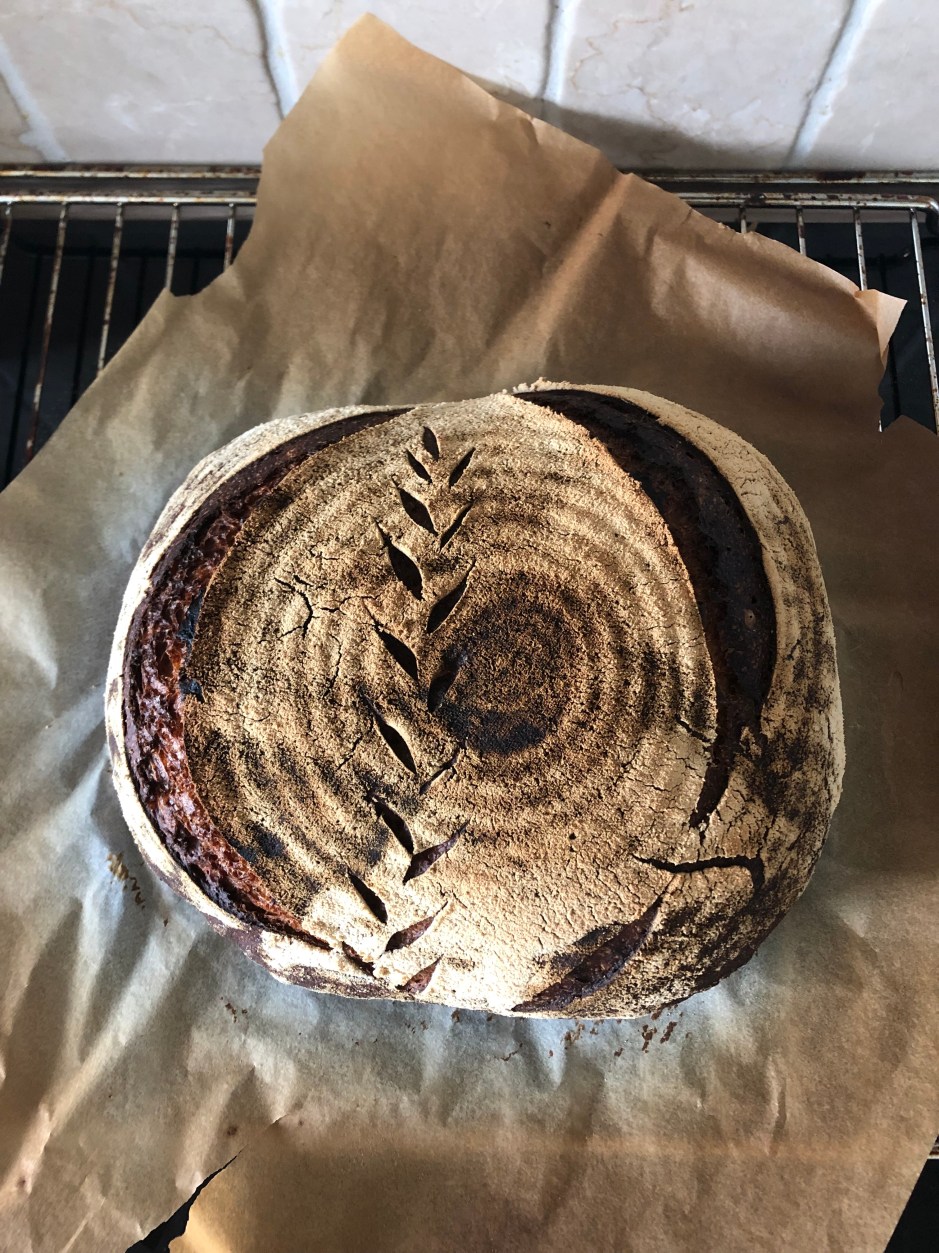
New week, new pile of things to do. New possibilities for me to create chaos (he he). Yesterday, I forgot again my resolution to not work during ‘family hours’, lost track of time, and managed to forget a loaf of bread I had carefully prepared the day before for almost two hours in the oven. I was so disappointed and frustrated! Baking with sourdough is a long process, and I ruined it because I was multitasking again and even worse, I had not stick to my promise to take a break from work during the evening. But I had to laugh too. Such a good reminder.

My husband has forgiven me for yelling and thinks a bread with a ‘well done’ crust is delicious. I am lucky. I have gained some perspective. I know that stress is a choice. It seems like it’s not, but it really is. I will work on not choosing stress in the future.

Lost and found

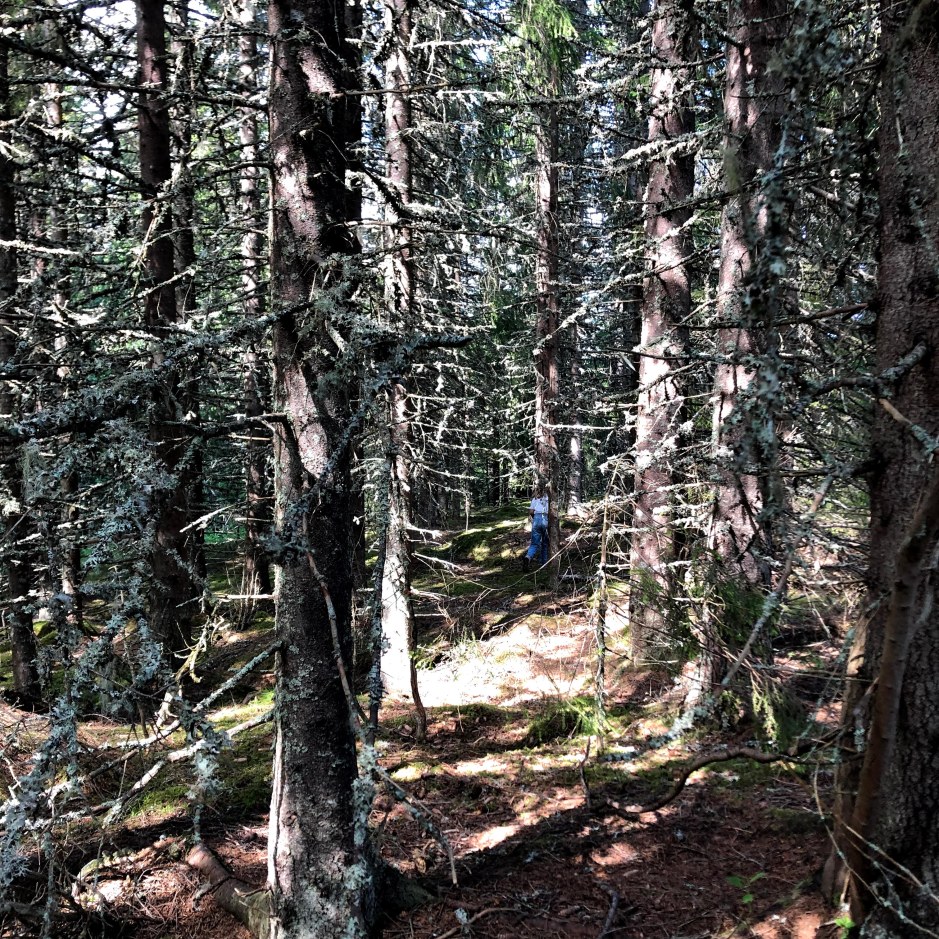
I went for a hike in the forest with two colleagues the other day. Both of them grew up experiencing nature like we do in Norway, hiking, camping, sometimes walking in the mountains for days. At some point during our hike, one of them said that she finds it exciting to sometimes get lost in nature to then find the way back. She told a story from her childhood where she and her family were hiking somewhere in Mali and got lost. They had to walk in the dark back to the cabin they were staying at. My colleague’s mum had to focus on her white shoes to not stumble as she had bad sight. It was fun, she said. In Mali. A family of five, lost in the mountains.

Her story inspired me because I don’t think I would remember as fun getting lost in nature as a kid, maybe not even now as an adult. I can imagine me getting scared, worried and maybe even angry and blaming it on my husband, as I often do. My kids complaining and blaming it on both of us.

Maybe I’m exaggerating or maybe not, but I found this story inspiring because my colleague’s family chose to have an attitude of adventure and playfulness in a moment that I most probably would have perceived as annoying and even dangerous. It brought me back to a reflection that has been coming and going in the last few years about the power of staying calm in all situations. This ability to stay calm comes with being able to take a step back from a situation and see solutions, but I also think it has to do with faith.

Observing my mind and my actions, I have noticed that I have had a tendency to get overwhelmed and almost panic in situations where things don’t go as expected. I have been afraid of challenges, problems and conflicts with people. Partly because I dread the unpleasant moments, but partly because I am worried about my ability to deal with difficulty. I don’t really trust myself. So I often have chosen to stay in my comfort zone, or to escape from the discomfort often making things worse because I don’t necessarily physically run away, I try to escape by acting impulsively, out of fear turing the situation messier than it originally was.

Since I became aware of this, I have been trying to work with it. I am trying to calm my mind down in moments of stress, distress or emotional pain, and instead of reacting impulsively, I try to take a mental step back and observe. It is an interesting exercise, to learn to give myself the space to feel scared, hurt or annoyed but not feed into the emotion. Take a deep breath and see possibilities, see options, and act -or not- from a space of calmness. Stay with the feeling without fighting it.

Life is like that, it has its ups and its downs. We instinctively seek for the ups and dread the downs. That is our nature, but lately, I have been reflecting in the beauty of going through the downs with a calm mind too. Experiencing whatever life is offering with an attitude of faith in ourselves, the process and the teachings they bring. Get lost, and find myself again. I believe that when we find our way back, we often continue slightly changed, mostly for the better.

The truth is that we all are born with this immense strength, we can overcome anything because that is our instinct. The key is the mental attitude. The teachings we draw from each situation. The energy we spend on them. The way we take care of ourselves and others in the process.

I share here one of my favourite poems from David Wagoner that I feel talk about what I just wrote.

Lost by David Wagoner

Stand still. The trees ahead and bushes beside you
Are not lost. Wherever you are is called Here,
And you must treat it as a powerful stranger,
Must ask permission to know it and be known.
The forest breathes. Listen. It answers,
I have made this place around you.
If you leave it, you may come back again, saying Here.
No two trees are the same to Raven.
No two branches are the same to Wren.
If what a tree or a bush does is lost on you,
You are surely lost. Stand still. The forest knows
Where you are. You must let it find you.

Spring reflections

The Spring is here and with it comes the awe of nature waking up to life after a long Winter. I enjoy observing how days are getting longer and longer, feeling the warmth of the sun, the birdsongs, and seeing plants and trees growing leaves and flowers.

Spring always brings me so much joy, but the start of the season is always challenging for me. I don’t know why, but I often feel tired physically, mentally and emotionally, and it takes a lot of inner work to get myself through it without allowing this tiredness to push me into a negative space. It has taken me some years to understand this pattern and even more importantly, to accept it.

My theory is that I spend so much energy keeping up with life during the dark and cold Winter, that when the Spring comes, my body is exhausted. I tried this Winter to follow better the rhythm of the daylight and allow myself to rest more and do more indoor activities that inevitably require less energy such as sewing, knitting, reading, playing board games with my kids and watching movies. Still, the tiredness of the Spring did come along.

Spring is also a quite busy period for me. As a teacher, May is an intense month with many holidays sprinkled throughout the month, and although I do appreciate the breathing pause they bring, they also interrupt the rhythm of school life in what I see as one of the most critical periods of the school year as we should be wrapping up, doing our last assessments to start writing report cards, write the end-of-the-school-year student reports, and prepare for next school year. In addition, all clubs my kids are part of, want to mark the end of the school year with celebrations, and on top of all that we have the Norwegian national day and all the expectations around it. Fighting all this, my desire to be outdoors and enjoy the better weather.

So, even though the light and the milder weather call me to be more active, I am trying this year to work with my expectations and what my different roles require from me. Not an easy task, but I keep learning:

  1. Prioritise: I can’t have a hundred items on top of my priority list. Remind myself of what is important for me and make my list accordingly.
  2. Put some things aside both practically and mentally. I can’t do everything right now. Some things will have to wait. This is very connected to nr1.
  3. Keep my sadhana rock steady. At least twenty minutes of sitting in silence preferably preceded of some yoga asana.
  4. Say no when needed. This one is very though because I don’t want so seem rude nor disappoint anyone, but it is also very necessary.
  5. Good enough is good enough.
  6. Give myself time and space to feel tired, confused and frustrated but do not feed into the emotions. Time and space will always allows me to get some perspective and find a way to get through situations.
  7. Make choices based on what I know and the resources I have with clear intentions and trust that whatever happens will be for the best. I must confess that making choices is one of the most energy-draining activities for me, but I am learning to follow this little formula. Trust is an important ingredient to not spend too much energy on them.
  8. REST. Go to bed early, listen to my body and mind and take a break during the day when I need it. I often eat lunch with my students or in meetings, but when I can, I take a half hour break during my work day and go for a walk in the park, literally. Walking in nature always recenter me. When I get home, if my kids are at their respective activities or with their friends, I take a coffee break to rest my mind and body.
  9. Move outdoors. I have as a goal to walk at least 7km a day, some days I walk more, some days slightly less. The key is in using my legs as my means of transportation. I walk or ride my bike to and from work and to whatever errands I have during the day.

This week’s mantra

Sunday evening I often try to spend some time to mentally go through the next week. What can be challenging? How do I want to deal with possible challenges? What attitude do I want to keep?

In the rush of the day, I often forget the conversation I have with myself Sunday evening, so I have to keep reminding myself during my sadhana or before bedtime.

This week, I want to keep verse 10 from Ch6 in the Gita in mind:

“To attain this godly state, Arjuna, you must become fully immersed in the True Self through the process called meditation (dhyana yoga). You have to control your mind, body, and senses and become free of possessions, expectations, desires, and greed. You must live alone, at least internally, in a quiet place. This inner discipline called meditation is imperative because it is the means for achieving lofty and necessary ends.”

I made myself a little mantra ‘I am free from possessions, expectations, desire and greed’.

I like the idea of living ‘alone, at least internally’. In my interpretation, it means to find contentment and peace internally, to stay centered and let the world be what it needs to be and flow with it.

New week, here we go.