Own your choices

I recently listened to an interview of a former Norwegian politician on the radio. I didn’t listen to the whole interview, but what caught my attention was that she was talking about how “everybody” wants to appear successful, especially on social media. She went on to say that she is probably ten kilos over her “normal” weight, but that is what she sees as a “bonus” for being the mother of four kids.

What does it mean to be successful anyway? The quest of it most probably ends up being an endless story cause the minute we have something, we want more, or the next thing, and most probably, when we seek success, we never totally find it. The same is true for happiness, isn’t it? If we make it our pursuit to reach a constant state of happiness, we will end up quite disappointed. How about seeking equanimity of mind? Or contentment? Something that comes from the inside that helps us better deal with whatever comes from the outside?

However, I don’t see anything wrong in striving towards making a better life for oneself and those we care for. What that means for me, most probably does not match what that means for you, or the next person. For me, it means constantly working towards living my life with awareness. If I live my life with intention, I am calmer, more present, and better suited to be around my loved ones and those who are part of my everyday life.

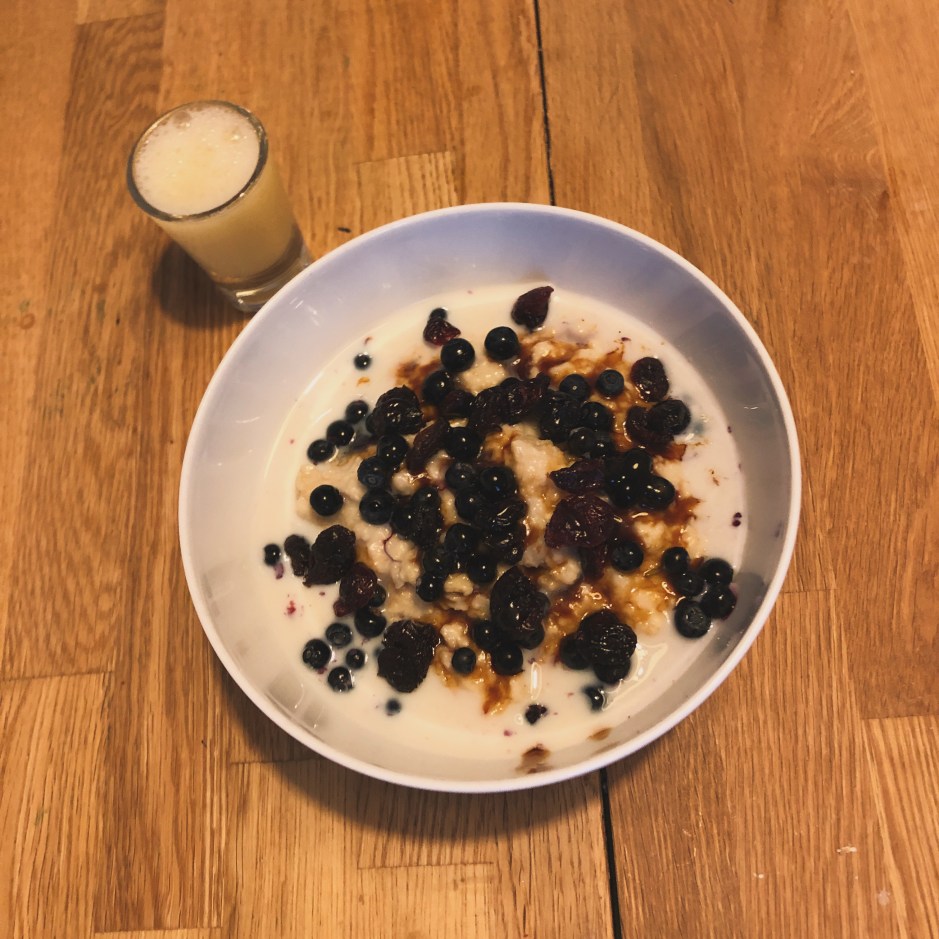
I lately think a lot about how we often make bad decisions seeking some sort of good feeling that doesn’t bring long-lasting wellness. It takes more effort to plan a balanced meal than buying fast food, it might be less appealing to eat oatmeal for breakfast than a pain au chocolat, and it might seem more relaxing to watch a reality TV show than go for a walk after a long day at work. Choosing what is right for our physical and mental health is not seeking success or perfection, it is an investment some of us choose to make because we understand that it will pay off in the long run. Through time, I have noticed how I feel after indulging in junk food compared to how I feel after having a healthy meal. It doesn’t mean that I never eat sweets or fatty food, but honestly, I try not to indulge because the price I pay when it comes to how I feel afterward is too high. I prefer to feel that I’m fit for life than go around feeling awful and thus being less balanced in my body and mind.

We often forget how everything we do or don’t do has a direct effect on our health. Therefore, this woman’s comment irritated me. I feel that ranting about “perfectionism”, often becomes a way to make excuses for not taking care of ourselves. Yes, gaining weight during pregnancy is normal, but it is also quite normal to lose it after some time if we eat what our body needs and not what our desires dictate, especially if we have a normal physically active life.

At the end of the day, it all boils down to the same, clarity of mind. Make your choices and live the life you feel like living, but stop making excuses for the poor choices you make that hurt your physical and mental health. Rather own them, and be brutally honest with yourself. Inquiry into why you don’t want to make good choices for yourself, and if you are okay with the consequences, then keep doing what you’re doing. If you care about your health and the well-being of those who love you, maybe it is about time you choose better.

Everything we consume has an effect on our body and mind, food, words, and images, not to mention alcohol, drugs, and so on. We know that, why do we ignore it?
Self-help = egocentrism?

This weekend, I can’t remember in which context, my husband said something that I’ve been hearing quite often in the last few years, namely that all this “self-help B.S.” that has become so popular is turning us into individualists, egocentric and selfish. I must say I totally disagree. I think that one of the reasons why we see people behaving more selfishly is precisely because they have little contact with their inner selves.

I think self-help is often confused with indulging in sensory pleasures, and/or indulging in the spiral of our thoughts to escape the discomfort that arises from being part of this life. There is, however, a deeper, more challenging self-help which is to have the courage to look ourselves directly in the mirror. To recognize and accept our vulnerability, our weaknesses, and our patterns that do not help us and thus do not help others. Deeper self-help requires a lot of work and a lot of trial and error, it requires honesty and courage, and it requires compassion. Maybe more importantly, it requires good guidance rooted in a solid tradition or at least solid knowledge, maybe even research, and that we stick to it for a while.

I believe that if we all were able to see ourselves with this kind of honesty, and still give ourselves the love and compassion that we need, we would then be able to see the same in others and thus show the same love and compassion. It is when we go around in the world covering our [unconscious] discomfort with thoughts, ideas, material things, and uncontrolled sensory experiences that we forget our humanity and thus forget others’ humanity.

This said, when we do the work of getting to know ourselves better, we also learn to listen to ourselves better. We learn to recognize our boundaries, to recognize our needs, and thus might be perceived as more demanding and “difficult” than we were before. This is not being selfish or egocentric, this is being assertive, but it might be hard to digest for some of those around us who have gotten accustomed to the old patterns of our behavior.

I must confess at this point, that it is sometimes rather confusing to try to live up to the idea of non-attachment and a the same time be “kind” to myself by listening to my inner voice when it sometimes feels that it might upset others. But this is the world we live in, isn’t it? A world of opposites. A world of contradictions, and as long as we live with awareness and act with clear intentions rooted in the values we have chosen to be our guides in life, I think we are doing more good than not. Self-help for me is also that. Making clear choices of what is going to guide our lives.

So, don’t stop the self-help work you are doing, and if you have been wondering, don’t get discouraged by the selfishness narrative. Honest, consistent, disciplined, and well-guided self-help can only lead you to a better place, and that in turn will have a good influence on those around you in the long term. I sincerely believe in this.

Love, again

I have never managed to think of my work as “just” work. It is almost impossible for me to go to school, teach, and then go home and let go of my day. I believe this is both because of my personality but also because of the nature of my work. I am always surrounded by people. My work is with and for people and we are constantly communicating and exchanging what I would like to call energy. We come to school with our mindset – the one we have that day, and the one we have formed throughout the years – and out of it, we mingle. Students, colleagues, and parents.

That is one of the things I like most about my job because I feel that I am constantly learning about human interactions and about my own mindset and attitudes. At the same time, when I forget to be mindful, it is one of the most exhausting parts of my job because I put myself in the position of “manager of emotions”. My students, their parents, and my own emotions… usually, I have enough with mine!

I sometimes observe in myself an inclination to mentally and emotionally oppose moments of tension. When there is a disagreement, when someone is experiencing distress and several people are involved, if I stop and observe myself, I feel resistance, especially if I feel one side is being more “reasonable” than the other, or when the distress is created by an experience of a situation that I feel is exaggerated, limited or even erroneous. However, once I have taken the time to take a step back and gain some perspective, I know that my rigidity doesn’t help because I end up being dragged into an emotion that is not mine and add to my frustration and judgment.

This month, my sangha chose as the topic of our gathering “love”. We decided on the topic at our last meeting, and we will all come to our gathering next week with our reflections, questions, and quotes to share. I have been reflecting on the topic of love through the lens of my understanding of the teachings in the Bhagavad Gita. The first thing I can say is that love in the context of the Gita is not limited to romantic love. It is bigger than that. Still, I find it difficult to define it. So I can do as when trying to describe Atman, by negation. Love is not a transaction, love is not conditional and it is not the result of an intellectual process.

I have been thinking that we often mix “love” with “like”. In French, we use the same word for both, “aimer”. However, we can say that love is something that unites us, that is bigger than us and at the same time part of us, so it cannot be subject to our judgment which comes from our limited mind. In the context of the Gita, we learn that we are love. We don’t need to search for it outside ourselves, we have it and we just have to move our attention inwards to see it, touch it, and show it.

If we think of love as some sort of power we have in ourselves, we then can use this love in different situations. We can put love at the base of all our actions. I do my work with love, I talk to others with love, and I navigate through difficult situations using love as a compass. It can sound like a cliché, but it isn’t.

So, when once again this week, I suddenly felt I had the responsibility to manage a situation where students were each other at their mental “corner”, acting out of their minds, opposing each other, with emotions all over the place, I reminded myself of the power of love. Somehow, this reminder allowed me to slow down and let go of the opposition. I stopped and thought, how can I create a space for both of them? Their emotions feel very real right now, both need acknowledgment but they also need to see each other. I don’t know how, but it worked. I managed to open my perspective and create space for everyone and I think everyone felt seen and heard. Furthermore, one of my students approached me with very nice reflections that I think will help them in the future. Because that is what it is all about, isn’t it? Not necessarily about solving conflicts, but helping my students find a way to navigate through human interactions in a constructive way, in a way that respects their individuality but at the same time respects other people’s individuality too, creating a space for everyone to thrive.

I didn’t give any answer because, like most of the time, I don’t have one (which often is a source of stress and distress for me), I just invited them to ask questions that can bring us closer together. I have written this many times, but I will write it again, we all live out of our minds and this is bound to create a conflict unless we accept this fact and put love in between each other to create some sort of consensus. The challenge is to be constantly mindful of this simple principle.

I am very excited to hear what my sangha has to say on the topic. I will maybe share in an other post.

Kudos to my kid

I had been dreading the yearly school skiing trip ever since I checked the weather forecast and saw it was going to rain a couple of days before the trip and then the temperature was going to drop below zero degrees centigrades. This meant icy conditions. This surely meant me being on my bum (or worse) quite often.

Every year, in February, before the Winter break, we take our middle school students on a skiing trip. Every year, we go to the same place, and students get two options: downhill or cross country. I am in the cross-country group. It is usually a very pleasant trip except for the last two kilometers which are only downhill. During the 23 years I’ve been living in Norway, I have been trying to improve my skiing skills, and I am much better than when I started, but I still dread steep downhills, especially when it is icy.

I KNEW it was going to be icy this year, and I had two fears: 1) to fall and hurt myself or break a bone 2) to be so afraid of my own downhill that I was going to be unable to help the students who aren’t very experienced in skiing. Every year, we have students who either have never skied before, or ski only on the yearly Ski Day. In that order. I know, I should be ashamed of myself, but that’s how it is.

A couple of days before the trip, I made an agreement with myself, to go with the flow. Stop dreading how it was going to be, and solve the possible challenges once there, in front of the steep downhill. Worst case scenario, I could take my skis off and walk the last two kilometers.

Usually, we get to the last part of the trip quite fast and give students two options, to go downhill and meet the rest of the school at the Alpine skiing center, or go for an extra loop with some of the teachers. I like skiing so much that I usually join the extra loop. Oftentimes, all students choose to go back to their peers together with a couple of teachers, so some teachers end up in a solo trip for about an hour or so.

This year, one of my colleagues suggested she and I do the extra loop and then just take our skis off and walk the hill down. I was so grateful for her suggestion, but when we got back to the crossing where we had to go downhill, she changed her mind and suggested that we try skiing down through the forest (!!!). She must have seen the surprise in my face because she smiled and said it is often better when it is so icy on the tracks. She seemed so confident, and I know she does this quite a lot with her family, that I decided to give it a try. It wasn’t easy, but boy it was fun! It wasn’t that hard either. We used more time than we thought, but we got back on time to help the other teachers organise the students to get the bus back to school.

Being such a cautious person usually (to not say a wuss), I was so excited when we finally got back. Thanks to my colleague, who by the way, I think is super cool, I got myself out of my comfort zone, and experienced something new. At some points, we did have to take the skis off because there were patches of bare forest, or because there were too many trees. We also fell – me more than my colleague, but that was fine too.

I kept thinking. on the bus ride back something that I have been thinking about lately. Why is it that I always want things to go “smoothly”? Why do I always dread challenges? Isn’t life more fun when we get to learn something new? When we use our problem-solving skills? I am trying to change my mindset in this regard, and I am also trying to apply this in my parenting as my kids grow older. I am trying to transfer this to them.

Today, our youngest daughter (13) took the train alone for the first time. All the way from Trondheim to a place called Porsgrunn in the south of Norway. The whole trip takes nine hours. She had to change trains in Oslo. Instead of hoping for the trip to go problem-free, I hoped she would encounter challenges with a problem-solving attitude- which by the way I know she usually has. Of course, I prayed for safe travels, but I hoped more for her to be able to tap into her own strength. And guess what? Challenges did come. Her train to Oslo was delayed and she lost her train to Porsgrunn, but she managed to find the ticket office and was directed to the next train. She called me a bit stressed but happy from the train track and texted me from the train. I think this is a very good experience for her because she realized she can do this.

In the last year and a half, she has been challenged. She has experienced challenging friendships, her best friend of years made new friends, and she changed schools. Past the immediate distress and sadness, I have seen her grow, and I see her become more confident. I believe that partly unconsciously, she knows she can deal with challenges.

I am being more aware of what I say to her when she experiences a challenge now. I always tell her, you can do this. You have the skills, and you know we support you.

Trust

Is it a given or is it earned? Does the responsibility to create trust lies on the one who trusts or the one to be trusted?

Since it is a word, a concept that we have created, I believe there is no absolute answer to my questions. However, it is important to reflect on it and maybe create clarity around it.

There are behaviours and these behaviours, when repeated, turn into patterns. Either in the one who has the behaviour or in the one who experiences the consequences of it. Or both.

Following this line of thought, if you constantly behave in a way that does not match my expectations, I might lose trust in you. If there is a discrepancy between what you say and do, or if I ask for your help and you let me down, or if you lie…

On the other side of trust, there might be people who, because of past experiences, are distrustful. Either generally or towards people in specific roles. One could then say that we have to strive towards gaining the other’s trust.

Last week, I did something that I think cost me the trust of one of my students. It was, of course, a mistake, and I will now have to work next school year towards gaining their trust again. If I am given the opportunity. If this student leaves the school for some reason, they might then decide that teachers are not trustworthy.

I struggled with trusting last week too, and this is partly what led me into a distressed state of mind. I had an overly strong reaction to a change in my roles at work, and I wonder why I am so distrustful. Is my lack of trust directed towards the person? The role that person plays? Or me? Is my lack of trust in reality insecurity in disguise?

In any case, I think that the best I can do is to approach situations with curiosity. Ask the difficult questions both to the other person and also myself. I need to understand where my distrust comes from and work with it because, like in any relationship, it is difficult to have healthy interactions if there is no trust. Can we build that trust together? What is my part to play?

Most importantly, not take my mind so seriously. Take a break from it. Question my perspective before acting. The longer I live, the more surprised I am by my limitedness that, to begin with, seems so ‘real’ and ‘clear’…