Grading life

I recently sat with some colleagues at the end-of-the-school-year lunch and asked one of them “So, how is life?” He was surprised and amused by my question, and chose to answer by giving his life a grade out of ten. We asked him if he was pleased with the grade he gave to his life, and he replied, yes. Sooner than later we all started asking each other to grade our lives.

As an IB teacher, I started playing with the idea of “the criteria” to set a grade: marriage, kids, work, material comfort, and so on. I asked myself, what are the strands? Many of us were struggling to set a grade. What does a 10 mean? Can anyone reach a 10? Is my 10 the same as your 10? Many agreed that we all had our basic needs met and more.

Playing with this question during the last few days, I have come to the conclusion that no matter what is happening in my life, no matter what I have and don’t have, the best way to grade my life is on how I feel inside. My inner peace, my attitudes, and my general flow of thoughts.

Yoga teaches us that the world around us is transient, and that how we perceive this world is a result of our minds. Each mind has its own perceptions and limitations, so my 10 is of course not your 10. Furthermore, since the world is impermanent and ever-changing, if I put my well-being in what the external world can offer, I most probably will never be fully satisfied. Once I acquire something, I will discover that there is something else to acquire, or I will eventually have to go through the painful process of experiencing losing it.

We can agree that setting a grade to life is a silly exercise, but it is also a good way to reflect on what really matters. Maybe a 10 is not necessarily the goal. To me, what makes the most sense right now is to continue working with my inner world to better function in the outer world. It seems like a safer investment in this unstable and fluctuating world.

This reminds me of an important concept in Yoga that we find both in the Bhagavad Gita and Patanjali’s Yoga Sutras: santosha or contentment. Contentment is developed inside out and it is directly dependent on our attitude towards life. Cultivate contentment, and the rest will just flow.

A little theory of mine

On my way home on Friday, I heard on a French radio station a program about the increasing use of laughing gas among teenagers all the way down to 14 years old and its consequences. It reminded me that not so long ago, I read in the newspaper that in certain cities in Norway, the use of cocaine and hash has become as common as alcohol among high school students. A friend of mine back in Mexico told me recently that the use of drugs among teenagers has increased in the last few years too.

I can’t help but wonder if this is not partly a result of the way my generation is bringing up our kids in what we call the “Western world”. One thing that I think kids in France, Norway, and among the middle and upper classes in Mexico have in common is easy access to what brings sensory pleasure.

We can start with food. Many kids nowadays can eat sweets and drink sugary drinks daily if they want to. What in some cultures used to be limited to special occasions or at least the weekends, has become part of everyday life. Whenever a kid feels the need to be rewarded somehow, they can do it through the sense of taste.

Another way to get an immediate reward is by buying things. It is enough for a kid to express their wish for something to get it almost right away. It can be toys at a young age, clothes, makeup, and devices. What used to be left for birthdays and Christmas, is now part of everyday life. So, when special occasions come, we tend to give more than our kids need.

Lastly, we have the immediate reward electric devices give. Either through social media or gaming.

So, my theory is that we have created a generation of pleasure seekers. Kids nowadays are used to satisfying their senses almost constantly. It is not enough to go for a holiday by the beach, there is the pressure to make it exciting for the kids. So we book activities, or rent or buy equipment so the kids do not get “bored”.

As we all know, the more we get, the more we want. There is always something more exciting to experience, something bigger, better, or tastier.

Added to this is our well-intentioned need to protect our kids. Whenever they experience something unpleasant, especially socially, we intervene. We solve the problem for them. We remove them from the situation. We demand others to solve our kid’s problems. Leaving them incapable of dealing with disappointment, sadness, or pain. We do this to protect them, but we forget that the muscle of resilience needs to be trained.

My point here is not to criticize. I belong to this generation and I have observed in myself and my husband many of the behaviors I describe here, and I wonder if we are not doing more harm than good in some cases. Wouldn’t our kids benefit from having to strive a bit more to get what they want? Wouldn’t they benefit from learning to live simple lives? Wouldn’t they benefit from learning to be satisfied inside out instead of believing that the world around them owes them and that their happiness is in how much they get and how much they experience? Wouldn’t they grow for experiencing difficult situations and getting through them?

I know that the curiosity to drink alcohol and use drugs is not new. I know that the problem of substance abuse can have many reasons, but I wonder if the unlimited and often unconscious access to sensory pleasure is not also contributing to this tendency.

It is great that we have enough to give our kids everything they need and more, but maybe we sometimes need to stop and wonder where happiness really comes from.

Can you relax without stimuli?

The other day, I shared a short relaxation session with my colleagues where the main focus was to use the breath. I know that for many, the idea of sitting ‘just’ breathing sounds intimidating and maybe even boring, so I divided the session into three parts. One where we would connect the breath with soft movements (achievable for all kinds of bodies), another with a simple breathing exercise, and the last one with a body scan. The whole session lasted for approximately twenty minutes.

After the session, one of my colleagues told me it was very nice to ‘check in’ with herself. She said that while she was sitting there, she noticed how she was feeling and realized she hadn’t take the time to notice before. This reminded me of something I have been reflecting a lot about lately. It seems to me that most of us rarely take the time to slow down and just be, to check in with ourselves.

It is, of course, understandable that we all have different ways to cultivate our well-being, some choose to go for a run, others to watch a TV show, and although this does allow us to disconnect from everyday tasks, it is not necessarily bring long-lasting well being for our body and mind. During the years I have been practicing Yoga, I have come to the conclusion that there is a difference between sense indulging and self-care. I don’t necessarily think that indulging is wrong, it is nice to sometimes give in to a guilty pleasure, and as mentioned above, it can be part of our toolkit to disconnect from everyday life, but the thing is, I don’t think only indulging is going to bring real peace of mind because the satisfying feeling only lasts for a short period of time. In addition, we might seek activities that stimulate our mind and body like food, alcohol, and even entertainment, which feel good at the moment but do not allow for our nervous system to reset and restore.

I believe self-care requires more work, but less fuss. Self-care might bring some immediate comfort, and at times it can also bring some discomfort. In the long run, however, it brings peace of mind.

I might be biased by my enthusiasm towards the practice of Yoga meditation, but in my view, the only way we can really relax and take care of our well-being is by bringing silence to our body and mind on a regular basis. The challenge is, however, to have the patience to bear the noise our mind makes when we turn off the external noise. This is where the work starts because we need to learn to be with the noise of our mind as if it was background music. It is there, we notice it, but we choose not to do anything about it at that moment. We do not judge, we do not try to change it.

These moments of external silence but internal noise can be precious because like my colleague put it, it is then we have the opportunity to ‘check in’ with ourselves. We create the space to feel and think, we allow our mind to express itself. Sometimes, that is all we need. To give ourselves some ‘self-attention’, sometimes, we need further reflection on what is going on and what we need to do about it.

Making room for moments of silence and softness in our life not only helps us deal with our thoughts better, it also has an effect on our nervous system which in turn influences our state of mind. In addition, when we learn to quiet the mind on a regular basis, we are able to benefit from this practice in moments of intense distress.

To begin with, I recommend a combination of techniques like soft movement with breath for the busy mind. Practices like soft yoga asana, Tai Chi or even Qi Gong, going for a walk but with the awareness of being with yourself, with your breath, and trying to leave other distractions aside. Simple breathing exercises can also be very useful. Some help calm down the body and the mind, others are energizing. Yoga Nidra, is als a very good way to relax, and the fact that you need to focus on different body parts keeps your mind busy. If your mind is very very busy, I recommend writing. Sit in a quiet place for five to ten minutes and let words flow. No structure, no purpose, just write. Avoid reading what you write. Just leave it. This is a very nice way to ’empty’ the mind. Once you have practiced this for a while, you can start journaling. There are different ways to do it. I often like to sit down and write my reflections of the day, often, a specific aspect of it takes more place, and I discover quite a lot about myself and my interactions with the world. I often realize that something that seemed overwhelming when traped in my mind, wasn’t that bad when put into words in my notebook.

Whatever works for you, try to create at least one moment of quiet calmness in your everyday routine. With practice, you will notice the difference it makes in you. You might notice that the urge to indulge will reduce as you create more space for what I like to call ‘real’ self-care.
Lessons from this week

  1. Sometimes, good intentions are not enough. Discussing a mistake I made this week with a friend, he told me “I always give important decisions a night sleep.” In line with the teachings of Karma Yoga, I strive to create clarity in my mind. This means that I try to always be clear about the intention behind my action. I try not to act impulsively. However, this week, I made a choice with good intentions but after I gained perspective, I realised it wasn’t the best choice for everyone. Which leads to lesson 2:
  2. Running against the clock will often mean trouble. Had I taken the time to reflect on the options, I might have chosen differently, but during the last three weeks, I feel I have been in a constant race against the clock. My mum always says : move slower when you are in a hurry. My friend kindly told me: ‘the choice is made, you cannot change it. You have to put it behind you, but I disagree with your choice this time.’ I agree with him. No point spending time and energy in regretting, but I should learn from this mistake. Which leads me to lesson number 3:
  3. There is a difference between acknowledging our mistakes and shortcomings and torturing ourselves with regret and self-loathe. If we are to grow in this life, if we are to cultivate more peace inside and around ourselves, we need to see the difference between these two. Someone in my sangha wrote a very inspiring experience this week where he describes how, he has come to accept his shortcomings in his interactions with the people he loves, he has seen his part in situations where things haven’t gone the direction he wishes them to go, and he is willing to make adjustments in his attitude and behaviour. He sees it will require practice, patience and time, and he is willing to do so. He is not stuck in regret nor he is running away from the consequences of his actions. I think that what often happens in our relationships is that when we realise where we have been acting unskilfully, we struggle to see that it is just a matter of accepting and adapting. Which leads to point number 4:
  4. I should do my best to live in clarity and with pure intentions, the rest is out of my hands. If I notice I can make a change to improve a situation, I should, but I can’t expect anything in return. We all live inside our heads, and I cannot control how other people react to my actions.
  5. Finally, I should continue simplifying my communication with others. Keep it clear, keep it short and avoid getting tangled in explanations. Sometimes, the best I can do is not to say anything.

Following lesson nr5. I finish this blogpost here hoping you had an enriching week. ❤️

Lost and found

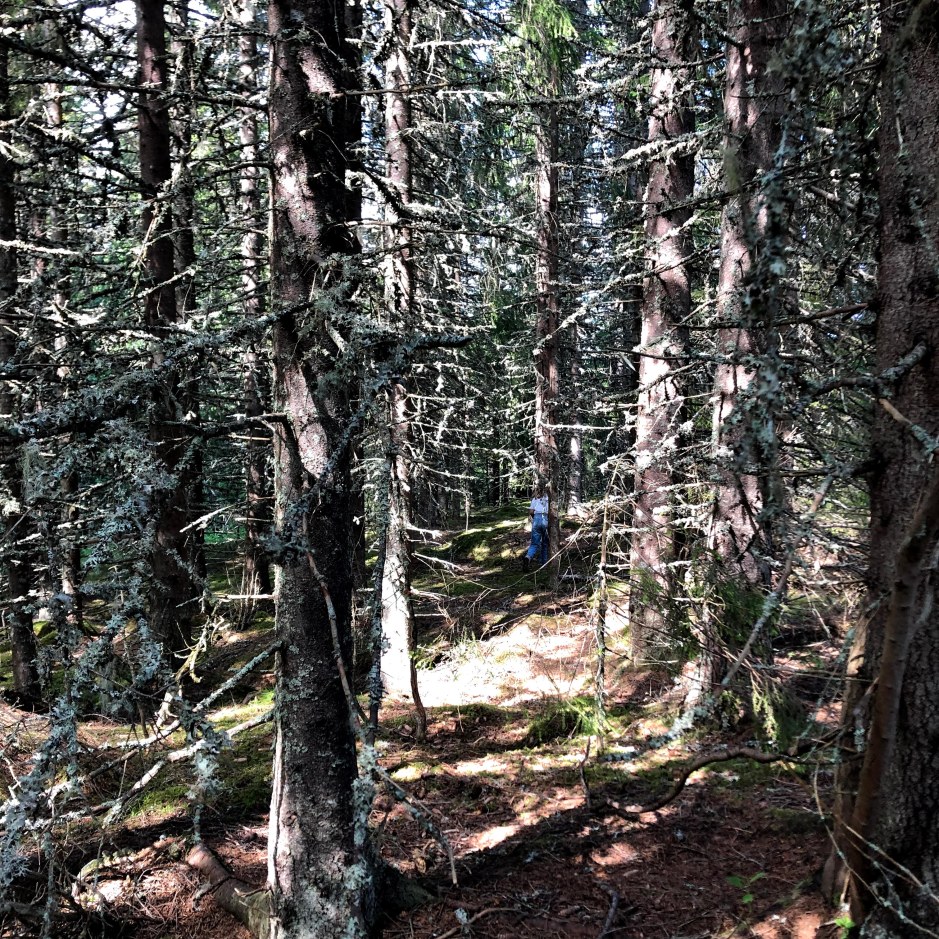
I went for a hike in the forest with two colleagues the other day. Both of them grew up experiencing nature like we do in Norway, hiking, camping, sometimes walking in the mountains for days. At some point during our hike, one of them said that she finds it exciting to sometimes get lost in nature to then find the way back. She told a story from her childhood where she and her family were hiking somewhere in Mali and got lost. They had to walk in the dark back to the cabin they were staying at. My colleague’s mum had to focus on her white shoes to not stumble as she had bad sight. It was fun, she said. In Mali. A family of five, lost in the mountains.

Her story inspired me because I don’t think I would remember as fun getting lost in nature as a kid, maybe not even now as an adult. I can imagine me getting scared, worried and maybe even angry and blaming it on my husband, as I often do. My kids complaining and blaming it on both of us.

Maybe I’m exaggerating or maybe not, but I found this story inspiring because my colleague’s family chose to have an attitude of adventure and playfulness in a moment that I most probably would have perceived as annoying and even dangerous. It brought me back to a reflection that has been coming and going in the last few years about the power of staying calm in all situations. This ability to stay calm comes with being able to take a step back from a situation and see solutions, but I also think it has to do with faith.

Observing my mind and my actions, I have noticed that I have had a tendency to get overwhelmed and almost panic in situations where things don’t go as expected. I have been afraid of challenges, problems and conflicts with people. Partly because I dread the unpleasant moments, but partly because I am worried about my ability to deal with difficulty. I don’t really trust myself. So I often have chosen to stay in my comfort zone, or to escape from the discomfort often making things worse because I don’t necessarily physically run away, I try to escape by acting impulsively, out of fear turing the situation messier than it originally was.

Since I became aware of this, I have been trying to work with it. I am trying to calm my mind down in moments of stress, distress or emotional pain, and instead of reacting impulsively, I try to take a mental step back and observe. It is an interesting exercise, to learn to give myself the space to feel scared, hurt or annoyed but not feed into the emotion. Take a deep breath and see possibilities, see options, and act -or not- from a space of calmness. Stay with the feeling without fighting it.

Life is like that, it has its ups and its downs. We instinctively seek for the ups and dread the downs. That is our nature, but lately, I have been reflecting in the beauty of going through the downs with a calm mind too. Experiencing whatever life is offering with an attitude of faith in ourselves, the process and the teachings they bring. Get lost, and find myself again. I believe that when we find our way back, we often continue slightly changed, mostly for the better.

The truth is that we all are born with this immense strength, we can overcome anything because that is our instinct. The key is the mental attitude. The teachings we draw from each situation. The energy we spend on them. The way we take care of ourselves and others in the process.

I share here one of my favourite poems from David Wagoner that I feel talk about what I just wrote.

Lost by David Wagoner

Stand still. The trees ahead and bushes beside you
Are not lost. Wherever you are is called Here,
And you must treat it as a powerful stranger,
Must ask permission to know it and be known.
The forest breathes. Listen. It answers,
I have made this place around you.
If you leave it, you may come back again, saying Here.
No two trees are the same to Raven.
No two branches are the same to Wren.
If what a tree or a bush does is lost on you,
You are surely lost. Stand still. The forest knows
Where you are. You must let it find you.