
Yoga and the senses

Most Yoga practitioners are familiar with Patanjali’s Ashtanga Yoga that, if practiced sincerely, disciplined, and with the right support, will lead us to the liberation of our conditioned mind and thus the realization of who we really are: ‘love, freedom and bliss’ (Prasad Rangnekar 2011)

One of the so-called ‘eight limbs of Yoga is pratyahara or control of the senses.

Withdrawing the senses, the mind and consciousness from contact with external objects, and then drawing them inwards towards the seer is pratyahara.” Yoga Sutras of Patanjali book II, sutra 54.

The goal is to get in touch with that part of ourselves that is beyond our body and mind and the means to achieve this goal is to calm down the mind. Therefore, an important part of our practice towards controlling the mind is the control of the senses.

In the Bhagavad Gita, we learn that we have five senses of perception or jñānendriya: the ears, nose, tongue, eyes and skin; and five organs of action or karmendriya: legs, arms, mouth (for speech), genitalia and anus. It is through the senses and the mind that we experience and take part in the world. We are however warned that what the senses bring to our mind is impermanent and we, therefore, have to learn to seek stability within ourselves.

“[…]the contact between the senses and the sense objects gives rise to fleeting perceptions of happiness and distress. These are non-permanent and come and go like winter and summer seasons […] one must learn to tolerate (endure) them without being disturbed.” Bhagavad Gitra Ch. 2 v.14

If we seek happiness in the outer world, we tend to get attached to the pleasures that the senses bring because these pleasures are short lasting. This kind of attachment is easy to see in our actions and in our mind. I can observe myself thinking about getting home, opening the cookie box and eating a cookie. I can observe myself daydreaming about the cookie. Maybe, the thought of eating that cookie is what helps me get through the day, and what is wrong with that? Nothing is wrong with enjoying a treat after a long day at work. The problem is when my welbeing depends on that treat or any other treat. Here are three main reasons I see why it can be a problem:

  1. The pleasure of eating a cookie lasts for just a short moment which can lead to either overindulging because I want to extend the moment or me seeking the next sensory stimulation to continue feeling ‘good’/’happy’.
  2. My happiness is dependent on something exterior to me but what if I get home and the cookie box is empty? I will then find myself with an unmet expectation. What will my reaction be? How will that make me feel?
  3. All the time and mental energy spent in thinking about the cookie distracts my mind and does not allow me to be present in the moment. It becomes nothing more than a distraction.

“While contemplating on the objects of the senses, one develops attachment to them. Attachment leads to desire and from desire arises anger.” Bhagavad Gita, Ch2 v.62

Pratyahara in the context of meditation is when we sit down with ourselves in our daily practice and start by “turning off” our senses to bring the attention inwards. We aim to let go of the need to register and identify sounds, let go of getting caught up in specific smells and for most of us it is easier to close our eyes to avoid getting distracted by our sight. But the senses don’t necessarily stop when we avoid using them. Thoughts continue to fly in our head, and if we haven’t been practicing non-attachment in our daily life, it is when we sit in silence that all these sensory attachments can become stronger. They way we live our daily life affects our practice and in return, our practice affects our daily life.

Throughout the years I have been studying Yoga, I have come to observe other ways I overindulge my senses that I wasn’t aware of like for example when I sometimes want to know certain things that are unnecessary for me to know. I have sometimes catched myself wondering if so and so has said this or done that just to stop and ask myself, why do I need to know this? Gossip is maybe the right word here. How would my life improve if I know more details about other people’s lives that do not have any direct effect in my own life? It’s just a way to ocupy my mind really. Or how about reading and listening to the news? I think that as a mum and a teacher, I should stay updated about what is happening in the world, but to what degree? How much is too much? How much is necessary and how much is just overinduging?

What I like about Yoga is that it is never dogmatic. We are encouraged to take part in life and enjoy it, but we are warned of getting attached to the external world because as mentionned above it only feeds into the limited idea we have of who we are and most importantly, everything in the exterior world is transcient so we doom ourselves to a life of Sisyphus.

“That person who gives up all material desires and lives free from a sense of greed, proprietorship (I and mine) and egoism, attains peace.” Bhagavad Gita ch2 v71

By controling our senses, we filter what we allow into our mind and by doing this we gradually regulate our reactios to the external world. It is all cyclic. Less sensory innput helps create more inner silence in the long run which allows us to access our inner peace, this in turn results in less seeking of sensory stimuli which leads to a quietter mind. It is not simple, it requires courage, perseverance and a lot of practie. The inner void before the inner peace can be quite scary.


Tired

Do you have days where you feel you are not ready to face ‘the world’? I sometimes have such days. I feel tired and irritable and feel that I don’t have the energy to face whatever small or bigger challenges the day might bring… I know, it sounds dramatic, and luckily, I don’t have many of those days, but I do have them. Especially after an intense period at work and/or at home.

I try to work with my mindset, and I also try to find out why I feel like that to avoid going into that space. There can be different reasons, but what was overwhelming my mind this morning was the thought of having to ‘deal’ with teenagers the whole day to come home and ‘deal’ with my own teenagers the whole evening.

Neither my students nor my own kids are especially difficult teenagers, but I often have a feeling that as a teacher and as a mum, I am constantly negotiating with them to do what they actually don’t want to do, and trying to explain why they need to do less of what they actually do want to do.

I can go on and on in my mind about why it is so tiring and why I am so worried and wonder also if I am right or if I am exaggerating. This usually makes me feel even more tired and overwhelmed, and I start dreading certain situations that lie ahead in my day: a lesson because I know how certain students are going to behave and I am going to have to deal with it, a situation at home because I will have to be stern and I don’t feel like it.

I was having one of those clairvoyance moments by the kitchen counter this morning when I realized that all I have to do is to do my job. I just have to show up, and if the usual suspects do the usual that require me intervening, I just have to pull them aside and take that conversation all over again. It doesn’t really matter how they react to it. Whether they respond well or not, it is up to them. All I need to do is to stay calm, be clear, maybe even be stern and stop reading people so much. Stop expecting this or that, and most of all, stop dreading uncomfortable situations/conversations. They are what they are, I can make them less uncomfortable by keeping my cool and talking calmly.

I recently read somewhere something like “burnout happens when we have expectations connected to our actions”. Yoga philosophy says something similar without using the word ‘burnout’. We cultivate a peaceful state of mind by doing our best and letting go of the fruits of our actions. I think I get very tired because I am constantly absorbing my students’ and my kids’ reactions to what I say and do.

So, on my way to work today, I kept repeating to myself “be clear, be firm, but don’t get angry. If I get a negative reaction from a student, let it be”. It might sound weird, but I keep telling myself that the less I focus on what other people do or don’t do and the more I focus on what I do and why I do it, the less stressed and tired I will feel. I also think that putting my attention in myself allows me to be more mindful of how I act and why.

It turned out to be a good day at work with the usual challenges, but I think my mindset helped me stay focused and less stressed. I really need to remember this every day.

At home, things are also what they need to be. I keep choosing my battles. and reminding myself to speak calmly but firmly even if it is the millionth time I ask my youngest to pick up her dirty clothes from the bathroom floor.

Who knows what is best for you?

“You can rise up through the efforts of your own mind; or in the same manner, draw yourself down, for you are your own friend or enemy.” Bhagavad Gita ch6v5

This quote is from chapter 6 in the Bhagavad Gita where the path of meditation is explained (Yoga Dharana). Krishna, Arjuna’s friend and guide emphasises that we have the power to make our lives good or bad.

Notice how Krishna talks about the ‘efforts of [our] own mind’.  The mind is key and the outer circumstances are secondary in this theory of Yoga.
The work of self-observation and self-reflection is crucial in order to decide which aspects of our life and mind we can continue cultivating and which ones we need to change, and more importantly, how.

In the quest towards making choices that will improve your well-being, you can start by avoiding taking your mind and body too seriously. What does this mean? Avoid over-identifying yourself with the shape of your body or the state of your mind. Avoid the extremes of overindulging or neglecting yourself. In both cases, you are feeding into your ego mind which prevents you from reaching deeper into your Higher self which, according to Yoga, is Pure Potential.

Overindulging 

What do you associate with overindulging? How do you overindulge? We often think about food and alcohol, but there are other ways to overindulge: sex, work, sleep, social media, reading the news… It is basically any activity we do to stimulate our mind through our senses where we lose control.

Beside the possibility of harming our health, by losing control of our senses, we also lose the opportunity to keep a calm and clear state of mind. Patanjali talks about thoughts that bring pain, and thoughts that bring suffering. Thoughts that bring suffering are selfish thoughts. Whether we like it or not, when we lose control over our senses we are being selfish. We are seeking to feel good through the experience of sense objects. The problem is that, when we seek comfort by satisfying our senses, we end up in a negative spiral. We either experience momentary pleasure in sensual experiences, but the moment the stimulus is over, we start craving for more, or even worse, we don’t experience satisfaction until it is ‘too much’ leaving us feeling overstimulated, and maybe even remorseful for the loss of control over ourselves.

Overindulging often comes from a conscious or unconscious feeling of void. This void is felt in different ways by different people and we often connect it to past experiences or trauma. The truth is that if we all observe our mind, we all experience some sort of emptiness. For some, it is stronger, and for others it is more bearable. 

So, what to do?

  1. Slow down: when we slow down, we are more aware of what we do and why we do it.
  2. Make sure you rest enough: lack of sleep and rest can lead to overindulgece. The mind seeks stimulation to get out of tiredness or the emotional instability tiredness brings.
  3. Enjoy life with moderation: we are not encouraged to neglect ourselves. We are encouraged to use our senses to experience the world with its ups and downs but we are warned of the consequences of being controlled by our senses. Instead, we should aim to live a life of discipline, where we control the senses.
  4. Try not to put your well-being in sensory experiences. Cultivate contentment that is independent of the external world. Contentment is mentioned in Patanjali’s Yoga Sutras, it is anchored inside ourselves, no matter what is happening outside us.

By contentment, supreme joy is gained.” Book II sutra 42 Patanjali’s Yoga Sutras.

Swami Satchidananda writes in his commentary on Paranjali’s Yoga Sutras that one must understand the difference between contentment and satisfaction: ‘Contentment means just to be as we are without going to outside things for our happiness. If something comes, we let it come. If not, it doesn’t matter. Contentment means neither to like nor dislike.’

“ The contact of bodily senses with objects and attractions in the world creates feelings like sorrow or happiness, and sensations like heat or cold. But these are impermanent, transitory, coming and going like passing clouds. Just endure them patiently and bravely; learn to be unaffected by them.” Bhagavad Gita ch2 v14

The Bhagavad Gita invites us to live a life of moderation and of constant awareness over and control of the senses. The problem with putting our happiness in sensory experiences is that they do not last. Everything we experience in the outer world is transient. If we want to experience a constant feeling of contentment, we need to put our focus inwards. According to Yoga, all we need is already inside ourselves, beyond our mind and our body. If we take the time to slow down, to make contact with this inner core, we will gradually experience this feeling of contentment that is independent of anything that is happening around us.

  1. Take time to know yourself in all aspects of your life. Observe what happens when you sleep less, what happens when you sleep more. Try different techniques to improve sleep: reading, light exercise before bedtime, meditation, yoga, staying away from electric devices. Observe what happens with your body and mind when you eat certain food. Be honest with yourself. It might be possible that you feel satisfied after overindulging, but what happens next? Do you experience discomfort? If not, continue as you do. If yes, what can you change? If we take the time to listen to ourselves, to observe how our body and mind react to different stimuli, we find out what best suits us.
  2. Create habits and stick to them. We are all different, and it is good to listen to advice, but if you keep jumping blindly from one thing to another, you are not listening to yourself. It has taken me many years of either overeating or dieting to finally realize that something in between is what is best for me. I have tried different things and have come to a sustainable diet. Something that I can live with, that doesn’t complicate my life, on the contrary, it makes it easier.
  3. Be patient. Be consistent. Be kind and compassionate towards yourself. 

Self-neglect

“I must emphasize that you have to lift yourself by your own efforts! You must not allow yourself to be demeaned by your ego-self. Know that the self can be both friend and foe – a friend when used to conquer the mind, senses and body; a foe, when it drags one into the mind, senses, and the body. True Self (Atma) is the ally; the ego-mind self is the enemy.” Bhagavad Gita ch6 v5-6

Some feed into their ego by overstimulating their senses, some, by self-neglect. Many move from one to the other constantly beating themselves for either overindulging or for not taking care of themselves.

In any case, we are only feeding into our ego mind creating stress and distress for ourselves. Neglect is not only harmful for ourselves because how can we function to our best when we don’t take care of ourselves? How can we show genuine care, compassion and love to others when we don’t do it towards ourselves?

Therefore, the best thing you can do is to find MODERATION in your life.

“It is impossible to practice Yoga effectively if you eat or sleep either too much or too little. But if you are moderate in eating, playing, sleeping, staying awake and avoiding extremes in everything you do, you will see that these Yoga practices eliminate all your pain and suffering.” Bhagavad Gita ch6 v16-17

Note that ‘practice Yoga’ doesn’t mean to do physical exercise (asana), but the practice of cultivating a peaceful and clear state of mind. If what we seek is to live a more peaceful and clear life, we need to start by taking good care of ourselves. Even if we are taught that we are much more than our body and mind, these are the vehicles we have to move around and experience life. Therefore, we need to take care of both. The best way to do so is by living a life of moderation in actions and in thought.

The only way out is through

Over the years, I have come to realise that I dislike emotional pain so much that I try to avoid it as much as I can, often in very stupid ways.

I sometimes ‘predict’ how a situation is going to make me feel so I either go around dreading the moment it is going to happen (which like with most predictions, never happens), or I do something impulsive to avoid the pain making an unnecessary mess.

The source of my distress is in some cases insecurity and fear of being judged or rejected. It comes from my attachment to an image of myself I want so badly to keep and people to have of me. I know what I stand for, I believe it comes from a good space, but I’m afraid of the conflict different opinions can create.

In other cases, the source is the unwillingness to face things as they are because I wish they were different. So I avoid the situation or go ahead and blame. It is funny how we believe blaming helps, but it really doesn’t make us feel better.

Expectations are also a problem. The mind game of expectations is quite refined in my case. I don’t like the gap between what I expect and how things turn out, so I either avoid or expect the worse (haha). So I show up already with a bad attitude, when in reality I don’t know what is going on I happen.

Some weeks ago, I decided to be courageous and:

  1. Stop predicting (duh!)
  2. When in a situation that I perceive as emotionally painful, take a deep breath and just observe the pain. Not run away, not act impulsively.
  3. Understand that the so-called pain comes from the gap between what I expect and what is really happening.

So far, I can say that it is helping. I believe that, the less resistance I make to myself and what is happening around me, the less I struggle.

It sometimes feels liberating, it sometimes sucks big time because I have to face what I don’t want to face.

This said, I believe that I gain a bit more understanding of how my mind works, and it allows me to move a bit up and further…

Be quiet and reset

My Yoga teacher, Prasad, has taught me the importance of cultivating silence.
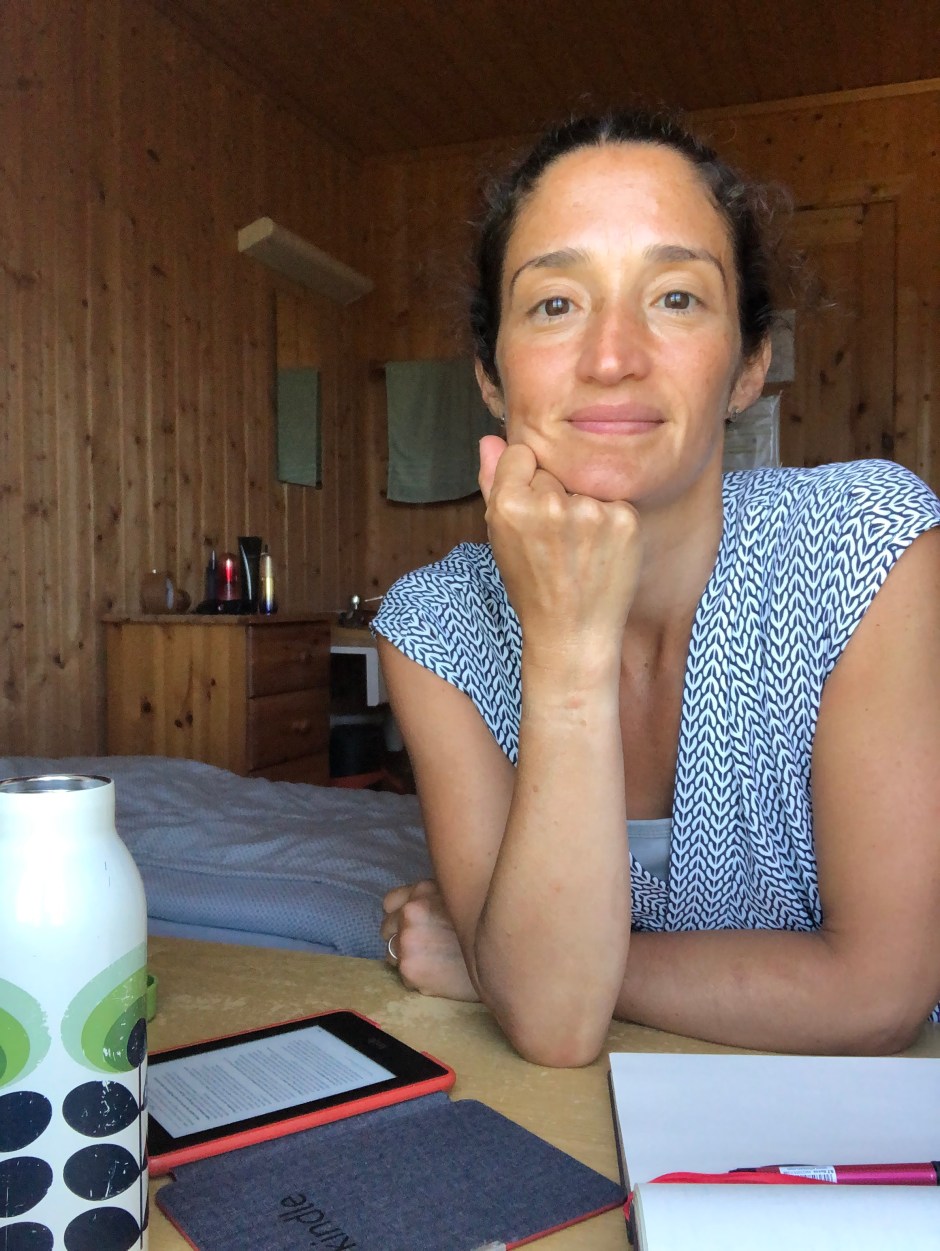
At least twice I year, I have created the habit of retiring to the guest house in Mariakloster in Tautra. I am so lucky to have such a place so near Trondheim!
When I am silent, I automatically slow down. When I slow down, I am able to observe my thoughts better and let go of the broken record of rumination, worries, regrets, and attachments. It is often after a period of silence that I move from thinking to reflecting, and that is very helpful.

Sometimes, I experience clarity, sometimes the only experience is the experience of being alone, in silence, in a slow tempo with myself for some days.

This time, I bring back from my retreat two things:
1) A quote from Mother Teresa: “Not all of us can do great things, but we can do small things with great love.” A reminder of the importance of putting our heart in everything we do. A reminder of the importance of accepting and embracing what we are put to do in this life. A reminder to not compare ourselves with others and stop blindingly chasing the bigger, faster greater.
2) Thankfulness for having Prasad as my guide. May I remember to be as patient, loving, and compassionate with my students, yoga students, and my own children as he is with me.