Patience

Do you ever get caught up in negativity? What happens then? Have you noticed when that happens? Is there a sort of pattern? Since Friday and throughout the weekend, I started noticing that almost everything was creating distress in my mind. Either by mentally rejecting an idea or a task I had to do, by focusing on the negative aspect of a situation or by predicting the worst-case scenario. Through the practice of yoga, -please read in the broader understanding of yoga, not just asana (physical activity)- I am gradually learning to observe my thoughts and not take them that seriously. By this, I mean that even though I notice distress rising internally, I don’t necessarily give in to the emotion. I just observe it. This doesn’t mean either that I can make it go away right away but by giving attention to my states of mind, I seem to be able to let go easier than when I don’t.

As a yogi, it doesn’t stop there, I have to be curious about why I am being so negative. What has changed? What is happening internally that is meeting the external world with a different attitude? I made some discoveries:

1) At the beginning of the lockdown, I was being very good at keeping my sleeping routines as usual making sure I sleep between seven and a half and eight hours per night. During the last two weeks, I’ve been going to bed later sometimes sleeping seven or less hours. I don’t know if it is because of ageing but I know now that for me to be at my best, I need eight hours of sleep. If I sleep under seven, I am more emotional, I have problems concentrating, and by consequence I am less efficient at home and work.

2) This took me a while to realise: I am putting too much pressure on myself during the lockdown. Since I have (or I think I have with full online work, three kids, a husband and a cat) more time, I want to spend that time ‘well’. What does that mean? Well, I want to spend more time with my kids in the afternoons doing fun stuff, I have been wanting to take an extra course in anatomy applied to yoga, so I signed up to an online one, I want to finally develop some ideas I have about yoga teaching, I want to do some home improvements, I want to read books, I want to exercise more, I want to spend more time with my older son in the evenings (that is why I’m going to bed later), and the list goes on and on… In addition, the ne new situation brings new possibilities: online teaching and online yoga teaching. This is lots of fun, and I have many ideas for both, but it requires time to learn new skills, use new tools, and plan differently.

Added to all this crazy mental activity, is the uncertainty of the situation. In Norway, we have come to a point where schools are gradually reopening. We know it will soon be our turn but we don’t know when or how our school is going to choose to meet all the requirements by the government to avoid spreading of the virus. On one side, my brain doesn’t like uncertainty, on the other, this makes planning for my lessons a bit challenging because I don’t know how much time I still have until things are turned upside down again… But mainly, I struggle with uncertainty.

So, once I realised all this, I have come to one big keyword: PATIENCE. Yes, I have maybe more time, and it is nice to have some projects and wanting to improve my online teaching, but not everything needs to happen right now. PATIENCE with myself, when I get anxious about the uncertainty, it is ok to experience these emotions right now. Just keep observing, keep breathing, and the anxiety will eventually go away. PATIENCE with life right now, things are as they are and we all are doing as good as we can with what we have.

I will also sleep more, be more disciplined with how much work I do and read the news only once a day. I really need to stay away from my computer after dinner no matter how many ideas I get. My mind needs to rest. I can just sit down and enjoy a cup of tea without having to do or achieve anything at the same time.

I also have to keep reminding myself that whatever happens, we always get through it. Whatever challenges we meet, we only come a bit wiser a bit stronger out of them. But above all, how important it is to have a stable sadhana. If it wasn’t for my sadhana, I think I would be even more negatively affected by the situation. I am so thankful for my teacher and for the teachings of yoga.

On being a mother: between ego and sacrifice

Among all the roles I play in life, motherhood is the one that keeps me reflecting the most. Where is the line between my responsibility and my kids’ own path in life? Where do my attitudes and behaviours stem from? A genuine wish to guide my children or my ego? How much am I ‘supposed’ to sacrifice in the name of motherhood?

I understand that being a mother is not what defines me. I understand that motherhood is one of the roles I play in life, but who I am is not limited to being a mum. I understand that I would harm myself and my kids if I were too attached to this role because every action then would come from ego. This said, I do believe that of all the roles I play in life, being a mum is the most important right now. My kids came to the world into our family, and at least during their first eighteen years or so, we have the responsibility to create a safe environment for them. Since they are young, they are still creating their own perception of who they are and the world around them. I know that this perception will change through experience, but I feel that I have the responsibility to at least try to help them have a positive experience of these first years.

Still, when I think about myself as a child, I can recognise that already then, I had my own way of perceiving things. Sometimes, no matter what my parents or other adults said. This means that as a mum, my job is to be clear about what my intentions are, but at the end of the day, the way my kids develop will be pretty much out of my hands. I can only guide and live the life I want them to be inspired by, but they will eventually live the life they will choose and learn the lessons they came to learn.

The way I understand it, ego, or ahamkara in sanskrit, is the aspect of our self that limits us. When we let ego guide us, we act in limited ways. Ego feeds itself, among other things from believing that its importance in this world is connected to how much control we have of our surroundings. Ego is the part of us that is attached to the practical world: what we do, the titles we have, the ideas and believes we have, the material possessions we have, our achievements and our defeats. So, as a mum, how can I keep ego in check? By letting go of control? By not being selfish? By sacrificing everything to my children? Maybe, but there is a catch in this idea of sacrifice too.

One of the basic principles in Karma yoga is yadnya which is translated as sacrifice. Anyone that is a parent would say that in order to be a good parent, we need to make some sacrifice. But what does sacrifice really mean? Can our understanding of sacrifice also feed into our ego?

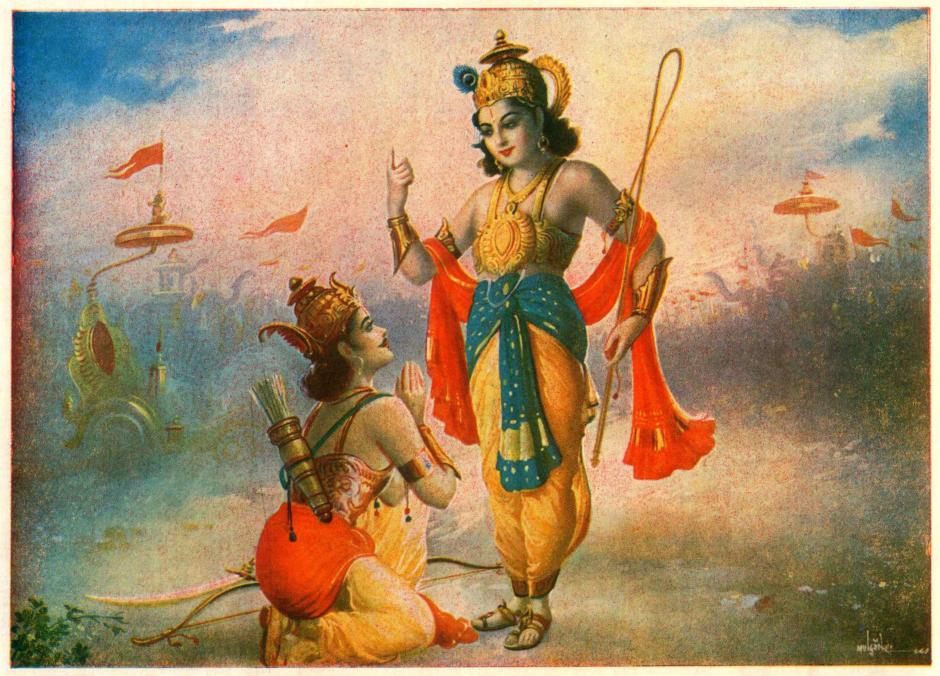
Sacrifice is explained by Krishna to Arjuna in the Bhagavad Gita as offering our actions to something bigger than us. So, yes, we play our role of parents as a sacrifice when we keep in check our intentions and avoid acting out of fear, own ambition, or a need to control our children. Sacrifice is by no means a concept of self-neglect because connected to the concept of sacrifice is the idea of sustainability. Can I go on like this for long? Also, because once we put ourself in a role of martyr, it is very easy to feed the ego with it. So, where goes the line between not being selfish and neglecting yourself? From personal experience, I know this line is very thin, and it keeps moving.

I have observed myself rejecting projects or even opportunities using my kids as an excuse. ‘I don’t have time because I want to be present for my kids’. I do want to be present for them, and I think I am, but to be honest, I have, in some occasions asked myself if I wasn’t using my kids as an excuse to not come out of my comfort zone.

This weekend, I signed up to a webinar of an hour and a half each day. In addition, I had some small things I wanted to do that do not include involving the whole family. To begin with, I felt bad conscience, I felt selfish and stressed. Especially towards one of our daughters who needs daily physical activity, and who is quite lonely during the weekends. But I had to let go of my need of always having control over everything. It is ok, from time to time, to dedicate some of our common free time to my own personal and professional growth. I think our daughter has appreciated the opportunity to spend time on her own with her things, and just relax for the weekend. I have made agreements with her, and both yesterday and today she went outside to move either walking or biking. My family do need me, but it doesn’t collapse if I sometimes let go of my need to organise and control everything. This for my own peace of mind, and for my kids to discover that they are completely capable of managing their free time on their own.

Where did you loose your key?

According to Yoga, we seek happiness and love because that is the natural state of our Higher Self. This Higher Self (Atman) is who we really are. The issue is that most of us don’t have contact with this Higher Self. We live deluded believing that we are our lower self which is our physical body, our thoughts and everything we perceive and identify as ‘me’.

One way to the Higher Self is through meditation which requires practice and non-attachment. This non-attachment is our tool throughout the day and during our practice to reach the state of meditation. Sitting in silence every day is a way to train the mind to slow down and focus which in turn is a tool to gradually detach from what is in our way to see our Higher Self.

The challenge is, that this Higher Self seems so difficult to reach. Most of us are dealing with a very limited mind. So, it is easier to reach towards what we can see in search for happiness and love getting lost in our senses, acting in selfish ways and in worst case scenarios acting in self-destructive ways. Unfortunately, nothing in the tangible world can give us lasting happiness or a lasting feeling of being loved because everything is in constant change including our perceptions and expectations. What made me happy today, might not be enough tomorrow. The most trusted and loved person you have can suddenly change his/her mind and walk away from your life.

Once a seeker in the path of yoga accepts these basic principles, life’s small and bigger challenges take a slightly different form. We are affected by them, but we have the tools to work ourselves out of the negativity that can be created by our emotions, especially those like anger, fear, jealousy, desire and greed.

In the Bhagavad Gita, we meet Arjuna, a great warrior who finds himself paralysed by fear and anxiety right before the battle of his life. The more we study the Gita, the more we can identify ourselves with Arjuna and realise how limited and limiting our mind can be. We learn to observe our attitudes and behaviours, and with practice, discipline and patience, we manage to make adjustments that bring us to a steadier calmer state of mind.

Learning about the limitedness of our minds, and the absurdity of pursuing happiness outside ourselves is also a powerful tool that helps us better interact with other people. When you start observing your mind and realise all the internal work you need to do in order to live a more peaceful life, you are also able to recognise the same struggles in other people. You might be able to forgive easier when you acknowledge the fact that we all are seeking the same but act (out?) in different ways to achieve it.

Think about this next time you have struggles with someone you expect something from. How can you expect the other person to give you what you believe you need, when the other person is busy in his/her own mind? If you are lucky, this person is aware of his/her struggles, but most of us spend a good part of our lives completely oblivious of our own limitations.

My advice is 1) If you are lacking something, see how you can provide it to yourself. If it is love that you are seeking, find this love inside yourself. Or at least be very clear of how this love should look like and give it the same way you expect to receive it without expecting anything in return. 2) Next time someone hurts your feelings, think about the cliché line “It’s not you, it’s me”, and believe in it. Whatever people do is an expression of their own inner world, of their perceptions and expectations. Even when someone acts in response to your actions, they are acting with their mind as the puppeteer. Just observe this in yourself during the next days. People are just people doing their thing but we have decided who we like, who annoys us, who we hate, who we want to have by our side, and who we want to push away. This connects to another way of interpreting the same line, ask yourself why am I reacting like this? In most cases, it is because the other person’s actions did not meet our own expectations.

I once heard a story, I am not sure if it comes from Buddhism or from the Yoga tradition, but I think it fits here. When we keep looking for what we feel we lack in the outer world or in other people, it is as if we had lost the key for our home, and keep searching for it at the wrong place knowing very well that it wasn’t there we lost it.

Where do we root our contentment?

Have you ever experienced that you study something and believe you ‘have it’ just to discover that you actually don’t have a clue? That just happened to me last week.

I have been reflection about a few things since the beginning of the lockdown, and as usual, I have been sharing them with my yoga teacher, Prasad. I feel so fortunate to have a teacher that challenges my mind! I often feel that no matter which philosophy you choose to follow, the path of spirituality is like a game. There are levels. Not levels of achievement, but levels of understanding. Not so long ago, I wrote a text about the concepts of raga (attachment) and dvesha (aversion), and I think I have also written about santosha (contentment) before.

Last week, I was thinking about my life situation during the lockdown, and I wrote some lines to my teacher sharing my thoughts feeling that I was ‘content’ with the situation. He encouraged me to observe what I wrote and the thinking behind it, and I discovered that my mind is constantly swinging between attachment and aversion. “I like this, I dislike that, I fear this, I regret that, I want this, I wish that, I don’t wish this, I hope that will go away… ” All the time! There is nothing wrong about that but what a way of wasting mental energy! It took me some days to understand what he meant but suddenly, just like that, it hit me! The more I keep labelling what is around me, even if I believe I am being flexible and adapting, the more I am keeping my mind busy with the external world instead of giving myself the chance to slow down, be quiet and listen to what my inner self has to say. As my teacher pointed out, I will never find contentment in any situation, I have to find the contentment inside me.

So where does the “game” comparison come in here? Well, if you study yoga, you might have come across the concept of santosha. I remember in the beginning of my studies, one of my peers recommended to start by being thankful. There is a little routine one can establish by every day making a list of things we are thankful for. Every day, no matter how challenging it might be, has some elements we can be thankful for. This way, we train the mind to focus on the positive instead of the negative. When we give the mind a rest from the negative, we are able to take a step back from it, be less emotional about it and deal with it in a more skilful and less energy-consuming way. We could then say, this is step one in the process.

Then, comes another aspect of contentment that I have been exploring lately, which is the idea of being okay with anything that happens around me. This is connected to the idea of non-attachment. If I let go of my expectations of how a situation should or shouldn’t be, I will then discover that I can be at peace with what is, and try to work with it. I can then learn a lesson, play my part, or let go and walk away.

The latest aspect I learned this week is the fact that nothing in the outer world will ever bring contentment. Why? Because 1) Everything is constantly changing and I am aware of it. So, consciously or unconsciously I will enjoy it but have some sort of attachment to it “Oh, I wish it will never end!”. Or even be anxious about it ending. 2) My mind is used to think consciously or unconsciously that the grass might be greener on the other side. We are constantly making choices, and we choose according to the information we have at any given time, but, there is always this slight element of doubt. “Did I choose correctly? What would have happen if I had chosen differently? Would I be even more content?”

This last aspect is an invitation to really start digging deeper. Yes, Yoga is a lot about the attitude with which we live our lives, and none of the described understandings of contentment is wrong, but if I want to go deeper, I’d better start believing that real lasting contentment is something that I will only find inside, and for this, I need to continue practicing my sadhana and detach from my limiting ideas whether I perceive them as good or as bad. They are only ideas.

I remember reading this somewhere, we often believe that we achieve some sort of wisdom, just to find out the next minute that we were only at the top of the iceberg…

What I think Krishna would say now

“As Krishna watches the once-brave warrior prince plunge into pitiable weakness His normally soft eyes become steely, and He speaks. “Arjuna, where does all this despair come from? This egoistic self-indulgence at a time of crisis is shameful and unworthy of you. You are a highly evolved, cultured man who is supposed to live a truth-based life, a life of dharma. And yet your confused mind is unbalanced and would not know truth if it hit you over the head.”

Hawley, Jack. The Bhagavad Gita: A Walkthrough for Westerners (pp. 11-12). New World Library. Kindle Edition.

These are the words spoken by Krishna to the great warrior Arjuna almost right before the battle of his life. Arjuna has lost his center in the tornado of his emotions, and is unable to think clear as he stands in the middle of the battle field.

I think Krishna’s words, although they sound harsh, are very powerful and useful for all of us in any situation where life throws at us challenges. Like the Corona-virus challenge we are in now.

Krishna starts by scolding Arjuna for being selfish and indulging in the emotions created by his own perceptions in a moment where he should be on top of things. What does Krishna mean with egoistic self-indulgence? Have you ever experienced something similar? I can definitely relate to this description. I have experienced that life doesn’t go as I expect it to go. That there is a huge gap between what I want and what reality serves me and I get lost in the dark cloud of emotions. I keep thinking and overthinking and the more I think, the more I feel I am right, or even entitled to feel how I feel, and I keep feeding into these emotions.

Let’s take the Corona-virus situation as an example. I am used to the predictability life in Norway brings, but now, we don’t really know what is going to happen. We don’t know how long we will have to live a quite different life from the one we are used to. It feels like we can’t make projects, we have lost some of our freedom. It can almost feel that we are all put on hold. What can be my natural reaction to this? Anxiety, frustration, fear. Nothing wrong with any of these emotions, they are a natural response to situations like this, but what Krishna is trying to make Arjuna understand is that one thing is to experience these emotions and another is to be stuck in the web of negative emotions and just continue spinning a more and more complex web by feeding into them. Once we notice these emotions, we need to do our best to get out of them because acting out of fear, frustration and anger will not bring us to a good place.

For this, it is important to note what he says next: “[…it] is shameful and unworthy of you. You are a highly evolved, cultured man who is supposed to live a truth-based life”. This is, in my opinion, to help Arjuna find his self-confidence again. He is reminding him of his potential, a potential that we all share with Arjuna. We can read this aloud to ourselves in front of the mirror every time we are taken down by self-doubt. By reminding him what he is made of – pure potential – he reminds him that even in moments of fear and despair, he is capable of dealing with life provided that he doesn’t indulge in the negativity produced by his mind.

We are all able to live a truth-based life. This truth-based life is a life where we first of all are centered in what is stable, and that stability cannot be found in the external world. No matter how hard we try, we will never have full control of the circumstances, but we can have control of our actions and reactions. We are all part of this truth and when we center ourselves in it, we can then skilfully fight any battle, just like Krishna knows Arjuna can because we know what our duty –dharma – is.

I think the concept of dharma is very useful in difficult and uncertain situations. Once the first shock of emotions has passed, we can ask ourselves, what is my role in all this? How can I contribute to both my well-being and the well-being of those around me? What is in my hands and how can I make the best out of this situation? We all have our set of skills and unique talents that make a difference in the big picture. Imagine if all of us always acted with the clear intention to contribute instead of reacting out of fear or frustration!

Sometimes, our dharma is to do something that we might perceive as unpleasant or even scary. Like Arjuna, his dharma is to fight this battle, but we have to keep the big picture in mind. Have our intentions clear. Arjuna has to fight this battle to reestablish the moral order, not out of thirst for power or revenge.

So, in these times of Corona-crisis, once we have gotten over the shock of having to change our way of living for some time or maybe even permanently, let’s spend our energy in finding our center instead of rejecting a situation we cannot change. Let’s spend our energy in doing the best we can do with what we have. So we have to stay home? What can this mean for you other than not being able to do what you want to do? What can you do to make this time a good time for you and those around you? How can you contribute? It can be as simple as staying calm to help your family stay calm. Last but not least, let’s keep our intentions very clear. Are we acting out of fear? Out of selfishness? Are we seeing the whole picture?