Busy bee? Not today

I need to start creating moments during the day to take a pause. It doesn’t matter if it is five minutes, ten minutes or a whole hour. I tend to get caught in the misleading idea that every minute of the day needs to be used in a ‘productive’ way. Either at work or at home. Why do I keep falling into this silly pattern? I don’t know.

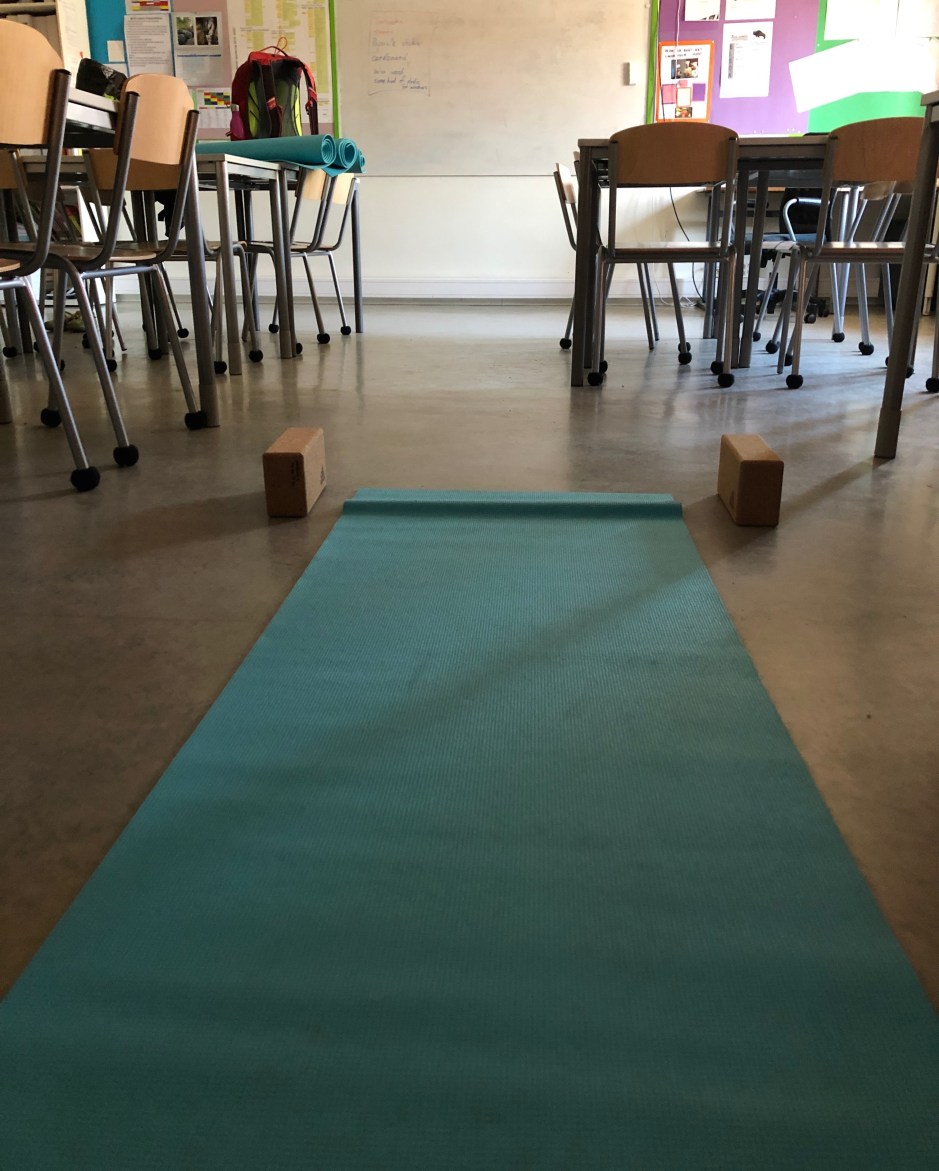
Sometimes, some extra time falls from heaven like today. Thursday last lesson, I teach yoga as an elective to some students in our school, but I had forgotten that their class was on a trip today. I prepared  myself and the classroom and nobody showed up. It felt so good to then spend the time to do my own asana practice and I even took five minutes to lie down in shavasana. It would have been too time consuming to change back to my regular clothes and tidy up just to try to get some work done before the end of the school day.

Sometimes, I have to create the time for myself like this week. I just didn’t feel like rushing through the house to get it cleaned during a weekday evening, I didn’t feel like hurrying up. Instead, I invited myself for a run by the sea in the gorgeous Spring weather, and left the cleaning for later this week. I genuinely felt revitalised that evening and the next day.

Everyday, I create a space and  time in the early morning to do my sadhana. This is non negotiable, but I keep forgetting that if I need something, the best person to provide it is myself. Never expect anyone to give you what you need, you need to take self-responsibility to take care of yourself. No one is going to ask you to stop spinning around because we live in a society that cultivates and encourages business, and you know what? That is nonsense.

Adicciones

¿Qué es una adicción? Y ¿por qué nos volvemos adictos a algo/alguien? No pretendo tener conocimiento científicamente comprobado sobre el tema, pero tengo mis propias experiencias y observaciones mezcladas con lo que he aprendido estudiando la filosofía del Yoga durante los últimos cinco años.

Tal vez podríamos decir que hay de adicciones a adicciones. Hay las que nos dañan de manera más visible ya que afectan más rápido al cuerpo y la mente como las drogas y el alcohol y son en las que normalmente pensamos cuando se habla de adicciones.

Además, durante los últimos diez o quince años se habla de la adicción al azúcar o comida en general. La adicción al azúcar es al parecer precida a la del alcohol y las drogas, ya que se dice que al tratar de dejar el azúcar, el cuerpo tiene síntomas de abstención.

Cuando se es adicto a la comida, se mueve uno más hacia el tema de la adicción mental o emocional, que obviamente también estan presentes en las adicciones mencionadas. Come uno para compensar alguna emoción difícil como estrés o tristeza y en muchos casos no está uno conciente de ese patrón de comportamiento.

Según la filosofía del Yoga, la mayoría de seres humanos tenemos una sensación de vacío dentro de nosotros. Algunos más marcada que otros, y gran parte de nuestras acciones en este mundo están orientadas hacia llenar ese vacío. La mayoría de nosotros no estamos concientes de ello. Ese vacío existe porque no estamos conectados con nosotros mismos. Desde que nacemos estamos acostumbrados a buscar en el mundo exterior lo que ya tenemos en el mundo interior, pero mientras más buscamos afuera, menos estamos conectados adentro. Lo que básicamente estamos buscando es amor, paz y libertad.

El mundo exterior es temporal y en constante cambio, así que por más que tratamos de llenar nuestro vacío con objetos y personas que se mueven en ese mundo, seguimos sintiendonos insatisfechos. De ahí las adicciones más subtiles como el trabajo, las compras, la comida, entre otras, y mis adicciónes: los problemas y el drama.

Estas adicciónes también nos hacen sentir que tenemos una especie de propósito en la vida: si ahorro lo suficiente y me puedo comprar los zapatos de la marca esa famosa, habré conseguido la felicidad. Si soy disciplinado, tengo actitud de servicio en mi trabajo, doy lo mejor de mi, demuestro al mundo y a mí mismo que valgo algo. Pero todos hemos pasado por lo mismo, ya que tengo los zapatos con los que tanto soñé, la felicidad me dura un rato, pero después se me antojan otros zapatos. O lo que es peor, doy y doy en mi trabajo y un día, sin más ni más, hacen recorte de personal y yo soy la afortunada a la que corren primero.

No sé cuándo empezó mi adicción a los problemas, pero sí sé por qué la tengo. Al querer ayudar a resolver problemas me siento miembro útil de la sociedad, me siento que mi vida tiene razón de ser. Lo único malo es que hasta hace poco no se me había ocurrido pensar que 1) siempre habrá problemas que resolver 2) no todos los problemas tienen solución 3) al creer que ayudo a resolver un problema, surgirán otros problemas como consecuencia de la solución al primero…

No tiene nada de malo querer ayudar, pero si tanto quiero apagar fuegos, ¿por qué no mejor estudié para ser bombero? Mi experiencia durante los últimos seis años es que hay gente y comunidades que se alimentan de problemas. No saben vivir sin problemas. Tal vez no quieren dejar de tener problemas. Y yo sigo sacando el extinguidor creyendo ciegamente que ayudo en algo.

Lo mismo con el drama, que se puede ver un poco como los problemas. Durante los últimos cinco o seis años tuve una amiga a la que consideré mi amiga más cercana. La escuchaba cuando tenía problemas, nos divertíamos cuando no tenía problemas, pero poco a poco me dí cuenta de que me estaba yo enredando en sus dramas. Y sus dramas desgraciadamente son la mayor parte del tiempo, consecuencia de sus propias acciones. Poco a poco tomé el papel de tapete porque como había tanto drama, casí nunca tenía tiempo para pasarlo conmigo. Me buscaba cuando necesitaba consuelo, cuando necesitaba salir de sus problemas, cuando necesitaba de una amiga. A veces, yo necesitaba de mi amiga, pero mi amiga nunca podía estar ahí para mí porque sus problemas eran más grandes que los míos. Primero me sentía frustrada y abandonada en la amistad, y luego me sentía egoista por esperar algo de ella sabiendo que su vida era tan complicada.

Tuve un periódo de cansancio constante y tumulto emocional a principios de la primavera, en parte como concecuencia de mi papel imaginado de solucionadora de problemas, sobre todo en el trabajo y como concecuencia de esta amistad.

Hace una semana, decidí irme de retiro durante un fin de semana. Me fui a una isla remota cerca de donde vivo, me hospedé en una casa de huéspedes y me puse como objetivo guardar silencio durante dos días. No hablar, tratar de no elaborar mis pensamientos, y descansar.

Fue cuando regresé que decidí que mi trabajo no es resolver los problemas de mi trabajo ni de la gente que me rodea. He hecho lo que he podido para contribuir en mi trabajo de manera positiva, he cometido errores también, pero siempre con buenas intenciones. Si los problemas siguen surguiendo, es independientemente de lo que hago o no hago y tengo que marcar mi límite. Hablé con mi amiga y le dije que la quiero con toda mi alma y que espero de verdad que sus problemas se resuelvan pero que ya no tengo energía para seguir así. Lo más importante para mí fue darme cuenta de que ni ella es mala persona ni yo soy mala persona. Simplemente, esta amistad estaba drenandome y ya no podía yo seguir así.

Lo interesante ha sido observar a mi mente esta semana. Me he sentido inquieta, un poco perdida y a veces hasta apagada. Primero no sabía por qué, hasta que ayer descubrí que es porque mi mente no sabe en dónde fijarse. Ya decidí que el drama de mi amiga no es mi drama, y que los problemas de mi trabajo no son mis problemas. Llevaba años de permitirle a mi mente maquilar y maquilar al rededor de estas dos adicciónes día y noche. Ahora que he dicho basta, mi mente no sabe qué hacer. Tengo síntomas de abstención.

La clave ahora es no dejar que mi mente encuentre una nueva adicción y mejor dirigir esa energía y atención hacia algo con un propósito más duradero y positivo. Si sigo las enseñanzas del yoga, eso sólo puede venir del interior de mi ser. Así que a cultivar el silencio, la calma y el amor mezclados con una buena dosis de paciencia y disiplina mental y poner atención a lo que mi alma me diga.
Self-compassion

Let a man lift himself by himself; let him not degrade himself; for the Self alone is the friend of the self and the Self alone is the enemy of the self. Bhagavad Gita Chapter 6 verse 5

Compassion is an important aspect in the practice of Yoga and one of the core values in Buddhism. I recently asked both my adult yoga students and my teenage yoga students what compassion is for them, and their answers inspired me to write this post.

I can start like I did with my students by asking what is compassion for you? Take a moment to think about it before you read further.

The common definition that most of us use is being understanding and kind towards others. The definition in the dictionary is slightly different: sympathetic consciousness of others’ distress together with a desire to alleviate it.

Very few students include themselves as an important object of compassion when defining the word.  However, according to the Yogic and Buddhist traditions, in order to cultivate compassion towards others, we have to first cultivate compassion towards ourselves. If this is a new idea for you, take some time to reflect on it. Doesn’t it make sense? But what does that mean? How do we show compassion towards ourself?

I asked one of my teenage yoga students how she shows compassion towards herself, and she answered “by eating chocolate”. Eventhoug there is nothing wrong with enjoying something we like,  I think this illustrates how we sometimes tend to misunderstand what self-compassion is, and that is why I opened this post with the quote from chapter 6 in the Bhagavad Gita.

We often think that we are being kind towards ourselves by indulging in something, especially when we experience distress. It can be food, alcohol, TV, social media, you name it. In my perspective, this is only a way of escaping from that distress. We might get the illusion that we are alleviating it, but in reality we are just hiding it or pushing it away. That is not self-compassion.

Self-compassion requires courage, it requires the ability to see beyond our fear. We have to first have the courage to stop running away and face the source of our distress, which we often have the illusion comes from the outside world, but if we look closely, we will discover that it comes from inside us.

So, I wonder, when am I doing something ‘kind’ towards myself that will allow me to continue growing as a spiritual being and what am I using as crutches to avoid the fall, the pain, the distress?

I have already shared in a post the distress I sometimes cause inside myself because I get caught up in thoughts and emotions. I recently realized that I haven’t been showing self-compassion at all. Although it is positive to be aware of one’s flaws, one’s dark sides, it is harming to be judgemental about them. The advice in Yoga is so subtile, I think. We are encouraged to confront our inner darkness but we have to accept it first and then make small adjustments at a time. As a dear friend recently said to me, you need to embrace the monster inside you to move forward.

Only when we decide to live a life of awareness, of rude honesty towards ourselves, will we be able  be compassionate towards ourselves and thus lift ourselves forward.

In the process, compassion towards others starts to come easier and more naturally as we keep discovering our dark sides, our weaknessess and we then can identify with other people’s distress. This allows us to be less judgemental and more understanding, more tolerant, more willing to help.


A week of turmoil and Bhagavad Gita ch6

Ever since I was a little girl, I’ve had the tendency to get overwhelmed by the world around me. Or maybe it would be more correct to say, overwhelmed by my perception of the world around me. I don’t know why, but I tend to overthink and get carried away by my emotions. My dad used to tell me that I take life too seriously.

During the last five years, I have been studying and practicing Yoga with the hope that this side of me would fade away, but I still have periods where I get overwhelmed by all and everything, and to be honest, there is nothing to be so overwhelmed about. These episodes are maybe even stronger than before because emotions pile up as I want so badly to have control over my thoughts and emotions and I see how they get stronger and stronger until I can’t control them anymore.

I was listening to episode 94 of Secular Buddhism yesterday about The Five Hindrances in the Buddhist tradition: desire, aversion, disinterest, agitation, and indecision. One of the main points in this podcast is that we learn about these hindrances to be aware of them when they arise in our mind and to be curious and mindful but not to try to get rid of them.  I still have a lot to learn about my mind and what I can and cannot do about it.

I discovered that one of my biggest hindrances is that I believe that through the practice of yoga, I will no longer experience challenging thoughts and emotions. When they arise, I push them away, but after some time, they come back even stronger and that is when I lose my patience with myself and the rest of the world around me. Desire to control gets in the way of achieving a calm state of mind. The more I desire to be patient, the less patient I am.

My Yoga teacher encouraged me this week to study chapter 6 in the Bhagavad Gita. I am to savor one verse at a time allowing the message to sink in. So, here’s verse 1:

“Without dependence on fruits of action, he who performs action as duty, he is a Sannyasi and a Yogi. Neither without fire nor without action.”  

In this verse, we are encouraged to engage in the world with a sense of purpose and without any expectation. Everything we do, we do it as our duty, putting our best effort into it, and running away from our roles (like I sometimes really want to do) will not help.

Further, in verse 2 I read: “What they call renunciation, that know to be disciplined activity. O Pandava, for no one becomes a Yogin who has not renounced his (selfish) purpose. No one becomes a Yogin without renouncing expectation.”

The way I understand it we are encouraged to observe what drives us to act and discern between acting out of duty and acting out of need. We should then refrain from acting out of need, or at least be very aware of the motivation behind these kinds of actions and know that the outcome will mess up with our expectations.

So, I will experiment with this. When the need arises, I will sit with it, I will not reject it, but I will not put it into my actions because the outcome most probably will not meet the desired one and I will then again engage in the turmoil of my emotions. I will act out of duty, do my job in this world with my best intentions and efforts, knowing that the result is not in my hands.

I will continue with my daily Sadhana without expecting it to “fix” me. I will remember to be compassionate towards myself.

This is the path of spirituality, isn’t it? One step at a time. Learning, unlearning, adjusting our perceptions. Falling and standing up again. And in the meantime, hoping that those around us have the capacity to forgive our bad moments.

What I wonder about now is what are my real duties in life and what are my perceived duties?

Stormy weather and refining the mind

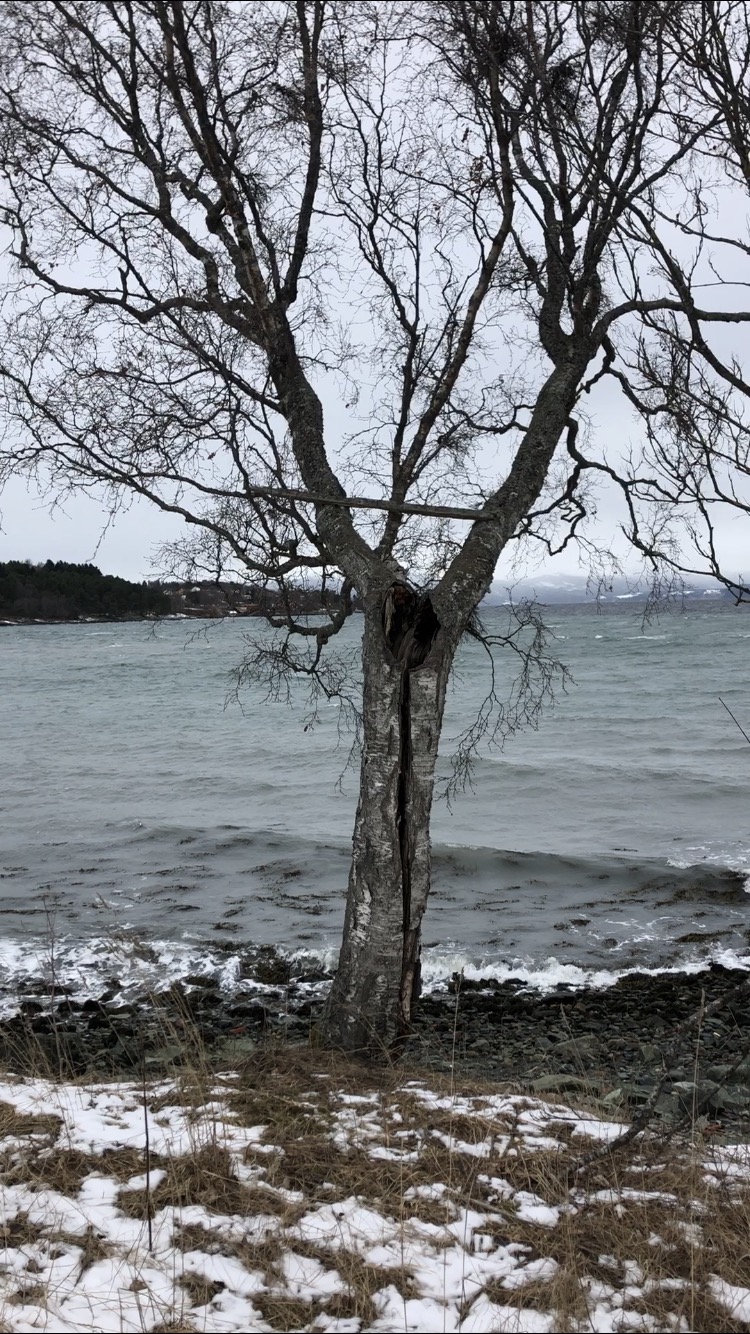
Early one morning
feeling the storm coming
I went for a walk
I reached the shore promenade
the mood in nature was in sync with my heart
When the storm hits my heart
I believe in the stories my mind serves me
These storms form somewhere deep inside me
So I walk, and I kindly ask my mind to cease
For I won't blame it on the world I perceive
I keep walking, until I stop to observe
The sea is moving with the wind
A bird in the sky is flying in the wind
The trees are moving with the wind
For what I see no one blames, no one feels guilt
The storm is just here doing its thing
Has the storm in my heart a function?
Why the need to blame or regret?
I don't know why this storm comes
but no matter how much I reject it, it keeps coming back
Today, I'll be like the sea, the bird and the trees
I'll allow the storm to be
Maybe one day, I'll let go enough
To allow the storm be the guide towards the place it needs to take me.

We all suffer from mood swings, I presume. I think I have already talked about mine in other post. I have periods where I feel overwhelmed by everything and everyone. I have periods in my life where I feel alone.

My mind serves me with a bunch of thoughts to engage with that will feed into these challenging moods. All from analysis to justifications of why I feel how I feel. So lately, I try to observe my thoughts and tell myself that I am getting entangled in my stories again . I let go of the stories so I stop blaming everything and everyone for my mood.

What I discovered today is the level of self-loathe that I experience now when this emptiness hits me. I feel guilty for going back to that space. I feel helpless as it seems like I can’t get myself out of it so easily. But what if I just accept that I have these stormy days? What if I allow the storms to come instead of try to run away from them?

I know about these moods, and I am working on refining my perceptions. I obviously can’t stop these moods from coming yet. Can I accept that? Maybe these storms just need to happen, and the less importance I give them, the less damage they make.

Interestingly enough, after acknowledging that, I felt some relief.

I recently heard on a podcast that mindful living is a full time job. Refining the mind is so too. When we think we’ve got it, we discover it is just the tip of the iceberg. It might help to think that we are explorers in unknown lands, and approach the mind with the enthusiasm an explorer has. 🙂