On spirituality, Halloween, Yoga, contentment, less stress and less waste

Human History is marked with quite a few gruesome actions done in the name of religion. I believe, however, that humanity needs spirituality. Spirituality and religion are not the same. In my view, religion is the institutionalizing of spirituality, and if we are not aware of this, we might end up putting our mind and well-being in the hands of someone else, which in turn is the opposite of spirituality.

Living a spiritual life for me means to take responsibility for my thoughts and actions, to do what I need to do to cultivate a calm and content state of mind. This is, of course, beneficial for me, but I believe that through that work, I also benefit my surroundings because I start seeing the connections. I see how my attitudes and actions affect me and the world around me. In addition, when I take my well-being into my own hands, I demand less from the world. Furthermore, when I learn to know myself better, I accept my place in the world and play my roles from a place of giving instead of receiving.

Spirituality can be anchored in different traditions, but for many people, it can be a personal practice without any adherence to any tradition. I know a few people who in my view live a spiritual life without even being aware of it, even less calling themselves spiritual. In my case, spirituality came in the form of Yoga practices. That is why I write about it, but if you find another path that works for you, stick to it.

Contentment is an important aspect of Yoga. I sincerely believe that many of the struggles we experience today would reduce or even disappear if we had a more conscious approach to contentment. Contentment is a state of mind, and it needs to be cultivated inwardly. In order to cultivate contentment, we need to slow down, to let go of the excess of actions and impulses we are used to having in our lives. We need to prioritize. We need to reflect on what can stay and what needs to go. We need to be aware of our impulses and work towards a less dependant relationship to our senses. The more dependent our happiness is on sensory input, the more we want, the more we demand from the world around us. This has a direct impact on the people we mingle with and the environment. Just think about it for a moment, if you manage to cultivate a content inner state, you will consume less, or at least more mindfully, and this will have a direct impact on the environment. If on the contrary, your happiness is dependant on material things, the more you buy, the more you own, the more you want. Happiness from material things lasts for a short period of time. It doesn’t take long after we have acquired something before we want something else.

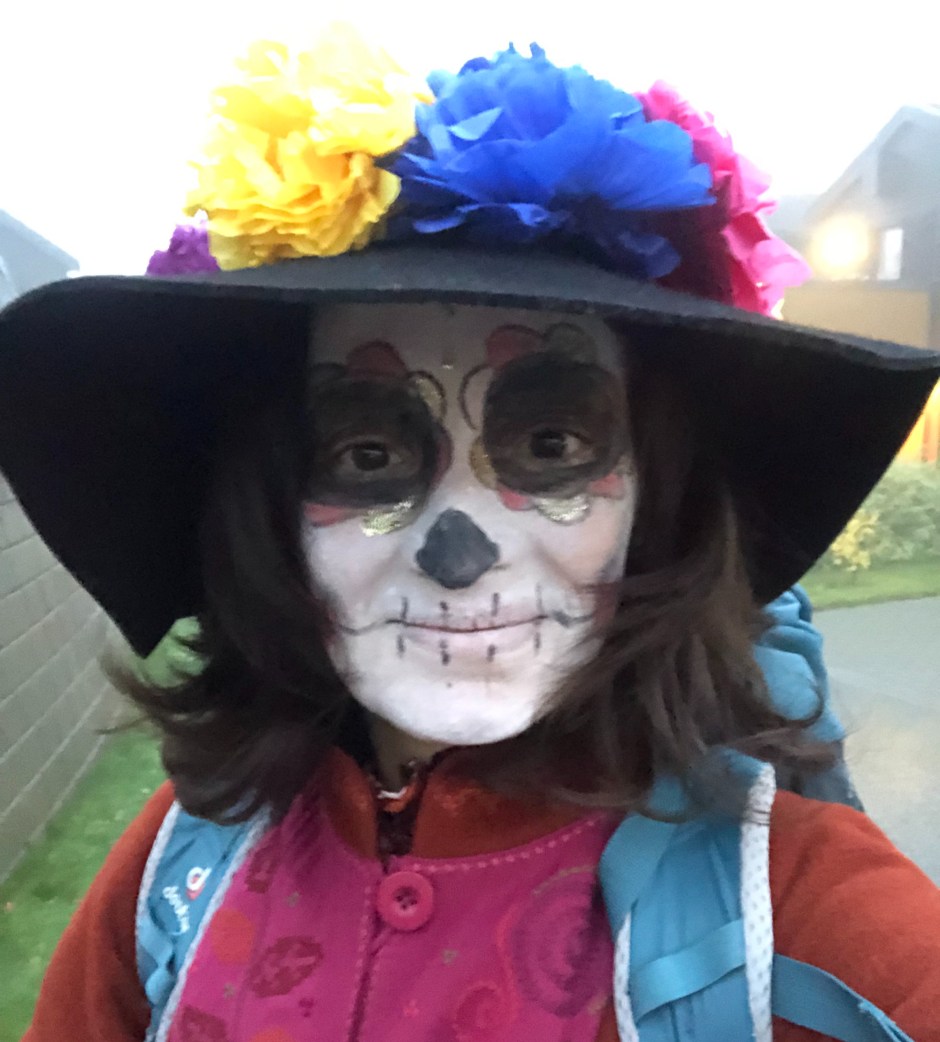
I believe slowing down and prioritizing are crucial to cultivating contentment. It is difficult to live mindfully unless we slow down. I have Halloween as an example. Our youngest daughter loves Halloween, ever since she was in preschool. She used to say that Halloween was her favorite ‘season’. For her, there was Spring, Summer, Halloween, and Christmas. To begin with, Halloween represented another thing ‘to-do’ in a busy everyday life with three kids. It represented, to be honest, stress. However growing up in Mexico, Halloween and Dia de Muertos kind of merged when I was a child, and it was something I also used to look forward to. So, throughout the years in our home in Norway, we have developed a tradition for Halloween. A more conscious approach to it. Since it is important and fun for our girls, we take the time to prepare for it to make it a fun season and avoid stress and impulsive shopping. The girls and I start planning for their costumes before the Fall Break. They decide what they want to be. During the Fall Break, we go to the second-hand shops to find clothes and accessories to make their costumes and start the process. We then use our spare time to work on the costumes. Some years ago, we found a recipe for ‘spider cookies’ we like to bake every year. The girls usually invite a friend each to join us. To avoid too much waste, we pop popcorn to give away to the kids that come trick-or-treating, and I don’t buy Halloween decorations. We don’t have space to keep them and I don’t want to create waste just for one day. The only decoration is a pumpkin that we carve together. When our son was part of the celebrations, we used to run a competition. Each kid would draw an idea for the pumpkin and my husband would choose the winner. This year, I was made aware of the amount of water and energy that goes to cultivate all the pumpkins we buy for Halloween. So, we made baked pumpkin seeds for snacks and I used the pumpkin ‘meat’ for pancakes. Next year, our goal is to cultivate our own pumpkin! On November 1, I bake Pan de Muerto, the culminating part of our Halloween celebrations.
I think that Halloween is perfect for us living up north. It is the time of the year where we gradually stay indoors more, and we then have handcraft activities to do. It has become a project between the girls and me instead of another stressful thing I have to plan on my own, on the run. And the whole process starts all over again in mid-November to start preparing for Christmas as we now try to handmade presents for family and pick what we think would be useful presents for friends.

I don’t mean to say that this is the perfect way to do things, but I am content with how it has developed so far. I know there is room for improvement when it comes to being environmentally friendly – like the pumpkin – but nothing is ever set in stone, so we learn as we go.
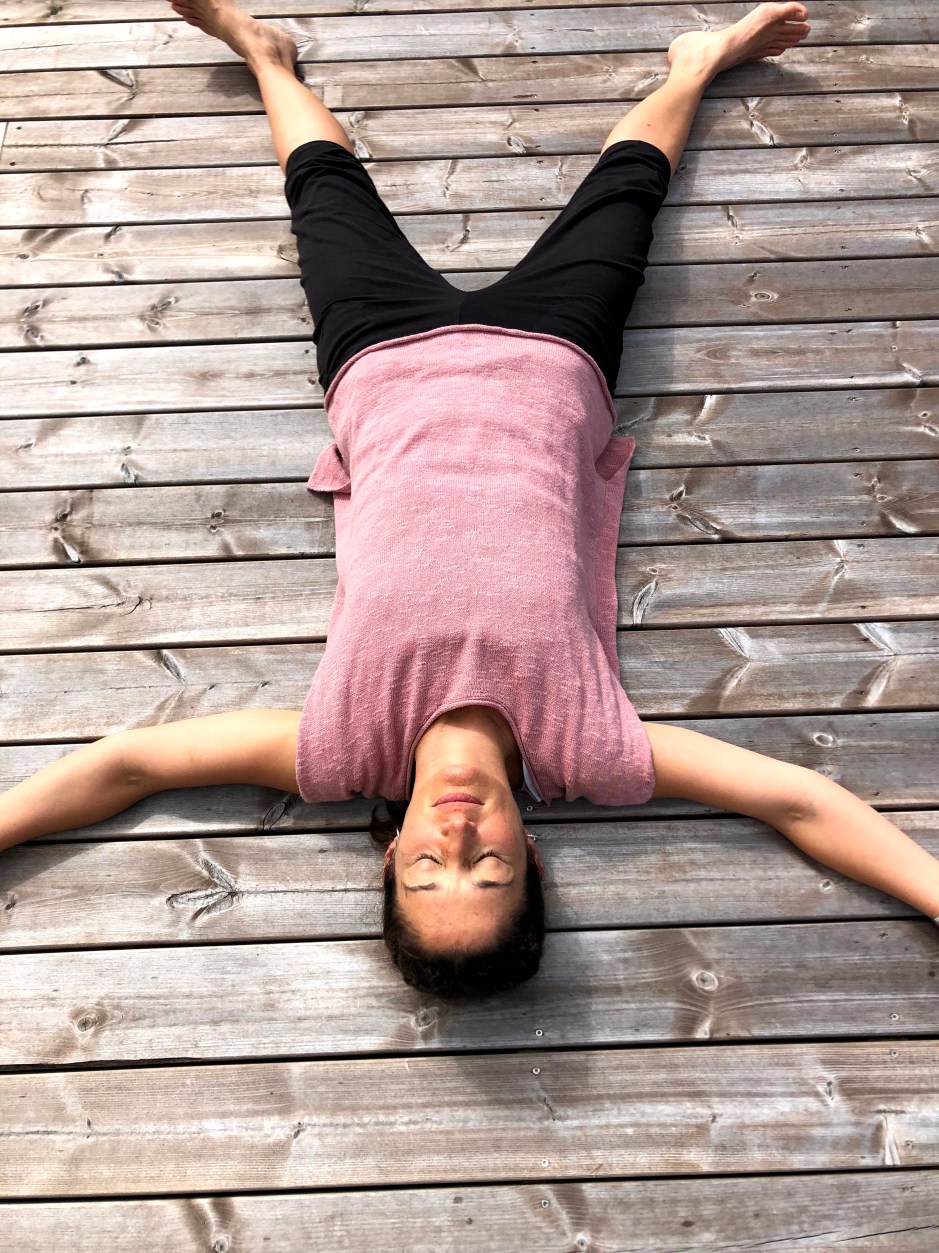
Lessons from lower back pain, again

Last week, my old friend lower back pain payed me a visit. It was an unexpected visit since we haven’t met each other for a while. The first time was shortly after my younger daughter was born. Since then, we met every once in a while, until I started practicing yoga ‘for real’.

What do I mean by that? Well, to begin with, when I finally took the time to practice regularly. During the last seven years, I practice almost daily, at least ten to twenty minutes a day, sometimes, if I have more time, up to an hour.

Consistency is not enough in itself though. It is good only when it allows for me to get to know my body better and do what I know is good for it. Practicing yoga asana daily could be harmful if I don’t practice mindfully.

So when I say that I started practicing yoga ‘for real’, I mean yoga in the extended sense of the word. Not just yoga as a physical practice, but as a way of living. I have had to accept my body as it is and not want to push it to what I want it to be or do. I know that lower back pain has been an issue for me during the last twelve years, so I take this into consideration during my daily practice. I focus on strengthening exercises and poses several times a week, I try to be mindful of not over doing certain poses like forward bends, and vary the poses I practice in a period of time to avoid injuries.

I believe in the power of simplicity, so I keep my practice to the basic poses, and have let go of the need to do poses that I feel unsure about. If I had the guidance of my yoga teacher on a regular basis, and he would consider it beneficial for my practice to introduce such poses, I would, but to push my body into them just because they look cool, or because that’s what is ‘expected’ from a yoga teacher, is not good enough reason for me.

But back to the lower back pain. Why did it come back? Well, because I ‘forgot’ to listen to my body. Some weeks ago, Isigned up for a series of yoga classes with a teacher that I enjoy, and got carried away by the ‘fun’ of doing poses I usually don’t do. And why do I write about it? Well, there are two main reasons:

  1. I know quite a few people that have gotten injured while practicing yoga asana, and then we tend to believe that yoga is not for everyone, or that yoga can be harmful. What is harmful is the need we have to push our body to do things it is not ready for, or that it doesn’t really need. Yoga asana is a very nice way to keep the body healthy, work with the breath and calm the mind, but it needs to be done mindfully and with respect for our body and its limitations. I honestly believe that one can practice yoga asana every day without getting injured as long as one doesn’t get carried away by ego.
  2. It is so important to learn to know our own body and work with it instead of against it. There is a very fine line between pushing it a bit to get stronger or gain better stamina and pushing it to the point of injury. I believe the practice of yoga is at its best when we create our own practice because we can then listen to our body at all times and create a practice that is suitable for that specific moment. It is of course, important to have a good teacher that can guide us from time to time, someone who we can trust, but most of the work needs to be done by us.

Luckily, I know more or less what I need to do when this good old lower back pain pays me a visit, and I’m already starting to feel better – with a little help from my chiropractor. My reflections about this experience can also be applied everyday life. It is so important to find our own way! Learn to know who we are, accept our shortcomings and know our strengths, identify our values and priorities and live accordingly. There is nothing wrong in observing what other people do, listen to opinions and even learn from others, but avoid doubting ourselves every time someone says or does something differently.

Saving our children from painful situations

A friend and I were talking the other day about our sons who are the same age and soon will have to choose what kind of studies they want to do for high school. Here in Norway, they can choose to go the ‘regular’ pathway that can lead them to university, or they can choose to learn a profession and come out being able to work. The latter is, of course, less prestigious than acquiring a university degree, but a good option to those who either have a clear idea or know well their skills, or who are tired of so much theory at school and want to do more practical work throughout the three years of high school.

My husband and I believe that, if our son chooses to choose a profession oriented pathway, we will support him. She is of the idea that her son (and our son) should choose the pathway that allows them to go to university. She has good arguments, and I don’t disagree with her, but what triggered this post was what she said at some point:

‘I want my son to make choices that will allow him to do something with his life in a way that is as painless as possible.’

Or something like that. Her argument is that, if they choose the profession pathway, and they change their minds in some years and want to go to university, it might be too late for them to study for and pass the exams required for those who don’t follow the ‘regular’ pathway. Valid arguments.

Can we really prevent our kids from experiencing pain?, and maybe most importantly, should we prevent our kids from experiencing pain?

The answer, is of course neither yes nor no. It is our instinct and to a certain degree our duty as parents to protect our children as much as we can, but lately, I keep thinking that this well-meant attitude might harm our children more than help them, and what is more, will exhaust us, because lets face it, no matter how much I try to keep pain away from my kids, pain will reach them at some point. Pain is part of life.

How can we harm our children by protecting them from pain? Well, it is through the experience of pain that we learn resilience, patience and perseverance. It is through painful situations that we often grow because we are pushed to take a self-check, to evaluate our situation, to learn and move forward. Maybe the key is not to spend most of our time and energy preventing our kids from making mistakes, but rather create a relationship of trust so when they make mistakes, when life gets tough, they know they can get through it by their own strength, and/or get our support if they need it to gain the strength to stand up on their own feet again.

Don’t misunderstand me, I do want my son to make choices that allow him to live a happy and meaningful life, and I do say my opinion whenever he is about to make a choice, but I also try very hard to remind myself to let go of the need to control him. I have to accept that he needs to make his own choices and deal with the consequences. I just hope that the day he makes a mistake or a choice that brings pain to his life, we will be able to support him in a way that helps him reflect, grow and move on.

I see it as a teacher too. I am thankful that I teach in times where we have a lot of focus on students’ social and emotional well-being, but I also feel that sometimes we feel obliged to micro-mange them to avoid emotional distress. If football games during playtime get too rough, we ban them. Parents contact us often when their child has had a conflict with another child often with the expectation that we will ‘fix it’ without the kids being involved to ‘avoid the distress’ caused by heaving to deal with the situation.

Although I understand the intentions behind this kind of expectations, I think that kids need to experience all sorts of emotions and learn how to deal with them. Both their own emotions and other people’s emotions. Maybe instead of banning the football game, we can have the necessary conversations – over and over again – to help them reflect on what went right and what went wrong, and more importantly, how they can do better next time. We help the students better by creating the space for them to talk and find common ground, and understand how they feel and how their peers feel. Maybe sometimes kids need to find their own solutions without adult involvement.

If you’ve been around for more than twenty years, you would agree that in life, we go through phases, some phases are more painful than others, but often, the most painful ones bring also a lot of growth. I teach students between 13 and 16 years old, and many changes happen during those years. Some teenagers go through tough periods trying to figure out who they are and what they want. It is painful for them, and often even more for their parents. The parents that suffer the most are those who try very hard to steer their children into a specific direction believing that that is the right direction. Or being overly worried about their child’s confusion. What I often observe from the outside is that the kids that have been raised with a set of clear values, that have parents that are present and available, manage to go through and beyond phases of confusion and pain and grow from them. It requires patience, resilience and perseverance from both themselves and their parents.

Reflecting about this, I have made myself some mental guidelines as a mum and as a teacher that I try to follow:

  • Walk the talk. Live my life as much in line as possible with what I believe in. Accept my mistakes and grow from them. Reflect with my children about them. I don’t need to pretend that I am perfect, or devoid from emotion.
  • Be mindful of how I react when my children make a mistake. Try to show understanding and be open for discussion instead of being judgemental.
  • When appropriate, share my views or opinion on something, explain why I think like I do, but make it clear that the choice is theirs (and hope for the best).
  • Remember that each one of my kids is an individual with their own path to walk. Be supportive, be present, but not controlling.
  • Help them go through difficult emotions. Explore and accept the pain to then let go and learn from it.
  • Keep learning together with my kids how to better support them in their own path. After all, parenting is all about learning by doing.

Spring reflections

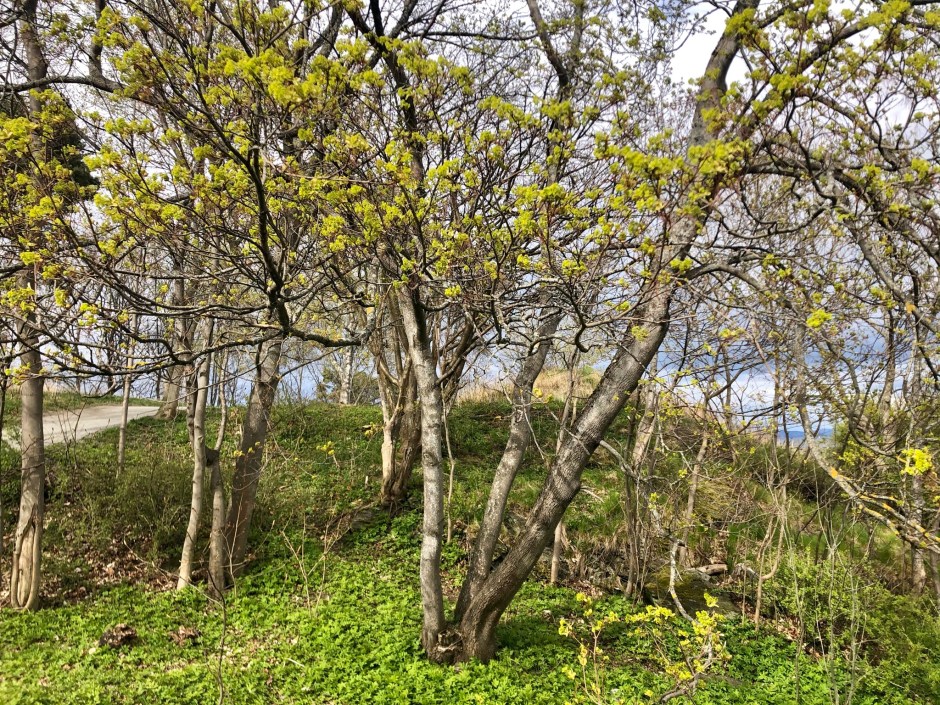
The Spring is here and with it comes the awe of nature waking up to life after a long Winter. I enjoy observing how days are getting longer and longer, feeling the warmth of the sun, the birdsongs, and seeing plants and trees growing leaves and flowers.

Spring always brings me so much joy, but the start of the season is always challenging for me. I don’t know why, but I often feel tired physically, mentally and emotionally, and it takes a lot of inner work to get myself through it without allowing this tiredness to push me into a negative space. It has taken me some years to understand this pattern and even more importantly, to accept it.

My theory is that I spend so much energy keeping up with life during the dark and cold Winter, that when the Spring comes, my body is exhausted. I tried this Winter to follow better the rhythm of the daylight and allow myself to rest more and do more indoor activities that inevitably require less energy such as sewing, knitting, reading, playing board games with my kids and watching movies. Still, the tiredness of the Spring did come along.

Spring is also a quite busy period for me. As a teacher, May is an intense month with many holidays sprinkled throughout the month, and although I do appreciate the breathing pause they bring, they also interrupt the rhythm of school life in what I see as one of the most critical periods of the school year as we should be wrapping up, doing our last assessments to start writing report cards, write the end-of-the-school-year student reports, and prepare for next school year. In addition, all clubs my kids are part of, want to mark the end of the school year with celebrations, and on top of all that we have the Norwegian national day and all the expectations around it. Fighting all this, my desire to be outdoors and enjoy the better weather.

So, even though the light and the milder weather call me to be more active, I am trying this year to work with my expectations and what my different roles require from me. Not an easy task, but I keep learning:

  1. Prioritise: I can’t have a hundred items on top of my priority list. Remind myself of what is important for me and make my list accordingly.
  2. Put some things aside both practically and mentally. I can’t do everything right now. Some things will have to wait. This is very connected to nr1.
  3. Keep my sadhana rock steady. At least twenty minutes of sitting in silence preferably preceded of some yoga asana.
  4. Say no when needed. This one is very though because I don’t want so seem rude nor disappoint anyone, but it is also very necessary.
  5. Good enough is good enough.
  6. Give myself time and space to feel tired, confused and frustrated but do not feed into the emotions. Time and space will always allows me to get some perspective and find a way to get through situations.
  7. Make choices based on what I know and the resources I have with clear intentions and trust that whatever happens will be for the best. I must confess that making choices is one of the most energy-draining activities for me, but I am learning to follow this little formula. Trust is an important ingredient to not spend too much energy on them.
  8. REST. Go to bed early, listen to my body and mind and take a break during the day when I need it. I often eat lunch with my students or in meetings, but when I can, I take a half hour break during my work day and go for a walk in the park, literally. Walking in nature always recenter me. When I get home, if my kids are at their respective activities or with their friends, I take a coffee break to rest my mind and body.
  9. Move outdoors. I have as a goal to walk at least 7km a day, some days I walk more, some days slightly less. The key is in using my legs as my means of transportation. I walk or ride my bike to and from work and to whatever errands I have during the day.

Back pain, mental pain and Yoga

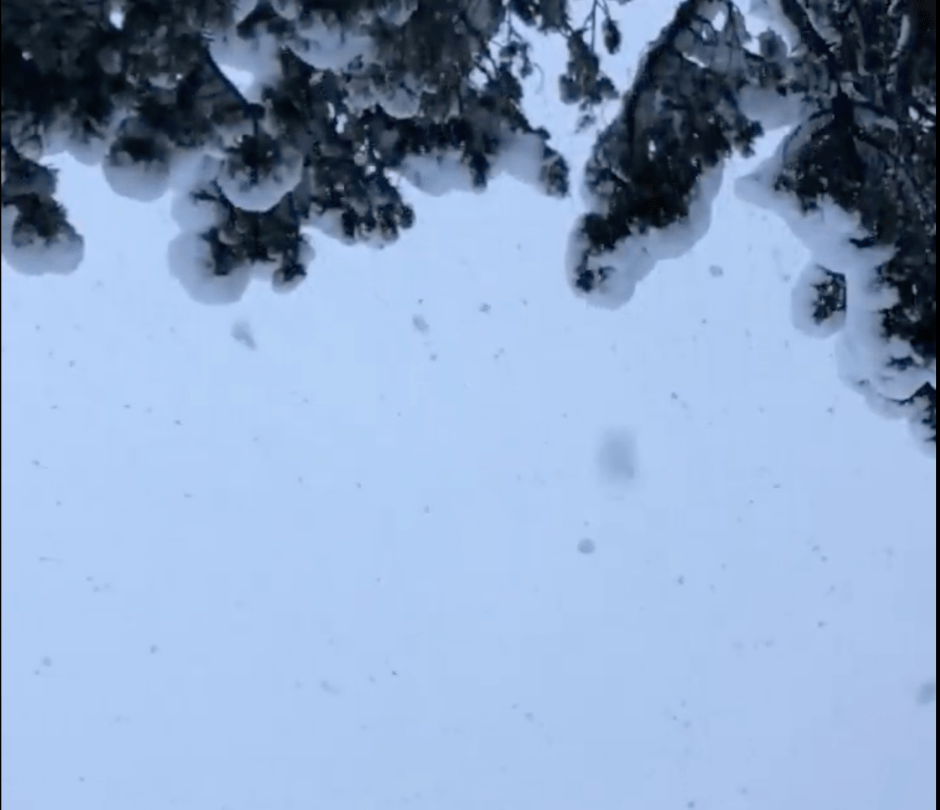
I love cross country skiing, and I feel the season here i Trondheim was shorter this year. Therefore, I was very excited to see on Saturday morning that it was snowing. I booked a car (we are part of a car collective), and I agreed with my husband that I would go for a trip on my own. I wanted to be as early as possible to make sure I was in the forest before too many people had the same idea as I had.

I was so early that there were no prepared tracks yet, and it was snowing so much that it was a bit challenging to actually ski, but I didn’t mind, I love it when it snows like that, and I was outdoors, on my own.

At some point, I got a bit lost, and I wasn’t sure where I was, but I just kept going knowing that I would find a sign somewhere some time. I had been going mainly uphill, so when I saw the first downhill, I was happy and relieved thinking that I must have been going back somehow.

The snow was heavy and sticky, and my skis weren’t gliding much and at a turn, I lost balance and fell on my knees. Nothing dramatic, just a little fall. But when I stood up again, I felt it. A sharp pain on my lower back. Good old lower back pain that takes the breath out of me. It’s been a while since last time, but I recognise it very well.

I couldn’t call myself a yoga practitioner if I didn’t use the tools I have learned for this kind of situations, so I tried to calm my mind that was going all over the place with ‘where am I?’, ‘how am I going to get to the car?’, ‘I’m completely alone here’, ‘it’s so painful’, and so on. I took some deep breaths, tried to straighten myself up, and attempted to continue and see what happens. I soon decided to take off the skis and walk down the hill. I took out my phone, found the right app, and to my great relief, I found out I wasn’t far from where I had parked my car. Somehow, I had made some sort of loop.

I was, of course, slightly disappointed with my trip and the back pain, but I was glad I was able to walk back. What is more, I know this old friend of mine, the back pain, it comes unexpectedly, it gives quite a lot of trouble, but it ends up leaving at some point.

The practice of Yoga asana has allowed me throughout the years to get to know my body better, and when an injury like this one happens, I know most of the time what I need to do for a speedy recovery. What is maybe more important is that since I know I suffer from lower back pain, my daily practice is focused on keeping my core muscles, my glutes and my legs strong and flexible.

So I drove home and did what I usually do, a combination of relaxing, going for walks and doing soft movements and some gentle stretches to release tension in the muscles that tend to contract when I hurt my back.

After a couple of days, I was much much better, and that is when I remembered that maybe two or three years ago, when I already had a quite steady yoga asana practice, I hurt my lower back just like last week, and I was devastated. I couldn’t understand how I could be in pain again when I practice asana every day and am very cautions of what I do to avoid getting hurt. The funny part, is that I have experienced the same when it comes to everyday life. I know my triggers, I know my mental and emotional weaknesses, and every time I would end up in an emotional situation, I would be so disappointed feeling that ‘I haven’t learned anything!’ To this, my yoga teacher has always said the same: develop patience.

So I have been reflecting about how, the practice of yoga as a holistic approach, does not necessarily prevents me from getting into situations where old patterns of thought and behaviour arise, where I feel bad about myself, or hurt, but I come out of such states of mind faster. Just like with my lower back pain. I am more capable of bearing the pain, observe the pain, and do what I need to do to get through it without making a bigger mess, without creating more mental and emotional distress for myself.

That is life, isn’t it? Keep walking, enjoy the highs and bear the lows with as much calmness as possible to not spend precious energy on making things worse for ourselves… I love what Yoga is bringing to my life.